

















In today's fast-paced digital economy, businesses must innovate quickly to stay competitive and meet evolving customer expectations. Whether developing a SaaS platform, healthcare application, fintech solution, eCommerce marketplace, or enterprise software, speed-to-market has become a critical success factor. However, building and managing an in-house development team often involves significant investments in hiring, infrastructure, training, and project management. To overcome these challenges, many organizations are turning to Product Development Outsourcing as a strategic way to accelerate innovation while maintaining high-quality standards.
Partnering with an experienced Product Development Company enables businesses to access specialized talent, advanced technologies, and proven development processes without the overhead costs of expanding internal teams. This approach allows organizations to focus on their core business goals while external experts manage product design, development, testing, deployment, and support. As a result, companies can launch products faster, reduce operational expenses, minimize development risks, and achieve greater ROI, making Product Development Outsourcing a powerful strategy for sustainable business growth.
What is Product Development Outsourcing?
Product Development is the complete process of transforming an idea into a market-ready product. It involves research, planning, design, development, testing, deployment, and ongoing improvements. The goal is to create solutions that solve customer problems while generating business value.
Product Development Outsourcing refers to partnering with an external development company to handle some or all aspects of this process. Rather than building a large internal team, businesses collaborate with specialists who possess the technical expertise and experience required to execute projects successfully.
Organizations commonly outsource:
- Product strategy and consulting
- UI/UX design
- Software architecture
- Web and mobile development
- Quality assurance
- Cloud implementation
- Technical support and maintenance
Modern businesses no longer see outsourcing as simply delegating technical work. Instead, it has become a strategic partnership where development companies contribute to innovation, technology selection, scalability planning, and product growth strategies.
Difference Between In-House Development and Product Development Outsourcing:
Businesses launching new products typically evaluate two options: building an internal development team or partnering with an external provider. Each approach offers unique advantages, but they differ significantly in terms of cost, flexibility, and speed.
|
Factor |
In-House Development |
Product Development Outsourcing |
| Cost | Higher expenses due to salaries, benefits, infrastructure, and training. | Lower costs with flexible engagement models and reduced overhead. |
| Time-to-Market | Development may be delayed due to hiring and onboarding processes. | Faster project initiation with ready-to-deploy development teams. |
| Access to Talent | Limited to locally available professionals and internal hiring capacity. | Access to global talent with specialized technical expertise. |
| Scalability | Scaling requires additional hiring, which can take months. | Resources can be scaled up or down quickly based on project needs. |
| Technical Expertise | Depends on the skills of the internal team. | Access to experts experienced in multiple technologies and industries. |
| Management Effort | Requires ongoing team supervision, HR management, and performance tracking. | The outsourcing partner manages team operations and delivery processes. |
| Infrastructure Investment | Requires investment in software licenses, hardware, and development tools. | Most infrastructure and tools are provided by the outsourcing company. |
| Flexibility | Adapting to changing project requirements can be challenging. | Teams and resources can be adjusted easily as business needs evolve. |
| Risk Management | Higher risk of skill gaps, employee turnover, and resource shortages. | Proven processes and experienced teams help reduce project risks. |
| Business Focus | Internal teams often divide attention between multiple responsibilities. | Businesses can focus on core operations while experts handle development. |
Why Companies Prefer Product Development Outsourcing Today?
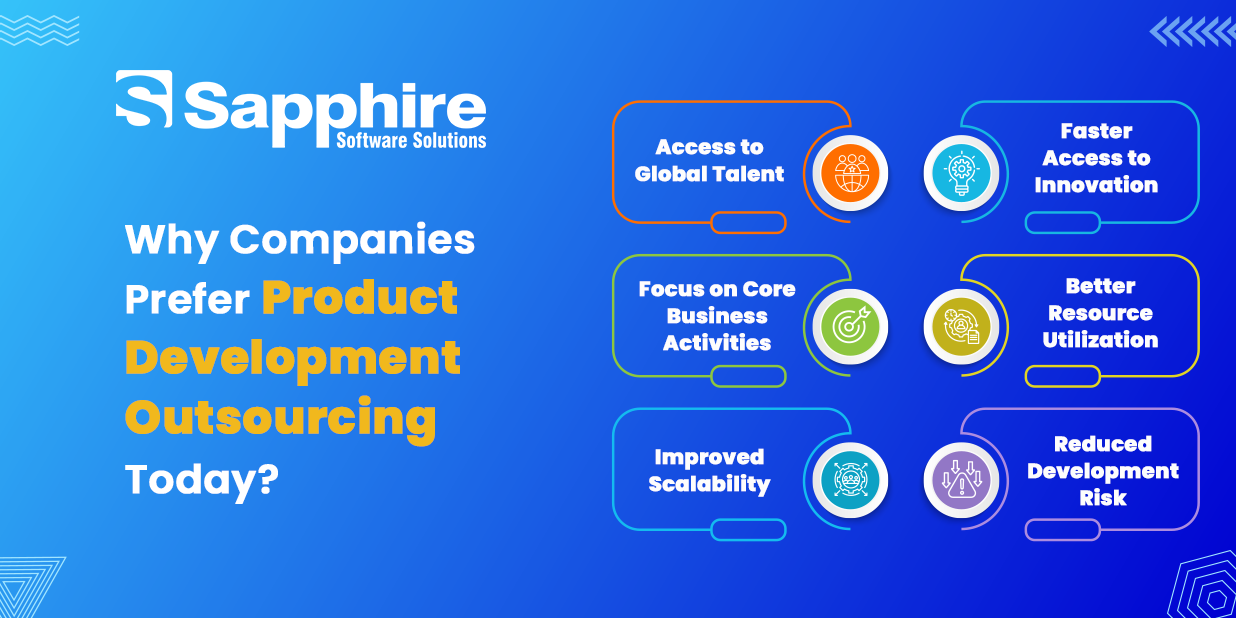
The popularity of outsourcing continues to grow because it solves many of the challenges businesses face when developing digital products.
Access to Global Talent:
Finding experienced developers locally can be difficult and expensive. Outsourcing provides access to global talent pools with specialized expertise in various technologies and industries.
Faster Access to Innovation:
Outsourcing firms stay updated with emerging technologies and development trends. Their experience across multiple projects enables businesses to adopt innovative solutions faster.
Focus on Core Business Activities:
Product development requires significant time and attention. Outsourcing allows internal teams to focus on strategic priorities such as marketing, sales, customer service, and business expansion.
Better Resource Utilization:
Companies avoid investing substantial resources in building large internal teams. Instead, they allocate budgets toward initiatives that directly contribute to business growth.:
Improved Scalability:
Business requirements often change throughout a project. Outsourcing partners can quickly adjust team sizes and skill sets to accommodate evolving needs.
Reduced Development Risk:
Experienced development providers use proven methodologies, frameworks, and quality assurance processes that minimize technical and operational risks.
Many organizations also leverage AI in Product Development through outsourcing partners to accelerate innovation, improve decision-making, and enhance product functionality.
How Product Development Outsourcing Helps Reduce Time-to-Market?
Speed is one of the most valuable competitive advantages in today's marketplace. Outsourcing helps businesses reduce development timelines through several mechanisms.
Immediate Project Kickoff:
Building an internal team often requires months of recruitment and onboarding. Outsourcing providers already have skilled professionals available, allowing projects to start quickly.
Established Development Processes:
Experienced outsourcing firms use Agile, Scrum, DevOps, and CI/CD methodologies that streamline development workflows.
Parallel Development Activities:
Outsourcing teams can work simultaneously on multiple project components.
For example:
- Designers create interfaces
- Developers build functionality
- QA teams perform testing
- DevOps engineers prepare deployment environments
Running these activities in parallel accelerates overall project delivery.
Dedicated Development Teams:
Many outsourcing providers assign dedicated teams focused entirely on a client's project. This ensures consistent progress and minimizes resource conflicts.
Faster Problem Resolution:
Experienced specialists can quickly identify and solve technical challenges based on previous project experience.
Continuous Delivery:
Automation tools enable frequent testing and deployment, allowing businesses to release features faster and respond quickly to market demands.
Lower Recruitment Expenses:
Hiring developers, designers, architects, and QA specialists requires significant investment. Businesses must spend on job postings, interviews, onboarding, and training.
Cost Benefits of Outsourcing Product Development Services?
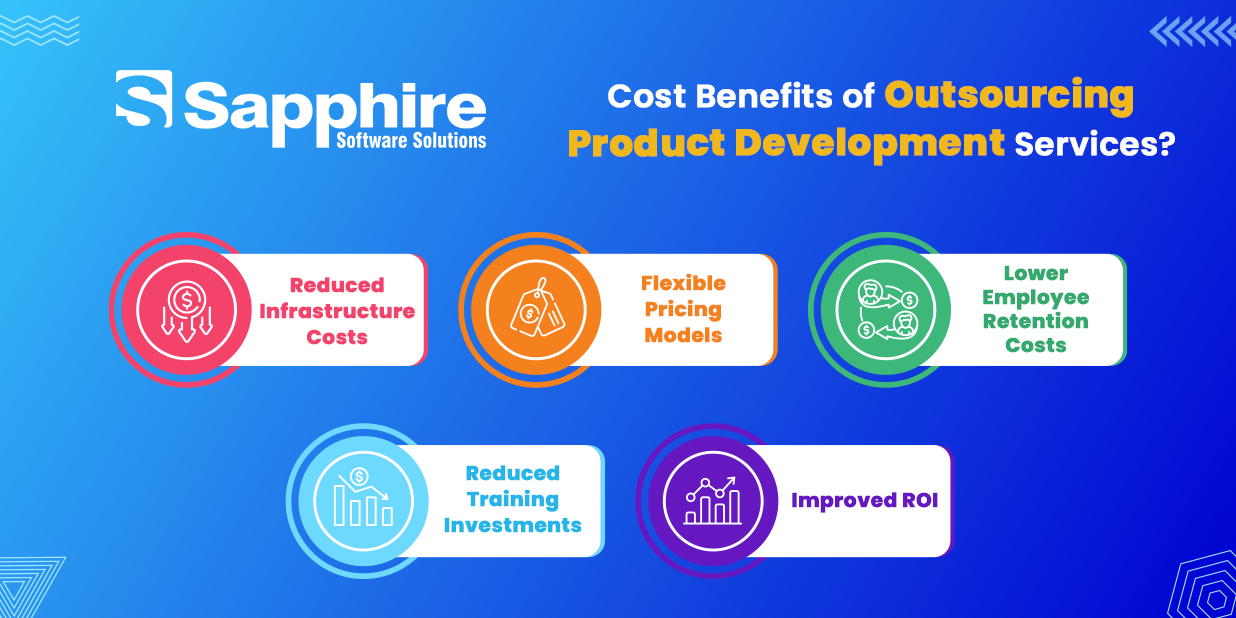
- Reduced Infrastructure Costs: Development requires software licenses, hardware, cloud environments, collaboration tools, and testing platforms.
- Flexible Pricing Models: Organizations only pay for the resources they need, making budgeting more predictable and efficient.
- Lower Employee Retention Costs: Retaining technical talent often requires salary increases, benefits, bonuses, and career development programs.
- Reduced Training Investments: Technology evolves rapidly, requiring continuous employee training. Outsourcing firms handle ongoing skill development internally.
- Improved ROI: Outsourcing Product Development Services often delivers faster results with lower costs, improving return on investment and allowing businesses to allocate resources more effectively.
How Software Product Development Outsourcing Works?
Successful outsourcing follows a structured process designed to ensure transparency, collaboration, and quality outcomes.
Requirement Discovery:
The process begins with understanding business objectives, customer needs, technical requirements, and project expectations.
This stage establishes a clear roadmap for development.
Planning and Architecture:
Development teams define:
- Project scope
- Timelines
- Technology stack
- System architecture
- Security requirements
Proper planning helps prevent costly changes later in the project.
Design and Prototyping:
User interfaces and workflows are designed before development begins. Interactive prototypes allow stakeholders to validate ideas and gather feedback early.
Development Phase:
Developers build the product using modern technologies and industry best practices. Agile methodologies ensure flexibility and continuous improvement throughout development.
Deployment and Launch:
After testing, applications are deployed to production environments and monitored closely. Deployment strategies minimize disruptions and ensure smooth launches.
Continuous Communication:
Regular meetings, sprint reviews, and progress reports maintain transparency and alignment throughout the project lifecycle.
Performance Optimization:
Following launch, teams monitor performance metrics and user behavior to identify improvement opportunities.
Ongoing Support:
A reliable Software Product Development Outsourcing partner continues providing maintenance, updates, and technical support after launch.
This ensures long-term product stability and growth.
Conclusion:
Modern businesses operate in an increasingly competitive environment where speed, innovation, and efficiency are critical for success. Companies that can bring products to market faster often gain significant advantages in customer acquisition, revenue generation, and market positioning.
Outsourcing has emerged as a strategic solution that helps organizations accelerate development while controlling costs. By partnering with an experienced Software Product Development Company, businesses gain access to global talent, proven methodologies, advanced technologies, and scalable resources.
As technology continues to evolve, businesses that embrace smart outsourcing strategies will be better positioned to innovate faster, reduce risks, optimize investments, and achieve sustainable long-term growth. The right development partner can transform an idea into a successful market-ready product while helping organizations save both time and millions of dollars throughout the development journey.