
















With continuous advancements in VR development software, AI integration, and new VR headsets and gear coming out, 2025 is set to be a landmark year for the industry.
Virtual Reality (VR) technology is no longer just a buzzword in gaming and entertainment. As we dive deeper into 2025 and look ahead to 2026, VR has become a cornerstone of innovation across industries—from healthcare and education to retail, real estate, and manufacturing. Businesses around the world are tapping into virtual reality applications to unlock immersive experiences, boost productivity, and transform customer engagement.
In this detailed guide, we explore the rise of virtual reality technology, its real-world applications, and how organizations are using it to gain a competitive edge. Let’s journey through what’s revolutionizing the way we work, shop, learn, and interact.
What is Virtual Reality?
Virtual Reality refers to a simulated experience that can be similar to or completely different from the real world. Users typically wear a virtual reality console or headset to immerse themselves in a 3D environment. These environments are often interactive and allow for movement, sound, and visual feedback to create a lifelike experience.
In 2025, virtual reality systems have evolved with ultra-realistic visuals, responsive haptics, and real-time analytics, making the simulation feel more real than ever before.
How Does Virtual Reality Work?
At its core, virtual reality technology functions through the integration of hardware and software components:
- Headsets (VR consoles): Devices like the Meta Quest 3, PlayStation VR2, and the anticipated Virtual Reality Apple headset enable visual immersion.
- Motion Tracking Sensors: Track user movements and translate them into the virtual world.
- Software Platforms: Create the environment and interactivity, often built by a virtual reality app development company.
- Input Devices: VR gloves or controllers allow users to interact with the environment.
These technologies work together to create an immersive virtual reality experience that engages all the senses.
Differences with Augmented Reality (AR):
It’s easy to confuse VR with AR. However, they serve different purposes:
| Feature | Virtual Reality (VR) | Augmented Reality (AR) |
|---|---|---|
| Immersion | Fully immersive | Partially immersive |
| Devices | VR Headsets | Smartphones, AR glasses |
| Interaction | Simulated 3D environments | Overlays on real-world views |
| Use Cases | Training, gaming, simulations | Navigation, retail, AR filters |
While AR enhances the real world, VR replaces it entirely with a virtual environment.
How to Develop an Effective Virtual Reality Experience?
Creating a high-impact virtual reality app or platform requires careful planning and expert execution. Here's a roadmap:
- Define Objectives: What problem is the VR solution solving? Is it training, marketing, education, or sales?
- Choose the Right Hardware: Select the appropriate virtual reality console or device for the target users.
- Design UX/UI for VR: Unlike websites, a virtual reality website must consider 3D navigation and spatial interactions.
- Develop the Environment: Use tools like Unity or Unreal Engine to build immersive worlds.
- Test and Iterate: Conduct real-time testing to ensure the virtual reality experience is smooth and intuitive.
- Partner with Experts: Collaborate with a skilled Virtual Reality App Development Company like Sapphire Software Solutions for optimal results.
Top Industries Being Transformed by VR in 2025–2026:
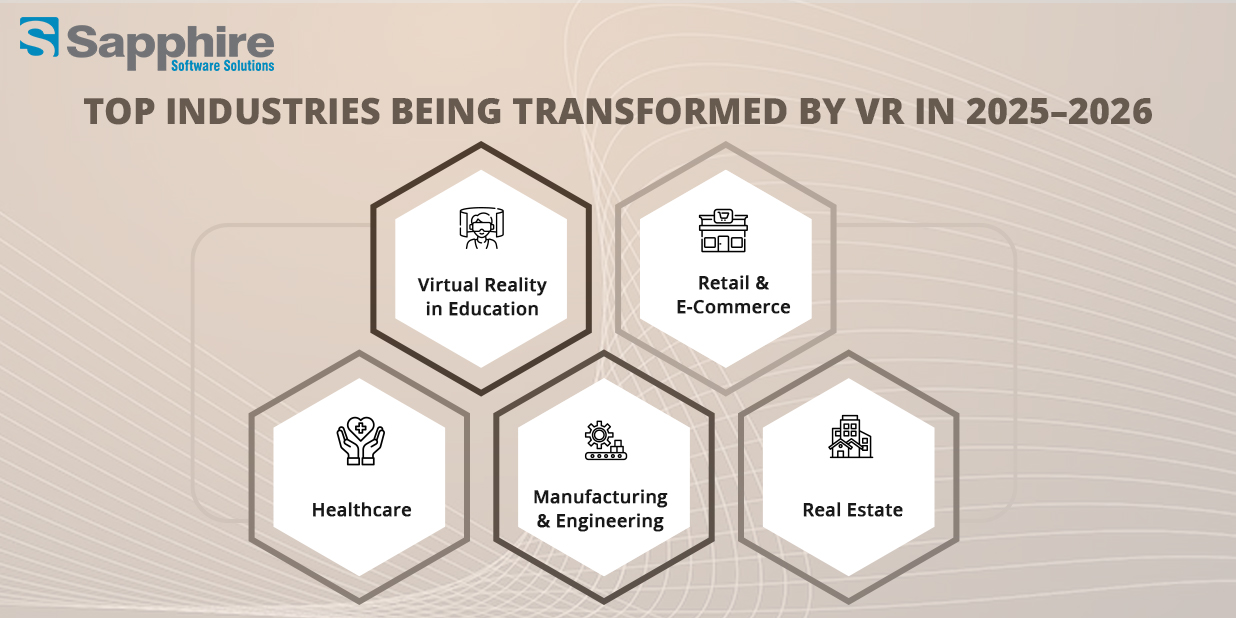
1. Virtual Reality in Education: Schools and universities are leveraging virtual reality education tools to take students on virtual field trips, simulate historical events, and practice science experiments. The result? Higher retention and more interactive learning.
2. Healthcare: VR simulations are being used for surgical training, therapy sessions, and patient consultations. It minimizes risk and enhances hands-on learning.
3. Retail & E-Commerce: Brands now offer a virtual reality experience that allows customers to try on clothes, test makeup, or explore showrooms—all from their homes.
4. Real Estate: Virtual property tours help buyers explore homes remotely, saving time and improving decision-making.
5. Manufacturing & Engineering: VR applications in prototyping, product design, and equipment training are improving productivity and safety.
The Future of Virtual Reality:
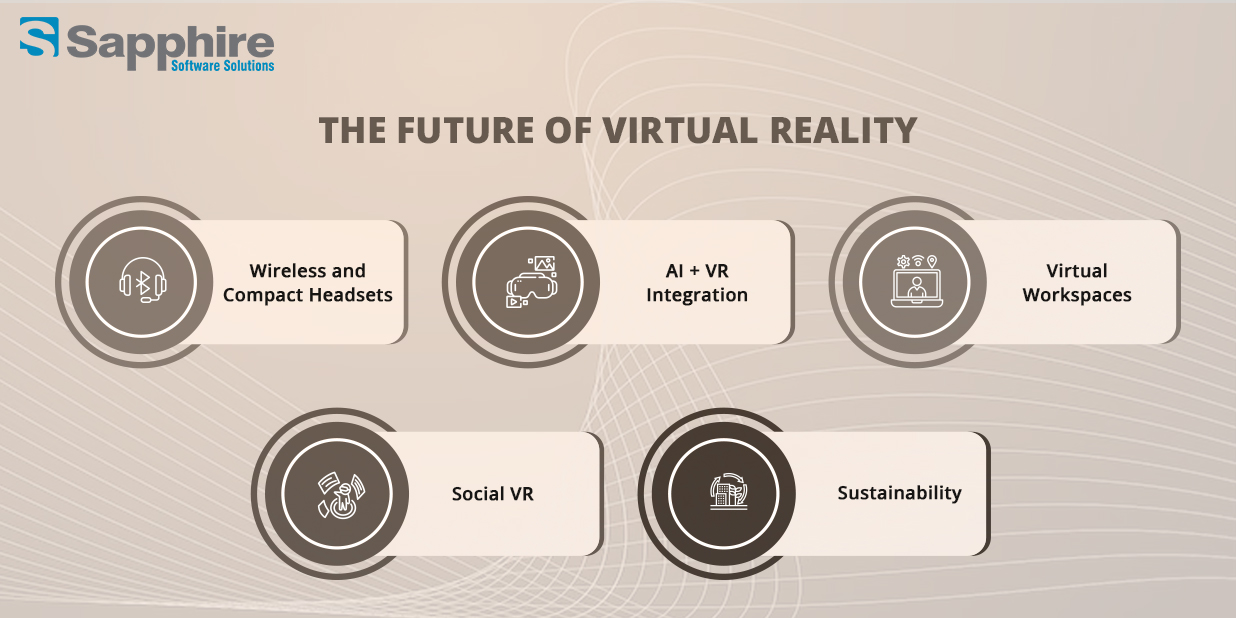
As we move into 2026, the VR landscape is expanding rapidly. Here's what lies ahead:
- Wireless and Compact Headsets: Devices like the upcoming Virtual Reality Apple headset are expected to set new standards.
- AI + VR Integration: Smarter interactions and predictive simulations.
- Virtual Workspaces: The rise of remote VR offices with avatars and real-time collaboration.
- Social VR: Virtual concerts, events, and communities are making online interaction more human.
- Sustainability: VR reduces travel, paper usage, and carbon footprints.
As technology becomes more affordable and widespread, businesses that embrace VR will unlock new revenue streams, improve efficiency, and gain a competitive edge in an increasingly digital-first world.
Why Every Business Needs a VR Strategy?
Ignoring virtual reality applications in your business strategy in 2025–2026 is a missed opportunity. Here’s why:
- Boosts engagement with customers
- Improves employee training
- Increases brand loyalty
- Drives innovation
- Enhances remote collaboration
In an increasingly digital marketplace, businesses that invest in VR today are positioning themselves for long-term success and competitive advantage. Whether you're a startup or an enterprise, the time to embrace virtual reality technology is now.
How a Virtual Reality App Development Company Can Boost Your Brand Engagement?
Partnering with a virtual reality app development company can elevate your brand by creating immersive, interactive experiences that captivate your audience. A specialized Virtual Reality App Development Company understands how to:
- Translate brand stories into immersive environments
- Develop intuitive virtual reality app interfaces
- Optimize performance across virtual reality systems
- Build custom solutions for retail, education, training, and healthcare
Such collaboration ensures your audience isn’t just using your product—they're experiencing it.
Elevate Your VR Vision with Sapphire’s Expert Virtual Reality App Development Services:
At Sapphire Software Solutions, we help forward-thinking businesses bring their VR ideas to life. Our custom Virtual Reality App Development Services include:
- 3D modeling and animation
- Cross-platform VR app development
- Immersive storytelling and gamification
- Integration with IoT and AI
Whether you're building a virtual reality website for real estate or a virtual reality app for online retail, Sapphire ensures it’s built to perform, engage, and scale.
Partner with Sapphire to:
- Create impactful virtual reality education tools
- Enhance customer retention through immersive brand experiences
- Get ahead of the curve with the latest in virtual reality technology
Conclusion:
Virtual Reality is more than just a tech trend—it's a transformational force for modern business. As we embrace 2025 and move into 2026, virtual reality applications are shaping how we learn, connect, and innovate.
From improving brand engagement to redefining how we work and play, the future is here—and it's virtual. Companies that integrate virtual reality systems into their operations today are not just keeping up—they’re setting the pace for tomorrow.
Let Sapphire Software Solutions help you unlock the power of Virtual Reality App Development Services and craft experiences your audience will never forget.