

















The education industry has transformed more in the last decade than it had in the previous century. Traditional classroom-based learning has evolved into digital-first learning experiences, making way for platforms like Udemy, Duolingo, Coursera, and ClassDojo to reach millions of learners worldwide. These platforms have proven that the future of education lies in mobile-first, personalized, and engaging experiences that can scale across geographies and industries.
However, one question always arises when entrepreneurs, startups, or even large institutions consider launching their own EdTech solutions: “What is the educational app development cost?”
The answer is not straightforward. The cost depends on several factors, including app type, complexity, features, platform (iOS, Android, Web), backend infrastructure, AI/ML integration, and maintenance requirements.
In this blog, we’ll explore the educational app development cost for different types of EdTech platforms, language apps, course marketplaces, gamified solutions, and large-scale learning management systems (LMS). Using real-world examples like Udemy, Duolingo, Coursera, Babbel, Unacademy, and ClassDojo, we’ll give you actionable insights into budget ranges, cost drivers, and strategies to optimize development expenses.
By the end, you’ll understand how much it really takes to bring your idea to life and how working with the right Educational Mobile App Development Company can save you both time and money.
What’s the Cost to Develop a Language Learning App Similar to Babbel?
Language learning has become one of the fastest-growing niches in EdTech. Platforms like Babbel and Duolingo have shown how gamification and interactive lessons can keep users motivated. If you’re looking to build a language-learning app, you’ll need to plan for both feature development and AI integration.
Key Features of Language Learning Apps:
- Onboarding & User Profiles – Personalized learner accounts.
- Gamified Lessons – Streaks, badges, and rewards to boost engagement.
- AI-Driven Personalization – Smart lesson recommendations.
- Speech Recognition – Pronunciation feedback in real time.
- Translation Practice & Vocabulary Builder – Core language modules.
- Social Features – Group discussions or peer challenges.
- Monetization Options – Freemium, ads, or subscriptions.
Cost Breakdown:
- Basic MVP with Core Lessons & Gamification: $30,000 – $50,000
- AI-Powered Mid-Tier App with Speech Recognition: $60,000 – $120,000
- Full-Scale App Like Babbel/Duolingo: $150,000 – $250,000
Additional AI-driven personalization features like adaptive lesson difficulty, real-time pronunciation feedback, and predictive learning paths can add 25–40% to costs.
A specialized Education App Development Company can help optimize expenses by building reusable APIs and integrating third-party AI models, reducing time-to-market.
Cost to Develop a School Management & Behavior Tracking App Like ClassDojo
School management apps such as ClassDojo empower educators to manage classrooms, improve student behavior, and connect seamlessly with parents. Building such a system involves both teacher-friendly dashboards and secure data systems for students and parents.
Must-Have Features:
- Teacher Dashboard – Attendance, homework, and grading tools.
- Student Profiles – Progress tracking and behavior reports.
- Behavior Tracking System – Positive reinforcement through points.
- Parent Portal – Direct communication with teachers.
- Messaging System – Notifications, updates, and event alerts.
- Data Security – Compliance with GDPR, FERPA, And COPPA.
Cost Breakdown:
- MVP with Attendance & Behavior Tracking: $25,000 – $40,000
- Full Parent-Teacher-Student App: $60,000 – $100,000
- Advanced AI-Powered Analytics Platform: $120,000 – $180,000
For institutions, partnering with an educational mobile app development company ensures compliance with student privacy laws while delivering seamless multi-user functionality.
What is the Cost to Develop an App Like Udemy for Course Creators?
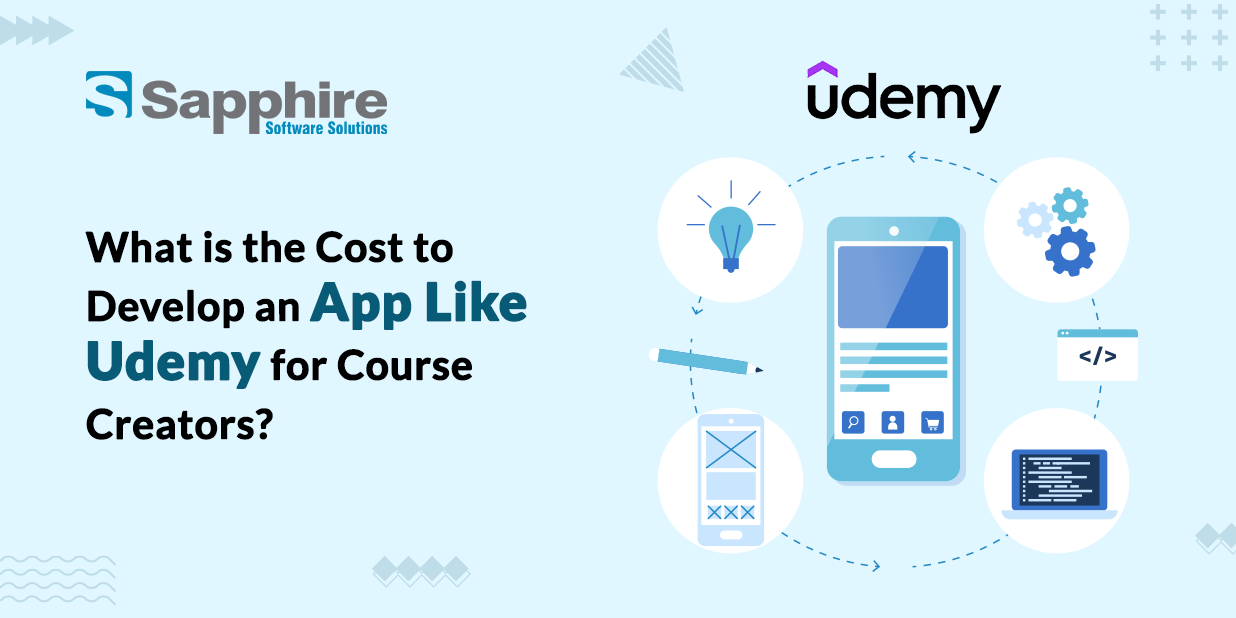
Udemy is a global course marketplace, hosting thousands of instructors and millions of students. Building such a platform requires investment in course hosting, search functionality, payment gateways, and video streaming infrastructure.
Core Features:
- Instructor Dashboard – Course creation, video uploads, resource sharing.
- Student Portal – Course enrollment, progress tracking, quizzes.
- Search & Filters – AI-driven recommendations and advanced search.
- Payment & Monetization – One-time payments, bundles, or subscriptions.
- Review & Ratings – Build community trust.
- Multi-Language Support – Reach international audiences.
Cost Breakdown:
- Basic Course Hosting Platform: $50,000 – $80,000
- Advanced Udemy-Like App with AI Recommendations: $120,000 – $200,000
- Enterprise-Level Global EdTech Ecosystem: $250,000 – $400,000+
Since Udemy thrives on scalability, the educational app development services required include cloud hosting, video compression, and AI-powered analytics to handle millions of users simultaneously.
How Much Does It Cost to Develop a Gamified Language App Like Duolingo?
Duolingo revolutionized learning by combining AI personalization and gamification into a single app. Building a Duolingo-like app requires not just lesson modules but also game mechanics, adaptive AI, and speech recognition engines.
Key Features of Duolingo-Style Apps:
- Gamification Elements – Points, streaks, leaderboards.
- Adaptive AI Learning Paths – Lessons adjust based on learner progress.
- Speech Recognition – Practice real-life conversations.
- Push Notifications – Daily learning reminders.
- Community Features – Peer competition and global leaderboards.
Cost Breakdown:
- MVP with Core Gamification: $40,000 – $60,000
- AI-Powered App with Speech Recognition: $100,000 – $180,000
- Full-Scale Global Platform Like Duolingo: $200,000 – $300,000
Breakdown of the Cost to Develop a University-Grade Learning App Like Coursera
Coursera represents a large-scale, university-grade platform with multi-level courses, official certifications, and global partnerships. Building such a system is complex and requires robust video delivery, secure data management, and AI-driven recommendations — the kind of solution typically developed by a skilled eLearning App Development Company.
Must-Have Features:
- Multi-Level Course Modules – Beginner to professional learning paths.
- Video Streaming & Live Classes – On-demand + real-time lectures.
- Certification Management – Issue and verify digital certificates.
- Collaboration Tools – Group discussions, assignments, and forums.
- AI-Powered Recommendations – Personalized course suggestions.
- Institutional Dashboards – For universities and colleges.
Cost Breakdown:
- Basic Course Hosting App: $80,000 – $120,000
- Coursera-Like Full Platform: $150,000 – $300,000
- AI-Powered University-Grade System: $400,000+
With eLearning app development cost models like this, expenses are higher because of integration with academic institutions, compliance requirements, and multi-tiered content management.
How Much Does It Cost to Develop an Educational Streaming App Like Unacademy?
Unacademy focuses heavily on live streaming for competitive exams, which requires high-quality video delivery, cloud scalability, and interactive features.
Core Features of Unacademy-Like Apps:
- Live Streaming Integration – HD classes with low latency.
- On-Demand Content – Recorded replays and downloadable lessons.
- Exam Prep Tools – Quizzes, notes, and practice tests.
- Subscriptions & Memberships – Tiered pricing models.
- Teacher-Student Interaction – Real-time Q&A and chats.
Cost Breakdown:
- MVP with Streaming + Quizzes: $50,000 – $90,000
- Full Streaming Platform with Subscriptions: $120,000 – $180,000
- Enterprise-Level Platform Like Unacademy: $250,000 – $400,000
For apps that rely on video, educational app development services must prioritize scalable cloud infrastructure, AI video compression, and real-time engagement tools.
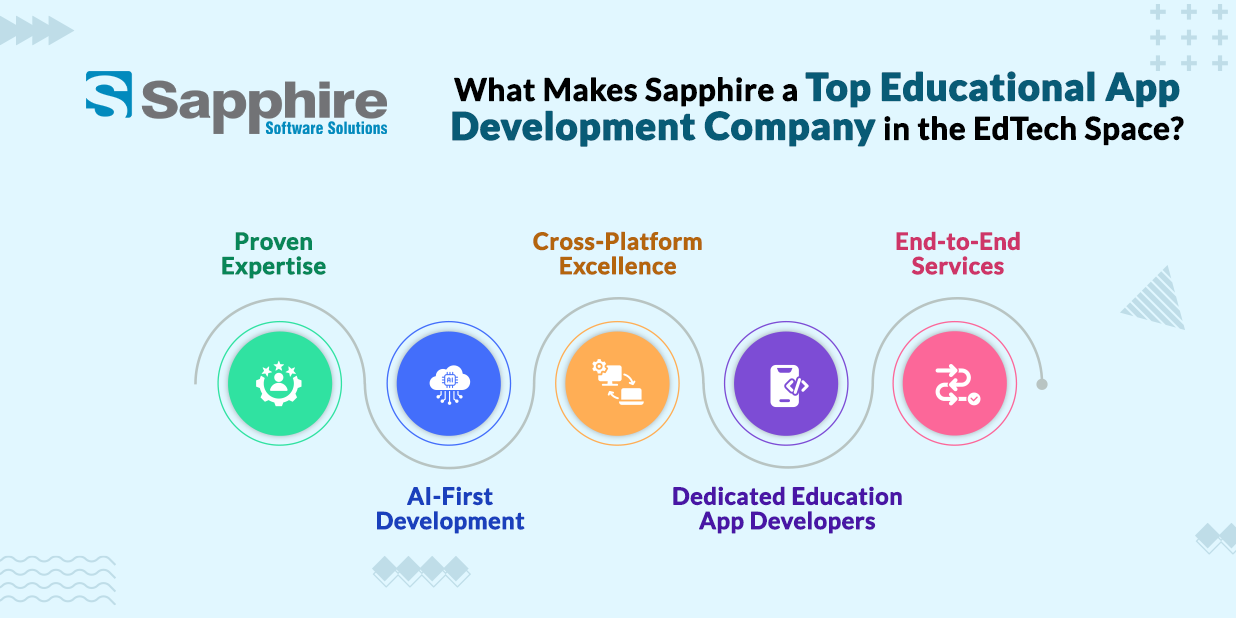
What Makes Sapphire a Top Educational App Development Company in the EdTech Space?
With so many players in the market, selecting the right Educational App Development Company is critical. Sapphire Software Solutions has earned a reputation for building world-class EdTech apps that combine AI, scalability, and intuitive design.
Why Sapphire Software Solutions Stands Out:
- Proven Expertise: Delivered apps across language learning, LMS, exam prep, and marketplace models.
- AI-First Development: Predictive learning, adaptive testing, and personalized recommendations.
- Cross-Platform Excellence: Android, iOS, and web solutions.
- Dedicated Education App Developers: Specialists in UI/UX for EdTech.
- End-to-End Services: From concept and design to launch and post-launch support.
By choosing Sapphire Software Solutions, businesses gain a partner who understands on-demand educational app development, global market demands, and learner engagement strategies.
Conclusion:
The educational app development cost depends on the scale and purpose of your app. A small MVP for language learning may start at $25,000–$40,000, while a full-scale Coursera-like system can exceed $400,000. The cost drivers include:
- Features & Functionalities – Gamification, AI, live streaming.
- Complexity & Scalability – Handling large user bases.
- Platform Choice – iOS, Android, or cross-platform.
- Third-Party Integrations – Payments, AI models, cloud systems.
Whether you’re building a Duolingo-style gamified app, a Udemy-like course marketplace, or a school management system, the investment is worth it in a fast-growing $350+ billion EdTech market.