
















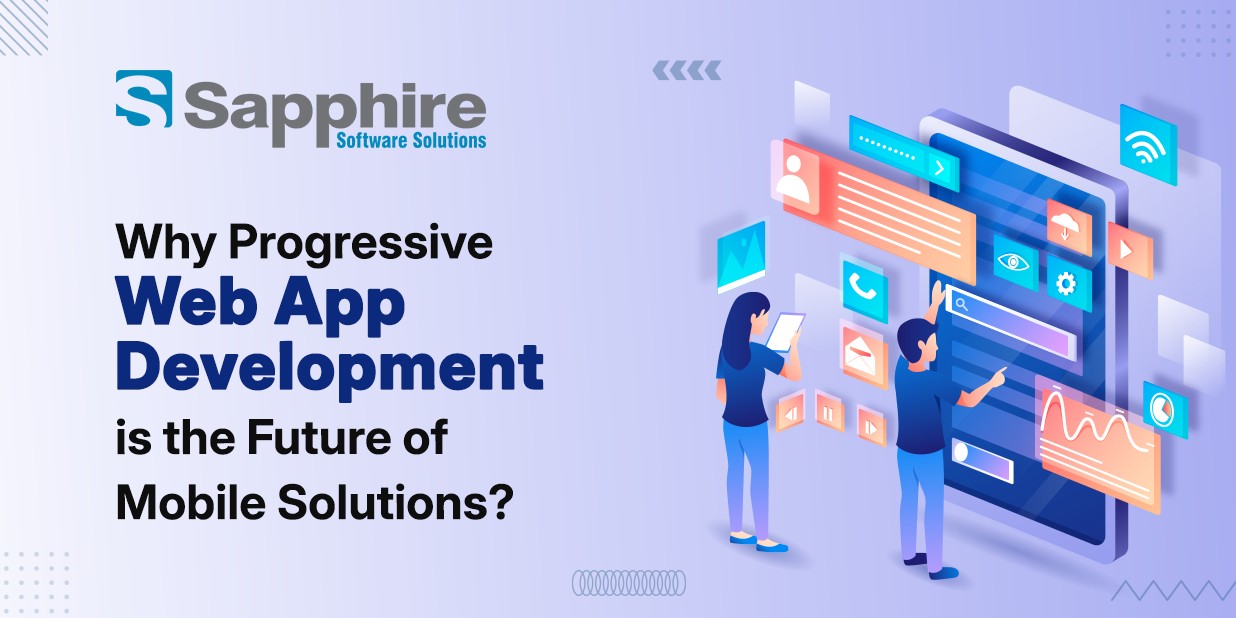
In today’s fast-paced digital economy, businesses are under constant pressure to deliver seamless, lightning-fast, and engaging mobile experiences. However, traditional mobile applications often come with long development cycles, platform dependencies, and recurring maintenance costs. This is where Progressive Web App Development (PWA Development) has emerged as a revolutionary solution bridging the gap between web and mobile platforms.
A Progressive Web App combines the best of both worlds: the reach and flexibility of a website with the power and functionality of a native mobile app. Users don’t need to visit an app store or download large installation files. Instead, they can visit a website, add it to their home screen, and enjoy a full app-like experience complete with offline access, push notifications, and fast loading speeds.
Over the last decade, major companies such as Twitter, Pinterest, Starbucks, and Forbes have embraced PWAs to enhance engagement and conversions. Studies show that PWAs can increase load times by up to 300%, boost user retention by 2-4x, and reduce bounce rates by nearly 50%. Its cost-effectiveness, combined with cross-platform compatibility, makes this technology a must-have for businesses aiming to scale in the digital era.
In this blog, we’ll explore what is a Progressive Web App, why it’s reshaping the future of mobile experiences, its key features, frameworks, and how companies like Sapphire are leading this transformation as a top Progressive Web App Development Company.
What is a Progressive Web App?
A Progressive Web App (PWA) is a type of application software built using standard web technologies such as HTML, CSS, and JavaScript, but enhanced with modern web APIs that deliver app-like experiences on any device.
Unlike traditional mobile applications that require separate versions for Android and iOS, PWA is platform-independent. It runs in a browser but feels and behaves like a native app. When a user accesses a PWA, they can install it directly on their home screen, use it offline, and even receive push notifications, all without visiting an app store.
The underlying philosophy of PWAs is “progressive enhancement.” That means they work for every user, regardless of browser choice, and enhance functionality depending on the device’s capabilities. This universal adaptability makes Progressive Web App Development a game-changer for businesses that want to provide a unified digital experience across desktops, tablets, and smartphones.
In simpler terms, PWAs represent a shift from “mobile-only” to “web-everywhere.” They load instantly, respond quickly, and offer immersive, app-like interactions. This gives users the comfort of an app and businesses the efficiency of the web in a win-win scenario in every sense.
Why Are Businesses Turning to Progressive Web App Development?
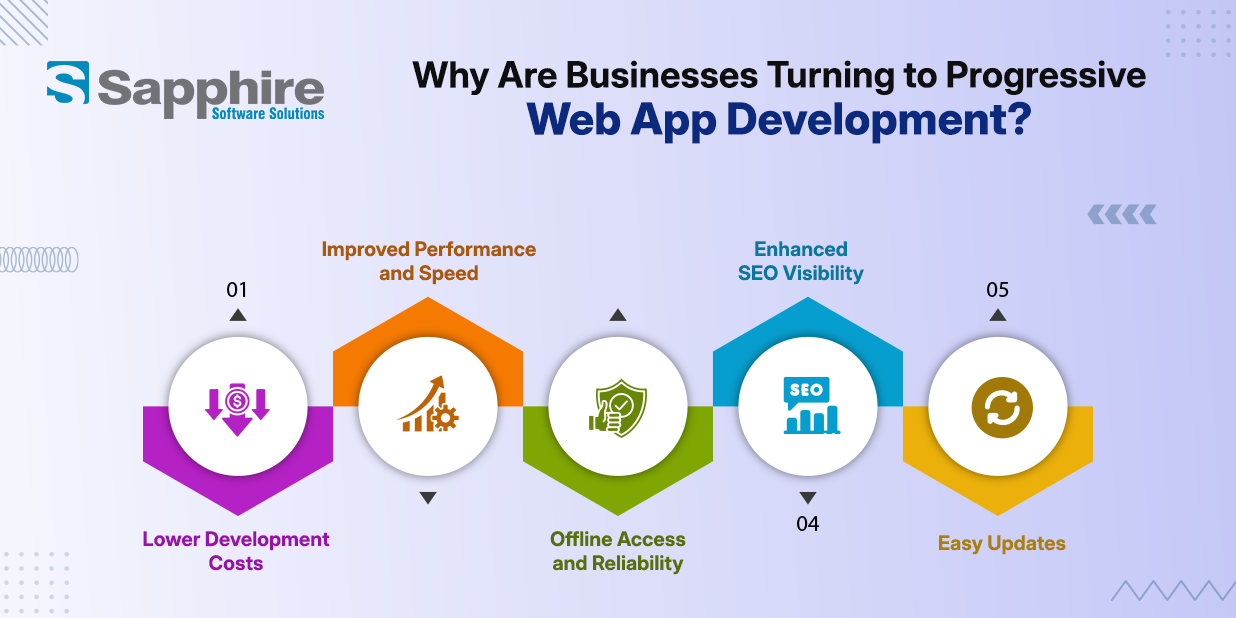
The global business environment is evolving faster than ever. Customers expect instant access, personalized engagement, and consistent performance across all devices. Traditional apps, though powerful, often fail to meet these expectations due to heavy downloads, slow updates, and expensive maintenance cycles. This has pushed many organizations to explore Progressive Web App Development Services as a more efficient and scalable alternative.
For startups and enterprises alike, PWAs offer numerous advantages:
- Lower Development Costs: Building a native app for iOS and Android typically means maintaining two separate codebases. PWAs eliminate that redundancy. One codebase serves all platforms, dramatically cutting costs and reducing time to market.
- Improved Performance and Speed: Thanks to advanced caching mechanisms and service workers, PWAs load instantly even on poor network connections. Faster loading directly correlates with better retention and engagement rates.
- Offline Access and Reliability: Unlike traditional websites, PWAs can function offline or in low-connectivity environments. This ensures users always have access to your content or services, enhancing brand trust.
- Enhanced SEO Visibility: Unlike mobile apps, which are confined to app stores, PWAs are fully indexable by search engines. This gives your business improved discoverability on Google and other search platforms.
- Easy Updates: Users don’t need to download updates manually from the app store. Changes are reflected automatically the next time they open the app.
For businesses aiming to provide a superior user experience without overspending, Progressive Web App Development is not just a trend; it’s a strategic necessity.
Key Features of a Progressive Web App:
The most exciting part of PWAs lies in their intelligent combination of web and native app functionalities. These Progressive Web App Features make them more user-centric and performance-driven than traditional mobile or desktop applications.
Here are the defining characteristics:
- Responsive and Adaptive Design: PWAs automatically adjust to any screen size or orientation. Whether accessed via a smartphone, tablet, or laptop, users enjoy a seamless experience without design distortion.
- Offline Capability: A Service worker's script that runs in the background to cache essential files, allowing users to interact with the app even without an internet connection.
- Push Notifications: Much like native apps, PWAs can send targeted notifications to keep users engaged. These notifications improve retention and conversion rates significantly.
- App-Like Interface: PWAs mimic the behavior and navigation of a native app, providing smooth transitions, gestures, and an immersive user interface.
- Secure via HTTPS: PWAs are served over HTTPS, ensuring data security and user trust. This security layer also supports features like payment gateways and user authentication.
- Install ability: Users can easily install the app directly from their browser with a single tap; no need for app store approval or downloads.
Collectively, these features make PWAs an ideal solution for businesses looking to engage users with reliability, speed, and flexibility. Whether for e-commerce, education, healthcare, or finance, Progressive Web App Development Services bring innovation without complexity.
Choosing the Right Progressive Web App Framework:
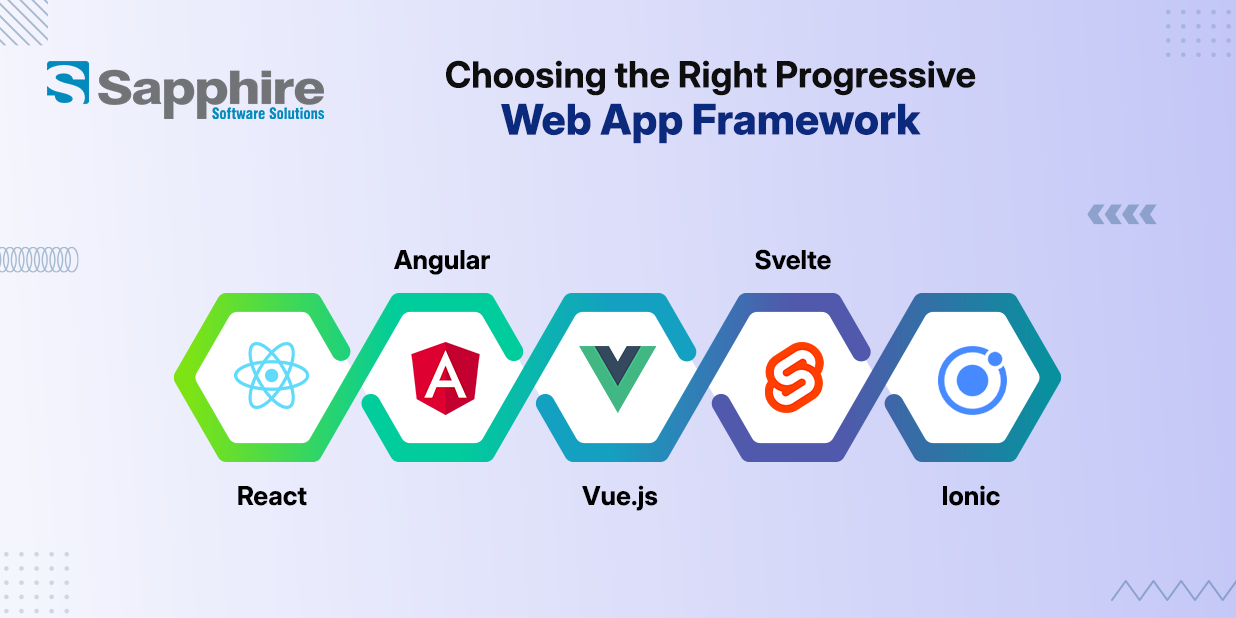
The foundation of every successful PWA lies in selecting the right Progressive Web App Framework. Frameworks simplify the development process by providing pre-built components, templates, and reusable code structures.
Some of the popular frameworks that developers rely on include:
- React: Backed by Facebook, React is renowned for its component-based architecture and speed. It’s ideal for building complex, interactive PWAs.
- Angular: Developed by Google, Angular offers a robust ecosystem for developing scalable and feature-rich PWAs with TypeScript support.
- Vue.js: Known for its simplicity and flexibility, Vue.js is a lightweight option for developers looking for an efficient framework with a gentle learning curve.
- Svelte: A newer framework that compiles code at build time rather than runtime, making PWAs faster and more efficient.
- Ionic: Excellent for teams that want to build hybrid apps using familiar web technologies with a native look and feel.
When choosing a Progressive Web App Framework, businesses should consider their existing tech stack, scalability needs, and desired performance outcomes. The right choice can accelerate time to market, reduce costs, and ensure consistent performance across devices.
How a Progressive Web App Builder Simplifies Development?
A Progressive Web App Builder provides tools and automation to streamline the app creation process. These builders allow developers, even those with minimal experience, to design, develop, and deploy high-quality PWAs with less manual coding.
Here’s how these tools simplify development:
- Template-Driven Creation: Builders come with ready-to-use templates and design blocks, helping developers rapidly build user interfaces.
- Drag-and-Drop Functionality: Simplified UI elements make it easy to customize layouts without writing extensive code.
- Automatic Configuration: Builders handle complex configurations such as service workers, caching strategies, and manifest setups automatically.
- Cross-Platform Compatibility: Apps built using these tools run flawlessly on multiple platforms, ensuring broader reach and consistent user experiences.
- Real-Time Preview and Testing: Developers can test apps instantly during creation, reducing bugs and deployment errors.
For businesses that lack in-house technical expertise, using a Progressive Web App Builder ensures faster deployment and lower costs while maintaining scalability and quality.
Why Businesses Choose Sapphire as Their Preferred Progressive Web App Development Company?
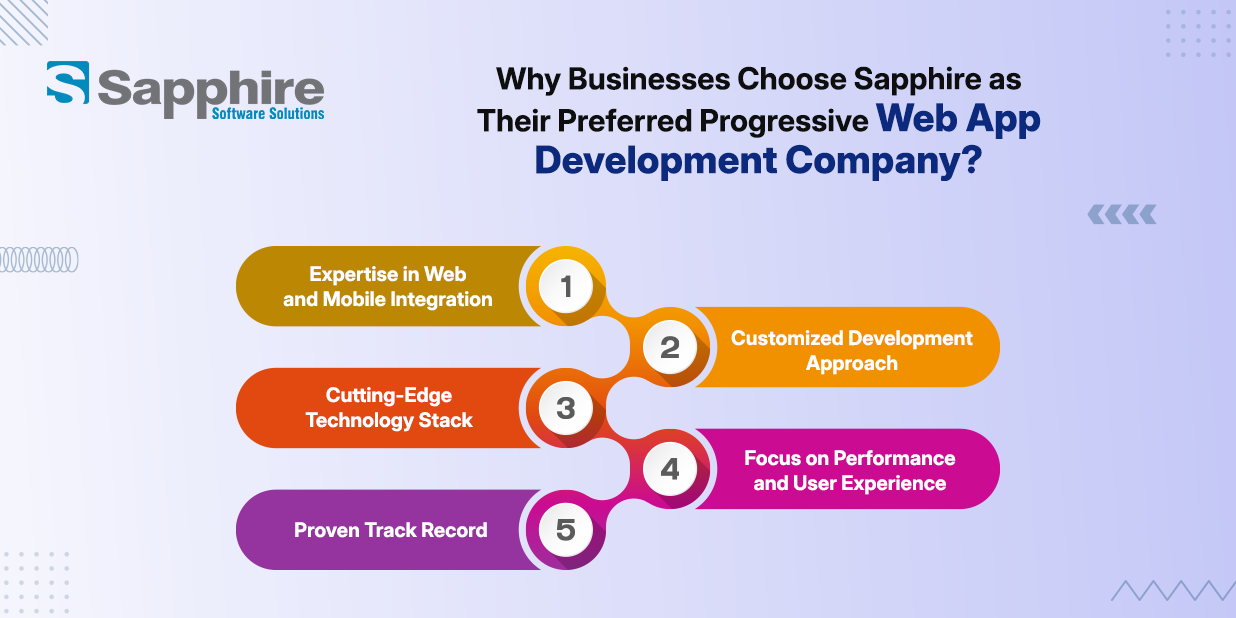
When it comes to adopting next-generation web technologies, partnering with an experienced Progressive Web App Development Company can make all the difference. Sapphire has been at the forefront of digital transformation, helping global clients design and deploy high-performing PWAs that drive measurable results.
Here’s what sets Sapphire apart:
- Expertise in Web and Mobile Integration: Sapphire’s team of developers specializes in merging mobile-like performance with the flexibility of the web, creating dynamic PWAs for industries such as retail, education, and healthcare.
- Customized Development Approach: Every business is unique. Sapphire offers tailored Progressive Web App Development strategies that align with each client’s goals, user base, and growth objectives.
- Cutting-Edge Technology Stack: The company leverages modern frameworks like Angular, React, and Vue, ensuring apps are not only visually appealing but also optimized for speed and security.
- Focus on Performance and User Experience: From lightweight codebases to fast load times, Sapphire ensures that each app delivers superior performance on all devices and networks.
- Proven Track Record: With numerous successful deployments worldwide, Sapphire has built a reputation as a reliable Web App Development Company that helps businesses transition smoothly into the PWA ecosystem.
In a market where users demand speed and reliability, Sapphire delivers innovation backed by expertise, ensuring businesses stay ahead of their competitors.
Conclusion:
The digital world is evolving rapidly, and the line between the web and mobile is blurring faster than ever. Web App Development Company has emerged as the bridge uniting these worlds, offering speed, scalability, offline capability, and superior user experiences at a fraction of the traditional cost.
For organizations that want to modernize their digital presence and future-proof their mobile strategy, investing in a PWA is a strategic move. With their ease of deployment, SEO benefits, and near-native functionality, PWAs are no longer a luxury but a necessity for forward-thinking brands.
By partnering with an experienced team like Sapphire Software Solutions, businesses can leverage the power of this transformative technology to develop an app that is not only efficient and secure but also aligned with the latest trends in web innovation.
The future of mobile is progressive, and the time to embrace it is now.