

















Just last month, I sat across from a client whose launch had gone completely sideways. Their new app, which they'd poured months into, crashed within hours of going live. Customer complaints lit up social media, and the dev team spent the weekend racing to patch bugs under intense pressure. What caused the mess? They’d skipped proper testing in a rush to save time.
Stories like this are far too common in today’s hypercompetitive tech world. Artificial intelligence in Quality Assurance Automation has become more than a buzzword—it now serves as the vital protection between a smooth launch and a reputation-ruining catastrophe. In today's world, where users ditch an app at the first hint of an error or slowdown, solid QA isn't optional—it's a must-have. Throughout the last ten years, I've watched testing change from a tedious hands-on task to a rapid, tech-powered field. If you manage a development team, kick off a new business, or guide product strategy, knowing how to put automated QA into action could make or break your chances of creating a product people adore—or one they remove after 120 seconds.
Why QA Automation is Crucial for the Future of Software Testing?
There was a time when our team could thoroughly test a release in just a couple of days. That’s ancient history now. In 2025, that same workload would take weeks—if it were even doable at all. Software development has exploded in complexity. Gone are the leisurely release schedules. Now, we live in a world of daily deployments, multi-platform support, and constantly evolving features. Manual testing simply can't keep pace anymore. I’ve watched brilliant QA teams struggle under the weight of too many test cases and too few hours. That’s where QA Automation steps in—it allows even small teams to simulate thousands of test cases overnight without lifting a finger.
In today's fast-moving DevOps landscape, Automation QA Engineers are no longer optional—they’re essential. Their ability to build and manage test frameworks, catch subtle bugs early, and handle large-scale regression testing keeps teams ahead of the curve. What I’ve seen repeatedly is that automation delivers what manual testing just can’t: faster feedback loops, broader coverage, and unwavering consistency. The companies staying competitive in 2025 are the ones who treat automation quality control not as an enhancement, but as their foundation for delivery.
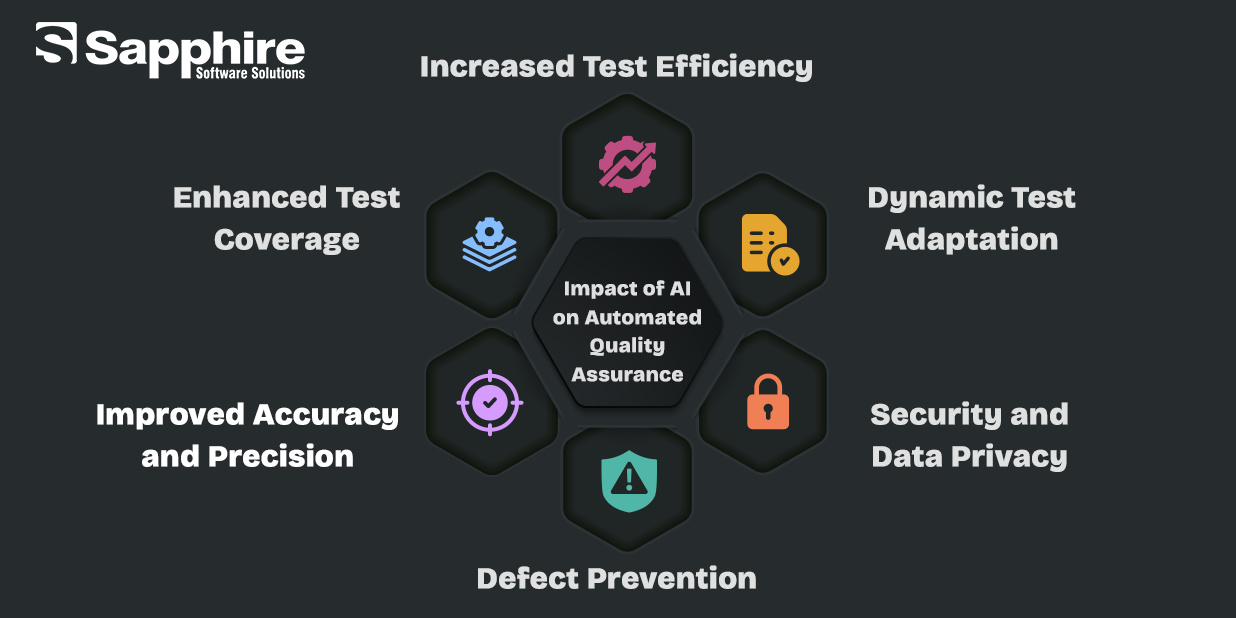
Impact of AI on Automated Quality Assurance:
Not long ago, I worked with a company that cut its testing time by more than 75% by integrating AI into its QA process. Previously, their automated suite took eight hours and routinely broke after minor UI changes. Post-AI, they were done in two hours, and the tests adapted intelligently when the interface evolved.
AI is not just improving Automated Quality Assurance; it’s redefining it. What once required manual tweaks and human attention now runs intelligently in the background. Machine learning in quality assurance models is being trained to recognize code patterns, predict potential breakpoints, and even fix broken tests autonomously.
With AI, automated testing software development is entering a new era. I’ve seen tools prioritize the most relevant tests for each code commit, and others that comb through test data to identify patterns invisible to the human eye. For Automation Quality Analysts, this means shifting from executing tests to making informed decisions using real-time insights. One of the most exciting developments is in visual testing. AI can now detect UI shifts that would take a QA team hours to spot. Performance testing, too, has benefited—predictive monitoring now flags potential bottlenecks long before they reach production. This AI-enhanced Automated Quality Management is not just faster; it’s significantly smarter.
What Are the Key Benefits of Automated Quality Management for Businesses?
Let me give you a practical example: A fintech client I worked with was stuck in a three-week testing loop for each release, and still missing critical bugs. After adopting automation, they slashed that to four days and saw customer complaints drop by 67%. The ROI was obvious within a single quarter.
- Speed and Efficiency: Every business I’ve helped saw their testing cycle time shrink dramatically. One e-commerce firm reduced their testing from two weeks to 36 hours, giving them a real edge in rolling out new features.
- Cost Savings: Yes, the setup costs for QA automation are real—but so are the savings. One enterprise reduced their testing spend by 42% in the first year, simply by automating regression testing and reallocating QA staff to higher-level tasks.
- Consistency and Reliability: Human testers bring variability. Some catch edge cases; others miss them. Automation executes tests with robotic precision—every single time. It removes the guesswork and delivers consistency that manual efforts can’t match.
- Scalability: A client recently needed to test across 18 different browsers and OS configurations. Manually? Impossible. With automation, they now test every combination every night, scaling in ways humans just can’t.
- Better Coverage: One healthcare client I advised expanded their test coverage from 60% to over 95%—without hiring additional QA staff. Automation made it possible to cover edge cases and paths they'd never had bandwidth for before.
- Earlier Defect Detection: Bugs found during production can cost 30x more to fix than those caught early. With automation integrated into their CI/CD pipeline, several of my clients now catch issues within minutes of a developer's commit.
- Here's the deal: When you're committed to top-notch quality, you can't do without expert Automation Quality Engineers to build and keep up your testing plan. These days, automation isn't just a bonus - it's a must-have.
Challenges of Implementing Automated QA Testing:-
I won’t sugarcoat it—getting Automated QA Testing right comes with hurdles. I’ve walked numerous companies through the process, and while the payoff is real, so are the roadblocks.
1. Initial Setup Costs:
One client I worked with invested $85,000 upfront. That covered tools, training, and consultants. It paid off within a year, but getting leadership buy-in for that initial spend was a major hurdle.
2. Tool Overload:
The testing tool market is flooded with options. I once helped a client sift through 14 different tools before finding one that played well with their tech stack. Choosing wrong can waste months.
3. Maintenance Overhead:
Automation isn't “set it and forget it.” Scripts need care. I’ve seen teams ignore maintenance only to watch 70% of their tests break in three months. Maintenance is part of the job—plan for it.
4. Learning Curve:
Whether you’re upskilling your QA team or hiring QA Automation Testers, expect a 3–6-month adjustment period. Productivity doesn’t spike overnight—it builds with practice and support.
5. False Positives and Negatives:
Badly written tests can create noise that drowns out real issues. One team I coached spent weeks chasing “bugs” that weren’t problems. Designing clear, actionable tests takes experience.
6. Incomplete Coverage:
Some scenarios—like UX nuances or highly dynamic third-party integrations—are still tough to automate. That’s why the most effective strategies I’ve seen use hybrid models, combining automation with human oversight.
The silver lining? These bumps can be smoothed with the right guidance. Partnering with experts in QA Automation Testing Services helps avoid many of the common pitfalls from the start.
When Should You Outsource QA Automation Testing Services?
Just last month, I met a dev team building a brilliant fintech solution. They had top-tier coders, but zero experience in automation. Rather than slowing down to learn, they outsourced their QA automation. Six months later, their releases are smoother, and their engineers stayed focused on innovation. Outsourcing QA Automation Testing Services is often the smartest move, especially for small to mid-sized companies. Here’s when it makes the most sense:
- Lack of In-House Talent: Building internal automation knowledge takes time. If your team lacks seasoned Automation QA Engineers, outsourcing gives you instant access to experts who’ve seen it all.
- Deadline Pressure: Racing toward a critical launch? I’ve worked with startups that avoided disaster only by leaning on outsourced QA pros who could ramp up quickly.
- Budget Flexibility: Building an internal QA automation function means full-time hires, tools, and infrastructure. Outsourcing offers predictable costs and lets you scale up or down as needed.
- Focus on Core Strengths: Your developers should be writing features, not test scripts. Outsourcing lets your team stay focused on what moves the business forward.
- Fluctuating Workloads: Some businesses have uneven testing needs. During quiet months, a full QA team may sit idle. Outsourcing lets you pay only when you need support.
At Sapphire Software Solutions, we’ve built our services around flexibility. We offer everything from one-off test automation projects to full-scale, ongoing QA artificial intelligence partnerships. We want to meet your needs instead of locking you into a strict agreement. Thinking about outsourcing? Let’s talk. No pressure—just real guidance based on what’s worked for others in your shoes.
Reasons to Hire QA Automation Testers from Sapphire for Your Next Project:-
I recently reconnected with a client who had left us for a cheaper QA provider. They returned six months later, post-launch failure in hand, saying, “We learned the hard way—QA isn’t where you cut corners.”
Here’s why clients trust Sapphire for QA Automation:
- Hands-On Experience: Our Automation Quality Engineers average over 8 years of real-world experience across finance, healthcare, retail—you name it. When issues arise (and they always do), they know how to respond.
- Tailored Frameworks: Off-the-shelf test plans don’t cut it. We build custom automated software testing frameworks that align with your product’s unique structure, workflows, and technology.
- Smart AI Integration: We're already using AI, not just talking about it. From self-healing test scripts to smarter prioritization, our use of AI has cut false positives by 43% across projects.
- Transparent Communication: You’ll always know what’s happening. Regular updates, clear reports, and honest discussions are part of every engagement. No black-box mystery testing here.
- End-to-End Support: From strategy to maintenance, we handle it all. You’ll never need to juggle multiple vendors or wonder who’s responsible for what.
- Scalable Service: Whether you're a startup or an enterprise, we can grow with you. Our models flex with your needs—no wasted spend or under-resourced crunch times.
We’ve helped everyone from bootstrapped startups to Fortune 500s deliver high-quality software faster. If you’re looking for QA support that moves the needle, Sapphire’s your partner.
Faster releases, fewer bugs—QA automation drives product excellence
Final Thoughts:
I started my journey in tech when manual testing was still the gold standard. Watching the evolution of Quality Assurance Automation has been nothing short of remarkable. In the fast-moving world of 2025 and beyond, automation isn’t a trend—it’s survival.
AI's growth, shorter release schedules, and growing user demands have made Automated Quality Assurance and AI a must-have. Businesses that put off using it often find it hard to keep pace and rush to make up for lost time. The great news? You don’t have to do this alone. With a trusted partner like Sapphire, you can bypass the growing pains and immediately start reaping the benefits of intelligent Automated Quality Management. The most successful businesses I’ve worked with treat quality not as a step, but as a mindset. AI in QA Automation makes that mindset scalable and sustainable.
Ready to make your software better, faster, and more reliable? Let’s talk. Our QA Automation Testers and Automation Quality Engineers are ready to help you deliver the best version of your product—on time, every time.