
















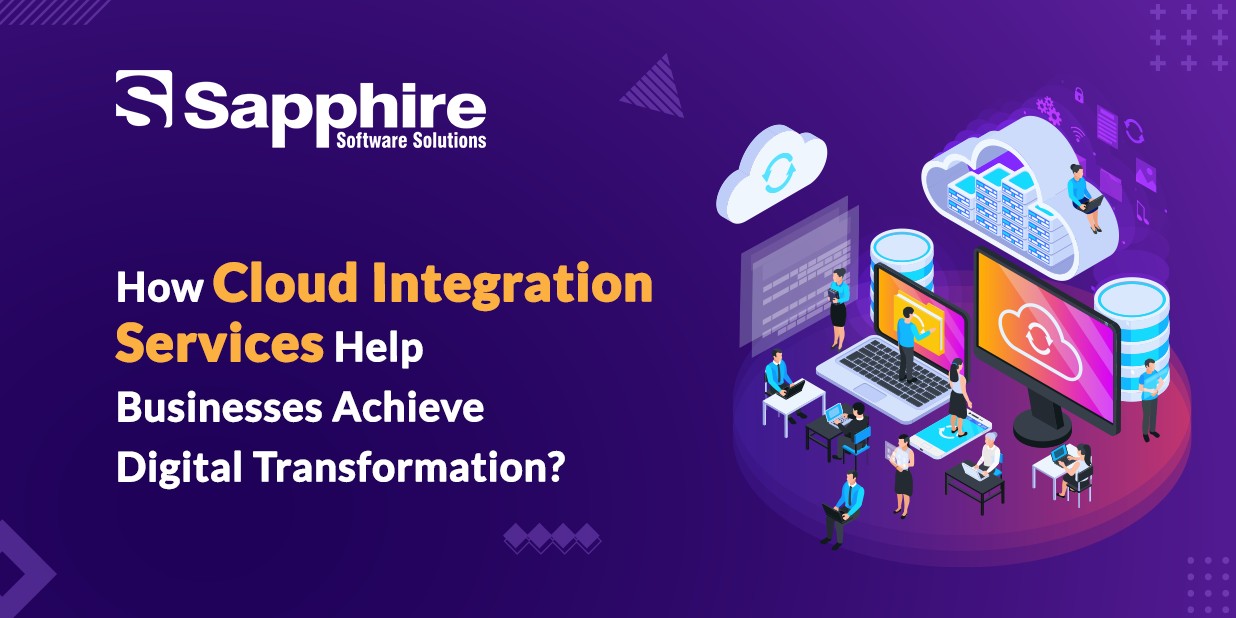
In today’s hyper-connected world, every organization strives to stay agile, data-driven, and customer-centric. Yet, many still struggle with fragmented systems, isolated applications, and disconnected data sources. This lack of integration limits business visibility, slows innovation, and affects decision-making.
That’s where Cloud Integration comes in — not just as a technology upgrade but as the backbone of digital transformation. It unites applications, databases, and workflows into one cohesive ecosystem that allows businesses to operate faster, smarter, and more efficiently.
Digital transformation isn’t only about moving to the cloud. It’s about ensuring that all your cloud-based and on-premises systems work together seamlessly — creating a foundation for automation, scalability, and innovation.
This blog explores how Integration Services drive digital transformation, from strategy and consulting to automation and implementation. Whether you’re planning a migration, upgrading legacy infrastructure, or building a future-ready cloud ecosystem, integration is the key to unlocking your business potential.
What Is Cloud Integration and Why It Matters in Digital Transformation?
Cloud Integration refers to connecting various cloud-based applications and services into a unified digital environment where data flows freely across systems. It bridges the gap between different software tools, platforms, and data repositories so that users and teams can work from a single source of truth.
Imagine your marketing team using HubSpot, your finance department running QuickBooks, and your operations relying on Salesforce. Without integration, these systems act like silos — unable to communicate, exchange data, or trigger automated workflows. With Cloud Integration, these tools become synchronized, allowing every department to access real-time data and insights that enhance performance and decision-making.
In the context of digital transformation, the importance of integration is monumental. Businesses are rapidly adopting cloud-native systems, IoT devices, and AI-driven analytics — all of which generate enormous volumes of data. To harness this data effectively, companies must create a connected digital infrastructure that enables interoperability, automation, and continuous intelligence.
The Role of Cloud Integration Platforms in Modern Businesses:
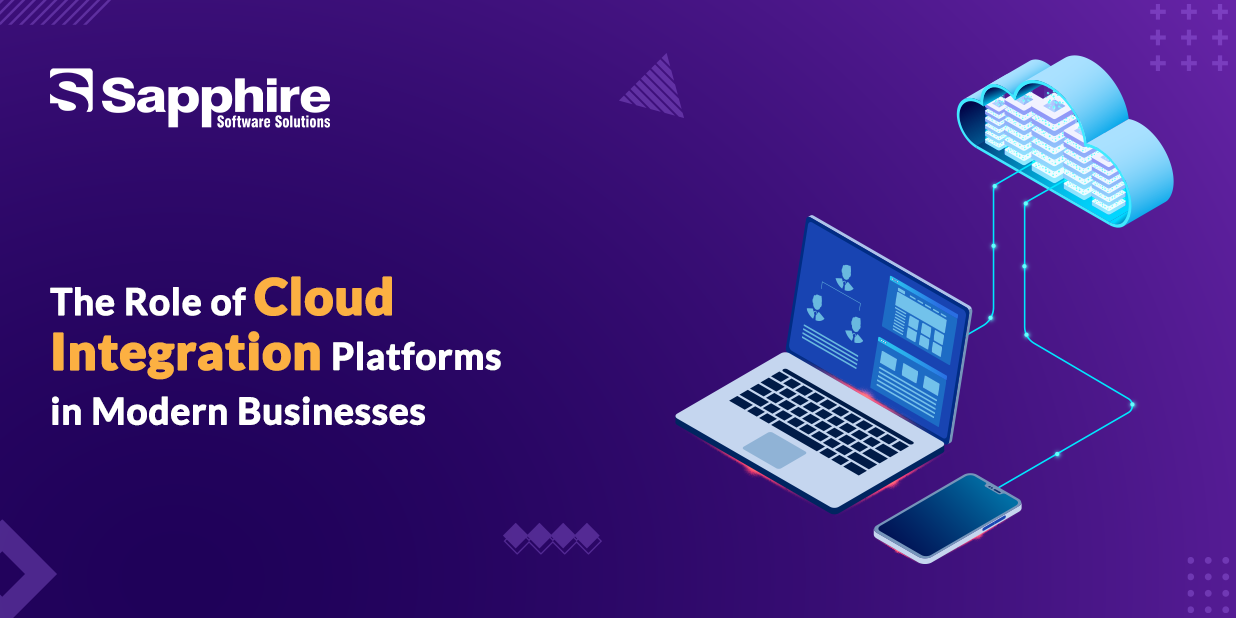
Modern enterprises rely on a complex blend of SaaS tools, on-premises systems, APIs, and third-party services. The role of a Cloud Integration Platform is to connect all these moving parts and make them work together effortlessly.
This Platform acts as the middleware layer that synchronizes applications, orchestrates workflows, and ensures consistent data flow. It simplifies the process of connecting multiple systems, regardless of whether they are public, private, or hybrid clouds.
Key advantages include:
- Unified Data Access: Employees get access to a single, trusted data view across applications.
- Operational Agility: Integration streamlines workflows, enabling teams to respond faster to market changes.
- Infrastructure: As businesses grow, integration platforms allow the easy addition of new tools or services without disrupting existing systems.
- Cost Efficiency: By automating data synchronization and process orchestration, companies save on manual operations and IT overhead.
For instance, Google Cloud Integration solutions help businesses leverage AI and data analytics while maintaining seamless connectivity between cloud and on-prem systems. The result? A more agile and data-driven enterprise that can innovate faster and deliver personalized experiences on a scale.
Ultimately, an integrated ecosystem powered by a robust platform makes your cloud environment more responsive, secure, and future-ready.
Building a Tailored Cloud Integration Solution for Your Business
No two organizations share the same infrastructure, challenges, or growth trajectory — which is why a one-size-fits-all approach doesn’t work. Every company needs a Cloud Integration Solution tailored to its unique business processes, goals, and technology stack.
A well-planned solution begins with a comprehensive assessment of existing systems. The process involves understanding data flows, identifying bottlenecks, and evaluating where automation can bring measurable value. The integration design is then mapped to align with your business objectives — ensuring the right combination of APIs, middleware, and connectors is implemented.
Key elements of a tailored integration include:
- Hybrid Environment Support: Connecting both cloud and on-premises applications for full interoperability.
- Real-Time Data Synchronization: Eliminating delays and ensuring decisions are based on live information.
- Security and Compliance: Ensuring encrypted data exchange and adherence to standards like GDPR or HIPAA.
- Scalability: Allowing the system to adapt as new applications or data sources are added.
Tailored solutions also empower businesses to integrate advanced technologies like AI, IoT, and analytics directly into their workflows. For instance, in retail, integrating e-commerce platforms with inventory and logistics systems enables predictive stocking and faster deliveries. In manufacturing, IoT-enabled integration can track equipment performance in real time, reducing downtime and maintenance costs.
By investing in a strategic integration roadmap, companies can move beyond fragmented systems toward an intelligent, data-connected enterprise capable of thriving in the digital age.
Why You Need a Cloud Integration Consultant?
The journey to digital transformation often involves integrating dozens of applications, APIs, and data pipelines. Without expert guidance, this process can become complex, risky, and time-consuming. That’s where a Cloud Integration Consultant adds value.
It brings deep technical and strategic expertise to design, implement, and optimize integrations across diverse platforms. They assess your business requirements, choose the right integration architecture, and ensure data consistency, scalability, and security throughout the process.
Consultants also help you avoid common pitfalls such as redundant data flows, incompatible APIs, or performance bottlenecks. Their role is not just technical implementation but also ensuring that integration aligns with your broader business transformation goals.
Partnering with experts through Cloud Integration Consulting Services can accelerate project timelines, reduce costs, and deliver measurable ROI. Whether you’re migrating workloads to Google Cloud or connecting legacy ERP systems to SaaS tools, consultants ensure your integration architecture is future-proof and aligned with best practices.
Moreover, having a consultant on board means you can focus on innovation while leaving the heavy lifting of technical orchestration to specialists who know how to build resilient, scalable, and secure integration frameworks.
Streamlining Operations with Cloud Integration Automation Services
In today’s fast-paced digital economy, speed and efficiency define success. Businesses that continue to rely on manual workflows or disconnected data systems often face inefficiencies, delays, and operational errors that restrict growth. To stay ahead, organizations are increasingly turning to Cloud Integration Automation Service — a crucial enabler of modern digital operations.
Automation in Cloud Integration Service ensures that applications, databases, and APIs work together without manual intervention. When integrated properly, it enables real-time data exchange, process synchronization, and automatic workflow execution across different departments.
Imagine this scenario: a retail company receives an online order through its e-commerce platform. Instantly, automation triggers stock updates in the inventory system, initiates shipment tracking, and sends an order confirmation to the customer — all without human input. That’s the power of integration-driven automation.
A robust Cloud Automation Service can help businesses:
- Eliminate Data Silos: Automation ensures that every piece of information flows seamlessly across CRM, ERP, marketing, and analytics platforms, reducing duplication and inconsistency.
- Accelerate Time-to-Market: Automated data flows mean new digital services, applications, or APIs can be launched faster, reducing go-live timelines.
- Enhance Customer Experience: Integrated automation ensures that customer data, order history, and interactions are available instantly across touchpoints.
- Enable Predictive Decision-Making: Automated analytics integration allows businesses to analyze trends, predict outcomes, and act on insights proactively.
When combined with Google Cloud Development Services or similar platforms, automation helps companies adopt intelligent features like AI-based triggers, event-driven APIs, and data orchestration pipelines that make operations more dynamic and adaptive.
At its core, automation transforms cloud integration from a reactive process into a proactive, self-sustaining ecosystem. Instead of spending time troubleshooting, your IT team can focus on optimizing strategies, developing new applications, or innovating emerging technologies.
How to Get Started with Sapphire’s Cloud Integration Service?
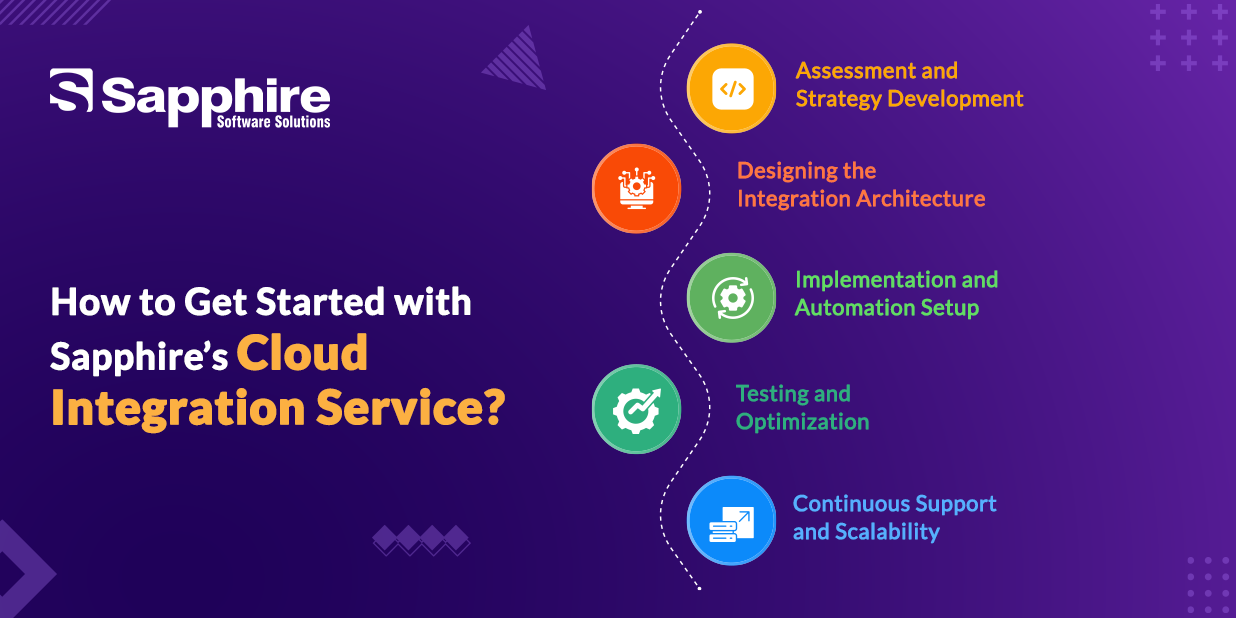
Adopting a new integration approach can seem daunting, but with the right partner, the journey becomes seamless. Sapphire Software Solutions helps organizations of all sizes design, implement, and manage their digital ecosystems through its comprehensive Cloud Integration Service portfolio.
Here’s how you can get started:
1. Assessment and Strategy Development:
The first step is understanding your current landscape. Sapphire’s consultants analyze your existing cloud and on-premises systems, data dependencies, and pain points. The team then designs a tailored strategy that aligns integration goals with your broader business objectives — whether it’s faster data access, improved scalability, or automation.
2. Designing the Integration Architecture:
Sapphire’s expert develops customized architecture using APIs, microservices, and middleware to connect all your applications. The design ensures that integration remains flexible, secure, and compatible with your existing tools. This phase involves choosing the right Cloud Integration Platform, such as MuleSoft, Boomi, or Google Cloud tools, depending on your technology ecosystem.
3. Implementation and Automation Setup:
Once the architecture is finalized, the next stage involves actual integration and workflow automation. Sapphire’s Cloud Integration Automation Service helps synchronize data, eliminate redundancies, and streamline process orchestration. From connecting CRMs and ERPs to automating data pipelines, this phase brings your digital infrastructure to life.
4. Testing and Optimization:
Every integrated ecosystem undergoes rigorous testing to ensure performance, reliability, and compliance. Sapphire engineers validate every connection and data flow to ensure there are no conflicts or security vulnerabilities. Optimization ensures that your integration remains fast, scalable, and aligned with business growth.
5. Continuous Support and Scalability:
Digital transformation doesn’t end at deployment — it evolves. Sapphire provides continuous monitoring, maintenance, and scaling support. As your business adds new tools or expands to new markets, integration grows with you.
Sapphire’s Cloud Integration Consulting Services empower businesses to modernize confidently. Their team of consultants, architects, and developers ensures a smooth transition from legacy systems to agile, cloud-connected environments — without disrupting operations or compromising security.
By choosing Sapphire, businesses not only adopt technology but also gain a partner who understands their digital ambitions and helps turn them into measurable success.
Conclusion:
A Cloud Integration Service is no longer just a technical upgrade — it’s a strategic enabler that transforms fragmented systems into a unified, intelligent ecosystem. By connecting applications, automating workflows, and delivering real-time insights, businesses can operate faster, make smarter decisions, and scale efficiently.
At Sapphire Software Solutions, our service is tailored to your unique needs, ensuring seamless connectivity, enhanced productivity, and measurable business impact. Partner with us to turn your digital infrastructure into a future-ready enterprise that thrives on agility, innovation, and growth.
Ready to transform your business? Contact us today to learn how Sapphire Software Solutions can help you achieve seamless cloud integration and drive digital success.