
















Mobile apps have become the backbone of digital transformation across every industry. From e-commerce and healthcare to fintech and entertainment, businesses rely heavily on apps to improve efficiency, deliver better customer experiences, and build revenue streams. But here’s the truth that every IT entrepreneur needs to understand — the success of any mobile app doesn’t start with coding. It starts with architecture. As mobile technology continues to evolve at lightning speed, future-ready architecture has become the single most important foundation for building secure and efficient digital products.
This blog explores the future of mobile app architecture, emerging trends shaping the industry, and what entrepreneurs should prepare to stay ahead of the innovation curve.
What is Application Architecture?
Before diving deep into emerging trends, it’s crucial to understand what application architecture in the context of mobile development is. In simple terms, it represents the blueprint that defines how different components of an app interact with each other — including UI, backend communication, data flow, integration layers, and deployment strategies. A well-structured architecture ensures flexibility, maintainability, and performance, while a poor one can lead to scalability issues, frequent breakdowns, and expensive redevelopment cycles.
Key Components of Modern App Architecture:
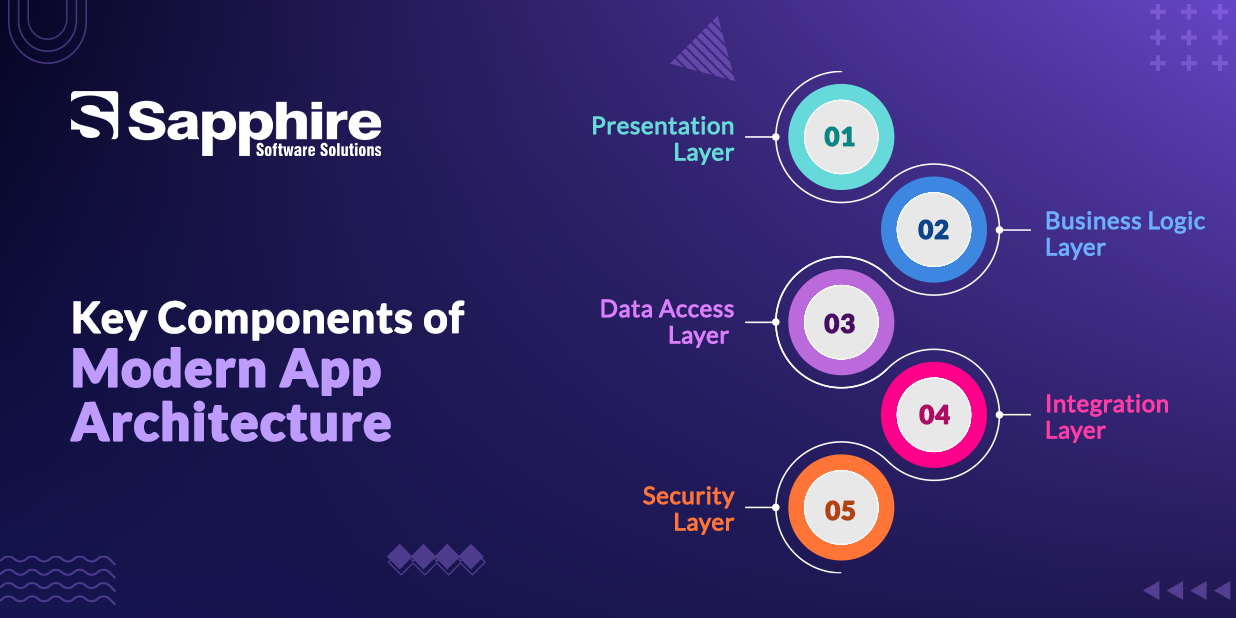
Modern mobile apps are no longer simple tools — they have turned into complex ecosystems. The architecture behind these apps includes core components that influence performance, user experience, and scalability.
- Presentation Layer: This layer focuses on how users interact with the app. Modern UI frameworks aim to deliver seamless, consistent, and responsive experiences across devices.
- Business Logic Layer: This component manages workflows, rules, and logic that dictate how an app operates behind the scenes.
- Data Access Layer: Responsible for securely managing data transactions between the application and its storage systems.
- Integration Layer: With the rise of APIs, apps now integrate with third-party services, cloud platforms, and external databases. Architecture must ensure seamless communication between all these components.
- Security Layer: Modern apps must be safeguarded against threats like data breaches, insecure authorization, and API vulnerabilities.
A flexible architecture ensures your mobile app is future-proof and easy to scale as your business grows.
Evolution of Mobile Application Development Architecture:
Mobile application development has come a long way. Earlier, apps were built using rigid monolithic structures where every feature was interconnected. While this approach worked for simple applications, it posed tremendous challenges as apps became more complex.
Over the years, architecture has evolved significantly:
- Monolithic to Modular: Developers transitioned from large, hard-to-maintain codebases to modular components that make updates, scaling, and debugging easier.
- Native to Cross-Platform: Thanks to rapid technological advancements, cross-platform solutions emerged to speed up development while lowering costs.
- API-Driven Ecosystems: Apps today depend heavily on APIs for communication, data sharing, and integrations, enabling more dynamic and feature-rich user experiences.
- Cloud-Based Architectures: With cloud services, apps can now store, scale, and process vast amounts of data without relying heavily on device memory.
Each evolution stage has added a new dimension to app efficiency, power, and scalability, leading us into a future defined by intelligent and autonomous app ecosystems.
Top Mobile Application Frameworks Shaping the Future:
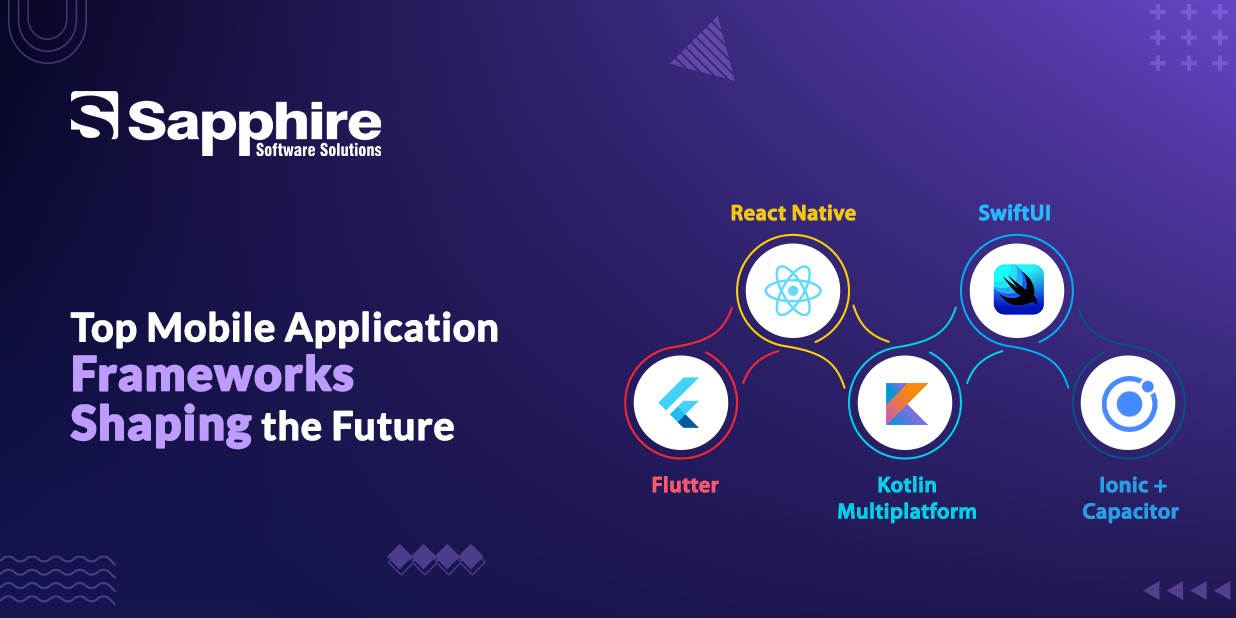
A strong Mobile Application Framework determines app performance, development speed, and long-term scalability. Some frameworks gaining dominance for future-ready architecture include:
- Flutter: Loved for its high performance and native-like UI, Flutter is expected to power the next generation of cross-platform apps.
- React Native: Powered by Meta, React Native offers exceptional community support and flexibility, making it ideal for startups and enterprise applications alike.
- Kotlin Multiplatform: This framework is increasingly becoming popular as it allows developers to share logic while writing native UI layers independently.
- SwiftUI: A modern declarative framework from Apple, SwiftUI is revolutionizing iOS development with faster workflows and clean code.
- Ionic + Capacitor: A hybrid approach is ideal for teams that want rapid development and web-based flexibility.
These frameworks are reshaping how businesses build high-performing apps for a competitive future.
Role of Mobile App Information Architecture in User Experience:
A powerful app isn’t only defined by its technology — it’s defined by usability. That’s where Mobile App Information Architecture comes into play. It ensures that the content, navigation, features, and data within the app are organized logically and intuitively.
A well-structured information architecture helps:
- Improve user satisfaction
- Reduce navigation friction
- Increase task completion speed
- Enhance accessibility for all user types
- Support a smooth multi-screen journey
When users say an app is “easy to use,” they’re unknowingly referring to the strength of its information architecture. As apps become more feature-rich, the role of IA becomes even more critical to reducing cognitive load and improving engagement.
Future Trends in Mobile Application Architecture:
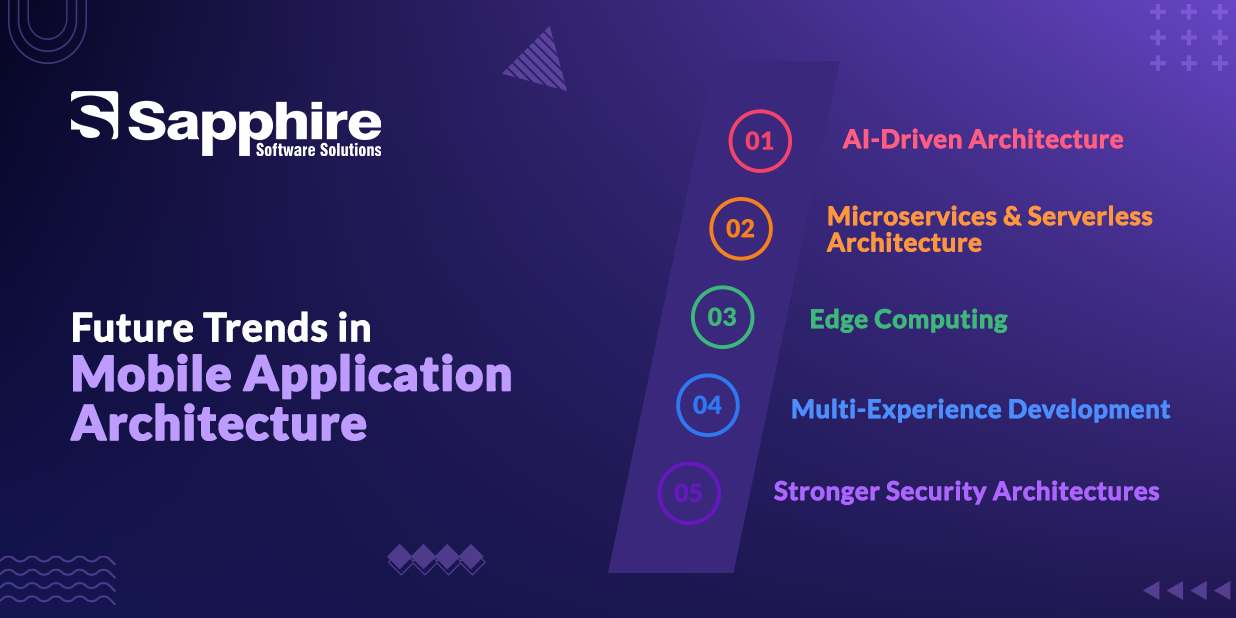
The future of app development is being shaped by intelligent automation, cloud-native design, and advanced computing technologies.
Here are the top trends IT entrepreneurs must watch:
- AI-Driven Architecture: Apps will increasingly use AI to optimize performance, personalize user journeys, and automate workflows. Architecture will need built-in support for ML models, predictive analytics, and real-time processing.
- Microservices & Serverless Architecture: Microservices enable independent development and deployment of each feature. Serverless computing reduces infrastructure costs and improves scalability.
- Edge Computing: To deliver high-speed experiences, apps will start processing data closer to the user, reducing latency and supporting IoT-heavy environments.
- Multi-Experience Development: Future apps won’t be limited to mobile screens. They’ll extend into wearables, AR/VR devices, smart TVs, and even automotive displays.
- Stronger Security Architectures: With increasing cyber threats, future architectures will adopt zero-trust design, biometric authentication, secure APIs, and AI-powered threat detection.
- Composable Architecture: Developers will assemble apps using plug-and-play components, reducing development time while maintaining high code quality.
These trends will redefine how businesses design, scale, and maintain modern mobile applications.
When Should You Hire Dedicated Mobile Application Developers for Architecture Setup?
Building a high-performance app starts with the right architecture — and this step determines up to 60% of your app’s long-term success. That is why businesses often choose to Hire Dedicated Mobile Application Developers when:
- You’re planning a large-scale, feature-rich app
- You want to reduce future technical debt
- You want industry-level performance, security, and scalability
- Your in-house team lacks architectural expertise
- You’re integrating AI, IoT, or AR capabilities
- You plan to support multiple platforms with shared code
Expert developers ensure your architecture is ready for future trends and scalable enough to handle evolving business demands.
Why IT Entrepreneurs Should Partner With Sapphire for Future-Ready App Architecture?
As a trusted Mobile Application Development Company, Sapphire Software Solutions brings years of experience, advanced technology expertise, and industry-specific knowledge to help you build a future-ready digital product.
Entrepreneurs choose Sapphire for:
- Architecture-Driven Development Approach: Every project starts with deep architectural planning to ensure performance, scalability, and long-term stability.
- Expertise in Next-Generation Technologies: From AI and IoT to microservices and cloud-native design, Sapphire builds apps using the latest innovations.
- End-to-End Mobile Application Development Services: Our services cover consulting, architecture design, UI/UX, development, cloud integration, testing, and ongoing support.
- Proven Experience Across Industries: Our team has delivered highly robust apps for startups, enterprises, and government organizations.
- Transparent Communication & Agility: We follow a collaborative development model that keeps you updated at every stage.
For entrepreneurs who want an app that’s powerful, future-ready, and built for scalability — Sapphire Software Solutions is the ideal partner.
Conclusion:
The future of Mobile Application Architecture is fast-evolving, intelligence-driven, and deeply integrated with cloud and edge technologies. For IT entrepreneurs, understanding these trends is no longer optional — it’s essential. A strong architecture sets out the foundation for performance, scalability, user experience, and long-term success. As the digital landscape becomes more competitive, businesses must adopt future-ready development frameworks, intelligent architectural patterns, and expert engineering support.
By partnering with an innovative technology leader like Sapphire Software Solutions, you can ensure your mobile app is built for the future — not just today.