
















Trading app development is no longer limited to large financial institutions. With the rapid growth of digital investing, stock trading, cryptocurrency, and wealth management platforms, FinTech startups and entrepreneurs are increasingly building custom trading applications to capture market demand and scale their businesses. Partnering with the right technology experts or a trusted Stock Trading App Development Company plays a critical role in creating secure, compliant, and high-performance platforms that meet modern investor expectations.
One of the most important questions business leaders face is: How much does Trading app development cost in 2026, and what return on investment (ROI) can it deliver? Development costs vary based on factors such as feature complexity, platform selection, regulatory compliance, security standards, third-party integrations, and scalability requirements. From MVP trading apps with core functionalities to advanced solutions offering real-time analytics, AI-driven insights, and multi-asset trading, understanding the cost structure is essential for effective financial planning.
For FinTech startups, a trading app should be viewed as a long-term revenue-generating asset rather than a one-time expense. When strategically designed, it can deliver strong ROI through transaction fees, subscription models, premium features, and strategic partnerships—while also building user trust and brand credibility. This blog explores the key budget considerations and ROI potential for trading app development, helping entrepreneurs make informed, growth-focused investment decisions.
What Is a Trading App and Why FinTech Startups Are Investing in It?
A trading app is a mobile or web-based platform that allows consumers to buy, sell, and deal with financial assets such as stocks, mutual funds, property, cryptocurrencies, and ETFs in real time. These apps connect consumers straight to financial markets, contributing features like live price tracking, portfolio auditing, market information, analytics, and stable transactions—all from a single connect.
Fintech mobile app development cost are heavily investing in trading apps because of the increasing demand for digital-first financial services. Consumers expect speed, availability, and transparency; that traditional trading systems often fail to give. Trading apps remove paperwork, decrease the share of profit costs, and make it accessible to beginners as well as experienced traders.
Another major reason for this expenditure is technology-compelled scalability. With AI-powered visions, data analytics in fintech, and cloud foundations, FinTech startups can personalize consumer experiences, control risk efficiently, and expand speedily across regions. Features like automatic trading, robo-advisory services, and real-time alerts grow user engagement and memory.
Average Trading App Development Cost: What Startups Should Expect
Building a trading app is a crucial investment for startups entering fintech. Understanding cost operators helps in planning budgets realistically and preventing overruns.
- Core Features Impact Cost: Basic features include user registration, portfolio tracking, real-time market data, and secure transactions. Advanced tools like AI-based insights, charting, and alerts significantly increase the Trading APP Development Cost.
- Technology Stack: Choice of principle (iOS, Android, or both), backend design, APIs, and third-party integrations personally influence problems and timelines.
- Design & User Experience: Intuitive UI/UX design is critical in trading apps. A clean, responsive interface improves adoption but adds to the overall AI-powered trading app cost.
- Security & Compliance: Encryption, two-determinant certification, and regulatory agreement are non-negotiable. These elements ensure trust but require specialized expertise.
- Team & Location: Costs of change based on either growth being done in-house, outsourced, or offshore, and the knowledge level of the team.
- Ongoing Expenses: Post-begin maintenance, modernization, and measuring should continually be included in the startup cost plan.
Key Factors Affecting Trading App Development Cost:
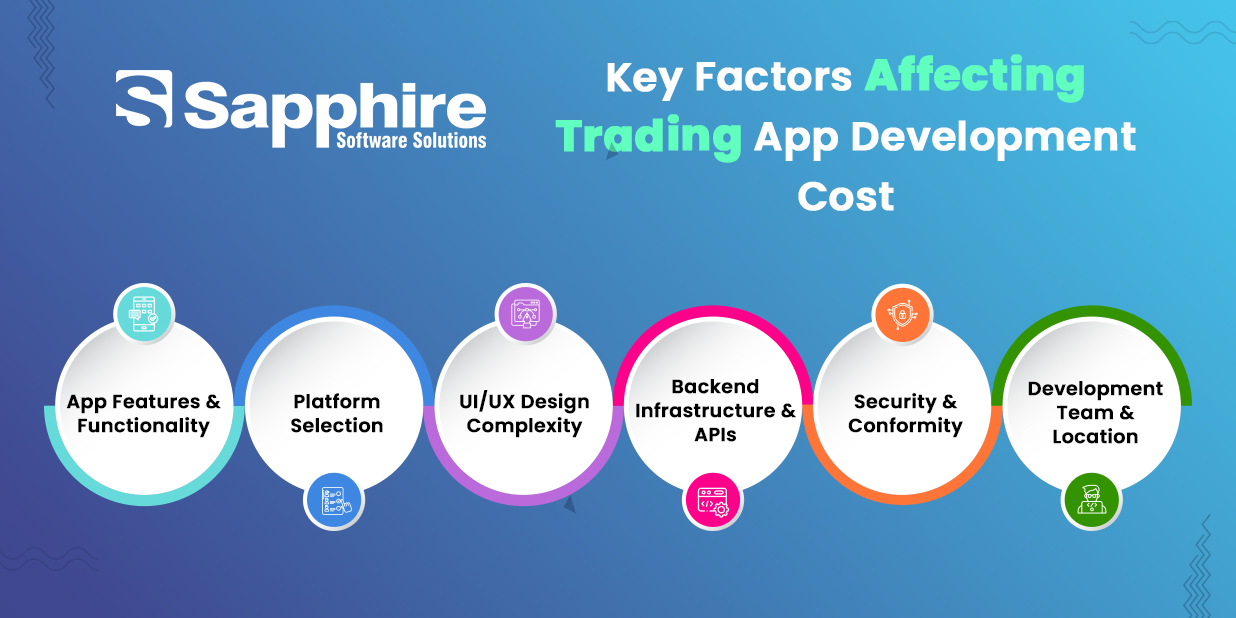
Trading app development cost depends on app complexity, features, security standards, real-time data integration, platform choice, UI/UX design, regulatory compliance, development team location, maintenance needs, and scalability requirements.
App Features & Functionality:
The number of features promptly impacts development cost. Basic features like user registration, dashboards, and order placement cost less, while leading devices such as real-time charts, AI-located analytics, and automated trading incur higher expenses.
Platform Selection:
Evolving for a single platform (Android or iOS) is more inexpensive than building a cross-platform or multi-platform app, which demands additional resources and experimentation.
UI/UX Design Complexity:
A simple, clean connect costs less, whereas custom animations, shared charts, and excellent design factors raise development time and cost.
Backend Infrastructure & APIs:
Stable servers, real-time data feeds, and third-party financial APIs considerably influence overall cost due to licensing and support requirements.
Security & Conformity:
Trading apps demand strong encryption, managerial compliance, and deception prevention, which increase development costs but are non-debatable.
Development Team & Location:
Hiring experienced developers from cost-effective regions can help build a Low-Cost Trading App without compromising quality.
Trading App Development Cost in India: Pricing & Charges Explained
Trading apps have enhanced a core part of India’s fintech ecosystem, and understanding the Trading App Development Cost in India is important before starting a project. In India, development is cost-effective due to skillful talent and ambitious pricing; costs change based on features, protection, and consent needs.
Key Pricing & Charges:
App Complexity:
- Basic trading app (user login, watchlist, order placement): Approximately ₹25–40 lakh
- Mid-level app (charts, portfolio, real-time data): Roughly ₹45–70 lakh
- Advanced app (AI visions, algo trading, analytics): Approximately ₹80 lakh–₹1.5 crore+
Platform Selection:
- Android or iOS (single platform): lower cost
- Cross-platform or web + mobile: increases budget by 20–30%
UI/UX Design Charges:
- Simple UI: ₹3–6 lakh
- Advanced, trader-friendly UI: ₹8–12 lakh
Backend & API Integration:
- Market data APIs, payment gateways, broker APIs: ₹10–25 lakh depending on providers
Security & Compliance:
- Encryption, 2FA, audit logs, SEBI-aligned practices: ₹8–15 lakh
- A major component of Trading App Charges in India
Maintenance & Support:
- Annual maintenance: 15–20% of total development cost
Trading App Development Cost in India depends on outlook, protection, and scalability. Planning features carefully helps control Trading App Charges in India while ensuring long-term reliability.
Hire Trading App Developers: Cost & Engagement Models
When businesses plan to build a stable and high-efficiency trading platform, the decision to hire Trading App Developers plays an important role in project advancement. Understanding pricing structures and big data in fintech models helps control budgets while securing technical excellence and consent.
- Cost Factors: Project Complexity: Cost factors in trading app development have lower price points, whereas those featuring live performance metrics, AI-driven insights, and unified multi-exchange access result in increased expenses.
- Freelance Developers: $20–$80/hour depending on expertise and region.
- In-House Team: Salaries range from $50,000–$120,000/year for full-time developers.
- Development Agencies: Project-based costs can vary between $15,000–$100,000+, depending on complexity and features.
- Developer Expertise: Highly experienced developers skilled in finance technology and blockchain command greater per-hour fees compared to less experienced teams.
- Technical Foundation: Expenses fluctuate depending on whether the build is for iOS, Android, a unified cross-platform approach, the chosen server-side structure, and external application programming interface connections.
- Protection & Consent: Achieving encryption, regulatory conformity, and the avoidance of discovery increases overall pricing.
Engagement Models & Pricing Structure:
- Time and Effort Model: This works well for short or evolving tasks, where you only pay for the programming hours used.
- Fixed Cost Structure: Ideal for endeavors where the requirements are clearly defined, providing predictable expenses and timelines.
- Dedicated Team Setup: A monthly fee retains a complete engineering unit, ensuring scalability and ongoing collaboration.
- Hybrid Scheme: Combines set fees with hourly billing to allow for flexibility and smart resource allocation.
Why Choose Sapphire as Your Trading App Development Company?
Sapphire Software Solutions is prominent as a Leading Trading APP Development Company, contributing contemporary solutions tailor-made to meet diverse market needs. Their knowledge assures that every app they create is stable, adaptable, and convenient, providing seamless experiences for both novice and professional traders.
With Sapphire’s Trading APP Development Services, businesses can choose leading features such as real-time market updates, AI-powered analytics, and perceptive dashboards. Their team targets conceiving strong platforms that handle high transaction volumes while asserting data integrity and supervisory compliance.
Partnering with us values innovation, precision, and client satisfaction. Whether your goal is to launch a new trading platform or enhance an existing one, Sapphire’s end-to-end development approach ensures your app stands out in the competitive trading landscape.
Conclusion:
For FinTech startups and entrepreneurs, trading app development is a strategic investment that must be aligned with long-term business goals. Success depends on careful planning, cost optimization, regulatory readiness, and delivering a secure, seamless user experience. By focusing on scalable architecture and value-driven features, businesses can control development costs while positioning their platform for sustainable growth and market relevance.
At Sapphire Software Solutions, we believe a well-executed trading application is more than a digital product—it is a revenue-generating business asset. With the right technology strategy and execution approach, startups can unlock new revenue streams, strengthen user trust, and gain a competitive edge in the evolving FinTech ecosystem.