















Every year, millions of mobile applications are launched, yet only a small fraction ever becomes financially successful. The difference between apps that fade away and those that generate steady revenue usually comes down to how well they apply Mobile App Monetization from day one.
Many founders focus on downloads and user engagement but forget the most critical question: how will the app sustain itself financially? Understanding how to monetize mobile app ideas early allows developers to align features, user experience, and pricing models with long-term business goals.
In this blueprint, we will walk through how smart monetization choices, the right technology partners, and thoughtful planning can transform a simple app into a profitable digital product.
Why Most Apps Fail to Make Money?
Most apps don’t fail because they lack innovation — they fail because they lack a revenue strategy. Many developers launch apps hoping growth alone will lead to profits, but without structured mobile app monetization strategies, growth simply creates more costs.
Another common mistake is relying on a single income source. Apps that depend only on ads or one-time purchases often struggle when user behavior shifts. Sustainable success comes from mixing different Mobile App Monetization Models that balance user experience with revenue generation.
Additionally, poor technical execution also plays a role. Slow apps, poor analytics, and weak payment systems prevent even the best ideas from generating income.
Choosing the Right Monetization Strategy for Your App:
Selecting the right approach is the backbone of any successful Mobile App Monetization plan. Not all apps should charge users upfront, and not all apps benefit from advertising.
Some of the most effective mobile app monetization strategies include:
Freemium models:
This model allows users to access core features for free while paying for advanced functionality. It helps attract a large user base first and then converts the most engaged users into paying customers.
Subscription-based access:
Users pay a recurring fee to unlock continuous access to premium features or content. This creates predictable monthly revenue and builds long-term relationships with customers.
In-app purchases:
This approach lets users buy digital goods, credits, or feature upgrades directly inside the app. It works especially well when users are emotionally invested in improving their experience.
Advertising combined with optional upgrades:
Apps earn revenue by displaying ads while offering paid plans to remove them. This balances free user growth with premium user conversions for higher overall profitability.
Your decision should depend on your audience, industry, and long-term goals. For example, a fitness or productivity app may perform better with subscriptions, while gaming apps often thrive with in-app purchases.
Understanding how to monetize mobile app offerings also requires testing and refinement. What works for one region or demographic may not work for another.
Top Platforms That Can Boost Your App Income:
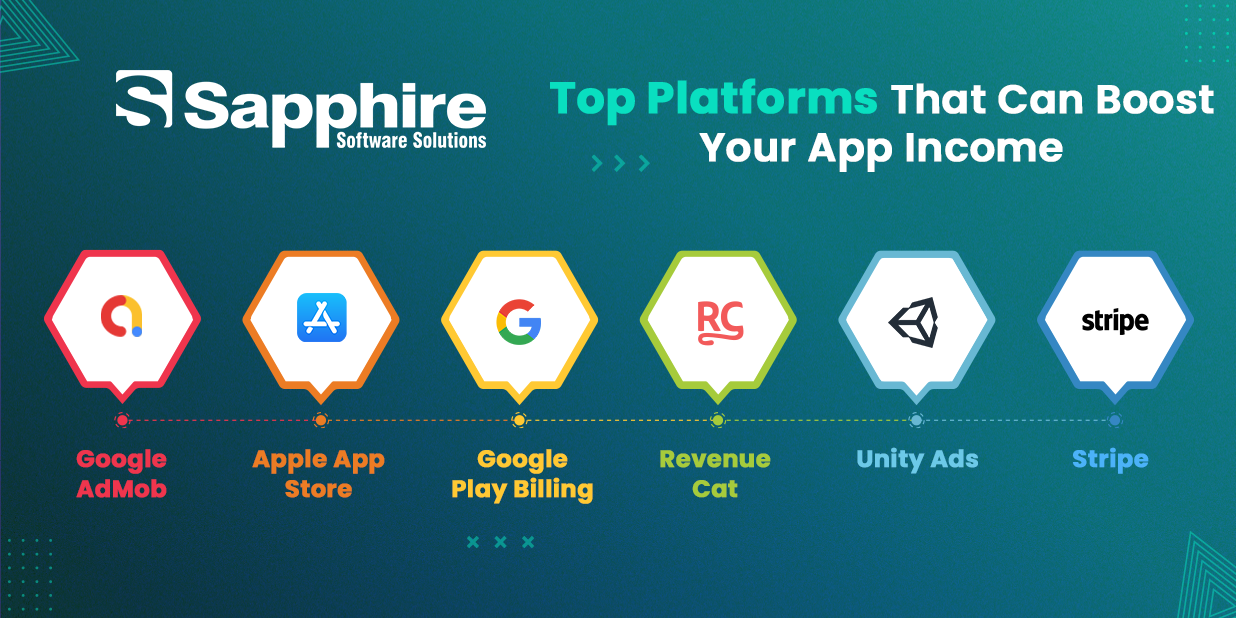
The right technology stack plays a powerful role in how much revenue your app can generate. By integrating a strong app monetization platform, you can automate billing, improve ad performance, and gain valuable insights into user spending behavior—allowing you to scale profits without disrupting the user experience.
- Google AdMob: Google AdMob helps app owners generate revenue by displaying targeted ads to users based on behavior and interests. It uses Google’s massive advertiser network to maximize fill rates and optimize earnings without hurting user experience.
- Apple App Store: Apple’s in-app purchase system allows apps to sell subscriptions, digital content, and premium features securely. It offers a smooth checkout experience, increasing user trust and conversion rates on iOS devices.
- Google Play Billing: This platform enables Android apps to charge users for subscriptions, one-time purchases, and premium upgrades.
- RevenueCat: RevenueCat simplifies subscription management and revenue tracking across both iOS and Android.
- Unity Ads: Unity Ads allows developers, especially in gaming apps, to earn revenue by showing rewarded video ads. Users can watch ads in exchange for in-app rewards, keeping engagement high while increasing profits.
- Stripe: Stripe enables secure and flexible payment processing for apps that sell products or services directly.
How Hiring Expert Developers Can Skyrocket Your App Profits?
A great monetization plan fails without great execution. This is where Hire Mobile App Developers become a revenue decision rather than just a technical one.
Experienced developers build apps that:
- Load faster
- Handle secure payments
- Track user behavior accurately
- Integrate monetization tools seamlessly
When you work with teams offering Best Mobile App Development Services, they don’t just build features — they design revenue engines. They understand how to embed monetization into UX, optimize checkout flows, and reduce user drop-off.
The right development team can easily double or triple the earning potential of an app simply by building it the right way.
Avoiding Common Monetization Pitfalls Without Losing Users:
One of the biggest risks in Mobile App Monetization is pushing users away while trying to make money.
Overloading apps with ads, hiding features behind paywalls, or forcing subscriptions too early can destroy trust. Users should feel that payments unlock value — not that they are being punished.
Effective mobile app monetization strategies respect user experience while guiding users naturally toward paid options. Transparency, fair pricing, and smooth payment flows keep engagement high while revenue grows.
Apps that balance these elements build loyal users who willingly pay.
Why Work with a Top Mobile App Development Company for Successful App Monetization?
Working with the Leading Mobile App Development Company is often the difference between an average app and a market leader.
These companies understand how design, development, and monetization fit together. They know which features encourage spending, how to structure pricing tiers, and how to integrate the best app monetization platform for long-term scalability.
When you partner with a team that offers Best Mobile App Development Services, you don’t just get an app — you get a business-ready digital product built for profit.
Conclusion:
From a business standpoint, mobile app monetization is not just a technical implementation — it is a long-term revenue architecture decision. Companies that plan monetization at the strategy stage consistently outperform those that treat it as a post-launch experiment. For Sapphire, this is a strong market positioning opportunity. By showcasing your expertise in revenue modeling, subscription optimization, in-app purchase strategy, and scalable payment integrations, you demonstrate that your team builds apps with profitability in mind. This approach attracts serious founders and enterprises who are not just looking for development support but for a growth-focused technology partner.
By aligning innovation with measurable ROI, Sapphire can confidently position itself as a Top Mobile App Development Company in USA that delivers business-driven digital products. Your messaging should clearly communicate that you design apps as revenue engines — optimized for user retention, recurring income, and long-term scalability. When prospects see that you combine technical excellence with monetization intelligence, they are more likely to convert into high-value leads, long-term clients, and strategic partnerships that fuel sustainable business growth.