
















Artificial intelligence is no longer a futuristic concept—it is a practical tool that businesses are actively using to improve operations, enhance customer experiences, and drive growth. However, building successful AI solutions is not just about creating models. It requires a structured and well-managed process from start to finish. This is where the Machine Learning Lifecycle becomes essential.
Many organizations jump into AI projects expecting quick results, only to face challenges like poor model performance, inconsistent data, or deployment issues. These problems often arise because the machine learning lifecycle is not properly understood or implemented.
A well-defined lifecycle ensures that every stage—from data collection to model deployment and monitoring—is handled systematically. It helps teams build reliable, scalable, and efficient solutions that deliver real business value.
In this blog, we will explore the complete lifecycle of machine learning, its importance, and how businesses can use it to achieve long-term success.
What is the Machine Learning Life Cycle?
The machine learning lifecycle refers to the end-to-end process of building, deploying, and maintaining machine learning models. It includes multiple stages such as data collection, data preparation, model training, evaluation, deployment, and monitoring.
Unlike traditional software development, machine learning relies heavily on data. The quality of the data directly affects the model's performance. This makes data management a critical part of the lifecycle.
Another key aspect is iteration. Machine learning models are not built once and left unchanged. They require continuous improvement based on new data and changing conditions.
The Machine Learning Development Life Cycle provides a structured framework that helps teams manage these complexities effectively. By following a clear process, businesses can reduce risks and improve the success rate of their AI initiatives.
Life Cycle of Machine Learning: Key Stages Explained
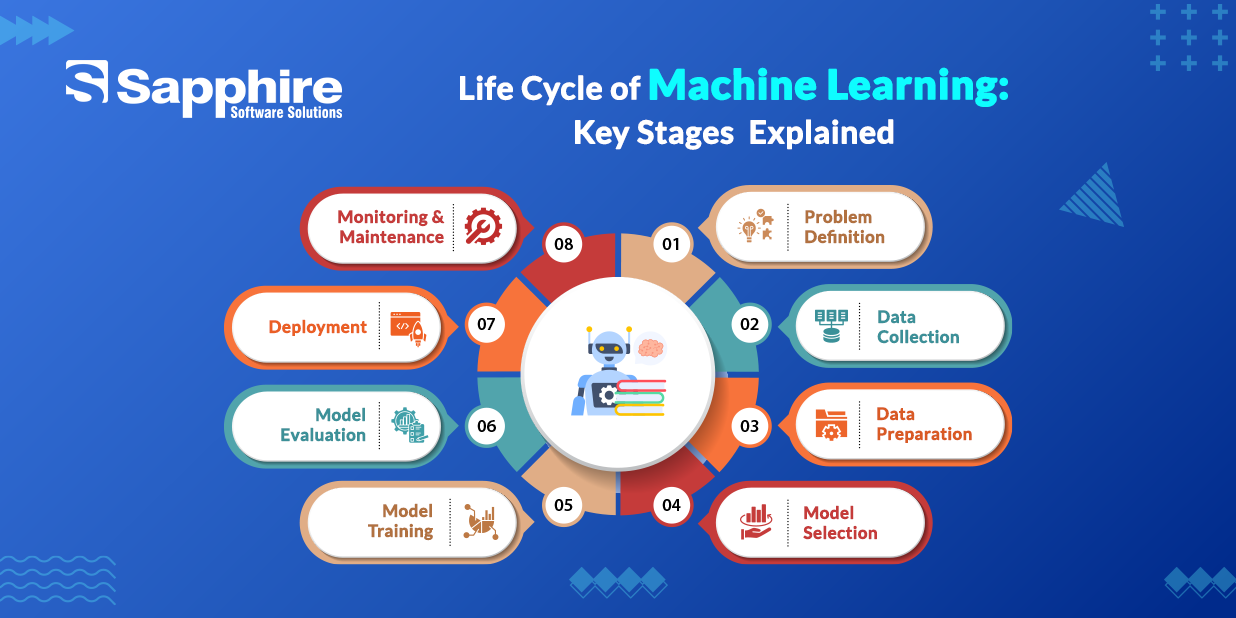
The Life Cycle of Machine Learning consists of several interconnected stages, each playing a vital role in the overall success of the project.
- Problem Definition: The first step is to clearly define the business problem. Without a well-defined objective, it is difficult to build an effective model.
- Data Collection: Data is the foundation of machine learning. This stage involves gathering relevant data from various sources such as databases, APIs, and user interactions.
- Data Preparation: Raw data is often incomplete or inconsistent. Data cleaning and preprocessing ensure that the dataset is suitable for model training.
- Model Selection: Choosing the right algorithm is crucial. Different models work better for different types of problems, so careful selection is required.
- Model Training: During this stage, the model learns patterns from the data. The quality of training directly impacts the accuracy of predictions.
- Model Evaluation: The model is tested using validation data to measure its performance. Metrics such as accuracy, precision, and recall are used to evaluate results.
- Deployment: Once the model meets performance requirements, it is deployed into a production environment where it can generate real-world outputs.
- Monitoring and Maintenance: After deployment, the model must be monitored continuously. Changes in data patterns may require updates or retraining.
This structured approach ensures that every step is carefully managed, leading to better outcomes.
Machine Learning Model Lifecycle vs Traditional Development:
The Machine Learning Model Lifecycle differs significantly from traditional software development processes.
In traditional development, applications follow a predictable path—developers write code, test it, and deploy it. Once deployed, the system remains relatively stable unless updates are required.
In contrast, machine learning systems are dynamic. Their performance depends on data, which can change over time. This means that models need to be continuously updated and monitored.
Another key difference is experimentation. Machine learning involves testing multiple models and approaches to find the best solution. This iterative process is not as common in traditional development.
The concept of Machine Learning Model Lifecycle Management becomes critical here. It ensures that models are properly tracked, versioned, and maintained throughout their lifecycle.
Understanding these differences helps businesses adopt the right strategies for managing machine learning projects.
Boost Accuracy, Speed, and ROI with the Machine Learning Lifecycle
The Machine Learning Lifecycle is not just a technical framework—it is a strategic tool that can drive business success.
It ensures that every stage of AI development is structured, measurable, and aligned with business goals. This approach helps organizations maximize the value of their AI investments over time.
Improved Accuracy and Reliability:
A structured lifecycle ensures that models are built using high-quality data and tested thoroughly. This reduces errors and improves the consistency of outputs across different use cases. As a result, businesses can rely on AI systems for critical decision-making processes.
Faster Time-to-Market:
By following a clear process, teams can reduce delays and streamline development workflows. This structured approach eliminates confusion and speeds execution across teams. It enables businesses to launch AI solutions faster and stay ahead of competitors.
Better Scalability:
A well-managed lifecycle allows businesses to scale their AI initiatives efficiently. Models can be updated, retrained, and expanded as businesses need to evolve to ensure long-term adaptability without rebuilding systems from scratch.
Reduced Risks:
Proper lifecycle management minimizes risks such as data inconsistencies and model failures. It also ensures smoother deployment and better system integration. This reduces operational disruptions and improves overall project success rates.
Enhanced Decision-Making:
Machine learning models provide data-driven insights that support smarter decisions. These insights help businesses identify trends, predict outcomes, and optimize strategies. This leads to improved efficiency and better business performance.
The Machine Learning Life Cycle in AI plays a crucial role in ensuring successful outcomes. It helps organizations build reliable systems that deliver measurable value consistently.
Common Challenges in Machine Learning Lifecycle:
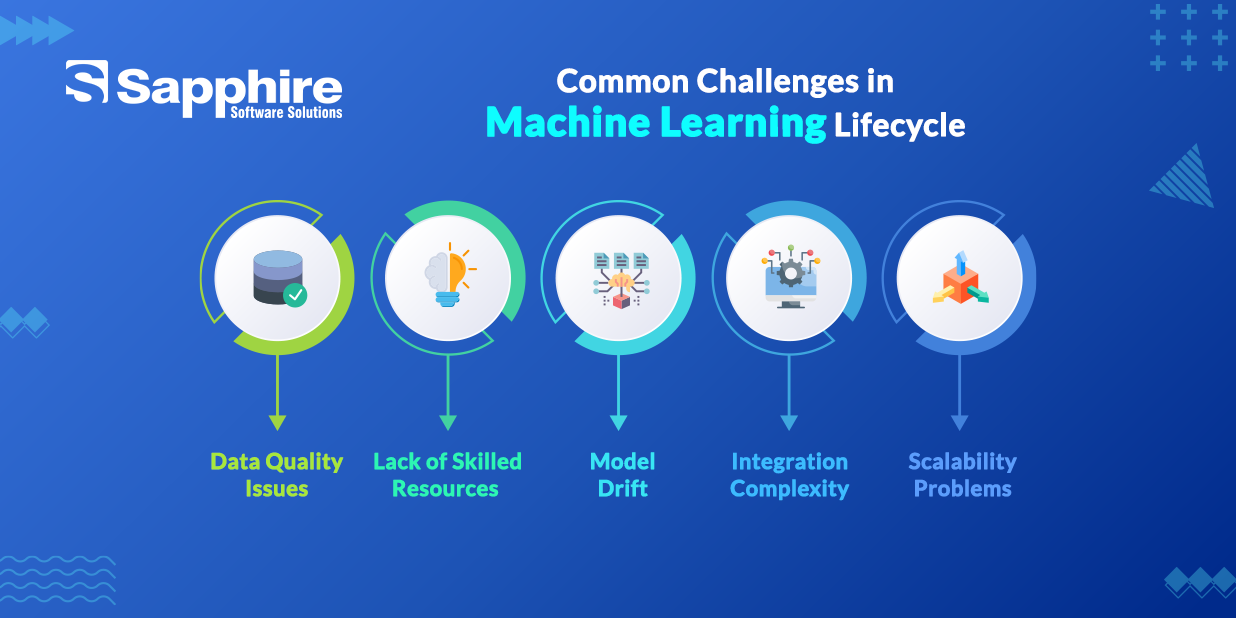
Despite its benefits, implementing the lifecycle of machine learning comes with challenges.
- Data Quality Issues: Poor-quality data can lead to inaccurate models. Ensuring clean and consistent data is often one of the biggest challenges.
- Lack of Skilled Resources: Building and managing machine learning models requires specialized skills. Many organizations struggle to find the right talent.
- Model Drift: Over time, changes in data patterns can reduce model accuracy. Continuous monitoring is required to address this issue.
- Integration Complexity: Integrating machine learning models into existing systems can be technically challenging.
- Scalability Problems: As projects grow, managing multiple models and datasets becomes more complex. Addressing these challenges requires a combination of technical expertise and strategic planning.
Best Practices to Optimize Machine Learning Lifecycle:
To maximize the benefits of the lifecycle, businesses should follow structured best practices. These practices help improve efficiency, accuracy, and long-term scalability of AI systems.
- Focus on Data Quality: Invest in data cleaning and preprocessing to ensure reliable and consistent datasets. High-quality data directly improves model accuracy and overall performance.
- Use Automation: Automating repetitive tasks reduces manual effort and speeds up workflows. It also minimizes human errors and improves operational efficiency.
- Implement Version Control: Track changes in models and datasets to maintain consistency across development stages. Version control helps teams manage updates and ensures accountability.
- Monitor Performance Continuously: Regular monitoring helps detect performance issues and model drift early. This ensures that models remain accurate and relevant over time.
- Encourage Collaboration: Collaboration between data scientists, developers, and business teams improves outcomes. It ensures better alignment between technical solutions and business goals.
By adopting these practices, businesses can optimize their Machine Learning Lifecycle effectively. This leads to better results, scalability, and long-term success.
How Sapphire Stands Out as a Trusted Machine Learning Development Company?
Choosing the right partner is critical for successful AI implementation. Sapphire Software Solutions has established itself as a reliable Machine Learning Development Company that helps businesses build scalable and efficient solutions.
The company offers end-to-end services, covering every stage of the lifecycle—from data preparation to deployment and monitoring.
Sapphire’s team of experts brings deep technical knowledge and industry experience, ensuring that solutions are tailored to specific business needs.
Another key advantage is the company’s focus on innovation. By leveraging advanced technologies and best practices, Sapphire delivers high-quality solutions that drive business growth.
With a commitment to transparency and customer satisfaction, Sapphire has become a trusted partner for organizations looking to implement machine learning successfully.
Conclusion:
The machine learning lifecycle is a critical factor in the success of AI projects. It provides a structured approach that helps businesses manage complexity, reduce risks, and deliver reliable solutions. From defining the problem to monitoring deployed models, every stage plays a vital role in achieving desired outcomes. Organizations that invest in a well-managed lifecycle are better positioned to leverage the full potential of machine learning.
As AI continues to evolve, the importance of lifecycle management will only increase. Businesses that adopt structured processes and work with experienced partners can stay ahead of the competition. By understanding and implementing the lifecycle effectively, organizations can transform their data into valuable insights and drive sustainable growth.
Get a Free Quote Today and accelerate your AI journey!