

















Every successful product starts as a simple idea. It could be a small observation about a problem, a creative solution to an everyday challenge, or a bold vision to disrupt an industry. However, turning that idea into a profitable product is far more complex than it seems. Many businesses struggle at this stage. They either rush into development without proper validation or spend too much time planning without execution. The result is often the same wasted resources, delayed launches, or products that fail to meet market expectations.
This is where a Product Development Company plays a crucial role. Instead of relying on guesswork, these companies follow structured processes to transform ideas into scalable and revenue-generating products.
From validating the concept to designing, developing, testing, and launching the product, every step is carefully planned. The goal is not just to build something functional but to create something valuable, user-focused, and market-ready.
What is Product Development?
To move forward, it’s important to understand what Product Development is in a practical sense. It is the complete process of transforming an idea into a tangible product that can be launched on the market. This includes research, design, development, testing, and continuous improvement.
The process is not limited to creating something new. It can also involve improving existing products, adding new features, or adapting to changing market demands. A strong Product Development Process ensures that every stage is aligned with business goals and user expectations. Without this structure, even the best ideas can fail due to poor execution.
Another important concept is the Product Development life cycle, which defines the stages a product goes through—from ideation to maturity. Understanding this lifecycle helps businesses make better decisions at each phase. Modern organizations also rely on Product Development Software to manage workflows, track progress, and collaborate across teams.
Why Product Development Is Critical for Business Growth?
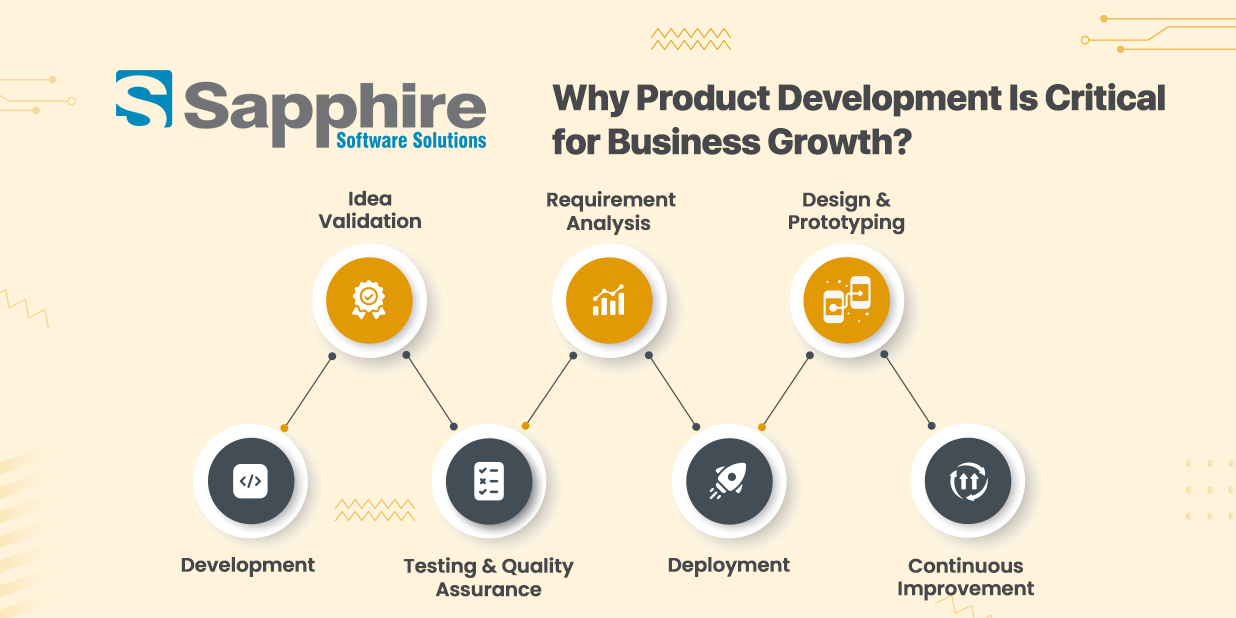
Product development is not just about building something new—it is about creating value that drives business growth. In a rapidly evolving market, customer expectations change quickly. Businesses need to innovate continuously to stay relevant. A strong development strategy allows companies to adapt and respond to these changes effectively.
One of the biggest advantages of structured development is risk reduction. By validating ideas early, businesses can avoid investing in products that may not succeed. It also improves efficiency. Instead of working in silos, teams collaborate with a clear roadmap, ensuring faster execution and better results.
Another key benefit is scalability. A well-developed product can grow with the business, supporting new features, users, and markets. Companies that invest in professional Product Development Services are better positioned to compete, innovate, and expand.
1. Idea Validation:
The process begins by evaluating whether the idea solves a real-world problem and has market demand. Research, competitor analysis, and early user feedback help validate its potential success. This step ensures that businesses invest time and resources only in ideas with real value.
2. Requirement Analysis:
Once validated, detailed requirements are gathered to define the product’s features and functionality. This includes technical specifications, user expectations, and business objectives. A clear requirement plan helps align all stakeholders and avoid confusion later in development.
3. Design and Prototyping:
Designers create wireframes and prototypes to visualize how the product will look and function. This stage focuses on user experience, interface design, and usability. Prototypes allow teams to test ideas early and make improvements before actual development begins.
4. Development:
Developers start building the product using appropriate technologies and frameworks. The focus is on creating a scalable, secure, and high-performing solution. Regular iterations ensure that the product evolves in line with requirements and feedback.
5. Testing and Quality Assurance:
The product undergoes rigorous testing to identify and fix bugs or performance issues. Quality assurance ensures that the application meets usability, security, and functionality standards. This step is critical to delivering a reliable and smooth user experience.
6. Deployment:
After testing, the product is launched in the live environment for users. Deployment involves setting up servers, configurations, and ensuring system stability. Teams closely monitor performance during this phase to address any immediate issues.
7. Continuous Improvement:
Post-launch, the product is continuously updated based on user feedback and market changes. New features, performance improvements, and bug fixes are introduced regularly. This ongoing process ensures long-term growth and keeps the product competitive.
How to Turn Your Idea Into a Profitable Product?
Turning an idea into a profitable product requires more than just development—it requires strategy.
- First, the idea must solve a clear problem. Products that address real user needs have a higher chance of success.
- Second, understanding the target audience is essential. Businesses must know who their users are and what they expect.
- Third, a strong value proposition sets the product apart. It defines why users should choose your product over others.
- Fourth, pricing strategy plays a key role. The product must deliver value while remaining competitive in the market.
- Finally, marketing and distribution determine how the product reaches users. Even the best products need visibility to succeed.
Working with a Product Development Consultant helps businesses navigate these steps effectively and avoid common mistakes.
How AI is Transforming Product Development?
The integration of AI in Product Development is reshaping how products are built and improved. AI helps analyze large amounts of data quickly. This allows businesses to identify trends, understand user behavior, and make informed decisions. It also improves efficiency by automating repetitive tasks. This reduces development time and allows teams to focus on innovation.
AI-powered tools can predict potential issues before they occur. This helps improve product quality and reduce risks. Another advantage is personalization. AI enables products to adapt to user preferences, creating a better experience. As technology continues to evolve, AI will play an even bigger role in shaping the future of product development.
Real-World Examples of Successful Product Development:-
Understanding how real products evolve from ideas into successful solutions gives businesses a clearer roadmap for their own journey. The following examples highlight how structured planning, market understanding, and continuous innovation play a crucial role in building impactful products.
Vidyalaya School Software:
Vidyalaya School Software is a powerful example of how identifying operational challenges in the education sector can lead to a highly successful digital solution. Schools often struggle with managing student records, attendance, communication, and administrative tasks across multiple systems. Vidyalaya addressed this gap by creating a unified platform that streamlines all these processes into one centralized system.
Over time, the platform evolved to incorporate features such as mobile accessibility, real-time notifications, and analytics dashboards. This continuous improvement approach demonstrates how a strong Product Development Process, combined with user feedback, can lead to long-term success and scalability.
Vidyalaya LMS:
Vidyalaya LMS represents how businesses can capitalize on emerging trends to build impactful solutions. With the rapid shift toward online learning, especially in recent years, educational institutions needed reliable platforms to deliver digital education. Vidyalaya LMS stepped in to bridge this gap by offering a comprehensive learning management system that supports virtual classrooms, course management, assessments, and performance tracking.
This example highlights how leveraging AI in Product Development and digital transformation trends can help businesses stay relevant and competitive in evolving markets.
OccuCare:
OccuCare is a strong example of niche-focused product development that delivers high value by addressing specific industry requirements. Workplace health and safety management is a critical concern for organizations, especially in industries like manufacturing, construction, and healthcare. OccuCare identified this need and developed a specialized platform to manage employee health records, compliance, and safety protocols.
It offers features such as health monitoring, risk assessment, and reporting tools, enabling organizations to maintain compliance while improving employee well-being. This case illustrates how working with a skilled IT consulting service and focusing on a targeted problem can result in a highly specialized and profitable product.
Key Takeaways from These Examples:
These real-world cases highlight several important lessons for businesses:
Successful products are built on solving real, clearly defined problems. Continuous improvement and user feedback drive long-term growth. Adapting to market trends ensures relevance and competitiveness. Niche-focused solutions can create strong value and differentiation.
By learning from these examples, businesses can better understand how to transform their ideas into scalable, profitable products through a structured approach.
Why Choose Sapphire as Your Product Development Company for Profitable Product Growth?
Choosing the right partner can make a significant difference in the success of your product. Sapphire Software Solutions brings experience, expertise, and a structured approach to development. They focus on understanding business goals and aligning them with user needs.
Their team ensures that every stage of development is executed efficiently. From ideation to deployment, they provide end-to-end support. They also emphasize scalability and performance, ensuring that products are built for long-term success. By leveraging modern technologies and best practices, Sapphire helps businesses turn ideas into profitable products.
Conclusion:
Turning an idea into a profitable product is a journey that requires planning, execution, and continuous improvement. A structured approach to Product Development ensures that every stage is aligned with business goals and user expectations. From validation and design to development and scaling, each step plays a crucial role in the product’s success.
With the support of Sapphire Software Solutions, the right Product Development Company, businesses can reduce risks, improve efficiency, and create products that deliver real value. Get a free quote Today to kickstart your product journey.