















I still remember ordering my first Uber. It was 2014, pouring rain in San Francisco, and I couldn't believe I could just press a button and watch a car drive toward me on my phone. The same thing happened when Instagram made my terrible coffee photos look decent, or when WhatsApp let me video call my family overseas without paying a fortune. These apps didn't just get popular. They rewired entire industries. What's fascinating, though - and this is where it gets interesting for entrepreneurs - is how many businesses saw these successes and thought, "We could build something like this for our market." And plenty did. Successfully. That's the whole Clone app thing.
Clone App Development has a reputation problem. People hear "clone" and think you're ripping someone off. You're not. You're looking at a proven business model, adapting it for your audience, improving what sucks, and getting to market while competitors argue about logo designs. Way less risky. Way faster. Startups are launching Clone app android platforms and iPhone clone app solutions, breaking into markets that seemed impossible before.
Here's what we're covering. How on demand clone app development works when you're building something real. Why is everyone interested? Which clone apps make money? What features matter? Real budgets. And why picking the right Clone App Development Company like Sapphire Software Solutions makes the difference between success and burning through savings.
What is a Clone App and Why It Popular?
Okay, let's kill this misconception right now. Building a clone app isn't illegal. You're not downloading Instagram's code from some sketchy website and changing the colours.
Here's what you're doing: looking at an app that works, figuring out why users love it, then building your own version from scratch with your branding, your improvements, your focus. You're inspired by the model. You're not stealing their code.
Why Clone Apps Are Suddenly Everywhere
Building an app from scratch is basically rolling the dice with your money. You're guessing that users will behave a certain way, that your pricing makes sense, and that people even want what you're building. Most new apps fail because these guesses are wrong. Clone apps remove most of that guesswork. Someone else already validated the concept. You know people want this because they're already using something similar.
That's why businesses keep choosing this path:
You can launch in three months instead of eighteen. Development costs drop dramatically when you're not inventing everything from scratch. Users already know how these apps work - no confusion, no learning curve. When you pitch investors, they immediately understand your business model. Expanding to new cities or countries becomes way more straightforward. Whether you're building a Phone clone app for communication, a Zomato clone app for food delivery, or a Clone App for WhatsApp for secure messaging, you're focusing on execution instead of wondering if the basic concept even makes sense.
Types of Clone Apps Entrepreneurs Are Building:-
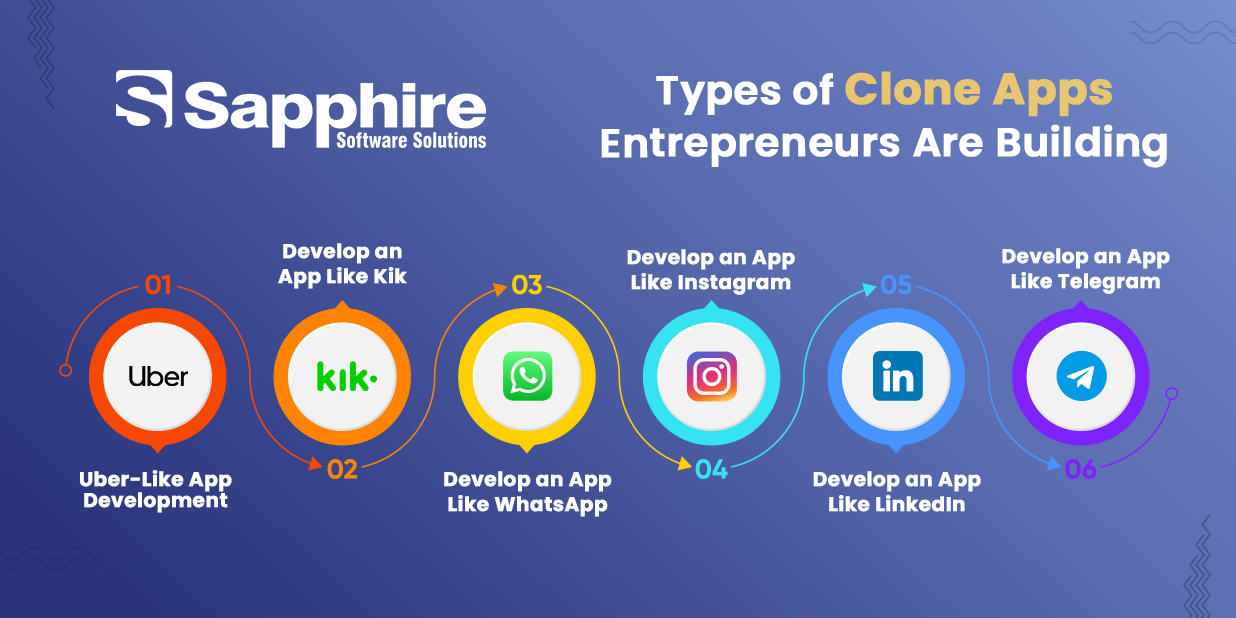
Clone app development works across basically every category. If an app's successful, someone somewhere has built a profitable version of it for their market.
Here's what's working right now.
Uber-Like App Development:
Uber-like app development services are still massively popular, and I get why. These platforms are way more than just ridesharing now. Think about all the moving parts - drivers, passengers, real-time GPS, payment processing, route optimization, ratings. It's basically an entire ecosystem. And that same framework now powers bike rentals, furniture delivery, courier services, and even emergency ambulances in some cities.
Your typical Uber-like clone app needs apps for both passengers and drivers, GPS tracking that doesn't freak out in tunnels, fare calculation that users trust, payment integration that works, and a review system. Most successful launches start small—one city, work out the kinks, then scale fast once the operations are smooth.
Develop an App Like Kik:
When you develop an App Like Kik, you're going after people who want messaging without all the extras. Kik won users over by being simple. Sign up in like thirty seconds. Start chatting. Done.
These clones work great for tight communities, gamers who need quick chat while playing, people who want semi-anonymous messaging, and younger users who care about privacy. You'll want genuinely fast messaging, group chats where sharing photos doesn't take forever, registration that doesn't demand your phone number (not everyone wants to give that out), and moderation tools that keep things from getting toxic. This model kills it in markets where people are sick of messaging apps that track literally everything they do.
Develop an App Like WhatsApp:
The demand to develop an App Like WhatsApp keeps climbing. Organizations, schools, and medical practices—all want messaging they can control. WhatsApp-style clones are being used for internal company communication (way better than email chains), connecting teachers with students and parents, doctor-patient messaging in healthcare, and private networks for neighbourhood communities. A solid WhatsApp Clone App Development Service ensures encryption that works, smooth handling of both individual and group chats, voice and video calls that don’t randomly drop mid-conversation, file sharing that handles different formats, and cloud backup that syncs everywhere. Where people get creative is adding features WhatsApp won’t—like admin controls for companies, compliance features for healthcare or finance, or regional data storage for markets concerned about where their data lives.
Develop an App Like Instagram:
When businesses develop an App Like Instagram, they're betting on visual content to build engaged communities. Instagram clones have evolved way past just being influencer platforms. They're powering niche communities around specific hobbies, creator platforms with actual monetization (not just "exposure"), brand-specific social networks, and visual platforms for specific industries—fashion boutiques, fitness trainers, travel photographers. Here's the thing, though—a focused Instagram-like platform serving one specific community often creates deeper engagement than Instagram itself. Smaller and targeted beats massive and generic more often than you'd think.
Develop an App Like LinkedIn:
To develop an App Like LinkedIn means you're building for professional networking, where real business happens. A LinkedIn Like App Development Company can help create industry-specific professional networks (like one just for architects or nurses), freelancing platforms, recruiting tools with specialized features, or alumni networks.
These platforms offer professional profiles that work like living resumes, job boards with streamlined applications, messaging between connections, skill endorsements that mean something to industry peers, and analytics for recruiters. Niche LinkedIn clones frequently outperform the main platform because they offer relevance that LinkedIn's algorithm misses.
Develop an App Like Telegram:
When you develop an App Like Telegram, you're prioritizing privacy, massive scale, and broadcasting content. Telegram-style clones work brilliantly for channels focused on specific topics, crypto communities where privacy really matters, news organizations, and secure enterprise communication.
Must-have features include cloud messaging that works on every device seamlessly, support for enormous groups and broadcast channels, file sharing without ridiculous size limits (why is this still a thing on other platforms?), bot integration, and privacy features that protect users. Perfect for startups planning global reach from the start.
Key Features Every Clone App Must Have:
Every successful Clone app shares certain core features. Skip these, and you're building on shaky ground.
What You Need: Onboarding that doesn't frustrate people, an interface that works on phones and tablets Backend that won't crash when you get traction, notifications that arrive on time Secure, reliable payment processing Admin dashboard showing real user data Multiple languages and currencies Infrastructure that scales without rebuilding. Whether building a Clone app Android solution or an iPhone clone app, these features show you're serious.
Cost of Developing a Clone App:
Everyone wants a number. But honestly, anyone giving you a price without asking questions first probably isn't someone you want building your app. When people ask how much does it cost to build a clone app, the reality is that costs depend on complexity, platforms (Android? iOS? Both? Web?), custom features, design work, and security requirements.
Realistic Budgets Clone apps cost less than starting from nothing, but cutting corners now almost always costs you double later when you're fixing problems instead of growing.
How Clone Apps Help Startups Enter the Market Quickly?
Speed matters more than almost anything these days. Clone apps let you do in months what used to take years. Launch while competitors are still wireframing. Test with real users instead of guessing. Attract early adopters and investors faster. Iterate based on actual behaviour, not assumptions. Scale without rebuilding from scratch. Smart founders don't reinvent wheels. They take proven models, customize for their market, optimize based on real feedback - and usually hit profitability way faster.
Why Startups Should Partner with a Clone App Development Company Like Sapphire?
Choosing the right Affordable clone app development Company is just as important as choosing the right app concept. Maybe more important. At Sapphire Software Solutions, we're not churning out identical clone apps from the same template. We build digital businesses engineered to compete in real markets.
What Makes Sapphire Different:
Real expertise across different clone app categories (we've built a lot of these) Custom solutions built for your specific needs, not cookie-cutter templates Architecture that's secure, scalable, and ready for growth Transparent pricing - no surprise invoices three months in Support that continues after launch, not radio silence Whether you need a Zomato clone app, Uber-Like App Development, or messaging platforms inspired by WhatsApp or Telegram, Sapphire Software Solutions makes sure your product stands out instead of blending into the noise.
Ready to turn a proven concept into something that's yours? Get a free quote and let's talk about what's realistic.
Conclusion:
Clone apps aren't shortcuts anymore. They're strategic accelerators for businesses that want to move smart and fast. By starting with concepts the markets already validated, adding meaningful improvements, and executing with focus, you can enter competitive markets with real confidence instead of blind hope. From social platforms to secure messaging, from ride-hailing to food delivery, Reliable Clone App Development lets startups focus on what drives success - acquiring users, building sustainably, and generating revenue. With clear vision and a solid AI Powered Clone App Development Company like Sapphire Software Solutions backing you, your next digital success might be closer than you think.