
















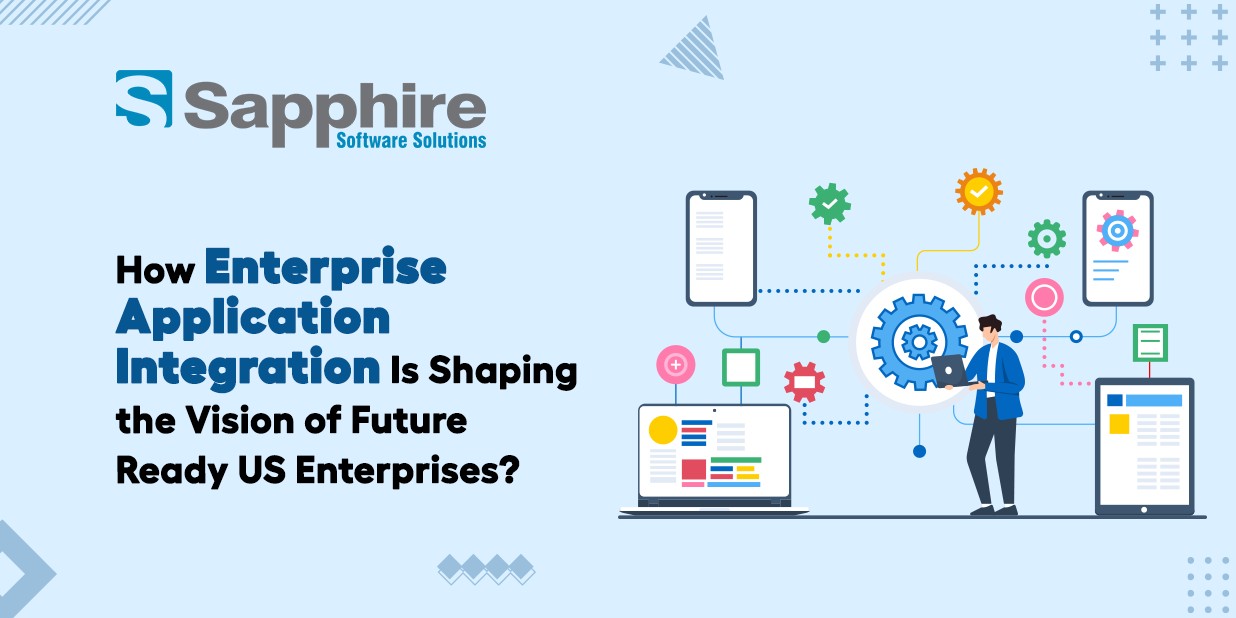
Modern businesses operate across a diverse ecosystem of applications, including CRM systems, ERP platforms, HR solutions, analytics tools, cloud environments, and customer-facing applications. While each application contributes to operational success, the real challenge lies in integrating these systems to function as a unified, intelligent environment.
With the rapid adoption of digital strategies, organizations are rethinking how enterprise applications are designed and utilized. Businesses today no longer need isolated systems—they require synchronized platforms that enable real-time data exchange, automation, and data-driven decision-making.
As a result, Enterprise Application Integration has evolved from a technical necessity into a core business strategy, enabling organizations to remain competitive, agile, and scalable in a fast-changing digital landscape.
What is an Enterprise Application?
To fully understand the importance of integration, it is essential to define what an enterprise application is.
An enterprise application is a large-scale software system designed to support complex business processes across multiple departments within an organization. These applications are built to handle high volumes of data, transactions, and users while ensuring reliability, scalability, and security.
Unlike consumer-focused applications, enterprise applications power mission-critical operations such as:
- Finance and accounting
- Customer relationship management (CRM)
- Supply chain and logistics
- Human resource management
- Business intelligence and analytics
Enterprise Application Development refers to the process of designing and building these applications in alignment with business objectives while ensuring seamless integration with existing systems.
Enterprise Application Architecture Explained:
Traditional enterprise architectures were based on monolithic designs, where all components were tightly interconnected. While effective in the past, these architectures lack the flexibility required in today’s dynamic business environment.
Modern enterprises are increasingly adopting:
- Microservices architecture, enabling modular and independent services
- Service-Oriented Architecture (SOA) promotes reusable components
- Cloud-based infrastructure, ensuring scalability and flexibility
A robust enterprise application architecture ensures seamless communication between systems. Technologies such as APIs, middleware, and integration platforms play a critical role in enabling this connectivity.
These tools facilitate automated data exchange across departments, eliminating manual intervention and improving operational efficiency.
Cloud computing further enhances enterprise architecture by offering:
- On-demand scalability
- Faster deployment cycles
- Cost optimization
Additionally, modern architectures prioritize real-time access to data, empowering decision-makers with accurate and timely insights.
Role of Enterprise Application Development in Modern Businesses:-
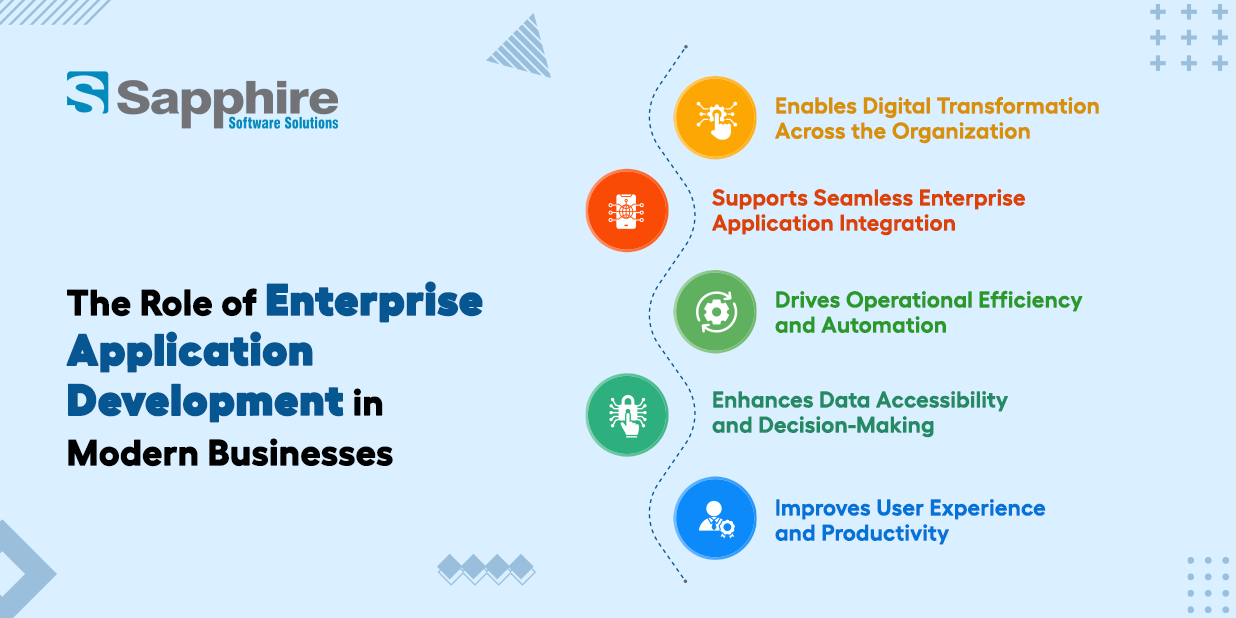
Enables Digital Transformation Across the Organization:
Enterprise Application Development plays a crucial role in helping organizations transition from traditional processes to digital-first operations, ensuring long-term competitiveness.
Supports Seamless Enterprise Application Integration:
Modern enterprise applications are designed with integration capabilities, enabling seamless connectivity with CRM systems, ERP platforms, and cloud applications.
Drives Operational Efficiency and Automation:
Automation of workflows such as approvals, reporting, and data processing reduces manual effort, minimizes errors, and enhances operational efficiency.
Enhances Data Accessibility and Decision-Making:
Integrated enterprise systems provide real-time access to data, enabling faster and more informed business decisions.
Improves User Experience and Productivity:
User-centric design and intuitive interfaces improve employee productivity and overall system adoption across the organization.
Common Challenges in Enterprise Application Integration:
While Enterprise Application Integration offers significant advantages, organizations often face several challenges during implementation.
One of the primary challenges is legacy system compatibility. Older systems may not support modern integration standards, requiring additional customization or modernization.
Another major issue is the presence of data silos, which disconnect systems and prevent a unified view of business operations.
Security and compliance risks also increase as multiple systems are integrated, making it essential to implement robust security frameworks.
Additionally, scalability challenges arise as businesses grow, requiring integration solutions that can handle increased complexity and data volume without compromising performance.
Key Benefits of Enterprise Application Integration:
Enterprise Application Integration delivers measurable business value across multiple areas.
- Increased efficiency by eliminating manual data entry and redundant processes
- Real-time data access, enabling faster and more accurate decision-making
- Improved customer experience through a unified view of customer interactions
- Cost reduction by streamlining operations and reducing inefficiencies
- Enhanced scalability, allowing businesses to grow without system limitations
These benefits collectively enable organizations to operate more strategically and competitively.
How Sapphire, as an Enterprise App Development Company, Is Driving Future-Ready Digital Transformation?
Sapphire Software Solutions has established itself as a trusted Enterprise App Development Company, helping organizations build connected, scalable, and future-ready digital ecosystems. The process begins with a comprehensive assessment of existing systems, workflows, and integration challenges. This helps identify gaps and opportunities to design a tailored integration strategy that enables seamless communication between applications.
By transforming disconnected systems into a unified digital ecosystem, Sapphire empowers businesses to improve efficiency, visibility, and agility. Sapphire’s expertise in Enterprise App Development and its team of skilled Enterprise App Developers ensure that applications are built with integration-readiness from the ground up. Leveraging modern enterprise architecture, the solutions are designed for flexibility, scalability, and long-term sustainability.
With a strong combination of technical excellence and business-centric thinking, Sapphire Software Solutions enables organizations to unlock the full potential of Enterprise App Development Services and build a future-ready enterprise.
Conclusion:
In 2026, the success of US enterprises will be defined by their ability to integrate systems, data, and processes into a unified digital ecosystem. Enterprise Application Integration has become a critical success factor, enabling organizations to improve efficiency, enhance customer experiences, and make real-time, data-driven decisions.
Understanding the importance of enterprise applications and investing in the right enterprise architecture allows businesses to build scalable and efficient systems. The benefits of integration—from cost savings and operational efficiency to improved customer engagement—far outweigh the challenges.
By partnering with a reliable Enterprise App Development Company, organizations can successfully transform their application landscape and build a cohesive, agile, and future-ready digital enterprise. Contact Sapphire Software Solutions today to get your free quote and start your digital transformation journey.