
















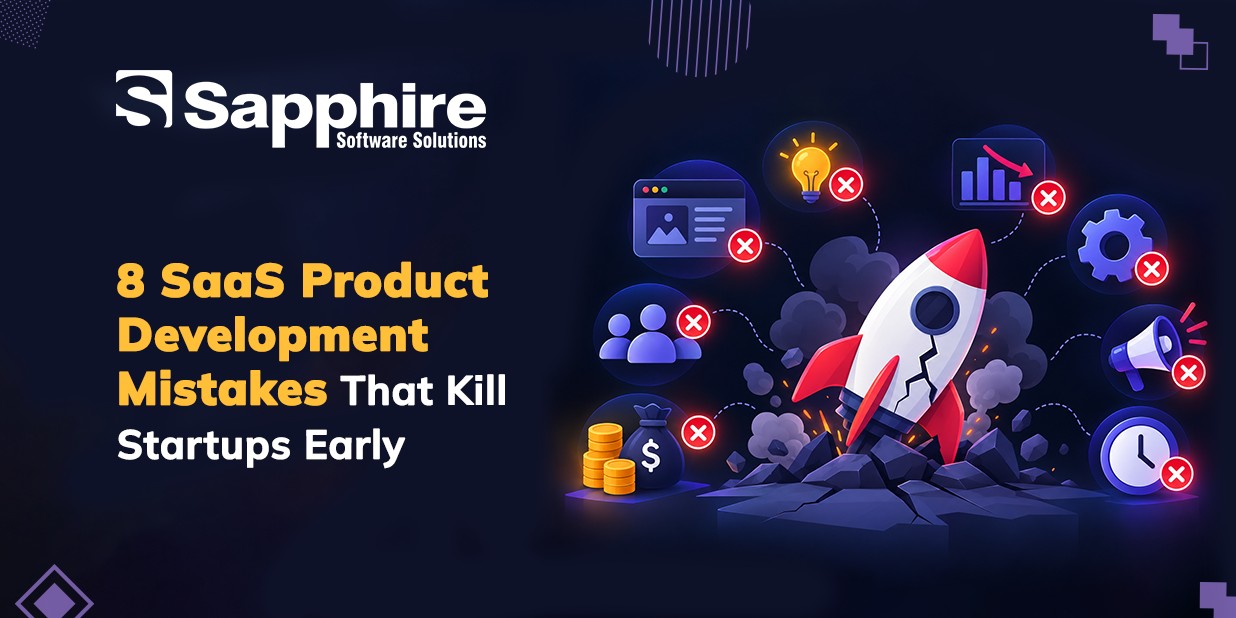
Why Do Most SaaS Startups Fail Early?
Every year, many SaaS startups emerge with ambitious goals but modest means. Most of them disappear in a span of two years, and seldom due to a bad idea. Usually, small, insignificant choices snowball into major problems: unwanted features, an inflexible codebase, or a confusing pricing page.
Fortunately, these problems are predictable, and thus preventable. Regardless of whether you choose to develop a SaaS product on your own or outsource the process to professionals, here are eight pitfalls you should avoid.
1. Building Without Validating the Problem First
No matter what research is done on startup post-mortems, the "no market need" always comes up as one of the top reasons that cause startups to fail. Entrepreneurs get in love with their solution and forget to make sure that there is actually a need for it.
Talk to 15 to 20 people in the target audience before writing any line of code and see how they solve the problem now, how much it costs them, and what solutions they have used so far. Test the need through a waiting list, a paid pilot, or a pre-sale. If there is no response, that means something new was learned for free.
2. Overloading the MVP With Too Many Features
The term "minimum" is often overlooked in "minimum viable product." The more features your product has, the longer the build process is, the more bugs there are, and the more maintenance is required. Also, it prevents the sole purpose of your product from shining through.
Choose a unique task performed by your product better than any other product and build only that. A great way to see whether you have chosen the right feature is to ask yourself whether you would lose your first 50 customers if you took it away from the product.
3. Choosing the Wrong Tech Stack and Architecture
Chasing a framework simply because it's in vogue is one of the most common and expensive practices out there. Choosing a proper stack will depend on a variety of factors – your team's experience, ease of recruiting, maturity of its environment and speed.
Proven boring technology wins here quite frequently. Equally critical is an architectural approach. Multi-tenant systems, good APIs and modularity make the development process much easier. A hurried rework once the system is deployed will cost several months of hard work.
4. Ignoring Scalability Until It's Too Late
You do not need to think about building something for a million users on the first day itself, but what you do need is to have a plan in place. Nothing is as bad as having a product crash while being mentioned in your first ever press release or customer launch.
Think of starting out with cloud-based architecture and cache jobs, queue jobs, database indexes, and all the other things you will need for performance from the beginning itself. You should be able to monitor the performance yourself and not the user.
5. Treating Security and Compliance as an Afterthought
Business customers will first inquire about security than inquire about the features. The security questionnaire, SOC 2 report, GDPR and HIPPA compliance can cause the sales process to take a few months if you are not prepared.
Retrofitting security is far more expensive than building it in. Start with the basics:
- Encryption for data in transit and at rest
- Role-based access control
- Audit logs and regular backups
- Secure authentication, such as multi-factor login
If your product uses AI, be clear about how customer data is stored and whether it's used to train models. Trust is a feature, and it closes deals.
6. Neglecting UX and Onboarding
Customers make up their minds about the value of your product in minutes. An awkward first-time experience results in churn before customers ever get a taste of its best capabilities.
The one and only purpose of onboarding should be to help people achieve their first win as quickly as possible. Use guided onboarding, templates, checklists, and helpful empty states. Measure how long it takes for new customers to get something valuable from your product.
7. Having No Clear Pricing and Monetization Strategy
Many founders set a price by copying a competitor or guessing low to attract users. Both approaches can leave you with a product that's popular but unprofitable.
Choose a pricing model that matches how customers get value, whether that's per seat, usage-based, tiered, or freemium. Talk to customers about what they'd pay, and revisit pricing as you learn. Track the numbers that matter: monthly recurring revenue, customer acquisition cost, churn, and lifetime value. Pricing isn't a one-time decision; it's something you test and refine.
8. Choosing the Wrong Development Partner or Team
The cheapest quote often becomes the most expensive project. A team that only writes code to a spec won't challenge weak ideas, flag risks, or think about your users.
Look for a partner with a real SaaS portfolio, clear communication, and a product mindset. Make sure you own your code and that they offer support after launch. If you want smart features like automation, predictive insights, or AI-powered search, working with an experienced AI SaaS development company can save you months of trial and error. Ask for references and talk to past clients before you commit.
Key Features Every Successful SaaS Product Should Have
Whatever your niche, strong SaaS products tend to share a common foundation:
- Secure sign-up and login: multi-factor authentication and single sign-on options
- Multi-tenant architecture: safe, efficient separation of customer data
- Role-based access: control over who sees and does what
- Subscription billing: flexible plans, invoices, and upgrades
- Smooth onboarding: guides, tooltips, and templates
- Analytics dashboard: clear insight into usage and results
- Integrations and APIs: easy connections to the tools customers already use
- Notifications and support: timely alerts and quick access to help
- AI-powered automation: smart recommendations and time-saving workflows
- Reliable cloud infrastructure: uptime, monitoring, and regular backups
Conclusion
The reason for the failure of most SaaS companies is not due to any single error but due to a chain of errors which could have been avoided through better preparation and decision-making like the absence of validation, over-engineering, lack of emphasis on security, and choosing the wrong developers.
It is important for developing SaaS products to make good decisions at an early stage and while there is still time and budget to do so. This is true whether you are looking to develop a new product or revive one that is failing. Ready to turn your idea into a product customers love? Contact us today and let's build it the right way.