

















The web development landscape is evolving faster than ever in 2026, and businesses that fail to adapt risk falling behind. The gap between companies leveraging modern web technologies and those relying on outdated strategies—from decisions made in 2021 or earlier—is becoming increasingly visible in key performance metrics, including site speed, conversion rates, and user experience under real-world conditions. Once this gap widens, closing it becomes a significant challenge.
Many organizations sense that their websites are underperforming, but the solution isn’t always clear. Should they refresh the design, invest in a full rebuild, or take a hybrid approach? Too often, the guidance they receive reflects industry trends rather than their unique business needs.
At Sapphire, we cut through the noise. This article provides an in-depth, practical look at the top web development trends in 2026. We examine what is genuinely shaping the industry, the real impact of AI versus common misconceptions, the investment required, and how to distinguish a reliable development partner from a costly mistake. No hype. No exaggerated urgency. Just actionable insights that matter for businesses ready to make strategic web development decisions today.
Rise of AI in Web Development:
There's enough noise around AI right now that the actual signal is getting hard to find. So, let's just talk about what's observable.
AI-Powered Code Generation:
AI tooling has made developers genuinely faster. Not marginally - meaningfully. Routine component generation, mid-build security flagging, and performance issue detection before shipping. Work that once took three days might take one. That's real, it's measurable, and it's already priced into how competitive teams operate. What AI still can't do is hold an architectural vision. Someone must decide how systems connect, where things get brittle under load, and what the codebase looks like when it's twice the current size.
AI is fast and capable within a defined scope. Give it an undefined scope, and it produces fast, capable mistakes. That distinction matters more than most vendor pitches suggest. For anyone evaluating an Affordable Web Development Service in USA, this changes the math practically. AI-assisted teams aren't billing hours the same way they were two years ago. That compression is real, and it shows up in pricing.
AI in UX & Personalization:
You've experienced this already, probably without naming it. The site that surfaces what you were looking for before you searched for it. The offer that shows up at the right moment rather than the wrong one. That's not intuition - it's behavioral data processing in real time. Scroll depth, session history, device, location, past interactions, feed into what loads on your screen.
When the judgment behind it is good, the experience feels almost uncanny. When the judgment is poor, it just feels like surveillance. The technology is largely solved. The design thinking behind it is still where things go wrong.
AI-Driven Testing & QA:
Anyone who's shipped software knows manual testing's ceiling. Time runs out, edge cases slip through, and things that seemed fine in staging behave differently in production. AI-driven testing doesn't run out of time. Continuous regression checks, automated coverage across edge cases, flagging before users find it. Doesn't eliminate post-launch problems - but it makes them rarer and smaller.
Top Web Development Trends 2026 That Are Shaping the Future:-
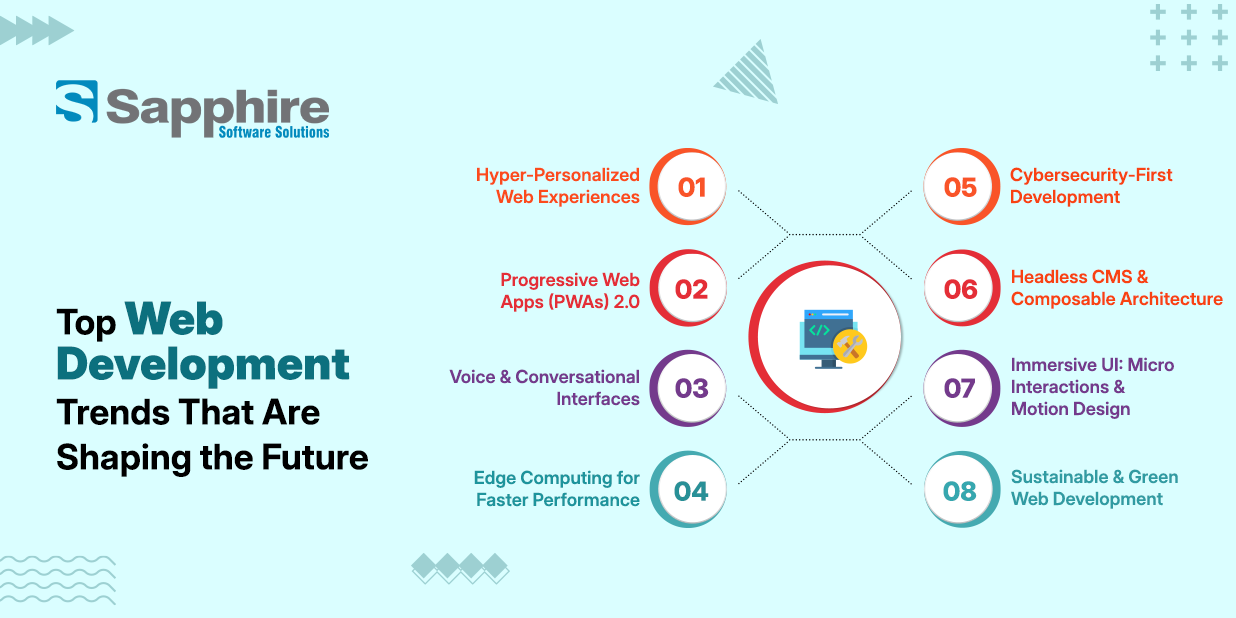
1. Hyper-Personalized Web Experiences:
Years of algorithmic content have quietly raised user expectations. People don't consciously think "this site isn't personalized" - they just feel friction they can't name and leave. The sites that hold attention in 2026 adapt: different messaging, different offers, different layouts for different visitors based on behavior and context. That's where current Web Design Trends and behavioral data are intersecting in ways that show up in actual conversion numbers, not just UX presentations.
2. Progressive Web Apps (PWAs) 2.0:
The native app versus web argument has shifted more than most people realize. PWAs now support offline use, push notifications, background sync, and performance that's genuinely hard to distinguish from a native build, for significantly less development cost and without fragmenting your team across platforms. If someone is telling you that you need a native app, it's worth asking whether they've priced a well-built PWA against it first.
3. Voice & Conversational Interfaces:
Ignoring voice search in 2026 is a choice with real consequences - lost organic traffic, mostly. Mobile-first users have normalized it, and sites that haven't accounted for it are behind in ways that compound over time. Conversational interfaces cover accessibility ground that standard navigation regularly misses. Neither of these was a serious business concern five years ago. Both are now.
4. Edge Computing for Faster Performance:
Load time data is consistent and unambiguous: delays of even one second show up clearly in bounce rates and conversion metrics. Edge computing cuts latency by processing closer to where users are rather than routing through centralized infrastructure. Faster load, better real-time performance, positive effects on SEO since search engines have weighted speed for years. These benefits aren't speculative.
5. Cybersecurity-First Development:
"We'll handle security after launch" hasn't held up well as a strategy. Zero-trust architecture, encrypted API communications, vulnerability scanning built into the development process rather than layered on afterward - these are baseline expectations now. The attacks targeting web applications have gotten more sophisticated. The business consequences of a breach have gotten steeper. "Later" has become a hard position to defend.
6. Headless CMS & Composable Architecture:
The clearest sign a codebase has outgrown its architecture is hearing "we can't change that without touching everything else." Headless systems separate the frontend from the content backend - redesigns don't cascade into full rebuilds, content reaches multiple channels from one place, and new capabilities get added without dismantling what already works. It's the most practical structural answer to staying aligned with Web Development Future Trends without treating your infrastructure as something to replace on a two-year cycle.
7. Immersive UI: Micro-Interactions & Motion Design:
The sites that feel expensive right now aren't always the flashiest ones. They're the most deliberate. Transitions that orient rather than decorate. Hover states that communicate rather than just respond. Scroll-triggered elements are timed well enough that users feel guided without noticing the guidance. People don't always articulate what makes something feel polished - they just feel it. That's where Web Design Trends have quietly moved: motion that earns its place rather than motion for its own sake.
8. Sustainable & Green Web Development:
Green development entered mainstream conversation faster than most expected. Regulation in certain markets pushed it. Genuine brand values pulled it. And then it turned out that leaner code and efficient hosting just produce better-performing products anyway, which made the business case and the environmental case point in the same direction. That alignment is probably why it stopped being a niche conversation so quickly.
Feature |
Traditional Development |
2026 Development Approach |
| Personalization |
|
|
| Testing |
|
|
| Architecture |
|
|
| Security |
|
|
| Performance |
|
|
| UI Design |
|
|
How Emerging Web Development Trends Impact Cost and Quality of Services?
The assumption that modern always means expensive is understandable. It's also getting harder to defend.
Initial Investment vs Long-Term ROI:
Thoughtful architecture costs more upfront - that's real and worth being honest about. But companies that skip planning almost always spend more across the full lifecycle. Maintenance accumulates quietly. Performance issues compound. Rebuilds arrive earlier than projected. The upfront cost of doing it right is rarely higher than the combined cost of doing it wrong and then fixing it.
AI Reduces Development Hours:
Tasks that used to consume days now take hours. That's already priced into how competitive development services are offered. It's why delivering a genuinely Affordable Web Development Service in USA without cutting corners has become more achievable - not as a marketing claim but as an economic reality. Faster delivery, predictable budgets, and less billing for overhead that used to be unavoidable.
Automation Improves Quality
Automated pipelines don't have off days. The same security checks, benchmarks, and test coverage run every time, regardless of deadline pressure or team composition. Quality stops depending on whether the right person happened to be paying close attention and starts being structural. That matters most on the projects where things get complicated.
Impact on Small & Medium Businesses:
The gap between what SMEs can build and what large enterprises can build has genuinely narrowed. Cloud infrastructure, modular architecture, scalable hosting - costs have dropped, and flexibility has increased. Sophisticated digital products are accessible at budgets that wouldn't have gotten close five years ago. Worth acting on while that's still true.
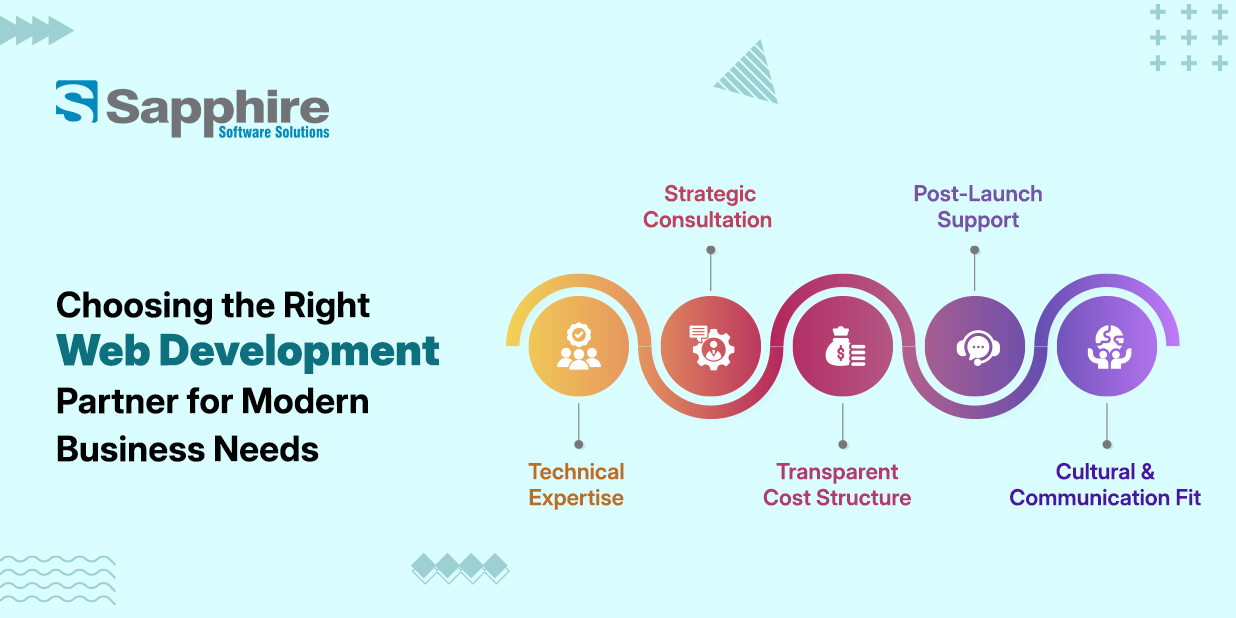
Choosing the Right Web Development Partner for Modern Business Needs:-
Getting this wrong costs more than most companies expect, and usually not in ways that are obvious until months in.
Technical Expertise:
Ask for specific examples, not polished decks. A real Top Web Development Company in USA can walk through actual problems they've navigated - real constraints, real trade-offs, real outcomes. Specific questions get specific answers. Or they don't, which is also information.
Strategic Consultation:
Partners worth keeping push back. They flag things that won't scale. They ask uncomfortable questions before agreeing to build something. Order-taking looks like collaboration early in a project. The difference shows up later when something needs to change, and no one wants to have that conversation.
Transparent Cost Structure:
Scope, pricing, milestones, and deliverables - clear before signing. Vague estimates are a preview, not a negotiating position.
Post-Launch Support:
Launch is a beginning. Security patches, performance monitoring, and ongoing iteration - your partner needs to be built for this rather than structured to hand off and move on.
Cultural & Communication Fit:
Underweighted almost universally. Teams that communicate well navigate hard moments better. Simple as that.
Conclusion:
Web development trends in 2026 are not just a checklist of features—they are interconnected components that drive business success. Performance impacts personalization, which in turn influences security, scalability, and the overall user experience. Making isolated decisions in this environment is increasingly ineffective. Businesses that approach web development as a strategic, integrated initiative are building websites that are resilient, scalable, and future-ready. On the other hand, companies that address each element in isolation often find themselves constantly trying to catch up.
At Sapphire Software Solutions, we help you create web solutions designed to last, combining cutting-edge trends with practical business strategy. Request a free quote today and start building a website that delivers results now—and stays relevant for years to come.