















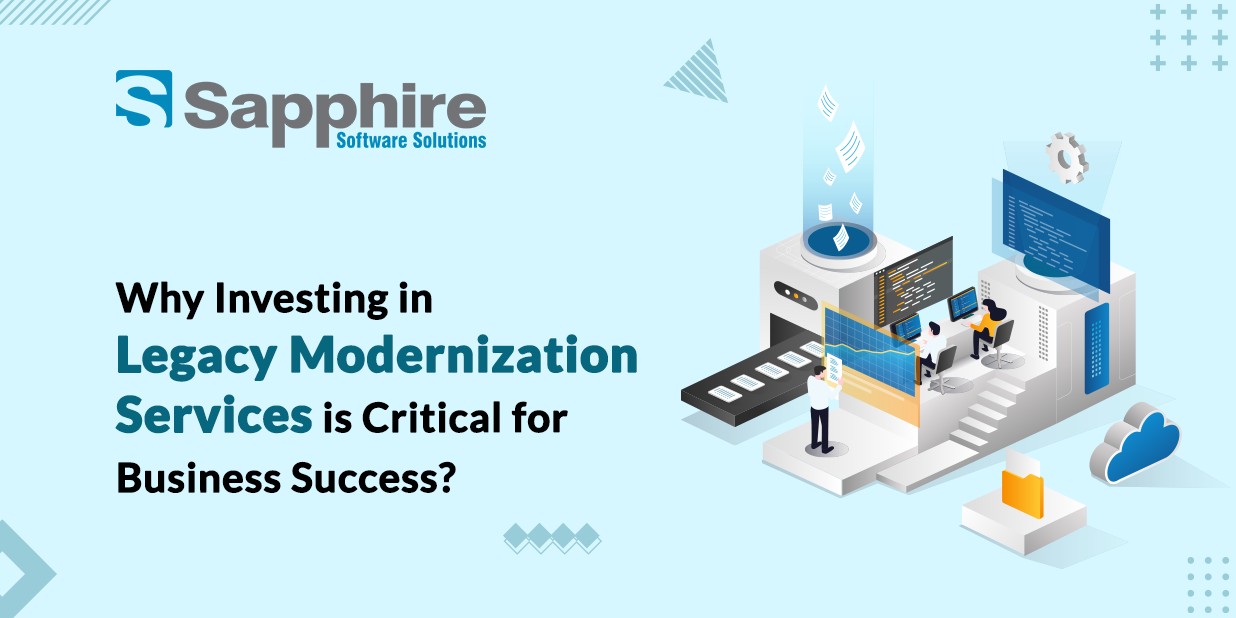
Technology doesn’t stand still, and neither do customer expectations. Today, organizations operate in a world where digital agility, data intelligence, automation, and scalable systems define who leads and who falls behind. Yet, thousands of businesses still rely on systems built decades ago. These older systems often carried companies through years of growth, and in many cases, helped build their strongest competitive advantage. But now, they are becoming a barrier instead of a strength.
Legacy platforms typically suffer from slow performance, limited integration capabilities, rising maintenance costs, and a shortage of skilled resources to support them. They also lack the flexibility to adapt to real-time market shifts, automation trends, or cloud-centric architectures that modern business demands. Even worse, security vulnerabilities and data silos in outdated environments expose organizations to operational risks and compliance challenges.
This is exactly why companies across industries are increasingly prioritizing Legacy Modernization not as a one-time IT upgrade, but as a strategic business move. It is about preserving what works, strengthening core business logic, and transforming outdated systems into agile platforms ready to support innovation, automation, and digital-first business models.
Whether it's the banking sector updating core financial platforms, healthcare modernizing patient record systems, manufacturers embracing smart factory solutions, or retailers replacing outdated ERP tools and modernizing legacy systems is directly linked to staying competitive.
This blog explores why modernization matters, the most effective approaches, and how choosing the right partner can accelerate digital transformation while protecting business continuity and long-term ROI.
What is Legacy Modernization and Why It Matters?
Legacy modernization is the process of transforming and upgrading outdated systems into modern, scalable, secure, and efficient digital platforms. It isn't simply “replacing old tech”; it is a thoughtful approach that protects existing investments, retains business logic, and enhances capabilities through enhanced performance, cloud adoption, automation, and better data accessibility.
For many organizations, legacy systems have become deeply integrated into daily operations over the decades. They hold critical operational workflows, business rules, customer history, and compliance frameworks. However, the technology foundation may no longer support innovation or fast-changing business environments.
Modernization matters because business growth today relies heavily on agility. Customers expect seamless digital experiences; internal teams need real-time data accessibility; and leadership requires systems capable of scaling securely without costly maintenance overheads. Aging platforms struggle to keep up with the pace of change, which directly affects operational performance, security posture, and decision-making capabilities.
Companies embracing legacy system modernization services are experiencing shorter deployment cycles, reduced downtime, automation benefits, and improved user satisfaction. More importantly, modernization fuels business evolution, allowing organizations to adopt cloud-native capabilities, microservices, and AI-driven functionalities without disrupting existing workflows.
Key Legacy Modernization Strategies for Business Growth:-
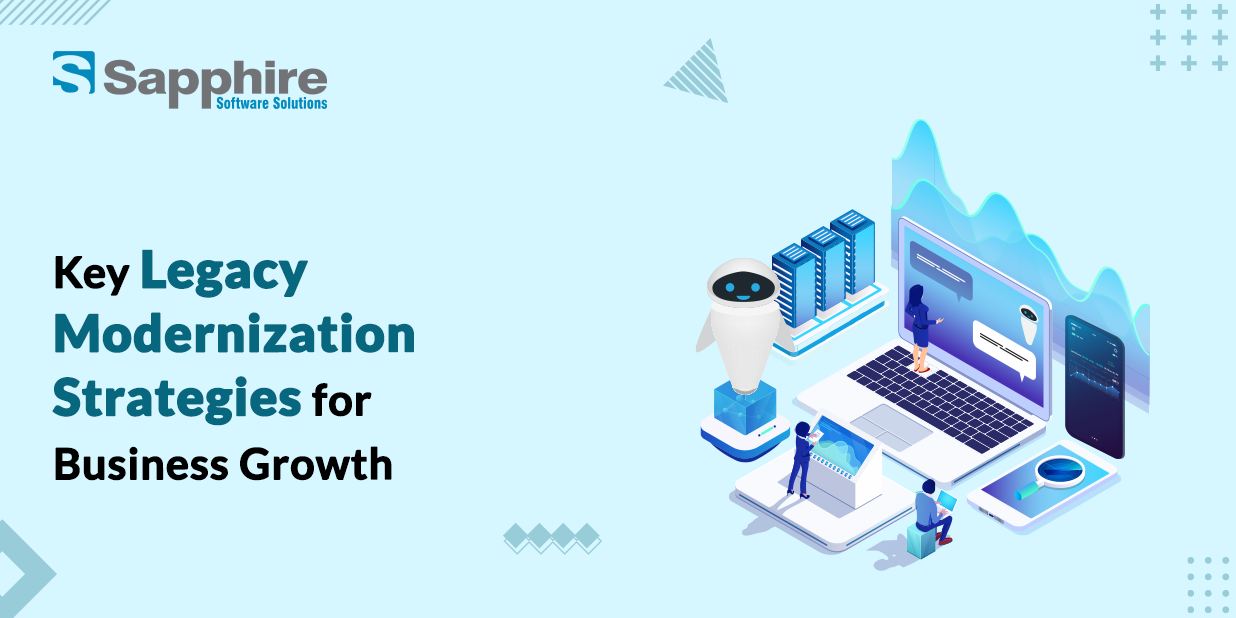
Modernization is not a one-size-fits-all initiative. Organizations must evaluate current systems, business goals, user challenges, and scalability needs before selecting the right approach. Different legacy modernization strategies help businesses evolve without losing the core logic that drives operations.
One common strategy is rehosting, often known as “lift and shift,” where companies move applications to modern cloud platforms without rewriting the code. This is fast, cost-efficient, and offers immediate performance gains. Another approach involves refactoring, which restructures code to optimize performance, enhance flexibility, and support new technologies.
Modernization can also involve rearchitecting legacy systems to adopt microservices and container-based structures. This helps organizations break monolithic applications into independent services, enabling faster updates and improved fault tolerance. In many cases, companies choose gradual modernization by retaining critical modules while introducing modern features in phases.
Whichever method businesses choose, success depends on aligning the modernization roadmap with business priorities, scalability expectations, and long-term digital transformation goals. When done right, modernization becomes a powerful accelerator for innovation, efficiency, and sustainable growth.
Comprehensive Legacy Modernization Services Explained:-
Modernization extends beyond software updates; it touches data, infrastructure, user experience, workflows, workflows, and business intelligence. Legacy modernization services typically include application reengineering, cloud migration, database modernization, UI/UX redesign, and platform re-architecture. These services ensure that technology infrastructure aligns with contemporary performance standards and long-term scalability aspirations.
Organizations may choose incremental modernization or full-scale transformation. Incremental upgrades often focus on critical modules first, ensuring minimal disruption while enhancing functionality step-by-step. Full transformation may involve migrating entire applications to cloud environments, rebuilding systems using microservices, or adopting low-code platforms to accelerate development.
The right modernization partner evaluates system complexity, integration dependencies, security gaps, compliance needs, and automation potential before recommending a solution. They also consider user experience that modern systems should empower employees, enhance collaboration, and improve decision-making.
Businesses benefit most when modernization is not just a technology upgrade, but a strategic journey guided by measurable performance improvements, lower maintenance overheads, robust security, and future-ready technical capabilities.
Legacy Software Modernization Services: Enhancing Application Performance:-
Performance is a defining factor in competitive industries. Legacy applications often struggle with responsiveness, scalability challenges, and resource inefficiencies. Over time, code complexity, outdated libraries, and obsolete frameworks make maintenance more expensive and integration more difficult.
This is where legacy software modernization services come into play. They focus on optimizing code, updating frameworks, modernizing databases, and upscaling software architecture to deliver faster performance and improved stability. Performance modernization sometimes involves adopting cloud-native architectures, leveraging automation for deployments, and implementing modern CI/CD pipelines.
Businesses must also prioritize enhanced security measures, updated APIs, seamless interoperability, and modern authentication protocols. A high-performance system contributes directly to customer satisfaction, employee productivity, and more efficient operations.
Proven Legacy Modernization Techniques to Drive ROI:-
Modernization investment should always deliver measurable returns. Successful initiatives rely on effective approaches that balance risk, cost, and future-proofing. Common legacy modernization techniques include replatforming, refactoring, containerization, API enablement, and transitioning towards microservices.
Another impactful technique involves data modernization, consolidating distributed data sources, improving data governance, enabling business intelligence, and powering AI-driven decision capabilities. Enhancing data infrastructure unlocks real-time insights that improve forecasting, customer engagement, and operational planning.
User-experience upgrades also drive ROI by reducing support costs, increasing adoption rates, and improving employee efficiency. With modern interfaces and automation, teams work faster and smarter, contributing to business growth.
Return on investment is highest when modernization aligns with business value drivers, revenue enablement, customer experience enhancement, cost optimization, and the ability to respond quickly to market shifts. Companies that treat modernization as a strategic asset experience long-term competitive advantage.
Legacy Application Modernization Services: Driving Efficiency and Growth:-
Operational efficiency defines profitability. Outdated systems often create bottlenecks, slow processing, manual workflows, disconnected platforms, and data accessibility challenges. Legacy Application Modernization Services focus on removing these gaps by transforming applications into secure, automated, and collaborative digital environments.
Modernized applications help businesses reduce manual intervention, accelerate data processing, improve compliance readiness, and support remote or distributed teams. Organizations can also integrate AI, machine learning, robotic automation, and predictive analytics once infrastructure becomes capable of supporting modern workloads.
In addition to upgrading existing enterprise systems, many organizations also explore Product Modernization Services to transform legacy software products into scalable, market-ready platforms designed for today’s digital economy. This approach often includes rebuilding outdated product architectures, enhancing performance, refining user experiences, and aligning with modern cloud ecosystems. The goal isn't just technical improvement; it's enabling companies to extend product life cycles, improve competitive positioning, and unlock new revenue opportunities across digital channels.
Choosing the Right Software Modernization Services Company for Your Business:-
Successful transformation requires expertise, planning, and execution of excellence. Choosing the right partner is crucial when investing in modernization. A seasoned Software Modernization Services Company understands not only technology evolution but also business operations, security priorities, and industry-specific challenges.
The ideal partner performs a comprehensive system assessment, develops tailored roadmaps, supports phased modernization, and ensures seamless integration without disrupting business activities. They should have experience across cloud platforms, enterprise applications, data modernization, microservices, and automation tools. Additionally, strong UX capabilities ensure applications remain intuitive and user-friendly.
Transparency, ongoing communication, and performance tracking are essential qualities to look for in a modernization partner. The goal is not temporary fixes, but long-term reliability, scalability, and technology evolution aligned with business goals.
With the right modernization partner, organizations reduce project risk, accelerate delivery timelines, and secure maximum return on modernization investments.
Conclusion:
Every organization eventually reaches a crossroads—where existing technology either continues to hold it back or becomes the foundation for something greater. Legacy modernization isn’t just an IT initiative; it’s a business reinvention opportunity. It’s the difference between maintaining systems and mastering transformation.
Modernization empowers companies to move faster, make smarter decisions, and deliver experiences that match the speed of their customers’ expectations. It aligns technology with business ambition—unlocking new revenue streams, enabling data-driven innovation, and reducing long-term operational friction.
At Sapphire Software Solutions, we believe modernization is not about discarding the old, but about elevating what already works and reshaping it for the digital economy.