















Edge Computing Meaning Demystified: From Cloud to Edge in Minutes:-
Edge Computing Definition:
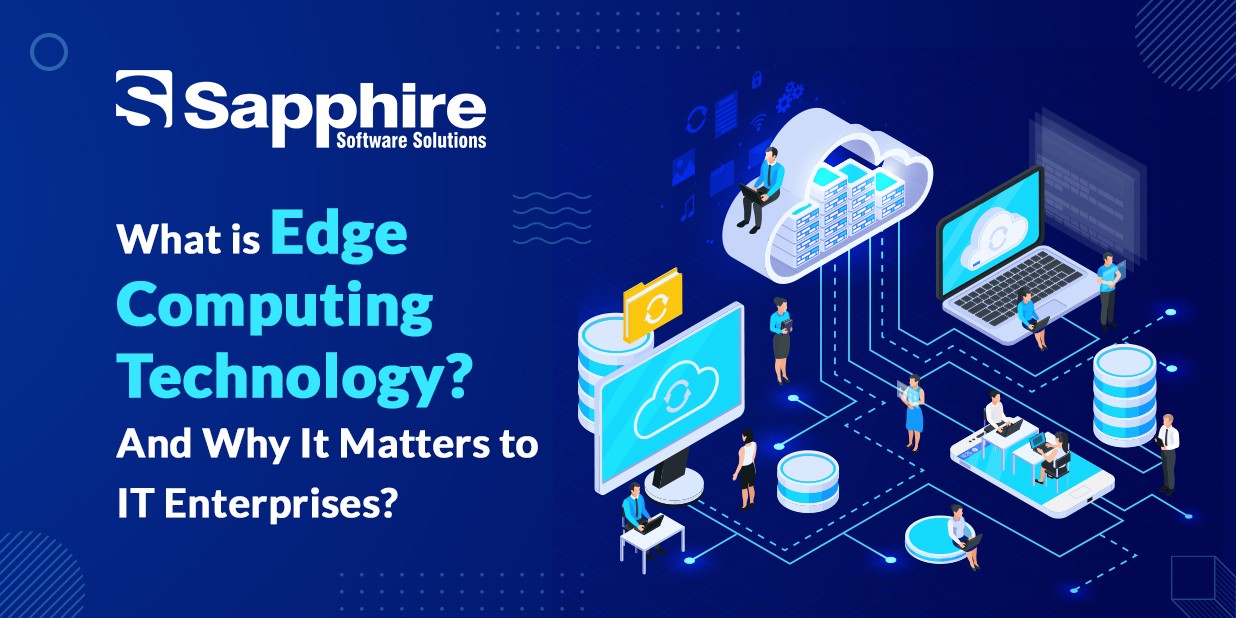
Edge computing does chores locally, therefore lessening the need to send all data to a centralised cloud. For uses needing real-time or near-real-time decision-making, especially, this improves speed and responsiveness.
Key concepts:
- Instant processing close to the data source helps to reduce latency.
- Bandwidth efficiency: Less data is flown to the cloud.
- Compliance and security: Local processing guarantees that private information remains within defined geographical boundaries.
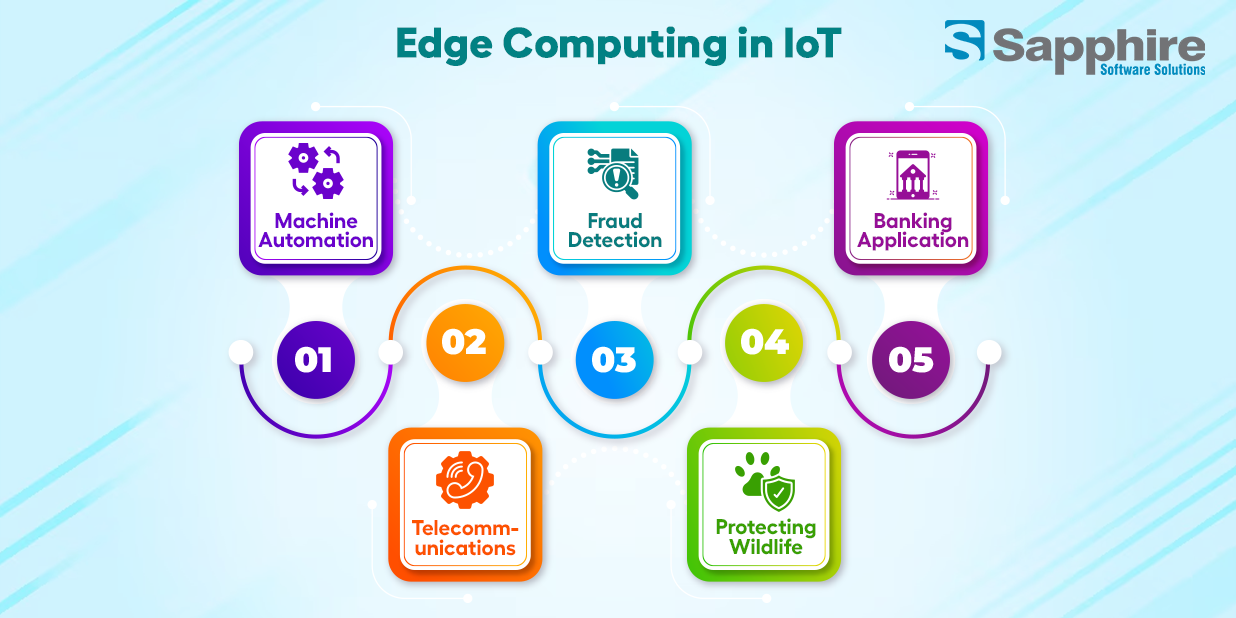
Edge Computing in IoT: Real-World Applications You Need to Know
IoT (Internet of Things) devices are creating data in unprecedented proportions. Edge computing lets these devices evaluate and act on data without depending totally on centralised cloud infrastructure.
Real-world examples:
- Devices like smart thermostats and security cameras make local judgments (e.g., turning on lights when someone walks into a room).
- Healthcare: Real-time alerting of healthcare personnel by wearable health monitors helps to identify abnormal heart rhythms.
- Manufacturing: Early fault detection by sensors in industrial equipment helps to reduce expensive downtime via predictive maintenance.
- Retail in-store analytics track consumer activity data on-site to maximize product positioning or inventory control.
Iot devoid of edge computing is like an automobile forwarding every driving choice to a distant control center. Edge computing makes it more like having a smart co-pilot right at your side.
How Edge Computing Architecture Is Powering Smart Cities, Iot, and 5G?
Edge computing is a basic architectural change redefining the operation of digital infrastructure, not just a term. Fundamentally, edge computing allows quicker, smarter, and more efficient systems by bringing processing capability and data analytics closer to the source of data generation. This is particularly important for driving 5G networks, Iot ecosystems, and smart cities, as well as other developing technologies.
Smart Cities:
Real-time data fuels smart cities' ability to control public transit, energy networks, traffic systems, and emergency services. Conventional cloud-based computing might cause delays, therefore impairing real-time responsiveness. Edge computing allows local data processing, therefore addressing this. Smart traffic lights, for instance, may instantaneously change signals depending on current traffic flow without waiting for cloud-based instructions, therefore enhancing traffic management and lowering congestion.
IOT (Internet of Things):
From industrial sensors to home automation systems, IoT (Internet of Things) devices are often installed in large, scattered networks. Costly and ineffective is sending all of your data to a centralised cloud. Edge design lets data be filtered, examined, and acted upon right away by distributing computing across gateways and local nodes. Especially in mission-critical uses like industrial automation or healthcare monitoring, this increases performance and lowers bandwidth consumption.
5G Networks:
5G's deployment provides ultra-low latency and tremendous bandwidth, a perfect partner for edge computing. Using Multi-Access Edge Computing (MEC), telecom companies are delivering services like autonomous car assistance straight from edge servers near customers, real-time video analytics, and AR/VR experiences. This local-first strategy improves user experiences and guarantees fast reaction times.
Edge computing, IOT, and 5G taken together represent a dynamic triumvirate transforming the digital terrain. Edge architecture guarantees operational efficiency, real-time decision-making, and the basis for inventions defining the next generation of smart technology.
Top Edge Computing Solutions for Businesses in 2025:
1. AWS IoT Greengrass:
Amazon's Greengrass lets AWS perform operations, data management, and secure communication even off-site by extending AWS to edge devices. For situations like agricultural, remote monitoring, and industrial automation, which call for intermittent connectivity, it is perfect.
2. Microsoft Azure IoT Edge:
Azure IoT Edge brings cloud intelligence to edge devices. It lets developers use custom code, stream analytics, and machine learning right at the edge of hardware. It's a go-to for enterprise-grade installations as it fits so well with Azure's IoT ecosystem.
3. Google Distributed Cloud Edge:
This completely managed solution puts the infrastructure of Google Cloud closer to the data collecting location. Designed for telecom and business use cases, it offers low-latency apps like AR/VR, gaming, and retail analytics with edge support for Anthos and Kubernetes.
4. Cisco Edge Intelligence:
Designed for industrial situations, Cisco's solution offers a safe means of gathering, processing, and delivering data from the edge to multi-cloud systems. In industry and utilities, where device-level data is absolutely vital, it is ideal.
5. HPE Edgeline Converged Systems:
Hewlett-Packard Enterprise provides tough, high-performance edge systems integrating computation, storage, and analytics. These are perfect for military activities, oil rigs, and transportation systems—hardy surroundings.
Businesses have to choose edge solutions fit for their industry needs, scalability targets, and cloud computing plans in 2025. Leading platforms that provide scalable, safe, intelligent edge computing systems fit for contemporary businesses include those described above.
Edge Computing Benefits That Make It Better Than the Cloud:
1. Ultra-Low Latency:
Edge computing's capacity for real-time answers is among its main benefits. Edge devices localise information rather than forwarding it to a centralised cloud server. Applications include driverless cars, real-time video analytics, robotics, and augmented reality, where even a few milliseconds of delay may have a significant impact—they depend on this.
2. Bandwidth Optimisation:
Sending hundreds or thousands of IoT devices' worth of data to the cloud may tax network capacity and raise prices. By evaluating and filtering data at the edge, edge computing lowers this burden and guarantees that only relevant data is sent to the cloud for long-term storage or further processing.
3. Enhanced Data Security:
Locally processing data reduces any security breach during transmission. Edge computing lets sensitive data be handled on-site, following data residency and privacy rules more easily, especially in sectors with strong compliance demands such as banking, healthcare, or government.
4. Greater System Reliability:
Edge computing guarantees that important processes may continue without disturbance in cases where regular access to the cloud cannot be ensured. Local processing helps apps to operate even in the event of network outages.
5. Smarter, Faster Decisions:
Edge-enabled analytics lets companies make quicker, better choices. Edge computing improves operational agility and responsiveness from tailored experiences in retail to predictive maintenance in manufacturing.
Edge computing enhances the cloud rather than replaces it; it provides a hybrid model in which real-time processing, privacy, and speed are paramount.
Choosing the Best Edge Computing Platform for Your Needs:
1. Integration with Existing Cloud Infrastructure:
Search for systems that fit your present cloud provider (AWS, Azure, Google Cloud, etc.). Data flow, security regulations, and analytics across cloud and edge settings all become simpler in a single ecosystem.
2. Support for AI and Machine Learning:
Verify that the platform provides edge AI/ML capabilities if your company depends on real-time analytics or intelligent automation.
3. Scalability and Flexibility:
Select a forum fit for your expansion. Whether you are installing 10 devices or 10,000, your edge infrastructure should grow readily without adding complexity or downtime.
4. Security and Compliance:
Edge Computer Services calls for security of great relevance. Search for systems providing end-to-end encryption, identity management, safe boot, and frequent industry standard compliance upgrades for GDPR or HIPAA.
5. Device and Application Management:
Long-term operations depend critically on effective management of edge nodes, firmware updates, and system health monitoring. Choose systems with integrated automatic upgrades, remote monitoring, and device lifecycle management.
6. Cost and Licensing:
Know the price structure; some systems call for pay-as-you-go billing while others need hardware purchases or licencing costs. Match the value given to your budget.
Selecting an edge computing platform is essentially about matching features to corporate objectives. Starting with a pilot project, assess performance and scale progressively for best effect and return on investment.
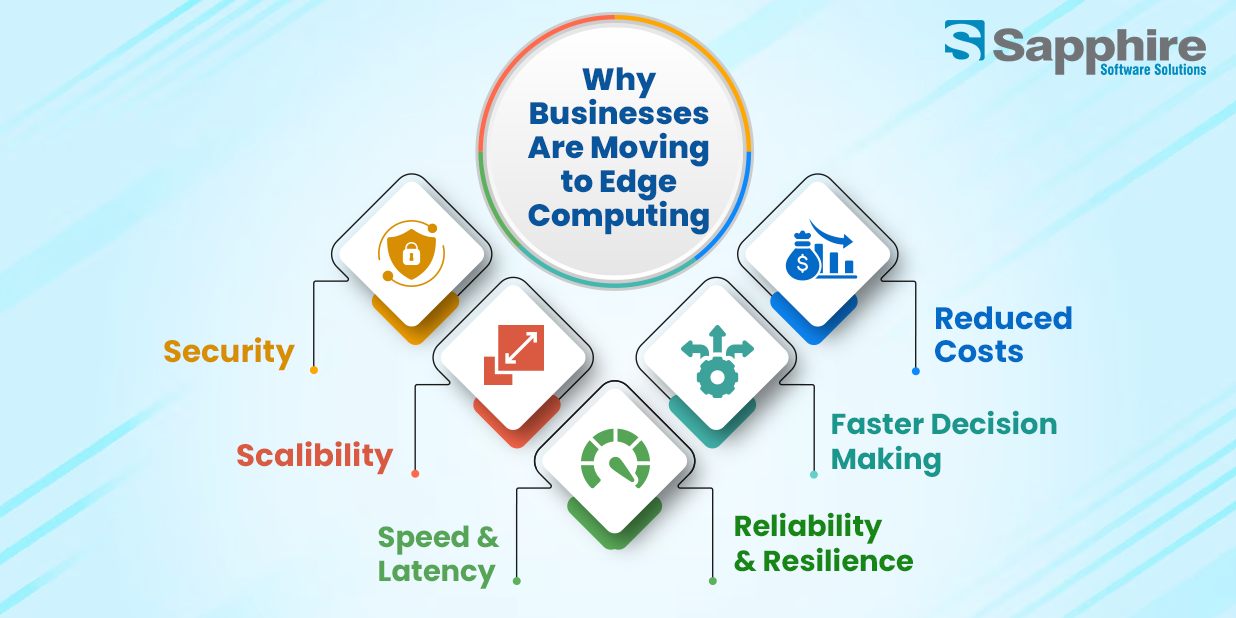
Why Businesses Are Moving to Edge Computing Services?
1. Real-Time Insights and Decision-Making:
Companies cannot afford delays in data analysis anymore. Edge computing processes data on-site or close to the source, therefore providing real-time insights. Manufacturing facilities, for instance, can quickly identify equipment problems; logistics firms can track and reroute cars in real time.
2. Operational Efficiency:
Edge services help businesses cut their requirement to send all data to centralised cloud servers. Faster reaction times, less latency, and better general system performance follow from this. Edge computing also lessens the burden on cloud infrastructure, therefore enabling companies to more wisely maximise resources.
3. Improved Customer Experience:
Edge computing lets companies provide speedier, more customised interactions from bespoke in-store experiences in retail to real-time service updates in transportation. Faster reaction to consumer behaviour, preferences, and requirements made possible by localised data processing.
4. Lower Costs:
By removing extraneous data before it reaches the cloud, edge computing aids in lowering bandwidth and storage expenses. Furthermore, decreased reliance on faraway data centers results in cost reductions for processes sensitive to latency and network utilisation.
5. Enhanced Security and Compliance:
Many different sectors have to follow rigorous data privacy regulations. Edge solutions let companies retain private data locally, therefore reducing risk and streamlining GDPR or HIPAA compliance.
Edge computing services are, all things considered, enabling companies to become smarter, more agile, and more competitive.
Why Choose Sapphire Software Solutions?
1. Tailored Edge Computing Solutions:
At Sapphire, we know that two companies are never the same. Rather than providing one-size-fits-all solutions, we create personalised edge computing solutions appropriate for your sector, company objectives, and technological environment.
2. Full-Stack Expertise:
Our staff consists of talented experts in IoT, edge, cloud, and artificial intelligence/machine learning technologies. From edge strategy consultation and solution design to implementation, monitoring, and optimisation, we provide end-to-end assistance, thereby assuring a seamless digital transformation path.
3. Seamless Integration with Cloud Providers:
Our area of expertise is combining edge computing with the main cloud providers such as Google Cloud, Azure, and AWS. While keeping consistency throughout your IT scene, this hybrid solution enables your company with the quickness of the edge and the scalability of the cloud.
4. Focus on Security and Compliance:
Every one of our edge installations first considers security. Sapphire uses compliant systems catered to your sector, robust data encryption, and safe access restrictions. Whether your data is handled locally or synchronised to the cloud, this guarantees its continued safety.
5. Proven Track Record:
From lower latency and cost savings to better decision-making, Sapphire has produced powerful edge computing solutions that generate actual results, trusted by both big businesses and SMES alike.
From Cloud to Edge — Experience the Evolution
Conclusion:
Edge computing is improving the cloud rather than replacing it. Edge computing provides the agility and speed required to remain competitive as sectors become increasingly linked, dispersed, and data-driven. From smart factories to driverless automobiles, the edge is where the next wave of digital revolution finds expression.
IT enterprises that use this technology today will lead tomorrow.