















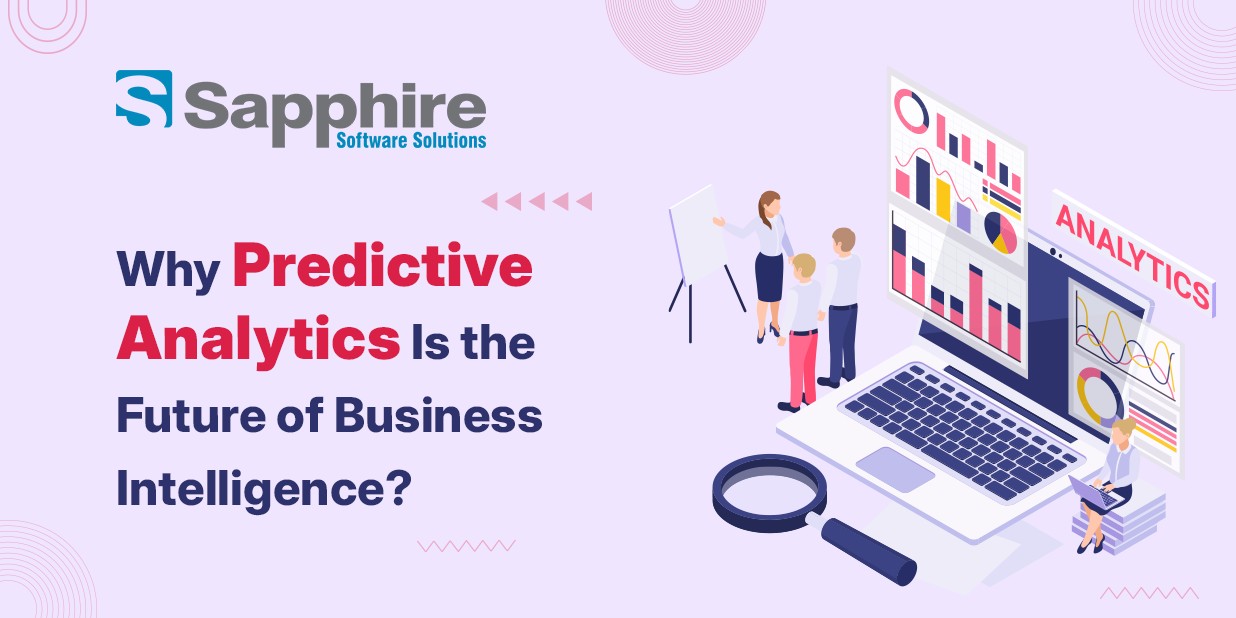
In an era where data is the new currency, organizations are continually seeking smarter ways to stay ahead. Enter predictive analytics, the game-changer that’s transforming raw information into forward-thinking strategies. More than just number crunching, predictive analytics is about understanding patterns, forecasting future outcomes, and empowering businesses to make proactive, rather than reactive, decisions.
Business intelligence is no longer limited to what has happened. The question now is, what will happen next? That’s exactly where predictive analytics shine. Companies across various industries are utilizing it to mitigate risks, identify opportunities, and streamline processes. Whether it’s anticipating customer behavior, managing inventory, or detecting fraud, predictive analytics is shaping the decision-making backbone of modern enterprises.
Let’s explore why predictive analytics is no longer optional but essential for future-ready businesses.
What is Predictive Analytics?
Predictive analytics refers to the use of statistical algorithms, data mining, and machine learning techniques to analyze historical data and forecast future trends or events. It’s a blend of mathematics, technology, and business insight, giving organizations a powerful lens to anticipate outcomes before they occur.
It works by identifying relationships in data, creating predictive analytics models, and applying these insights to future scenarios. For example, a retail chain can use predictive analytics to understand which products are likely to sell out next season. Or a bank might use it to detect potential loan defaults based on customer behavior patterns.
With the rise of predictive analytics AI, machines can now self-learn from data, improving predictions over time. AI-driven predictive models make the process more accurate and scalable, delivering real-time insights that once took weeks to process.
In short, predictive analytics bridges the gap between data collection and smart action, the very essence of modern business intelligence.
Why is Predictive Analytics Important for the Future?
The world is moving fast. Consumer preferences shift overnight. Market disruptions happen without warning. In this environment, businesses can no longer afford to rely solely on backward-looking metrics.
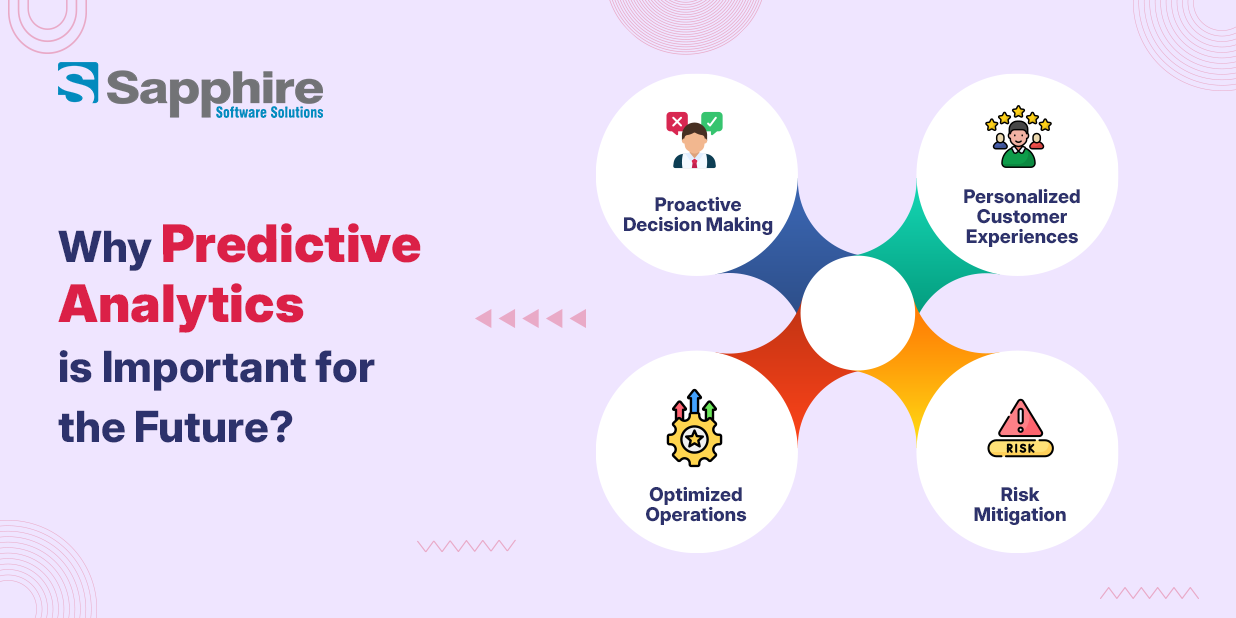
Here’s why predictive analytics is important for the future:
- Proactive Decision Making: Instead of waiting for a problem to occur, businesses can anticipate and prevent it. That’s a competitive edge few can ignore.
- Personalized Customer Experiences: With predictive analytics in marketing, companies can understand customer journeys and deliver hyper-personalized content and offers that convert.
- Optimized Operations: Predictive models can forecast demand, optimize supply chains, and reduce operational waste.
- Risk Mitigation: Whether it's cybersecurity threats or financial fraud, predictive analytics help businesses prepare and respond swiftly.
In sectors like healthcare, the role of predictive analytics in healthcare is already revolutionizing diagnosis, patient monitoring, and treatment plans.
The future will favor companies that don’t just react but predict, nd that’s the power of predictive analytics.
How does Predictive Analytics Work?
At its core, predictive analytics involves a multi-step process, and while the backend is complex, the logic is simple: learn from the past to shape the future.
Here’s how it typically works:
- Data Collection: From CRM systems, transaction records, IoT sensors, or social media, businesses gather historical and real-time data.
- Data Cleaning and Processing: This ensures quality and consistency of messy data leads to poor predictions.
- Modeling: Using statistical algorithms and machine learning, the system builds a predictive analytics model that correlates past data with potential outcomes.
- Validation: The model is tested against new data to measure accuracy.
- Deployment: Once validated, the model is used in living environments to generate predictions.
- Monitoring & Improvement: With AI, models can continuously learn and evolve.
Modern predictive analytics tools make this process more user-friendly and accessible to non-technical users, meaning business teams can act on predictions without needing data scientists at every step.
How Businesses Use Analytics?
The applications of predictive analytics in business are almost limitless — from startups to Fortune 500 companies, businesses are unlocking their potential in diverse ways.
Here are a few practical use cases:
- Marketing and Sales: Anticipating customer churn, identifying upsell opportunities, segmenting audiences more effectively, and improving conversion rates.
- Finance: Credit scoring, fraud detection, and revenue forecasting.
- Retail: Demand forecasting, inventory optimization, dynamic pricing, and personalized recommendations.
- Manufacturing: Predictive maintenance of equipment, quality control, and supply chain optimization.
- Healthcare: As already mentioned, predictive analytics in healthcare aid early disease detection, patient risk analysis, and personalized treatments.
By integrating predictive analytics software into their BI platforms, companies are turning data into intelligent action, not just dashboards and reports.
Top Predictive Analytics Methods and Models You Should Know:-
To get meaningful predictions, businesses rely on robust methodologies and algorithms. Let’s break down some of the most widely used predictive analytics methods and models:
Common Methods:
- Regression Analysis: Predicts a numeric value, like sales or pricing trends.
- Classification: Categorizes data into groups, such as approving or denying a loan.
- Clustering: Finds patterns in data, often used in customer segmentation.
- Time Series Analysis: Useful for forecasting sales, stock prices, or energy usage over time.
Popular Predictive Analytics Models:
- Decision Trees: Simple and intuitive, often used for classification problems.
- Neural Networks: Mimic human brain patterns, great for complex predictions.
- Random Forests: Combine multiple decision trees for better accuracy.
- Logistic Regression: Works well when outcomes are binary (e.g., will a customer churn? Yes or No).
- Support Vector Machines (SVM): Useful for classifying large datasets.
With the rise of predictive analytics AI, these models are becoming smarter and more adaptive. AI enhances its accuracy, enabling businesses to get better outcomes with less human intervention.
Best Predictive Analytics Tools and Software:-
The market is flooded with tools promising powerful predictions, but the best predictive analytics software balances usability, scalability, and performance.
Here are a few stand-out predictive analytics tools:
- IBM SPSS Modeler: Known for its intuitive UI and strong statistical capabilities.
- SAS Advanced Analytics: Offers comprehensive data mining and machine learning features.
- RapidMiner: Open-source and great for enterprises seeking customization.
- Tableau + Einstein Analytics (Salesforce): Integrates analytics into dashboards with AI capabilities.
- Microsoft Azure ML Studio: A cloud-based solution combining drag-and-drop tools with enterprise-level capabilities.
- Google Cloud AI Platform: Scalable and designed for deep learning applications.
- Python + Scikit-learn/TensorFlow: For teams with data science expertise, these libraries offer full control and power.
These platforms allow companies to build, train, and deploy models faster, making predictive analytics more mainstream across industries.
Choosing the Right Predictive Analytics Solution for Your Business:-
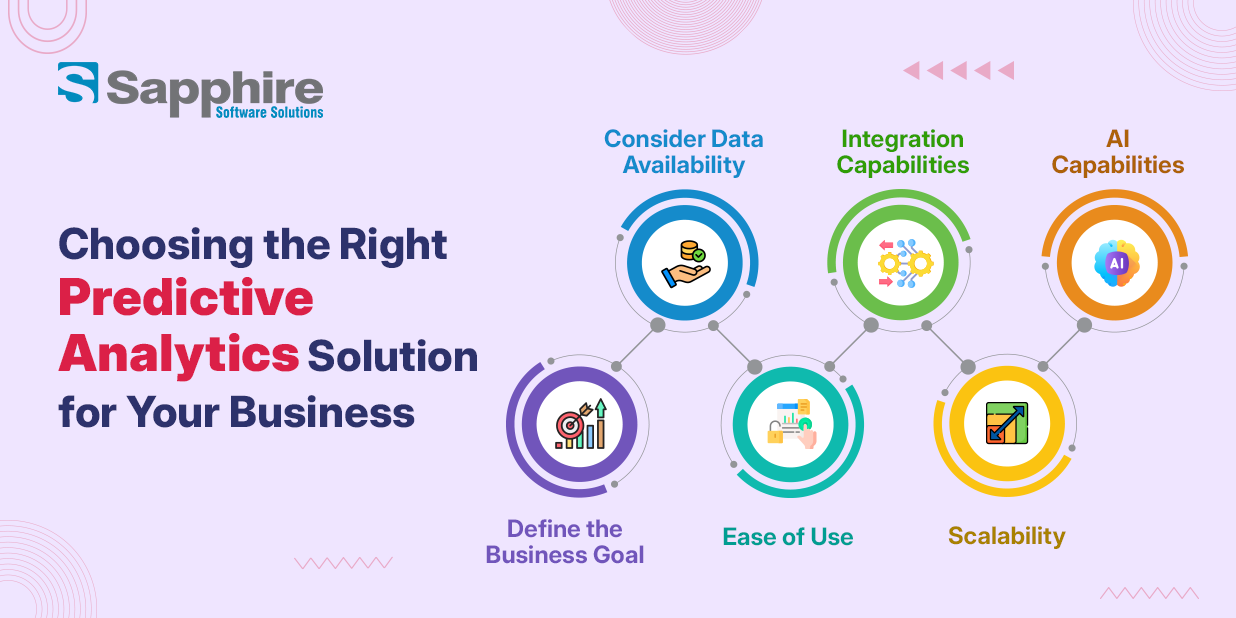
Selecting the right predictive analytics solution depends on your business needs, team skills, budget, and industry challenges.
Here are some tips:
- Define the Business Goal: Are you trying to reduce churn, forecast demand, or detect fraud?
- Consider Data Availability: The quality and quantity of your data significantly impact the results.
- Ease of Use: Choose a tool that our team can operate independently or with minimal training.
- Integration Capabilities: Ensure the software integrates well with your existing BI stack.
- Scalability: Your needs will grow; choose a platform that grows with you.
- AI Capabilities: The best solutions today include predictive analytics AI to automate learning and optimization.
No matter what industry you're in, a tailored predictive analytics solution can help you uncover hidden value from your data and act with confidence.
Why Sapphire Is the Trusted Company for Future-Ready Businesses?
With hundreds of tools and models available, navigating the predictive analytics landscape can be overwhelming. That’s where expert partners make all the difference.
Sapphire Software Solutions is a leading predictive analytics services company, trusted by forward-thinking businesses worldwide. Here’s why:
- Customized Solutions: We don’t believe in one-size-fits-all. Our team builds tailored predictive models based on your specific business context.
- End-to-End Expertise: From data integration and model building to deployment and monitoring, we’ve got it covered.
- Results-Oriented Approach: Our focus is on business outcomes, not just technical delivery. We help you move from insights to impact.
When you're ready to turn data into a future-proof strategy, Sapphire is the predictive analytics business partner you can rely on.
Conclusion:
As businesses brace for a future defined by uncertainty and competition, the ability to predict trends, behaviors, and outcomes becomes indispensable. Predictive analytics offers more than just insights; it delivers foresight, agility, and transformation.
Whether you're looking to improve customer experiences, reduce risks, or unlock hidden opportunities, predictive analytics is your compass in a data-driven world.
And with the right predictive analytics company by your side, like Sapphire Software Solutions, you’re not just preparing for the future. You’re building it.