















Artificial Intelligence (AI) is no longer a science fiction reality—it has become a day-to-day norm in business life. From chatbots that automate customer service to predictive analytics that provide insights, AI has been a game-changer in every industry. But with its accelerating adoption comes an all-too-often unseen problem: Shadow AI.
Similar to "shadow IT" a decade earlier, when workers utilized unauthorized tools beyond company control, AI shadow procedures are growing at an alarming rate. Workers now frequently employ tools such as ChatGPT, Jasper, Copy.ai, or other shadow AI applications without notifying their IT or compliance departments. Although this may appear innocuous or even beneficial to productivity, it can leave companies vulnerable to security threats, compliance violations, and intellectual property breaches.
The idea of long shadow AI isn't merely the concealment of tools—it's the long-term effect of unmanaged AI use on companies. It might be a designer toying with a drop shadow in AI for graphic design, a writer writing with a shadow writer AI, or a marketer using a shadow maker AI generator, but the truth is the same: when AI use is concealed from organizational management, danger accelerates.
What Exactly Is Shadow AI and Why Is It Growing So Fast?
Fundamentally, shadow AI is a term used to describe the use of artificial intelligence software inside a company without knowledge, consent, or approval of the IT department or business leadership. It might be employees utilizing a shadow AI application, a shadow AI generator, or even shadow writer AI software to carry out tasks ranging from writing documents to analyzing sensitive company information. Unlike sanctioned tools, shadow AI exists "under the radar," and thus it is both a source of innovation and an emerging threat.
So why is it growing so fast? One major reason is the availability of AI tools. Employees no longer must pay for pricey enterprise software—cloud-based AI platforms are frequently low-cost or even free, so anyone can use them in seconds. Coupled with today's productivity demands, where workers are tasked with doing more with less, AI has become a desirable shortcut.
The other driver is the boom of generative AI. With tools that emulate human-like answers, generating designs, or even managing shadow work AI duties, workers feel empowered to fix issues at once. Yet many are not aware of the security risks. Disclosure of sensitive company data to unauthorized AI threatens data exposure to third-party servers, thus posing compliance and privacy issues.
What are the risks of shadow AI in Businesses?
The threats posed by shadow AI extend much more than simply unauthorized use of software—shadow AI impacts an organization's security, compliance, and long-term stability. When end users use shadow AI applications, shadow writer AI, or other unchecked tools, they inadvertently introduce vulnerabilities that business leaders struggle to control.
One of the largest issues is data security. Workers may copy sensitive financial reports, customer information, or even proprietary code into a free shadow AI generator without realizing that third-party servers may store or repurpose the information. This provides the opportunity for cyberattacks, hacks, or unauthorized usage of sensitive company data.
Just as far as I am concerned is the compliance issue. For sectors such as healthcare, government, or banking, regulations like GDPR or HIPAA have stringent rules governing data management. One single use of shadow AI would precipitate significant fines, litigation, or revocation of operating permits.
Another hazard is intellectual property spilling. Groups testing AI-based design software—such as applying drop shadow in AI design functionalities—or writing strategies with shadow work AI may unintentionally reveal trade secrets to outside systems.
Apart from security and legal concerns, shadow AI creates operational fragmentation. If each department uses its own unauthorized tools, workflows become inconsistent, mistakes increase, and accountability suffers. Finally, the reputational risks cannot be omitted. If clients or investors find relaxed AI governance, they can lose trust in the company to safeguard information and act responsibly.
Is “Drop Shadow in AI” a Design Term or a Security Concern?
The term "drop shadow in AI" is somewhat ambiguous. In design parlance, "drop shadow" is the visual effect in Adobe Illustrator (AI) or any design software to add depth and highlight to graphics. But in the case of shadow AI, the terminology is different.
It points out the simplicity with which creative teams can leverage AI-driven design software in the absence of formal control. For instance:
A designer can utilize a shadow maker's AI generator to develop rapid visualizations.
A marketer can play around with automated design templates that feature AI-generated effects such as shadows or highlights.
Though the design output seems innocuous, the actual problem is that most of these tools actually ask users to upload brand material or sensitive creative files. If the AI tool is not vetted by the company, those files may be saved on third-party servers, making them vulnerable to theft or misuse.
So yes, drop shadow in AI is a design term as well as a security issue, depending on the situation. It reminds us that even artistic tools need to be screened for security and compliance hazards before they can be widely adopted within a business.
Tools Behind the Curtain: The Rise of Shadow AI Apps
The fast development of shadow AI applications has emerged as one of the most prominent challenges facing contemporary organizations. They are unlike conventional software that flows through proper IT channels and instead are often embraced quietly by staff who desire speedier solutions. The categories are wide-ranging. For example, bloggers and content developers are now depending more on shadow writer AI or shadow maker AI tools to write blogs, social media content, or advert copy within minutes.
Productivity-oriented personnel utilize shadow work from AI assistants to paraphrase meetings, create emails, and carry out similar office chores. Designers are trying out shadow AI generators for illustrations, icons, and even visual effects such as drop shadow in AI, while analysts might use free AI dashboards to process customer or sales data outside of approved platforms.
The attraction is obvious: these applications are quick, affordable, and don't require an approval process. But each take-up generates a new "shadow" within the business environment. IT teams tend to overestimate how deeply integrated these tools really are, making it harder to gain visibility and control.
The actual problem isn't blocking apps so much as why employees adopt them. Employees seek convenience, effectiveness, and innovation. With a collaborative relationship with a Leading Generative AI Development Company, organizations can offer secure, vetted alternatives that are of equal value. This enables passion around AI to be directed into safe, scalable innovation instead of unmanaged risks.
How to Identify and Control Shadow AI in Your Company?
Confronting shadow AI risk begins with one essential move: visibility. If you don't know where unauthorized AI is operating in your company, you can't possibly manage it. Workers could be running a shadow AI app, a shadow writer AI, or even shadow AI generators for free to accelerate tasks without even knowing they are exposing sensitive data. Companies must have a systematic solution to this problem.
Step one is to conduct an audit of the digital landscape. Periodic monitoring, employee surveys, and scanning tools from IT can identify active unsanctioned tools in your company. Second, educate employees. Most employees use AI shadow tools due to convenience rather than ill will. Training sessions that describe the threats and repercussions can change behavior while promoting responsible innovation.
Providing approved alternatives is also important. If employees are leveraging shadow work AI for content creation or note-taking, providing enterprise-class generative AI platforms gives the same productivity gain without security implications. Meanwhile, companies should have well-defined AI policies that define acceptable tools, data handling processes, and compliance standards.
How Can an AI Development Company Like Sapphire Transform Your Business?
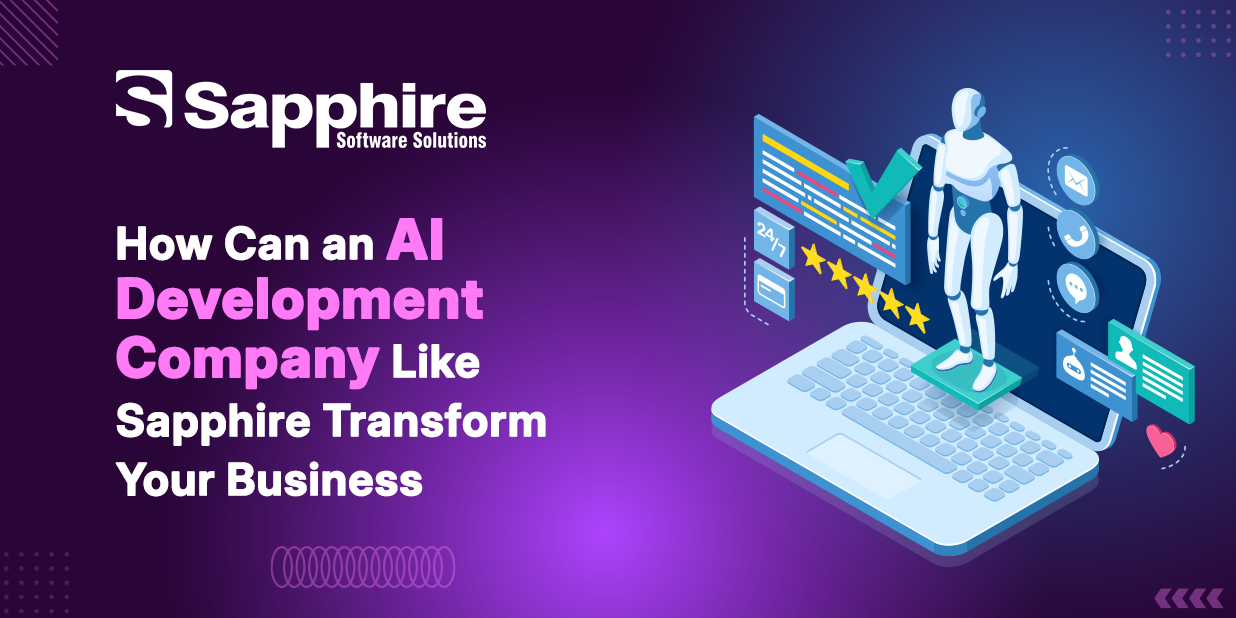
While shadow AI is a serious issue, the solution is not to eschew AI entirely but to adopt it in a safe, ordered, and strategic manner. This is where an established partner like Sapphire Software Solutions, a Top AI Development Company, is invaluable. With the right partner, businesses can turn away from dangerous shadow AI apps and substitute them with compliant and innovative solutions, all by working together with professional on-demand developers and AI experts.
One of Sapphire's competencies is creating bespoke AI solutions. Rather than having employees use unauthorized shadow AI generators or shadow writer AI tools, Sapphire constructs custom-built applications that fit your industry and organizational purposes. This means that productivity gains are achieved without sacrificing data privacy.
As a generative AI innovation firm, Sapphire Software Solutions also assists companies in embedding innovative capabilities such as smart chatbots, predictive analytics, and natural language generation. Companies can realize the same advantages employees desire from shadow work AI, but with enterprise-class governance and scale.
Just as relevant is compliance regulation. With legislation such as GDPR and HIPAA defining how companies manage data, Sapphire guarantees all AI solutions adhere to strict security and compliance measures. In healthcare, finance, and more, Sapphire provides secure, AI-ready solutions for the future.
Conclusion
As AI continues to transform how businesses operate, the rise of Shadow AI poses a silent but significant threat — from data breaches to compliance violations and operational inefficiencies. Ignoring these risks can cost your business far more than just technical debt; it can erode customer's trust, damage your brand, and invite regulatory scrutiny.
At Sapphire Software Solutions, we help forward-thinking businesses regain visibility and control over their AI landscape. Our AI governance solutions and secure infrastructure services empower you to embrace AI innovation responsibly — with full transparency, compliance, and performance optimization.
If you suspect Shadow AI might be operating under your radar, or you simply want to ensure your business is AI-ready and risk-resilient, talk to our experts today. Let Sapphire help you turn AI into your greatest asset — not your biggest vulnerability.
Book a Free Consultation or explore how Sapphire can safeguard your business in the age of AI.