
















Technology has historically sparked innovation; however, over the last 20+ years, we've started our journey toward connected intelligence. Many things that we viewed as futuristic possibilities, home sensing our needs, self-driving vehicles, farms watering their fields on their own, TVs providing personalized content recommendations, have become a part of our everyday experiences, thanks to a fundamental shift in our lifestyle, supported by the smart technology system. To fully understand this transformation, it's important to explore the Smart Technology Definition: a network of intelligent, connected devices and systems that collect, analyze, and act on data to improve efficiency, automation, and user experience.
Both businesses and individuals are taking full advantage of the benefits of these smart systems, which make our lives easier, more efficient, and provide a whole new avenue of possibilities. The dynamics of smart technology are changing quickly, driven by everything from smart technology devices like wearables, and internet of things (IoT) sensors, to the sophisticated advanced technology platforms that are ultimately connecting data, machine learning, and automation.
For companies like Sapphire Software Solutions, which is recognized as an industry leader within the smart technology services arena, the objective is not to create solutions but to completely change their respective industries, create value, and continue to push innovation for the future.
Within this blog, we will provide insight into smart technology, how smart technology is changing industries like agriculture and entertainment, trends to expect soon, and the role Sapphire is playing in the transition.
What is a Smart Technology System?
Prior to venturing into how it is transforming industries, it is imperative to stop and grasp the definition of smart technology in depth. In its simplest terms, a smart technology system is simply a system of interconnected devices, sensors, apps, and platforms that not only can collect and exchange information but also analyze it in real time. In contrast to conventional systems, which are dependent on manual inputs and fixed procedures, smart systems are dynamic and responsive. They can adapt based on patterns of use, anticipate future requirements, and maximize results with minimal human intervention.
Consider a simple example in daily life: a smart thermostat for the home. At first glance, it controls temperature. In fact, it does so much more. It analyses your day-to-day habits, monitors weather forecasts, and computes the most energy-saving settings. This implies that it's not simply responding—it's actively maintaining comfort while saving energy. This principle applies to industries as well. In a factory, an intelligent system may monitor equipment health, forecast failures before they occur, and schedule maintenance automatically to prevent downtime at a significant cost.
The real strength of smart tech systems is integration. These products and systems are not individual instruments—rather, they are pieces of an overarching ecosystem. Data streams smoothly between devices, allowing for quicker and more intelligent decision-making. To illustrate, a smart supply chain system may integrate warehouse inventory, transportation management, and customer demand forecasts into one dynamic system, cutting waste and streamlining efficiency.
Exploring Popular Smart Technology Devices Transforming Industries:-
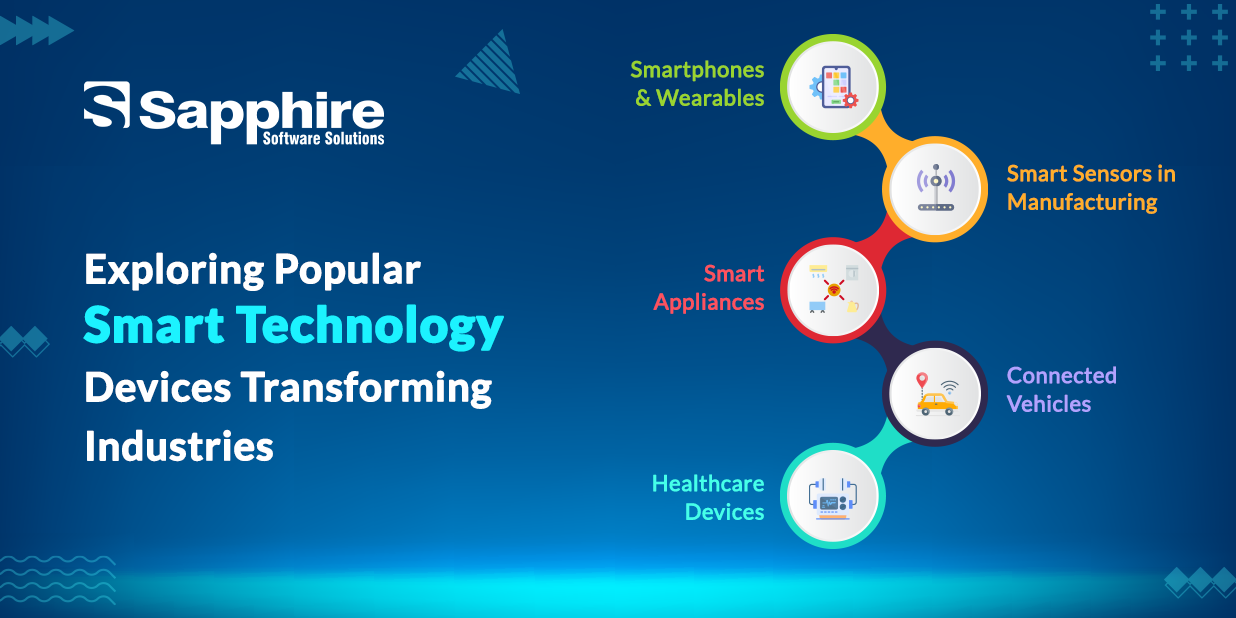
The emergence of intelligent technology devices has ushered in a new digital environment where connectivity, automation, and intelligence are ubiquitously integrated into daily activities. Far from just enhancing convenience, they are actually redefining the way industries work, businesses operate, and people live.
- Smartphones & Wearables: Smartphones have now moved from communication devices to command centers linking entire ecosystems, managing lighting, security, office equipment, and even cars. Complementing them, wearables like smartwatches and fitness bands give real-time feedback on personal health, promoting pre-emptive wellness choices. In medicine, physicians can monitor patients' vitals remotely, lessening hospital trips and facilitating early intervention.
- Smart Sensors in Manufacturing: In manufacturing plants, intelligent sensors are transforming operations. By tracking vibration, temperature, and power usage, these sensors will identify anomalies even before they turn into critical breakdowns. Sensor-driven predictive maintenance slashes downtime and operational expenditures, increasing efficiency in sectors such as automotive, aerospace, and energy.
- Smart Appliances: Households and enterprises are increasingly dependent on smart appliances. A connected refrigerator can recommend grocery lists, and an intelligent washing machine can warn customers of impending problems before they arise. For enterprises, appliance-grade machines optimize resource usage, minimize power consumption, and offer actionable intelligence regarding usage trends.
- Connected Vehicles: Today's cars are becoming digital platforms on wheels. With autonomous driving capabilities, sophisticated navigation systems, and anticipatory diagnostics, smart cars are not only making drivers safer but also building more intelligent transportation networks that minimize congestion and emissions.
- Healthcare Devices: From portable ECG monitors to AI-based diagnostic scanners, intelligent healthcare devices have revolutionized and democratized medicine. Remote monitoring devices enable physicians to monitor chronic illnesses, and AI-based devices assist in quicker, more accurate diagnoses.
Collectively, these devices create interconnected networks that can learn, adapt, and change. For companies, embracing smart devices translates to increased productivity, efficient operations, and new methods of engaging with customers, positioning them as a cornerstone of the future smart technology ecosystem. Partnering with a forward-thinking smart technology company enables businesses to effectively implement these innovations, ensuring seamless integration, scalability, and long-term competitive advantage.
The Role of Smart Technology in Modern Agriculture
Smart Technology in Agriculture has set foot in the age of digital agriculture, and farm smart technology is the focal point of it. Farmers are no longer sticking to conventional practices; they're employing technology to raise production, save resources, and enhance food security.
Some examples are:
- Precision Farming: Employing smart sensors and drones, farmers have been able to monitor soil condition, monitor moisture levels, and detect crop health in real-time. This eliminates wastage while enhancing productivity.
- Automated Irrigation Systems:
Intelligent irrigation adapts water delivery according to weather forecasts and soil conditions, conserving water while promoting maximum crop growth. - Livestock Monitoring:
Livestock wearable devices monitor health, feeding habits, and movement, minimizing disease threats and enhancing animal well-being. - Supply Chain Integration:
From farm to plate, intelligent systems provide traceability, transparency, and minimized food wastage.
The advantages of smart farming technology are evident—increased efficiency, less resource consumption, and environmentally friendly cultivation. With global warming and food demand on the rise, this industry has the most to benefit from smart technologies.
How Leading Smart Technology Companies Are Shaping the Future?
The innovation of the future is being crafted today by intelligent technology firms that are rethinking how companies, cities, and people interact with technology. Companies are no longer just designing isolated products; rather, they are constructing integrated systems driven by AI, IoT, robotics, and cloud platforms. This creates a smooth combination of hardware, software, and intelligence that interacts to enhance efficiency, sustainability, and user experience.
A robust smart technology firm knows that actual change goes beyond devices. It goes beyond end-to-end solutions of connected sensors and intelligent appliances to AI-based analytics and cloud integration. By building ecosystems instead of discrete tools, such firms make it possible for businesses to realize the maximum potential of data, automation, and personalization.
Some of the most significant ways they're redefining the future are:
- Constructing Smarter Ecosystems:
Interconnected products that exchange information in real time are revolutionizing sectors such as healthcare, logistics, and manufacturing. From predictive maintenance to smart homes, the quest for interoperability is paramount. - Emphasizing Personalization:
With AI-powered insights, organizations provide personalized user experiences. Smart office spaces optimize lighting, temperature, and resources according to employees' preferences, and smart retail systems dynamically suggest products. - Mobilizing Sustainability:
Numerous leaders are creating energy-efficient smart technology solutions, ranging from smart grids that minimize energy loss to farm equipment that saves water and maximizes crop harvest. - Scaling Innovation Industry-Wide:
By reducing costs and ease of adoption, smart technology solutions make innovations available not just to big business but to small companies.
Sapphire Software Solutions, a reliable smart technology services firm, is a prime example of this forward-thinking approach, merging innovation with the realities of doing business. Their capability to provide scalable, sustainable, and user-focused solutions guarantees that industries innovate in ways that actually enhance lives and business everywhere.
Future Trends in Smart Technology: What to Expect Next
As innovation speeds up, a few key emerging trends leap out, promising to transform industries and unlock new possibilities. Among the greatest stimulants will be the growth of 5G and IoT networks. With blazing-fast connections, billions of devices ranging from wearables to self-driving cars will talk to each other in real time. This will create the smart technology ecosystems of the future where cities, factories, and even homes act as intelligent, responsive networks.
The other defining trend is AI-driven automation. As machine learning continues to mature, sectors such as healthcare, logistics, and finance will become more dependent on predictive frameworks that users learn. Envision AI-powered hospitals that diagnose diseases earlier, or supply chains that dynamically respond to shifts in demand. Such developments will enable faster and more accurate decision-making.
At the level of society, smart cities are in the process of becoming the template for the future. With smart technology equipment like networked streetlights, smart waste management, and electronic transportation networks, these cities seek to make cities more secure, cleaner, and more efficient. Sustainability lies at the core of the transformation, with green technologies lowering carbon emissions and saving resources.
Exploring the Impact of a Smart TV App Development Company on Streaming
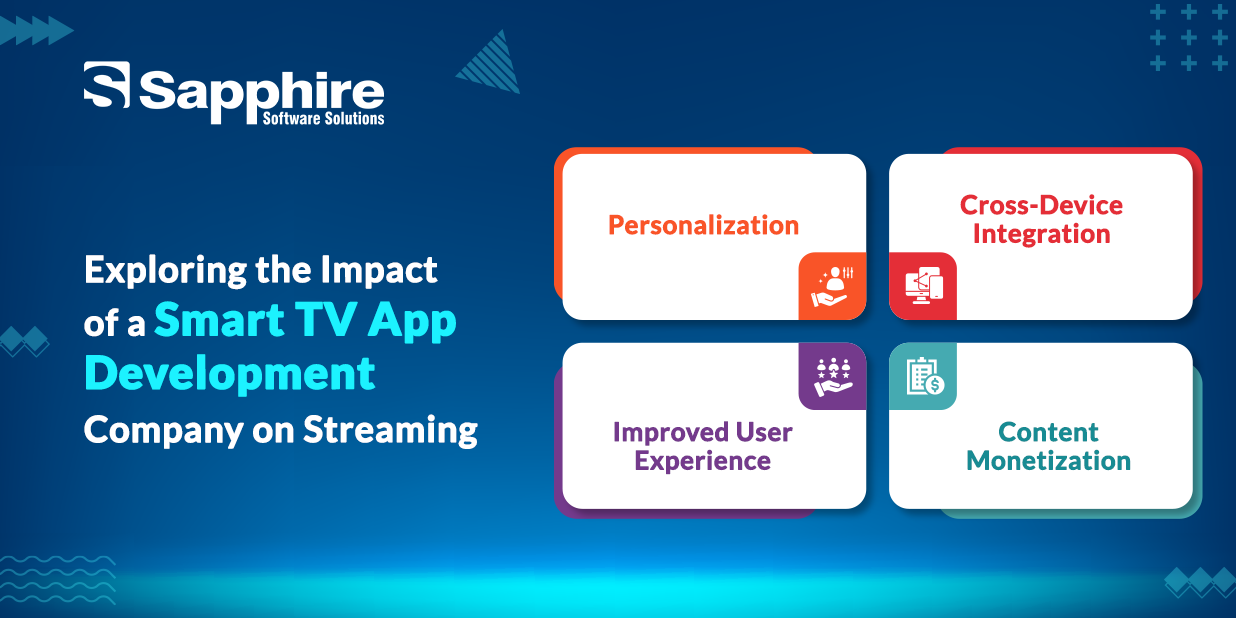
Entertainment is one of the sectors most obviously affected by smart technology. On-demand streaming has opened the need for sophisticated apps offering mass personalization and immersion. In these circumstances, the function of a smart TV app development firm is crucial.
Firms developing such apps prioritize:
- Personalization: Machine learning recommendations derived from viewer habits.
- Cross-Device Integration: Smooth streaming between smartphones, smart TVs, and tablets.
- Improved User Experience: Interactive functionalities, voice command, and interactive interfaces.
- Content Monetization: Facilitating subscription services, ad insertions, and pay-per-view offerings.
A smart TV app development firm's job is more than entertainment; it's about designing ecosystems that complement other smart technology devices so that consumers have a seamless experience.
Sapphire’s Impact as a Smart Technology Services Company on Industry Transformation
Sapphire Software Solution's fundamental competence is providing bespoke smart solutions that address the specific challenges of every industry. As a leading Smart Technology Services Company, they bring intelligent innovation to agriculture, applying connected sensors, AI-driven analytics, and automated irrigation systems to optimize crop yield, conserve resources, and simplify farm management. In entertainment, they create interactive platforms and apps that redefine user engagement, such as collaborative development with smart TV app development firms to deliver personalized content experiences.
Sapphire's experience in integrating smart devices, platforms, and data ecosystems ensures seamless communication between technologies. Companies benefit from end-to-end connected operations where devices not only collect data but also respond to insights in real-time—enabling predictive maintenance, streamlined workflows, and faster, more informed decision-making.
Lastly, as a visionary smart technology services company, Sapphire leads cross-industry innovation by delivering scalable, future-ready solutions. From smart automation and enterprise IoT platforms to AI-powered applications, their work consistently delivers measurable value—enhancing efficiency, improving customer experiences, and creating new revenue opportunities.
Conclusion:
As industries accelerate toward a connected, intelligent future, smart technology systems are no longer optional; they are the foundation of next-generation innovation. From agriculture and manufacturing to healthcare and entertainment, smart systems are creating new paradigms of efficiency, sustainability, and user-centric design. At Sapphire Software Solutions, we don’t just follow trends, we shape them.
Our expertise lies in building integrated smart ecosystems that go beyond devices to deliver real-time insights, predictive capabilities, and transformative user experiences. Whether it’s enabling precision agriculture, redefining digital entertainment, or optimizing enterprise operations with AI and IoT, our solutions are designed to create measurable impact and scalable growth for our clients. As a forward-thinking Smart TV App Development Company, we also develop immersive, personalized streaming experiences that align with today’s connected entertainment landscape.
The future belongs to those who embrace intelligence, automation, and integration. At Sapphire, we are committed to helping businesses not just adapt to the future but lead it. Let’s build a smart future, together.