
















You remember when business continuity meant keeping backups and crossing fingers? Yeah, that doesn't work anymore. Companies today deal with stuff that would've seemed crazy ten years ago. Ransomware attacks are happening every single day-small business losing everything overnight. Supply chains are breaking down for reasons nobody saw coming. Regulations are changing so fast you can't keep up. Markets are moving in directions that don't make sense. That's why Cloud Computing Introduction went from being this abstract IT topic to an actual survival mode for businesses.
Look, if you're still asking Cloud Computing What Is, you're already way behind. The question keeping people awake isn't about definitions anymore - it's about how we set up IT Cloud Computing, so things keep running when servers crash, when everyone's working from home, when customer traffic suddenly triples. Because that stuff happens now. All the time.
Business continuity turned into something way more complicated. It's mixing technology choices with operational planning, and trying to predict what breaks next. And Cloud Computing landed right in the middle of it all, helping companies not just survive when things go wrong but grow during the chaos. Are the companies getting this right? They're using disruptions to pull ahead while everyone else scrambles.
Here's what I keep noticing: continuity isn't about preventing failure. You can't prevent everything. Servers die. Networks drop. Someone always deletes something important at exactly the wrong time. What you're building is systems that take hits, adjust fast, and keep customers happy while your team freaks out internally. That's where smart cloud strategies become essential.
Growth of Cloud Computing in IT:-
The whole Cloud Computing Growth thing tells you how business priorities flipped over the last decade.
Early cloud adoption was simple. Companies looked at it mainly for cost savings. "Why are we maintaining these expensive data centers? Why pay for servers that sit at 30% capacity?" Made sense. Do the math, save money, move on.
Then something changed. These days, when executives talk cloud, cost savings barely come up. They're worried about agility—can we move faster than competitors? They want resilience—will we survive the next big outage? They need innovation—can we test stuff without risking everything? The whole conversation shifted from "how do we save money" to "how do we stay alive and competitive."
Businesses now expect IT that scales instantly, recovers automatically, and stays accessible whether teams work from offices, homes, or random coffee shops in different time zones. That expectation completely rewrote how companies think about technology. Traditional on-premises systems aren't dead, but they can't match what the cloud gives you - flexibility and redundancy built right in. You need to double the capacity overnight? On-premises means weeks of buying equipment and setting it up. Cloud means changing some settings.
What really pushed this forward wasn't just better tech. It was a necessity. Remote work went from an occasional thing to standard practice basically overnight. Operations went global. Customers expect perfect digital experiences constantly. IT Cloud Computing handles this by separating what your business does from physical infrastructure limits.
Key Cloud Computing Deployment Models:-
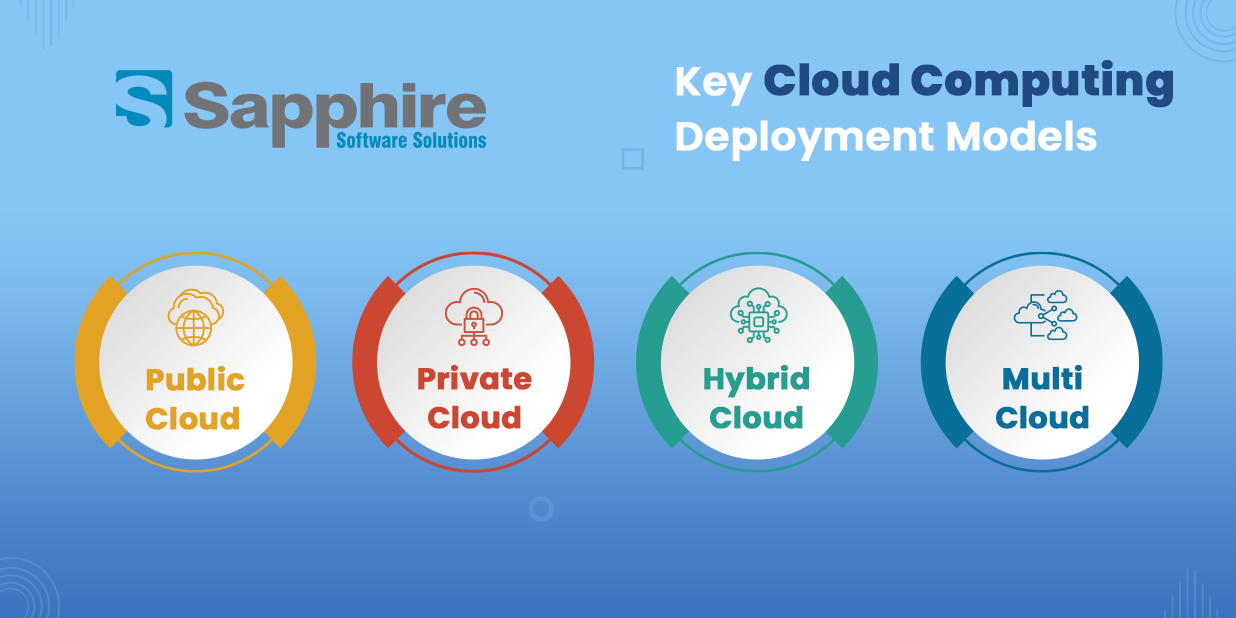
Every company handles continuity differently based on what they need. That's why understanding Cloud Computing Deployment Models matters before you commit long-term.
Public Cloud:
Public cloud is still the most popular choice by far. Massive scale, costs less, deploys fast. For most companies, public cloud becomes the foundation - you get redundancy across locations and automatic failover without dropping huge money upfront.
Private Cloud:
Private cloud works for organizations with strict compliance stuff or performance needs that shared infrastructure can't handle. Costs more, needs more expertise, but gives you control and customization.
Hybrid Cloud:
Hybrid models are getting popular because they give you real flexibility. Keep sensitive stuff on private infrastructure, run customer-facing things in public cloud. From a continuity angle, a hybrid lets you spread risk intelligently.
Multi-Cloud:
Some organizations spread workloads across multiple providers to avoid getting stuck with one vendor and boost resilience. AWS goes down? Your Azure stuff keeps running. But multi-cloud gets complicated fast.
Popular Cloud Computing Services for IT Businesses:
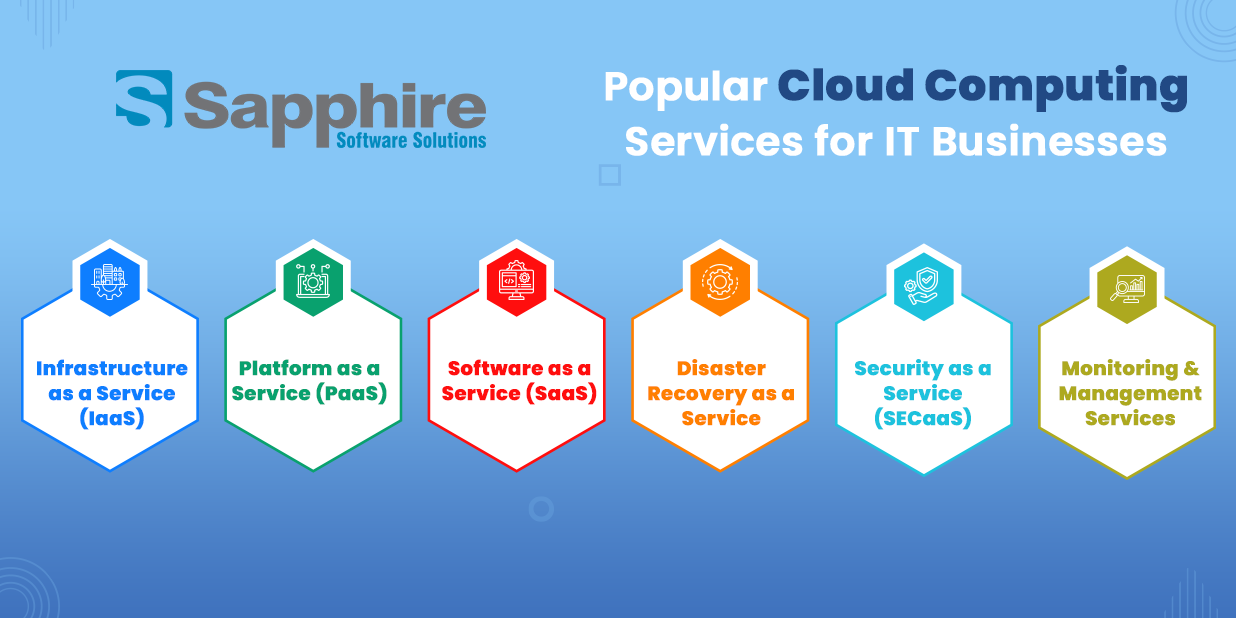
Modern Cloud Computing Services Provider offerings evolved way past just infrastructure.
- Infrastructure as a Service (IaaS): It gives you flexible computing power, storage, and networking. For continuity, IaaS lets you quickly copy environments across different regions.
- Platform as a Service (PaaS): Handles infrastructure management so developers focus on building instead of managing servers. During disruptions, teams keep working without getting stuck in recovery chaos.
- Software as a Service (SaaS): Keeps critical apps accessible no matter where people are. Communication tools, CRM, ERP - everything stays available.
- Disaster Recovery as a Service: Became central to modern strategies. Automated copying, testing, and quick failover cut recovery times dramatically.
- Security as a Service (SECaaS): SECaaS delivers cloud-based security controls such as threat detection, identity management, and compliance monitoring.
- Monitoring and Management Services: Cloud-native monitoring services offer real-time visibility into performance, availability, and risks. Early detection of anomalies allows IT teams to respond proactively before issues impact business operations.
Platforms like Cloud Computing AWS and Azure Cloud Computing Service integrate these into complete ecosystems, letting you design full continuity frameworks.
How IT Cloud Computing Drives Business Growth and Innovation?
Here's what people miss: continuity planning doesn't have to be just defensive. Done right, it drives growth. IT Cloud Computing lets companies innovate without being terrified of failure. Launch services, test them, scale what works—confidently—because recovery is already there. This speeds up experiments and gets products to market faster. Think about it: when you know you can roll back instantly if something breaks, you'll try stuff you'd never touch with traditional infrastructure.
Cloud environments make data-driven decisions easier, too. Analytics, AI, real-time insights - all helping leaders respond smart when disruptions hit. Instead of pausing everything, businesses adapt and keep moving. I've seen companies pivot entire business models in days because cloud made it possible.
Most importantly, cloud-driven continuity builds customer trust. Your stuff stays online during crises while competitors go dark? Customers remember. Reliability becomes a real competitive edge instead of just an operations box to check. Your brand gets stronger in ways marketing can't buy.
Money-wise, cloud strategies turn fixed spending into flexible spending. Resources get used based on actual demand instead of guesses. You're not stuck with expensive equipment from three years ago that's only used 15% of the time. Pay for what you use, when you use it.
Choosing the Right Cloud Computing Solutions:-
Picking cloud solutions isn't about using every feature. It's matching business needs with what technology delivers. Things to think about: Recovery Time Objectives and Recovery Point Objectives—how fast do you need to recover, and how much data loss can you handle? These are business decisions, not just tech decisions. Regulatory stuff—what laws do you have to follow? This changes a lot by industry and location. How systems connect—how do your applications depend on each other? You'd be shocked at how many companies don't know their dependencies until something breaks. Internal skills—can your team manage what you're setting up? No point getting fancy tools if nobody knows how to use them. Where your business is going—what are your plans for the next few years?
Companies always underestimate governance. Without clear rules, cloud environments get messy fast. You end up with shadow IT, duplicate systems, security holes, and costs going crazy. That makes things riskier instead of safer. This is where good guidance from a trusted Cloud Computing Services Provider really helps. Best strategies treat cloud as an ongoing thing, not a one-time project. Continuity planning needs to evolve with your business, technology changes, and market shifts.
Not sure which cloud approach works for your business?
What Makes Sapphire the Preferred Cloud Computing Services Provider for Modern Businesses?
At Sapphire Software Solutions, we never treated the cloud as just a tech service. It's business discipline first. Working with companies across various industries, including manufacturing, healthcare, finance, and retail, taught us a clear lesson: continuity planning only works when technology and business strategy move in tandem.
Our IT Cloud Computing approach focuses on:
- Architecture built for real resilience, not shortcuts that look good but fail under pressure
- Matching actual operational risks and real business priorities, not generic advice copied from somewhere else
- Real experience across Cloud Computing, AWS, Azure Cloud Computing Service, and hybrid setups
Clear governance, security, and compliance processes you can understand and manage. Instead of pushing standard solutions, Sapphire builds continuity strategies that grow with your business. From assessment and design through setup and ongoing improvements, we work as long-term partners - not just vendors making sales.
That's why companies trust Sapphire Software Solutions as their Cloud Computing Services Provider when continuity, growth, and innovation matter.
Conclusion:
Cloud computing has evolved from a technical upgrade into a critical business strategy for continuity, resilience, and growth. Organizations that invest in the right IT cloud computing approach are better equipped to handle disruptions, scale operations instantly, protect critical data, and maintain customer trust even during uncertain times. When cloud strategies align with real business goals, they don’t just minimize downtime—they create a competitive advantage that helps companies innovate faster and respond smarter to change.
At Sapphire Software Solutions, we help businesses design and implement cloud computing solutions that support long-term continuity and measurable business outcomes. From AWS and Azure to hybrid and multi-cloud environments, our focus is on building secure, scalable, and future-ready cloud architectures tailored to your needs. Contact us today to discover how Sapphire can help you strengthen business continuity, reduce risk, and accelerate growth with the right cloud strategy.