
















Data is the core of every business decision made in the digital-first economy we are now in. Fast, trustworthy, and easy access to data is required by all modern companies for customer personalization, predictive analytics, automation, and AI-based insights. This incompatibility is driving Database Modernization to be one of the most crucial elements of digital transformation.
As businesses are now adopting modern platforms such as cloud computing, AI, IoT, and real-time applications, these legacy databases are becoming increasingly challenged. Examples of this inadequacy are slow query performance, limited capacity to grow, costly to maintain, and/or a lack of secure data storage.
Digital Transformation (modern) is not only about adopting the latest tools, but it is also about ensuring that the data layer can accommodate the new tools being used. This is where Data Modernization comes into play; by transforming how data is held, processed, integrated, and secured, a business can create real-time insights into its operations.
What is Data Modernization? Understanding the Core Concept
To gain full insight into how important modernization is, you must first establish what Data Modernization is. Fundamentally, it’s the transformation of legacy databases into modern, scalable, intelligent platforms that provide capabilities for advanced analytics, automation, and near real-time decision making.
Data Modernization is more than moving your database to the cloud. Data Modernization requires an overhaul of the data architecture, enhanced accessibility, improved performance, and seamless integration between systems. This transformational process enables companies to transition from static, siloed data environments to dynamic, connected ecosystems.
Modern data environments can support multiple types of Data (structured, semi-structured, and unstructured) and can process this data in almost real-time. This capability is critical to many use cases such as AI driven Insight, customer behavior analysis, and predictive forecasting.
The primary goal of Data Modernization is to align technology with business needs. Rather than simply maintaining systems for stability, companies will utilize modern data platforms to drive Innovation, agility, and competitive advantage. Often, this includes the use of Data Warehouse Modernization, cloud-native database solutions, and advanced analytical platforms.
Role of Database Modernization in Digital Transformation:
As such, Database Modernization is no longer an optional upgrade; rather, it has become a prerequisite to achieving digital business outcomes.
Data infrastructures must also continue evolving to meet the complex, demanding requirements of modern digital initiatives (e.g., adoption of AI technologies, automation capabilities, omni-channel customer experiences, and providing advanced analytical insights). Legacy database technologies and architectures have proven difficult to adapt, as they continue to retain the constraints of their rigid architectural environment, limiting their ability to scale and respond to new business demands.
Using Database Modernization Services, enterprises can migrate their existing legacy, on-premises systems to public or hybrid cloud-based databases. This transition supports the scale-out capability to deliver the most efficient, cost-effective, and timely deployment of new services required by modern digital initiatives. Database modernization facilitates interoperability between disparate database systems and ancillary applications (i.e., analytics, CRM, ERP, and cloud computing), allowing for smooth end-to-end transfer of data across the enterprise.
Key Benefits of Database Modernization for Enterprises:
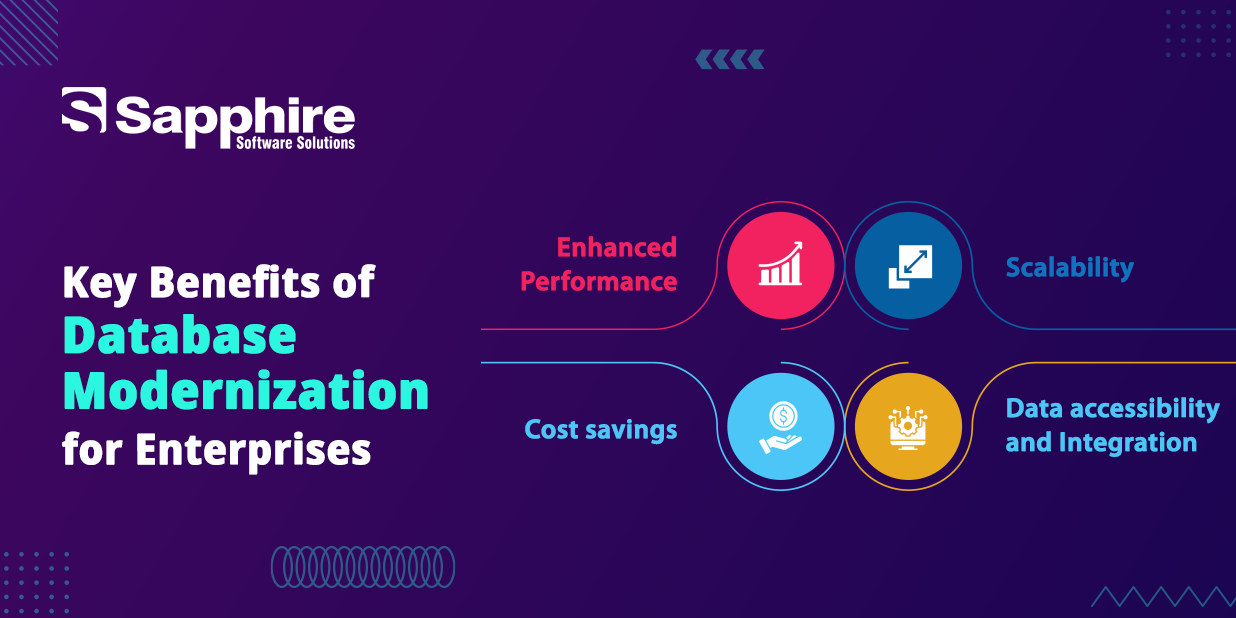
The companies that invest in Database Modernization reap numerous benefits in terms of functionality, innovation, and customer satisfaction.
1. Enhanced Performance:
One of the most immediate benefits of database modernization is Enhanced Performance. The modern databases are capable of faster query processing, real-time processing, and concurrency, which allows companies to access data instantly.
2. Scalability:
The modern platforms are capable of automatically scaling resources based on demand, which allows companies to scale without worrying about upgrading infrastructure continuously.
3. Cost savings:
The modern platforms are based on cloud architecture and optimized storage, which allows companies to save costs on maintenance, licensing, and hardware related to traditional databases.
4. Data accessibility and Integration:
It also increases with database modernization. The modern platforms provide a unified data environment that enables teams to work together, analyze data, and develop data-driven applications.
Security and compliance also increase with database modernization. The modern databases have inherent encryption, access, and monitoring capabilities that enable companies to meet regulatory requirements and minimize risks.
Overcoming Common Data Modernization Challenges:
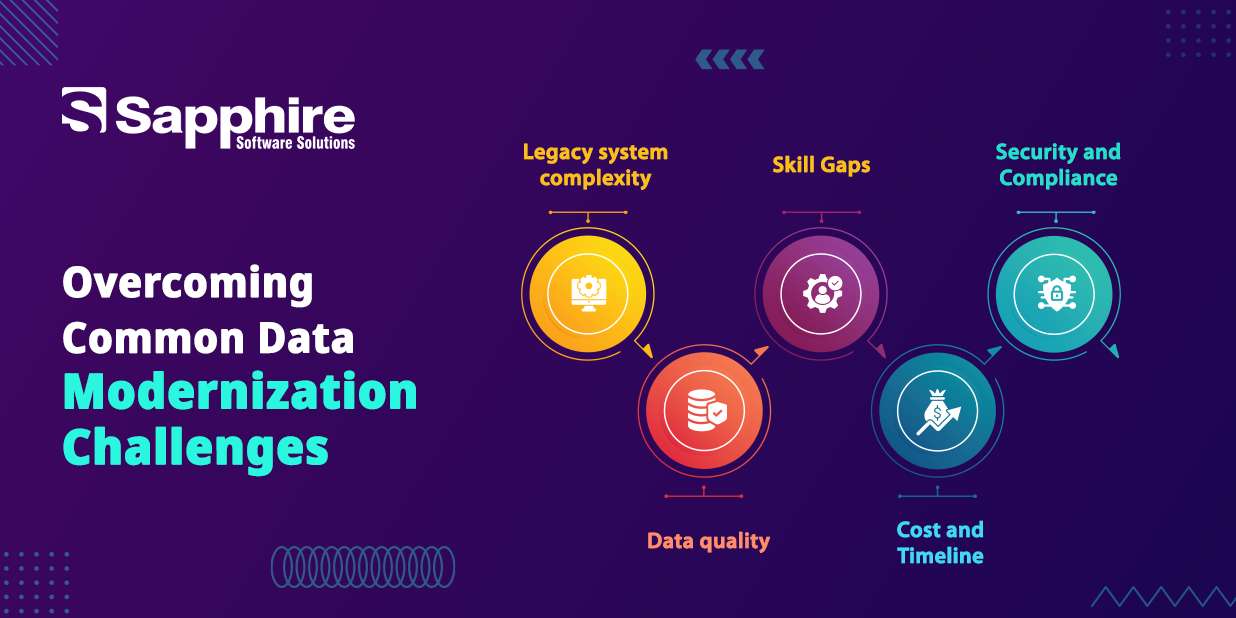
However, Data Modernization also has its own set of challenges that need to be overcome by organizations.
- Legacy system complexity: Legacy databases are known to have tightly coupled applications, and their schemas are outdated.
- Data quality: Inconsistent data formats, duplicate data, and missing data can create problems during data modernization.
- Skill Gaps: Modern data platforms require skills in cloud architecture, data engineering, and analytics. Lack of skills can cause projects to come to a standstill.
- Cost and Timeline: Poor planning can cause scope creep, and data migration can take longer.
- Security and Compliance: During data modernization, sensitive data needs to be protected, and regulatory issues need to be taken care of.
By understanding Data Modernization Challenges and taking steps to overcome them, organizations can increase the chances of success.
Proven Data Modernization Solutions for Growing Businesses:
The best Data Modernization Solutions are those that emphasize incremental change over disruptive transformations. Cloud migration is one of the most popular solutions. Cloud migration of databases to cloud-native platforms helps in scalability, flexibility, and optimization.
Data Warehouse Modernization helps businesses integrate data from various sources into a single analytics platform, which helps in advanced reporting and BI projects. Hybrid solutions provide a balanced approach, which combines on-premises infrastructure with cloud infrastructure to address compliance and performance needs.
Automation solutions help in automating data migration, testing, and validation, which reduces manual errors and efforts. Modern data integration platforms help ensure smooth data movement between systems, which improves data consistency and accessibility.
Importance of Data Security & Personal Data Protection Service in Modernization:
When organizations implement data and Database Modernization, they must focus on Security throughout the transformation process. Many modernization projects migrate Sensitive Data out of Legacy Systems into the Cloud (or hybrid). Without a properly defined Security Foundation, this change can subject an organization to Data Breaches, Compliance Violations, and ultimately loss of Customer Trust. Therefore, integrating a Comprehensive Personal Data Protection Service is now a requirement.
Another significant factor driving Security for Data during modernization is Regulatory Compliance. The Modern Data Platform and Personal Data Protection Service solutions combine to provide Role-Based Access Control, Audit Trails, and Real-Time Monitoring capabilities to enable organizations to demonstrate Compliance and Transparency in their usage of Personal Data.
Why Sapphire Is the Right Data Integration Services Company for End-to-End Database Modernization?
Sapphire Software Solutions is recognized as a reliable Data Integration Services Company because they consider database modernization to be a more extensive process than just a technical upgrade; rather, they see it as an overall strategic business transformation. They begin by looking at each company’s current data landscape as well as its operational obstacles and future digital goals rather than by evaluating the present technical capabilities, such as tools and platforms. This mindset makes sure that any investment in modernization will be effective in terms of performance and the ability to make decisions, not simply a matter of replacing a system.
The ability to provide complete end-to-end database modernization services is a significant advantage of Sapphire. Beginning with legacy database assessment and migration planning through Data Modernization Strategy, Sapphire monitors the complete life cycle of their clients' databases. Sapphire has technology experts who are experts at integrating modern databases with enterprise applications and analytics systems. The cloud ecosystem, which helps ensure that the flow of data functions smoothly throughout the business, without interruption to ongoing operations.
Conclusion:
Database modernization is no longer a technical enhancement—it is a strategic investment that directly impacts revenue growth, operational efficiency, and long-term competitiveness. Organizations that modernize their data infrastructure gain the ability to make faster decisions, launch digital initiatives confidently, and scale without limitations. In contrast, businesses that delay modernization risk higher operational costs, security vulnerabilities, and missed innovation opportunities. In a market where agility defines success, a modern data foundation becomes a critical growth enabler.
For forward-thinking companies, the real value lies not just in upgrading systems but in unlocking business intelligence, improving customer experiences, and creating new digital revenue streams. Sapphire Software Solutions helps enterprises turn database modernization into a measurable business advantage by aligning technology transformation with strategic goals. With the right modernization roadmap, businesses can move from maintaining legacy systems to driving continuous innovation and sustainable digital growth.