
















We once worked with a client who invested 18 months and a significant budget into modernizing operations through cloud infrastructure, a new CRM system, and multiple analytics platforms. On paper, the transformation looked complete and future-ready. The systems were poorly integrated, data flows were inconsistent, and the IT team was continuously resolving compatibility and integration issues. The core challenge was not the technology itself, but the absence of a unified architectural approach that aligned every initiative with the broader business ecosystem.
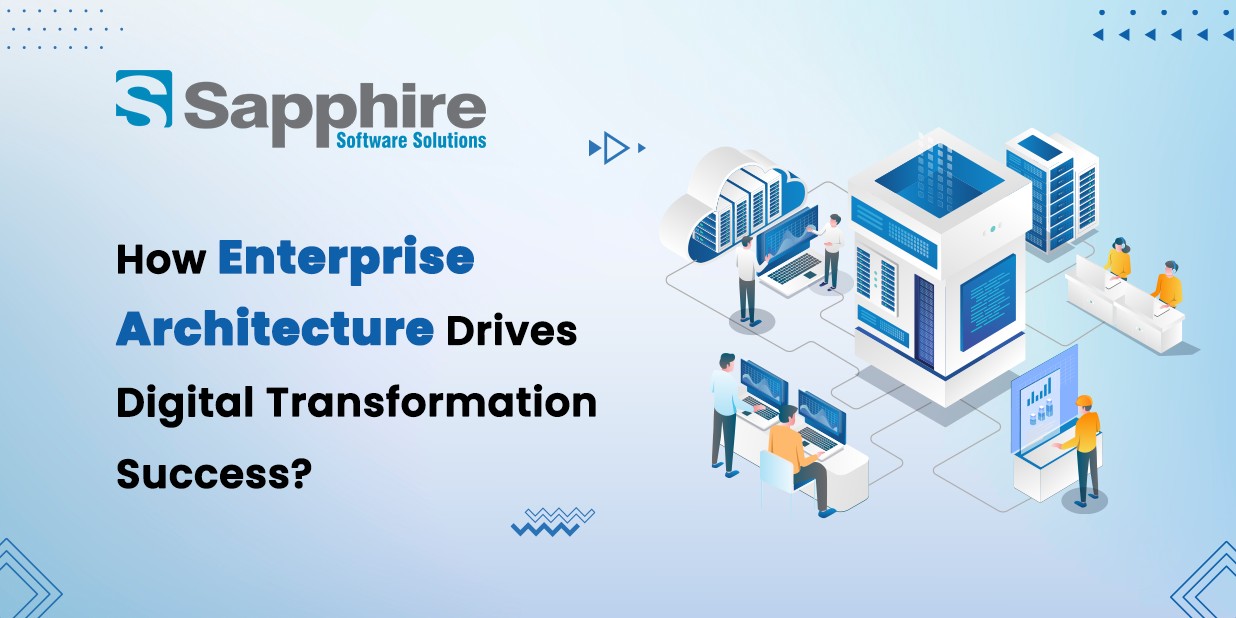
This is where Enterprise Architecture becomes a critical driver of successful digital transformation. It provides a structured framework to align systems, data, infrastructure, and business processes before major investments are made, ensuring scalability and operational efficiency. Strong Enterprise Architecture Management maintains this alignment as organizations grow and evolve, preventing costly disconnects between IT strategy and business objectives. For businesses planning cloud migration, AI adoption, or enterprise modernization, a well-defined architecture-first approach is essential—because sustainable digital transformation always begins with a strong, connected foundation.
What is Enterprise Architecture in Modern IT?
The simplest honest answer: Enterprise Architecture is the practice of understanding how your organization operates - processes, systems, data, infrastructure - and making sure those things support each other rather than working at cross-purposes.
A complete Enterprise architecture model spans four layers:
|
Architecture Layer |
Purpose |
|
Business Architecture |
|
|
Data Architecture |
|
|
Application Architecture |
|
| Technology Architecture |
|
Most organizations have fragments of this knowledge scattered everywhere - aging documentation, tribal knowledge held by long-tenured employees, vendor proposals from three technology cycles ago. A proper Framework for Enterprise Architecture consolidates that into something decision-makers can use.
Role of Enterprise Architecture in Digital Transformation:
Here's a story that's less a story and more a pattern. Business unit requests a new platform. Procurement approves. IT implements. Four months later, the data model is incompatible with the reporting stack, two critical integrations are broken, and the project that was supposed to take six months is now projected to take eighteen. Everyone acted in good faith. Nobody looked at the whole picture early enough. Enterprise Architecture Management is specifically designed to prevent this - not by blocking decisions, but by asking sure the right questions get asked before contracts get signed.
Key Roles of Enterprise Architecture:
1. Business and IT Alignment:
These two sides genuinely want different things sometimes, and that's okay - unless nobody is translating between them. Enterprise architecture provides the shared framework that lets business requirements and technical realities inform each other rather than collide.
2. Enterprise Integration:
Every organization has accumulated systems that weren't designed to coexist. ERP from one era, CRM from another, and analytics tools added last year. Enterprise architecture is the discipline that turns this inherited complexity into something functional.
3. Cloud Transformation Support:
Moving to the cloud without a grounding Framework for Enterprise Architecture typically produces one outcome: the same problems your organization had before, now running on someone else's servers and costing more per month.
4. Operational Efficiency:
Redundancy doesn't come from bad intentions - it accumulates from years of separate teams solving separate problems.
5. Innovation Enablement:
AI and advanced analytics aren't magic. They perform dramatically differently depending on the quality of the foundation underneath them. Clean architecture is what separates "AI pilot that worked" from "AI pilot that proved too complicated to scale."
Enterprise Architecture Benefits in Transformation:
|
Digital Challenge |
Architecture Benefit |
| Data silos |
|
| Legacy systems |
|
| Slow innovation |
|
| Security risks |
|
| High IT costs |
|
Key Frameworks for Enterprise Architecture:
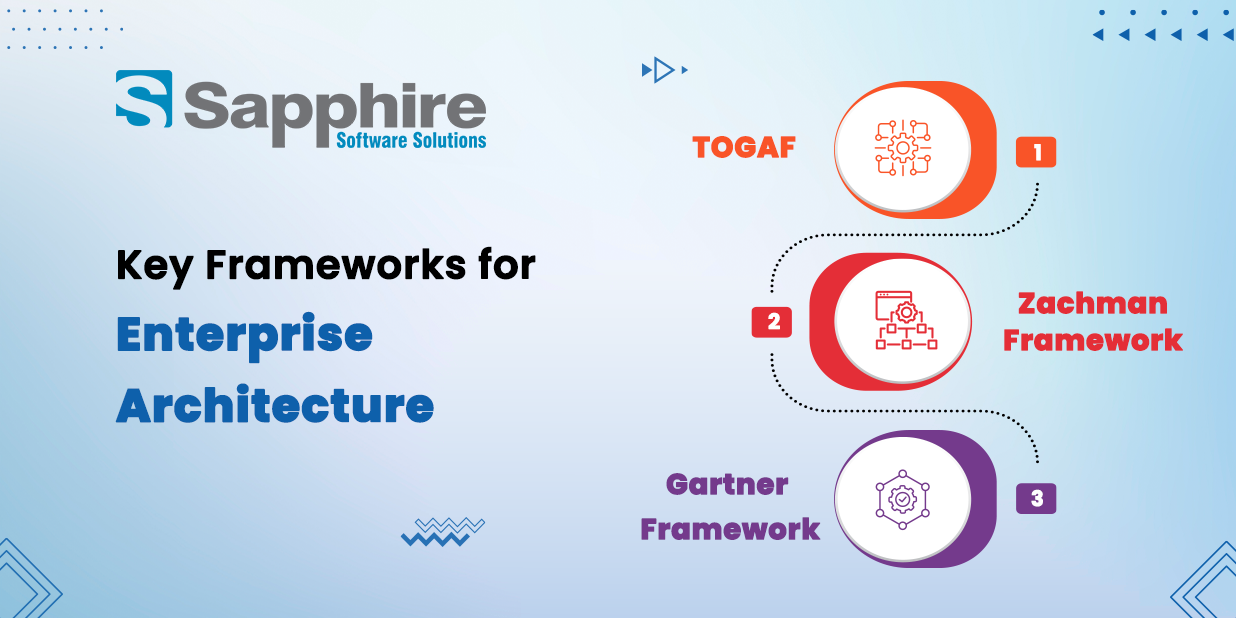
When selecting a Framework for Enterprise Architecture, consistency matters more than simply choosing the most popular option. A framework only delivers value when organizations apply it properly across teams and processes.
A. TOGAF:
TOGAF is one of the most widely used enterprise architecture frameworks because it offers a structured and scalable approach for managing complex business environments.
Benefits: Strong governance, scalable planning, business-IT alignment, structured implementation.
B. Zachman Framework:
The Zachman Framework focuses on organizing architecture from multiple stakeholder perspectives, making it useful for businesses struggling with fragmented system understanding.
Benefits: Better documentation, improved system visibility, standardized structure.
C. Gartner Framework:
The Gartner Framework is more outcome-focused and flexible, making it suitable for organizations seeking faster transformation with less governance complexity.
Benefits: Faster transformation, agile alignment, and continuous innovation support.
Comparison of Enterprise Architecture Frameworks:
|
Framework |
Best For |
Strength |
| TOGAF |
|
|
| Zachman |
|
|
| Gartner |
|
|
Enterprise Architecture Solutions for Modern Businesses:
Enterprise architecture solutions typically address a set of recurring pain points - rarely in isolation, usually tangled together.
- Cloud Architecture: Genuinely designing for operational reality, not just technically completing a migration checklist.
- Application Modernization: The work everyone avoids until the legacy system is actively blocking something critical. The organizations that do it proactively are consistently better positioned than those forced into it reactively.
- Data Architecture: The gap between "we have a lot of data" and "we can trust and act on our data" is vast. Bridging it deliberately is what data architecture does.
- Integration Architecture: Making existing investments function together properly. Consistently undervalued until the integrations start failing.
- Security Architecture: The organizations that treat security as a governance discipline rather than a reactive measure sleep considerably better.
A strong Enterprise App Development Company has seen these areas interact in practice, which is where the complexity that surprises people lives.
Benefits of Enterprise Architecture in Digital Transformation:
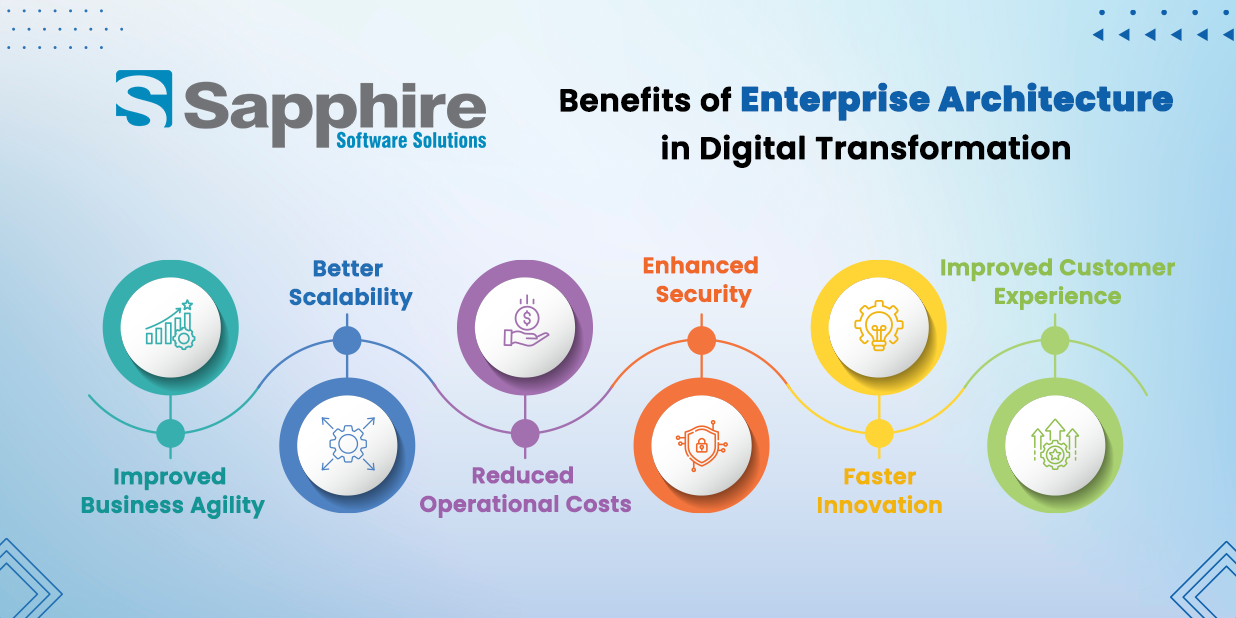
What mature Enterprise Architecture delivers, in concrete terms:
- Improved Business Agility: Decisions and responses tied to the current reality, not infrastructure designed for a business that existed four years ago.
- Better Scalability: A properly built Enterprise architecture model scales with the organization rather than becoming the constraint that limits it.
- Reduced Operational Costs: Redundant systems and inefficient processes carry real financial weight. Removing them does too.
- Enhanced Security: Documented, governed environments are genuinely harder to compromise than fragmented ones where nobody has the full picture.
- Faster Innovation: Stable foundations let new capabilities land cleanly rather than destabilizing everything around them.
- Improved Customer Experience: When internal systems work coherently together, customers feel it even when they can't name why.
| Without Enterprise Architecture | With Enterprise Architecture |
| Fragmented systems | Integrated ecosystems |
| Slow innovation | Agile operations |
| High maintenance costs | Optimized infrastructure |
| Security vulnerabilities | Strong governance |
Challenges Businesses Face Without Enterprise Architecture:
Without Enterprise Architecture Management, organizations rarely fail dramatically. They degrade gradually. Each team makes reasonable local decisions. Systems accumulate. The people who understood the legacy architecture retire or move on, and what they knew doesn't get documented because there was always something more urgent. Suddenly, nobody can confidently answer basic questions: what systems do we have? Where does this data come from? What breaks if we change this?
A missing Framework for Enterprise Architecture doesn't cause transformation to collapse. It makes transformation slower, more expensive, and more likely to surface expensive surprises at the worst possible moments.
Future of Enterprise Architecture in the AI & Cloud Era:
The architecture discipline is under active pressure right now - AI workloads, microservices complexity, zero-trust security requirements, a nd real-time data demands. These aren't future concerns to schedule for later. They're arriving on existing infrastructure today.
|
Trend |
Impact |
|
AI Integration |
|
| Cloud-Native Systems |
|
| Microservices |
|
| Real-Time Analytics |
|
| Zero-Trust Security |
|
Organizations that build adaptable Enterprise architecture solutions now won't be starting from scratch when these pressures compound further.
Role of Enterprise Architecture in Sapphire as an Enterprise Software Development Company for Business Solutions:
At Sapphire Software Solutions, Enterprise architecture service isn't a preliminary phase that produces a document - it's the ongoing engineering discipline that shapes every subsequent decision. As a trusted Enterprise Software Development Company, we've worked through enough transformations to know exactly what skipping the architecture work costs clients. We've also seen what getting it right enables.
Our work covers cloud transformation, application modernization, enterprise integration, AI enablement, data architecture, and security-focused infrastructure planning - and the intersections between all of them.
Conclusion:
A successful digital transformation is not defined by how many technologies an organization adopts, but by how well those technologies work together to support business outcomes. Without a strong Enterprise Architecture foundation, even the most advanced systems tend to create operational silos, increased maintenance costs, and limited scalability. In contrast, organizations that invest early in a structured architecture approach can align business goals with IT capabilities, ensuring that every investment contributes to long-term efficiency, agility, and innovation readiness.
At Sapphire Software Solutions, we help businesses build this foundation through practical, scalable, and future-ready Enterprise Architecture solutions tailored to real-world business challenges. Whether you are planning cloud migration, application modernization, or AI-driven transformation, our architecture-first approach ensures your systems are integrated, secure, and growth-ready from day one. Connect with us today to accelerate your digital transformation journey—get a free quote today and discover how the right architecture can turn complexity into a competitive advantage.