
















The world of Information Technology is entering an era of remarkable transformation driven by artificial intelligence. Over the last few years, we’ve seen AI evolve from simple automation scripts into self-learning systems capable of decision-making, optimization, and creativity. Now, the emergence of Autonomous AI Agents marks a pivotal leap in this journey, redefining how businesses approach efficiency, innovation, and problem-solving.
Unlike traditional AI systems that rely heavily on predefined rules and human supervision, these intelligent entities can think, learn, and act independently. They are not just tools, but digital collaborators capable of understanding objectives, executing multi-step tasks, and adapting to real-time changes without constant intervention.
For IT teams, this evolution is revolutionary. From infrastructure monitoring and cybersecurity to DevOps and software testing, AI Agents can automate entire workflows, reduce human error, and ensure faster decision-making. In essence, they’re reshaping how technology operates, turning reactive processes into proactive, self-optimizing ecosystems.
The age of intelligent autonomy has arrived, and IT is its beating heart.
What Are Autonomous AI Agents?
Before diving deeper, it’s essential to clarify what autonomous AI Agents are and how they differ from conventional AI models.
An AI Agent is a digital entity capable of perceiving its environment, processing information, and performing actions to achieve specific goals. When we add the term “autonomous,” it indicates that these agents operate with minimal or no human oversight, continuously learning and optimizing their performance.
Autonomous AI Agents leverage advanced machine learning, reinforcement learning, and natural language processing models to make decisions, solve problems, and even collaborate with other systems or agents. They can handle dynamic tasks such as analyzing data, optimizing system resources, or predicting failures before they occur, all while evolving based on outcomes and feedback loops.
Unlike traditional automation tools that depend on fixed scripts or linear commands, these agents possess cognitive abilities such as:
- Self-Learning: Continuously improving through exposure to new data.
- Goal Orientation: Understanding objectives and determining the best route to achieve them.
- Adaptive Decision-Making: Adjusting strategies in response to real-time variables.
- Collaboration: Interacting with other agents or systems to complete tasks efficiently.
In IT environments, Autonomous AI Agents are transforming everyday operations from automated code deployment and performance monitoring to predictive system maintenance and cybersecurity defense. The result is a new paradigm of self-managing IT infrastructure that’s faster, smarter, and more reliable.
Best Autonomous AI Agents in the Market Today:

As innovation accelerates, several platforms and frameworks are emerging as leaders in the autonomous intelligence space. The Best Autonomous AI Agents available today demonstrate remarkable versatility across industries, offering everything from workflow automation to strategic decision support.
Here are a few notable examples:
1. OpenAI’s GPT-based Agents:
Built on advanced large language models, these agents are capable of reasoning, coding, and problem-solving. They can handle technical documentation, write code, debug applications, and integrate with APIs for task automation.
2. Google DeepMind’s Alpha Series:
Initially designed for gaming, Alpha agents have evolved to tackle complex scientific and optimization problems, offering unmatched capabilities in reinforcement learning and decision-making.
3. Anthropic’s Claude Agents:
Known for their human-like reasoning and context awareness, these agents are ideal for customer interaction, compliance checks, and intelligent process automation.
4. AutoGPT & BabyAGI:
Open-source projects that autonomously execute multi-step goals, perform web research, and write reports without supervision are perfect for IT task management.
5. Microsoft Copilot:
A collaborative agent integrated into Microsoft 365 and Azure ecosystems, empowering developers and IT teams to automate routine tasks, analyze data, and manage infrastructure efficiently.
Each of these agents showcases the immense potential of autonomous intelligence from conversational interfaces to self-optimizing networks. Businesses leveraging these technologies gain not just automation but intelligent orchestration that continuously improves performance and decision quality.
How to Build Autonomous AI Agents: A Step-by-Step Guide
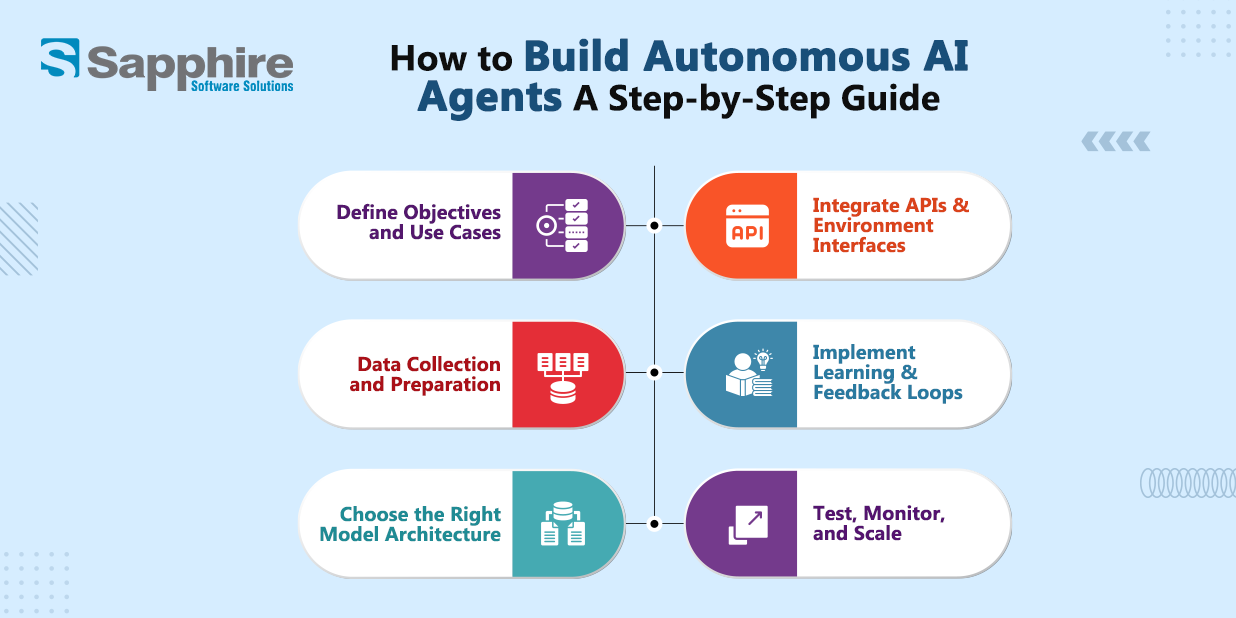
Building intelligent systems requires a thoughtful blend of data, algorithms, and infrastructure. Here’s a simplified step-by-step breakdown of how to Build Autonomous AI Agents effectively:
1. Define Objectives and Use Cases:
Start by clearly defining what the AI agent is supposed to achieve, for example, automating IT helpdesk responses, monitoring servers, or generating real-time analytics. The clarity of purpose shapes the agent’s architecture and capabilities.
2. Data Collection and Preparation:
Autonomous agents thrive on data. Gather high-quality structured and unstructured data from relevant sources. Clean, label, and preprocess it to train machine learning models that align with your use case.
3. Choose the Right Model Architecture
Decide whether your agent will rely on reinforcement learning (ideal for self-improving systems), natural language models (for conversational agents), or hybrid architectures combining both.
4. Integrate APIs and Environment Interfaces:
For your agent to act independently, integrate it with APIs or digital environments such as cloud servers, CRMs, or monitoring tools. This enables autonomous interaction and execution.
5. Implement Learning and Feedback Loops:
Allow the agent to learn from outcomes. Reinforcement learning enables trial-and-error optimization, helping the system make smarter decisions over time.
6. Test, Monitor, and Scale:
Deploy in a controlled environment, monitor results, and iteratively refine models. Once proven effective, scale the agent to handle broader tasks or integrate it into enterprise systems.
Building an autonomous agent is not just about coding; it’s about engineering intelligence that can adapt and grow. Partnering with an experienced AI Agent Development Company can accelerate this process by leveraging proven frameworks, tools, and expertise.
Comprehensive List of Autonomous AI Agents for Different Industries
The versatility of intelligent systems lies in their adaptability across domains. Here’s a broad List of Autonomous AI Agents currently reshaping different industries:
- Healthcare: Diagnostic assistants, patient monitoring bots, and predictive health analytics systems that improve care efficiency.
- Finance: Fraud detection, algorithmic trading, and risk assessment agents that analyze market patterns in real time.
- Retail & E-commerce: Inventory optimization, personalized recommendation engines, and automated customer engagement bots.
- Manufacturing: Predictive maintenance, process automation, and supply chain optimization through intelligent sensors and learning agents.
- IT & Cloud Services:
System monitoring, auto-scaling cloud infrastructure, and incident resolution without human oversight. - Education: Personalized tutoring systems that adapt to individual learning styles.
- Transportation & Logistics: Route optimization and predictive fleet maintenance to reduce downtime.
The power of AI Agents lies in their scalability. The same foundational intelligence can be repurposed across sectors to drive cost savings, efficiency, and innovation.
Transforming Customer Service with Autonomous AI Agents:
One of the most impactful applications of this technology is Autonomous AI Customer Service. Traditional customer support often suffers from long response times, limited availability, and inconsistent service quality. Intelligent agents are changing this narrative by delivering 24/7, context-aware, and emotionally intelligent support.
These agents can:
- Handle repetitive queries instantly using natural language understanding.
- Escalate complex issues to human agents only when necessary.
- Analyze sentiment to provide empathetic and appropriate responses.
- Learn from each interaction to continuously enhance customer satisfaction.
For IT companies managing global clientele, autonomous customer service agents reduce operational costs while improving user experience. They can be integrated with CRMs, email systems, and chat interfaces, ensuring unified communication across all touchpoints.
As businesses scale, Autonomous AI Agents ensure that customer experiences remain personal, timely, and efficient on a competitive edge that builds loyalty and trust.
Why You Should Hire AI Agent Developers for Your Business?
While AI platforms and open-source tools are more accessible than ever, building and maintaining intelligent agents requires specialized expertise. This is why many organizations choose to Hire AI Agent Developers who bring deep technical know-how and domain understanding to the table.
Professional developers help businesses:
- Design customized architectures suited to their industry.
- Integrate AI agents into existing IT ecosystems without disrupting operations.
- Ensure compliance with data security and privacy regulations.
- Implement continuous learning systems that evolve with organizational goals.
Partnering with experts also ensures that your AI systems remain future-proof, scalable, and aligned with evolving technologies. In a rapidly advancing field, skilled developers act as both creators and guardians of innovation, ensuring that autonomous systems deliver measurable ROI.
What Sets Sapphire Apart as a Top AI Agent Development Company in the IT Industry?
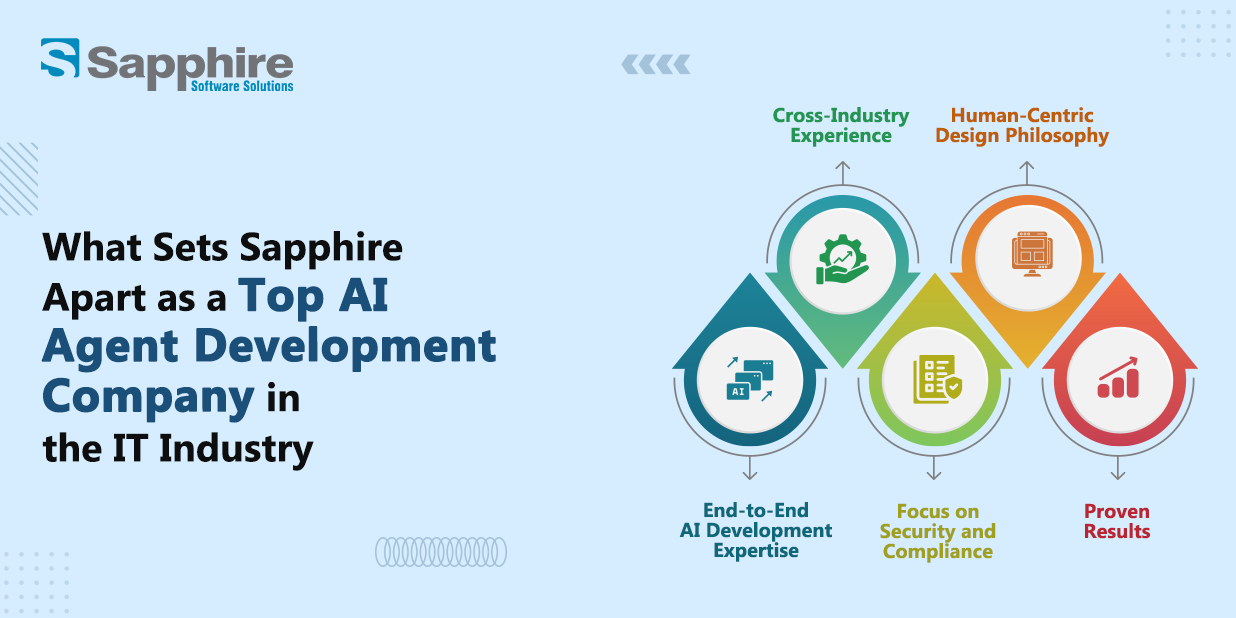
When choosing a partner for intelligent automation, experience and innovation matter. Sapphire stands out as a leading AI Agent Development Company, combining deep technical expertise with a strategic understanding of business challenges.
Here’s why global organizations trust Sapphire:
- End-to-End AI Development Expertise: From conceptualization to deployment, Sapphire designs tailored solutions using the latest AI models and frameworks.
- Cross-Industry Experience: With clients across IT, healthcare, finance, and manufacturing, Sapphire delivers adaptable and scalable agent-based solutions.
- Focus on Security and Compliance: Every project prioritizes data protection and adheres to industry regulations, ensuring responsible AI deployment.
- Human-Centric Design Philosophy: Sapphire ensures that automation does not replace human roles, creating synergy between people and technology.
- Proven Results: With a strong portfolio of successful deployments, Sapphire continues to redefine how enterprises leverage intelligent autonomy for digital transformation.
In short, Sapphire is not just a service provider; it’s a strategic partner helping businesses transition into the era of self-learning systems with confidence and efficiency.
Conclusion:
The integration of Autonomous AI Agents marks one of the most significant technological shifts in modern IT history. These intelligent systems are not just enhancing productivity; they’re reshaping the very fabric of how organizations operate, communicate, and grow.
As automation evolves into autonomy, businesses that adapt early will gain a lasting advantage. Whether it’s improving customer service, optimizing operations, or driving innovation, the potential applications of AI Agents are limitless.
By collaborating with a trusted AI Agent Development Company like Sapphire Software Solutions, organizations can harness this technology safely and strategically, turning complex challenges into intelligent, automated opportunities.
The future of IT is not just intelligence; it’s autonomous. And that future begins today.