

















Not long ago, the word 'disruption' was reserved for massive corporations with deep pockets and decades of market dominance. Today, that narrative has completely flipped. Small, agile teams with bold ideas are reshaping billion-dollar industries faster than ever before. From healthcare and education to food systems and logistics, startups powered by digital innovation are challenging outdated models and redefining how value is delivered.
This shift isn’t accidental. It’s driven by advances in artificial intelligence, cloud computing, data science, automation, and an ever-growing appetite for better, faster, and more personalized solutions. In this blog, we’ll explore how modern startups are creating real-world impact across industries—and more importantly, how you can apply the same principles to build something transformative of your own.
What is a Technology Startup?
Before diving deeper, let’s clearly understand What is Technology Startup?
At its core, a technology startup is a young company built around a digital product or service designed to solve a problem in a scalable and innovative way. Unlike traditional businesses, these ventures focus on rapid experimentation, automation, and growth through software-driven models rather than physical expansion.
A Technology Startup typically:
- Solves a real-world problem using modern technology
- Operates with a lean team and agile mindset
- Scales quickly through digital platforms
- Continuously evolves based on data and user feedback
This approach allows startups to compete with established players despite having fewer resources.
How Technology Startups Are Disrupting Industries?
The real power of startups lies in how they rethink problems from the ground up. Instead of optimizing broken systems, they rebuild them entirely.
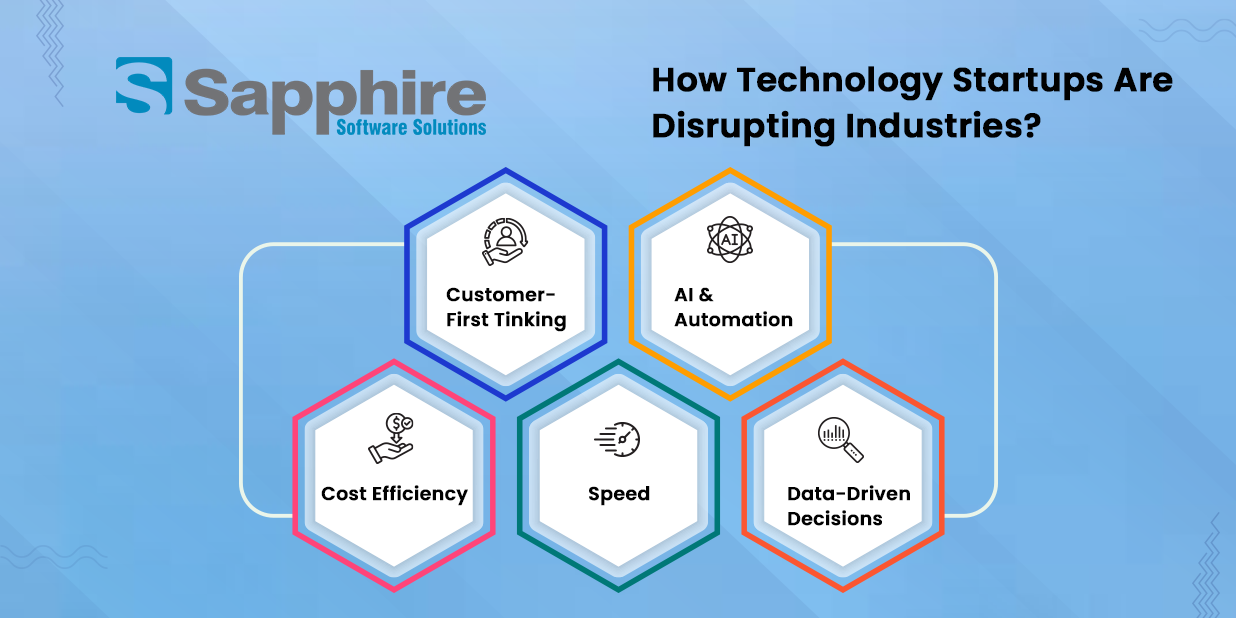
Here’s how disruption usually happens:
- Customer-First Thinking: Startups focus on user experience rather than legacy processes
- AI & Automation: Manual workflows are replaced with intelligent systems
- Cost Efficiency: Cloud platforms reduce infrastructure expenses
- Speed: New features and improvements roll out in weeks, not years
- Data-Driven Decisions: Real-time insights guide product evolution
This formula has proven effective across multiple sectors—especially healthcare, education, and food technology.
Healthcare Technology Startups: Innovation in Medicine
1. Counterforce Health — AI for Insurance Claims in Healthcare:
Counterforce Health addresses one of healthcare’s biggest pain points: insurance claim denials. Using AI-powered analytics, the platform identifies patterns in denied claims and automatically generates appeals. This reduces revenue loss for hospitals while allowing medical staff to focus more on patient care rather than paperwork.
2. HealthOrbit AI — AI to Reduce Administrative Burden:
HealthOrbit AI streamlines back-office operations by automating scheduling, documentation, and compliance tasks. By reducing manual processes, healthcare organizations can significantly lower operational costs and burnout among medical professionals.
3. Xaira Therapeutics — AI-Driven Drug & Protein Design:
Xaira Therapeutics leverages machine learning to accelerate drug discovery. By simulating protein interactions digitally, researchers can reduce years of laboratory experimentation, making treatments more precise and development cycles shorter.
4. Raidium — AI for Advanced Medical Imaging:
Raidium enhances medical imaging using AI-based diagnostics. Its technology improves accuracy in detecting anomalies in scans, helping doctors make quicker and more informed decisions—especially in early disease detection.
5. Education Technology Startups: Transforming Learning:
Learning is no longer confined to classrooms or standardized curricula. The rise of personalized, AI-powered platforms has reshaped how students learn and teachers teach. A modern Education Technology Startup focuses on adaptability, engagement, and measurable outcomes.
6. Sana Labs — AI-Driven Personalized Learning:
Sana Labs uses artificial intelligence to adapt to learning paths based on individual performance. Whether in corporate training or higher education, learners receive content tailored to their strengths and gaps, leading to better retention and results.
7. LearnSphere — “Netflix of Learning” with AI Curation
LearnSphere curates educational content the way Netflix recommends shows. Its AI analyzes learner behavior to suggest relevant courses, making continuous learning intuitive and engaging rather than overwhelming.
8. CogniMath — Adaptive Math Learning for K-12
CogniMath focuses on foundational math skills for school students. Its adaptive engine adjusts problem difficulty in real time, ensuring students stay challenged without feeling discouraged.
9. Aasoka — Integrated STEAM & AI Labs for Schools
Aasoka empowers schools with digital STEAM labs that integrate AI, robotics, and real-world problem solving. This approach prepares students for future careers by encouraging critical thinking rather than rote learning.
Food Technology Startups: Revolutionizing the Food Industry
1. Posha — AI-Powered Countertop Cooking Robot
Posha brings automation into home kitchens. Its AI-driven robot cooks meals autonomously, learning user preferences over time. This innovation reduces cooking time while making healthy meals more accessible.
2. Revo Foods — 3D-Printed Plant-Based Seafood
Revo Foods uses 3D printing to create plant-based seafood alternatives. By mimicking texture and taste, the company offers a sustainable solution to overfishing without compromising culinary experience.
3. Foodtel — Cloud-Based Food Waste Prevention
Foodtel focuses on reducing food waste in commercial kitchens. Its cloud platform predicts demand, tracks inventory, and optimizes usage—helping businesses save money while minimizing environmental impact.
4. Famveg — Tech-Driven Fresh Produce Supply Chain (India)
Famveg modernizes agricultural supply chains by connecting farmers directly with retailers using digital platforms. This reduces wastage, improves pricing transparency, and ensures fresher produce for consumers across India.
Latest Tech Startups to Watch:
Looking ahead, several trends define the rise of Latest Tech Startups across global markets. Here are four that stand out:
- AI-First Products: Startups are embedding intelligence at the core, not as an add-on
- Vertical SaaS Solutions: Highly specialized platforms tailored to niche industries
- Sustainability-Driven Innovation: Green tech and carbon-neutral models gaining traction
- Human-Centric Automation: Technology designed to assist—not replace—human roles
These trends show that innovation is no longer just about speed, but about responsible, scalable impact.
How to Start Your Own Technology Startup Company?
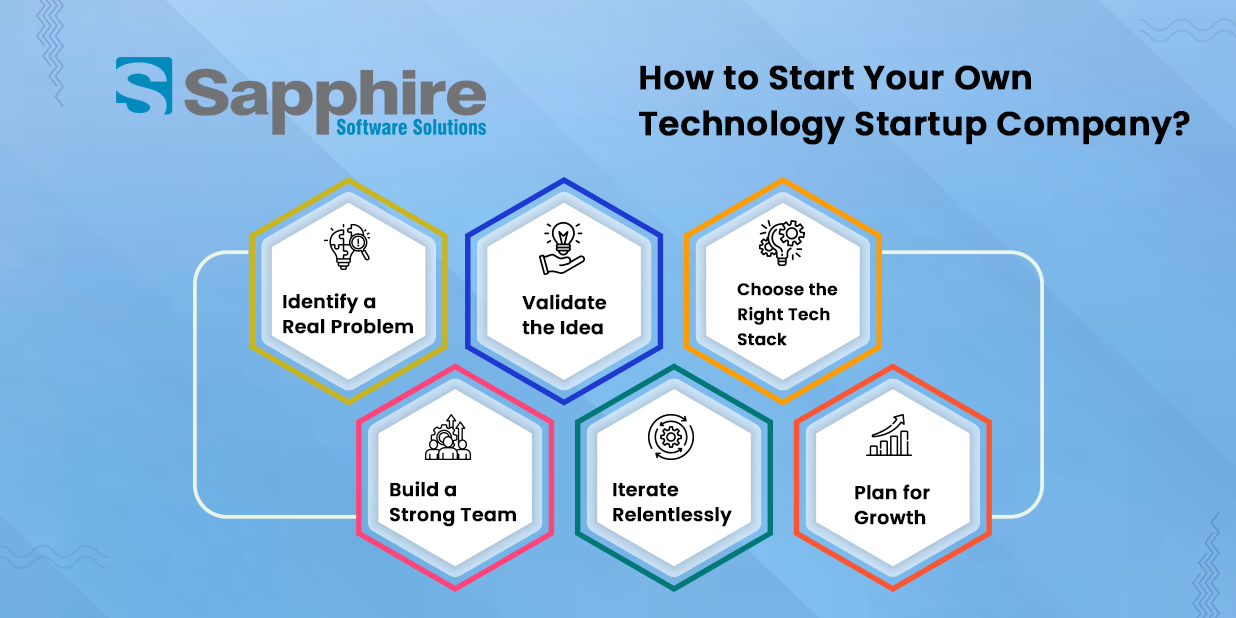
Building a Technology Startup Company isn’t about having a perfect idea—it’s about execution and adaptability. Here’s a practical roadmap:
- Identify a Real Problem: Talk to users before writing code
- Validate the Idea: Build a minimum viable product and gather feedback
- Choose the Right Tech Stack: Prioritize scalability and security
- Build a Strong Team: Balance technical skills with business insight
- Iterate Relentlessly: Improve based on real usage data
- Plan for Growth: Think global from day one
Success doesn’t come from avoiding failure—but from learning faster than others.
How Sapphire, as a Tech Consulting Services Provider, Can Help Your Startup Succeed?
Even the most promising idea needs expert execution. This is where Sapphire Software Solutions plays a strategic role as a Tech Consulting Services Provider.
Sapphire supports startups by:
- Translating ideas into scalable digital products
- Providing expert guidance on architecture and security
- Accelerating time-to-market with agile development
- Offering end-to-end support—from MVP to enterprise scale
With deep industry expertise and a startup-friendly approach, Sapphire Software Solutions helps founders focus on vision while ensuring technology never becomes a bottleneck.
Conclusion:
Technology startups today are defined by their ability to execute faster, smarter, and more efficiently than traditional enterprises. Across healthcare, education, and food technology, successful startups are proving that real disruption comes from solving meaningful problems with scalable, AI-driven solutions—not just from adopting the latest tools. The opportunity for innovation has never been greater, but sustaining growth requires the right technology foundation.
Many promising ideas struggle to reach their full potential due to challenges in architecture, scalability, security, and time-to-market. Turning innovation into a reliable, market-ready product demands strategic planning, technical expertise, and continuous optimization. This is where experienced technology partners play a critical role in transforming vision into measurable business outcomes.
As a trusted Tech Consulting Services Provider, we empower startups to build, scale, and evolve with confidence. From MVP development to enterprise-grade solutions, Sapphire helps entrepreneurs eliminate technical barriers and focus on growth. With the right execution partner, startups can move beyond disruption and create a lasting impact in their industries.