
















In today’s hyper-connected and fast-paced business environment, productivity is no longer just a metric, it’s the backbone of competitiveness and growth. Organizations across industries are looking for ways to empower their employees, streamline processes, and create agile workflows that can adapt to ever-changing demands.
A Digital Workplace is more than just a collection of tools or software. It’s a strategic environment where technology, collaboration, and culture come together to drive efficiency and innovation. According to multiple studies, organizations that effectively implement a well-planned Digital Workplace Solution have seen productivity improvements of up to 40% or more. This is not simply about working faster, it’s about working smarter.
The concept has evolved significantly over the past decade. What once was just a remote access system for email and shared documents is now a complex ecosystem that integrates Digital Workplace Platforms, intelligent Digital Workplace Technologies, cloud collaboration, AI-powered analytics, and strong Digital Workplace Security protocols. When strategically designed, the digital workplace empowers employees to work from anywhere, on any device, while still feeling connected to the organization’s mission, values, and community. Finally, we’ll highlight how Sapphire, as a trusted Digital Workplace Consultant, can help your organization accelerate its transformation.
What is Digital Workplace Services?
Digital Workplace Services refer to the combination of strategies, tools, platforms, and technologies designed to enable employees to perform their jobs effectively in a digital-first environment.
At its core, a Digital Workplace Solution should:
- Facilitate seamless communication across teams and geographies.
- Provide secure access to company resources from any device.
- Streamline business processes to remove bottlenecks.
- Integrate tools that employees already use into a unified interface.
- Enhance the employee experience, not complicate it.
The scope of Digital Workplace Services typically includes:
- Collaboration Tools like Microsoft Teams, Slack, or Google Workspace.
- Document Management Systems with real-time co-authoring and version control.
- Project Management Platforms for agile workflows, such as Asana, Jira, or Trello.
- Cloud Infrastructure for flexible, scalable operations.
- Automation and AI tools to minimize repetitive tasks.
- Security and Compliance Frameworks to protect sensitive data.
For example, an effective Digital Workplace Platform might allow an employee to log in from home, instantly access their project files stored in the cloud, communicate with their team in real time, and even run AI-assisted analytics on project data all without having to jump between disconnected systems.
Current Trends and Growth in the Digital Workplace Market:-
The Digital Workplace Market is experiencing rapid growth driven by the shift toward hybrid and remote work models. According to industry research, the global Digital Workplace Market size is projected to reach hundreds of billions of dollars within the next few years, with double-digit annual growth rates. Businesses have realized that digital transformation is not optional, it’s essential.
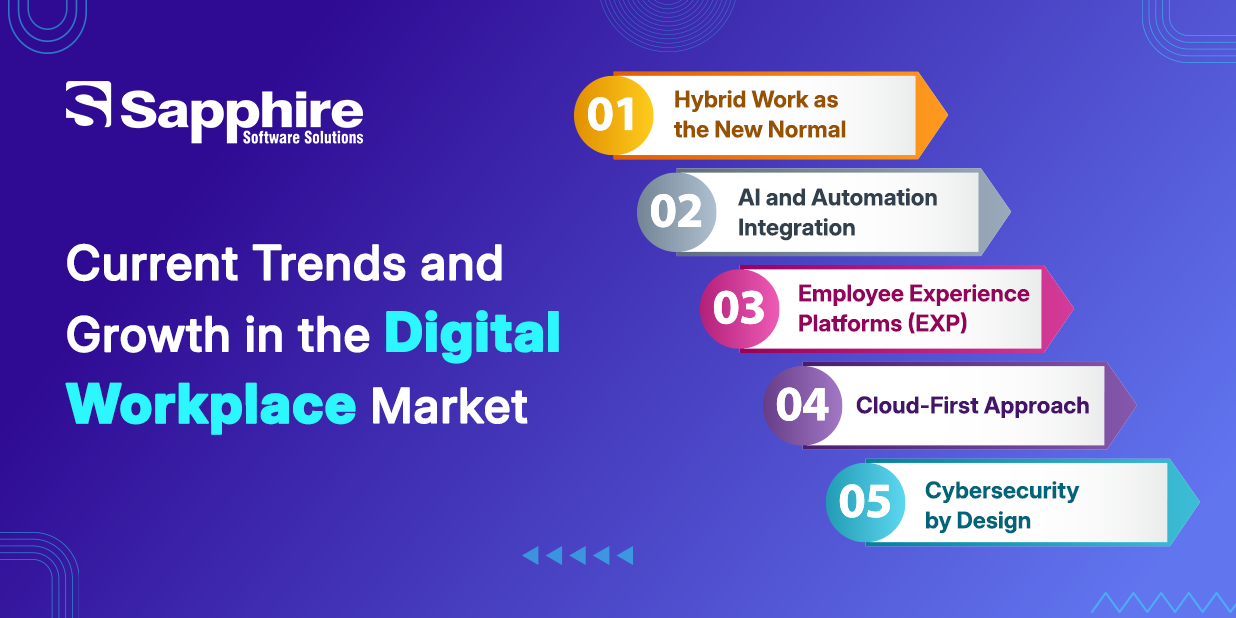
Some key trends shaping this growth include:
- Hybrid Work as the New Normal: The pandemic accelerated remote work adoption, but many companies have since moved to a hybrid model.
- AI and Automation Integration: Advanced AI and machine learning tools are becoming integral to Digital Workplace Technologies. They help in automating routine tasks, analyzing workflows, and even predicting future project risks.
- Employee Experience Platforms (EXP): Organizations are investing in platforms that combine communication, recognition, feedback, and learning in one place, putting employee engagement.
- Cloud-First Approach: With scalability, cost efficiency, and security in mind, companies are moving critical workloads to the cloud.
- Cybersecurity by Design: With increased digital connectivity comes heightened risk. Digital Workplace Security is now a top priority, focusing on identity management, encryption, and real-time threat detection.
Difference Between Digital Workplace Platforms and Digital Workplace Software:-
While often used interchangeably, Digital Workplace Platforms and Digital Workplace Software are not the same.
- Digital Workplace Platforms: A platform is an integrated ecosystem that brings together various tools and services in one place. Think of it as the central hub that hosts and connects different Digital Workplace Technologies communication tools, file storage, project management apps, analytics dashboards, etc. Examples include Microsoft 365, Google Workspace, or ServiceNow. The key advantage is integration employees have a single sign-on, unified search, and consistent user experience.
- Digital Workplace Software: Refers to individual applications or programs that serve a specific function. For instance, Zoom is a communication software, Trello is a project management software, and Dropbox is a file-sharing software. On their own, they are powerful tools, but without integration into a Digital Workplace Platform, they can lead to scattered workflows and productivity loss.
Building a Comprehensive Digital Workplace Strategy:-
A Digital Workplace Strategy is the blueprint for transforming how your organization operates in the digital age. It’s not just about deploying new tools, it’s about aligning technology with your business goals, culture, and workflows.
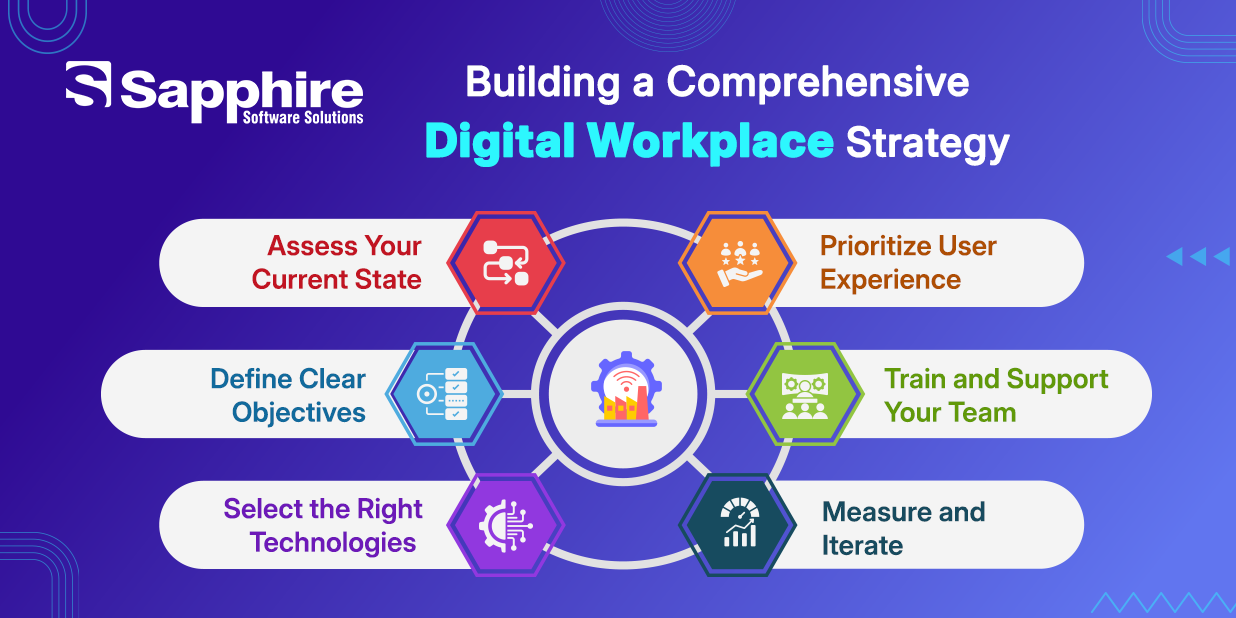
Here are the key steps to building a successful Strategy:
- Assess Your Current State: Evaluate existing tools, workflows, and pain points. Identify gaps in communication, collaboration, or security.
- Define Clear Objectives: Is your goal to boost productivity by 40%? Improve Digital Workplace Security? Enhance employee engagement? Clear objectives guide the entire strategy.
- Select the Right Technologies: Choose Digital Workplace Technologies that integrate well and meet your specific needs cloud services, AI tools, automation systems, and secure communication platforms.
- Prioritize User Experience: A Great Digital Workplace Solution should simplify work, not complicate it. Focus on intuitive interfaces, mobile accessibility, and minimal training requirements.
- Train and Support Your Team: Technology adoption fails without user buy-in. Provide training, ongoing support, and feedback channels.
- Measure and Iterate: Use analytics to track usage, performance, and Digital Workplace Benefits. Refine your strategy based on data and feedback.
A well-executed Digital Workplace Strategy turns technology into a productivity engine rather than a distraction.
Key Benefits of a Digital Workplace:-
The Digital Workplace Benefits go far beyond convenience they directly impact the bottom line.
- Increased Productivity: Integrated workflows reduce time spent switching between tools, allowing employees to focus on high-value tasks.
- Enhanced Collaboration: Real-time communication and co-authoring tools bridge geographical and departmental divides.
- Flexibility and Mobility: Access to work resources anytime, anywhere fosters work-life balance and reduces absenteeism.
- Improved Employee Engagement: When employees have the right tools, they feel empowered and valued, leading to higher morale and retention
- Cost Savings: Cloud-based Digital Workplace Solutions reduce infrastructure costs and optimize resource usage.
- Stronger Security: Centralized Digital Workplace Security controls protect sensitive data while enabling secure remote access.
How Sapphire as Your Trusted Digital Workplace Consultant Can Accelerate Your Transformation?
Choosing the right Digital Workplace Consultant can be the difference between a smooth transformation and a costly misstep. Sapphire brings deep expertise in Digital Workplace Technologies, market trends, and implementation best practices.
With Sapphire Software Solutions, you get:
- Tailored Solutions that fit your unique business needs and goals.
- End-to-End Implementation from strategy design to technology integration.
- Proven Security Frameworks to safeguard your data.
- Employee-Centric Design to ensure adoption and satisfaction.
- Ongoing Optimization so your Digital Workplace Solution evolves with your business.
By partnering with Sapphire, you accelerate time-to-value, minimize disruption, and maximize your Digital Workplace Benefits—putting you on track for that 40% productivity boost.
Conclusion:
Building a Digital Workplace that truly boosts productivity is not about chasing the latest tech trends it’s about creating a secure, integrated, and people-focused environment where work happens effortlessly. And with the guidance of a trusted Digital Workplace Consultant like Sapphire Software Solutions, the journey becomes faster, smoother, and more impactful. The future of work is digital and the time to build yours is now.