
















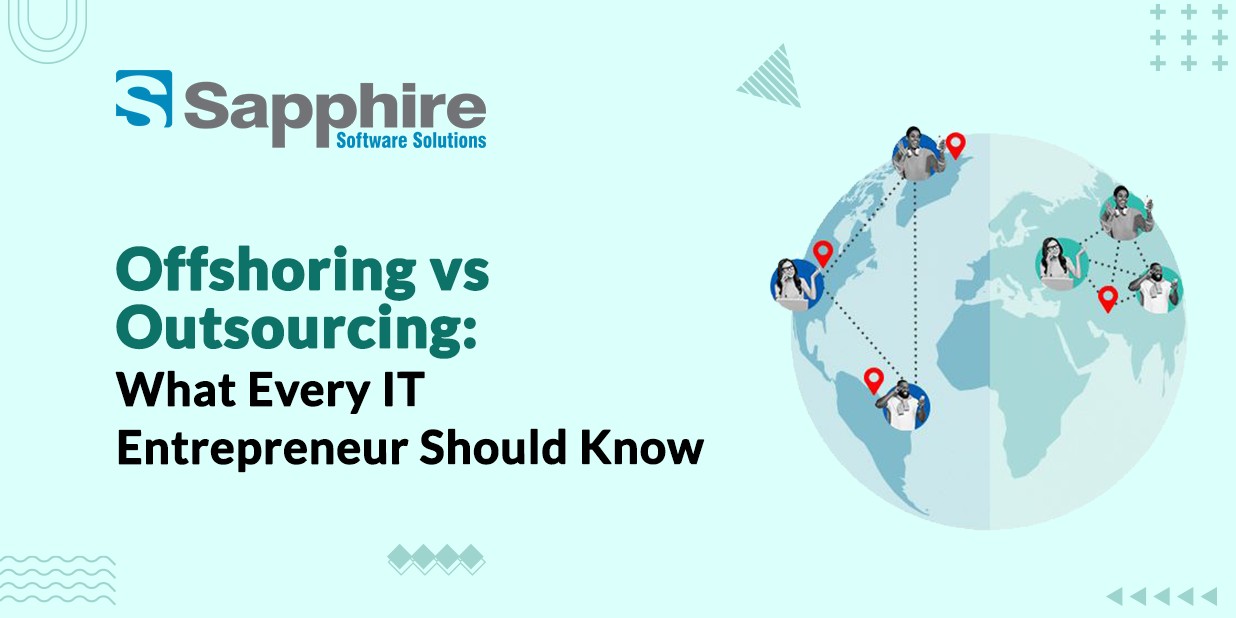
In today’s fast-paced global economy, IT entrepreneurs are constantly searching for strategies that enhance productivity, reduce operational costs, and scale efficiently. Two of the most popular models that help achieve these goals are offshoring and outsourcing. Although these terms are often used interchangeably, their underlying structures, benefits, and long-term impacts on a business differ significantly.
The ongoing shift toward digital transformation, remote collaboration, and globalized talent pools has made understanding of offshoring vs outsourcing more critical than ever. For technology-driven companies, particularly those building scalable software solutions or managing complex digital products, choosing between these two models can define their success trajectory.
This blog aims to clarify what offshoring vs outsourcing is, explore their key distinctions, evaluate their real-world advantages and disadvantages, and guide you in choosing the right strategy for your IT business. By the end, you’ll have a clear understanding of which model aligns best with your goals and how a trusted partner like Sapphire Software Solutions can help you execute it seamlessly.
What is Offshoring vs Outsourcing?
Before deciding which model suits your organization, it’s essential to understand the definition and scope of both approaches.
Outsourcing involves contracting a third-party company, often within the same or a different country, to perform specific business functions or projects. This could include anything from application development, cloud management, and technical support to UI/UX design and IT maintenance. The core objective is to delegate tasks to experts outside your organization, allowing you to focus on strategic business areas.
Offshoring, on the other hand, specifically refers to relocating certain business operations or development processes to another country—usually to leverage cost advantages, specialized skills, or time-zone differences. For instance, an IT company in the U.S. may establish a development center in India or the Philippines to access highly skilled developers at competitive rates.
In essence, offshoring vs outsourcing lies in geography and control. Outsourcing is about who does the work, while offshoring is about where the work is done. However, many organizations combine both models, outsourcing their development to offshore teams to enjoy the best of both worlds: reduced costs and global expertise.
Offshoring vs Outsourcing: Key Differences Every IT Entrepreneur Should Know:
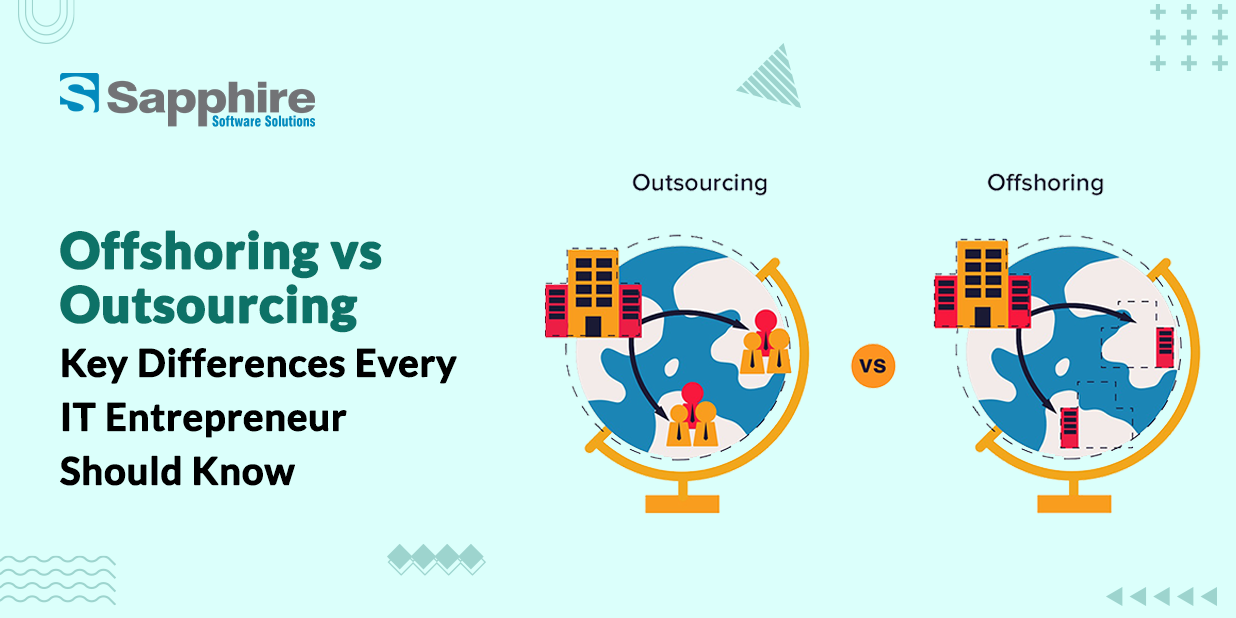
For IT entrepreneurs, understanding the offshoring vs outsourcing difference goes beyond terminology. It shapes your company’s operational strategy and risk management. Here are the primary distinctions:-
- Geographical Aspect:Outsourcing can happen locally or internationally. Offshoring always involves another country, often one with lower labor costs.
- Ownership and Control: In outsourcing, you contract work to an external vendor who retains management control over daily operations. In offshoring, you may establish your own remote office or team overseas, maintaining full ownership and operational control.
- Cost Efficiency: Both offer cost benefits, but offshoring usually yields more significant long-term savings due to lower wages and operational expenses.
- Communication and Time Zone Factors: Outsourcing partners may share the same or nearby time zones, enabling smoother communication. Offshoring may involve time differences, but with proper management, it can enable 24/7 development cycles.
- Skill and Talent Availability: Offshoring provides access to a broader global talent pool, particularly beneficial for specialized IT roles like AI, DevOps, and full-stack development.
For IT startups and scaling tech companies, the choice often depends on the complexity of projects, desired control levels, and cost expectations. Understanding these nuances helps entrepreneurs align technology investments with long-term business objectives.
Offshore vs Nearshore Outsourcing: Which Model Fits Your IT Business?
As global collaboration becomes the norm, IT companies now evaluate three primary delivery models: onshore, nearshore, and offshore outsourcing.
- Onshore outsourcing means partnering with vendors within the same country.
- Nearshore outsourcing involves working with partners in neighboring or nearby countries with similar time zones and cultural contexts.
- Offshore outsourcing, however, takes advantage of distant locations (like India or Vietnam) for larger cost and resource benefits.
When comparing offshore vs nearshore outsourcing, consider these dimensions:-
- Time Zone Alignment: Nearshore partners offer more convenient communication due to smaller time gaps. Offshore teams operate in opposite time zones but can provide round-the-clock development cycles.
- Cultural Compatibility: Nearshore regions often share similar languages and work ethics, leading to fewer misunderstandings. Offshore destinations like India compensate with experience, scalability, and robust IT infrastructure.
- Cost-Effectiveness: Offshore outsourcing remains the most cost-effective, especially for long-term product engineering and dedicated team setups.
- Scalability and Talent Availability: Offshore destinations offer access to vast developer ecosystems, enabling faster project ramp-ups and specialized technical support.
For tech entrepreneurs prioritizing agility and scale, offshore outsourcing software development company partnerships often deliver the best mix of affordability, expertise, and flexibility.
Top Examples of Offshoring and Outsourcing in the IT Industry:-
The IT industry provides countless offshoring and outsourcing examples that showcase how global collaboration accelerates innovation.
- Microsoft has long leveraged offshore development centers in India for software engineering and product testing.
- Google and IBM outsource specific services such as customer support and analytics to specialized third-party firms.
- Startups like Slack and GitHub initially outsourced product design and development to focus on go-to-market execution.
For startups, outsourcing can help launch products quickly without heavy upfront investment. For enterprise IT firms, offshoring ensures scalability and continuity. These models have shaped the backbone of modern IT ecosystems where global teams deliver integrated digital solutions seamlessly.
Ultimately, whether it’s code development, cloud management, or data analytics, real-world offshoring and outsourcing examples demonstrate how distributed collaboration has become an innovation multiplier rather than just a cost-saving tactic.
Advantages and Disadvantages of Offshoring and Outsourcing for IT Companies:-
Every IT leader must evaluate both offshoring and outsourcing advantages and disadvantages before choosing the right model.
Advantages:-
- Cost Efficiency: Lower labor and operational expenses, especially in countries like India, enable businesses to allocate more funds toward innovation.
- Access to Global Talent: You gain access to specialized skill sets from cloud architects to AI engineers without geographic constraints.
- Scalability: Teams can expand or contract based on project requirements, allowing agile growth.
- Focus on Core Competencies: Outsourcing repetitive or non-core tasks lets in-house teams concentrate on strategic initiatives and product innovation.
- 24/7 Productivity: Offshore collaboration ensures continuous development cycles and faster project delivery.
Disadvantages:-
- Communication Barriers: Time zones and cultural differences may require proactive management.
- Quality Control Challenges: Ensuring consistent quality requires transparent reporting and performance tracking mechanisms.
- Data Security Risks: Businesses must enforce strict compliance policies and secure data transfer practices.
- Hidden Costs: Transition, training, or communication expenses may be added if not properly planned.
By balancing these pros and cons, entrepreneurs can select the model that optimizes both cost and operational excellence while mitigating potential risks.
Choosing the Right Offshore Outsourcing Software Development Company:
Selecting the ideal Offshore Outsourcing Software Development Company can determine the success of your global IT strategy. Here’s a roadmap for making an informed choice:-
- Evaluate Technical Expertise: Review the company’s experience in your technology stack—whether it’s web, mobile, or enterprise systems.
- Check Cultural Compatibility: Effective communication and shared work ethics are crucial for long-term partnerships.
- Assess Security Practices: Ensure the vendor follows international data protection laws like GDPR and ISO standards.
- Request Transparent Pricing Models: Fixed-cost, time-and-material, or dedicated team models must align with your financial goals.
- Inspect Past Work and Testimonials: A reputable provider will have strong client case studies and authentic feedback across platforms like Clutch or Good Firms.
- Consider Flexibility in Engagement Models: Companies offering both project-based and dedicated resource options help you adapt to changing workloads.
A strong offshore partner goes beyond technical delivery; it acts as a strategic ally that understands your business objectives and aligns IT outcomes with growth.
Why India is a Leading Offshore Development Hub for IT Outsourcing?
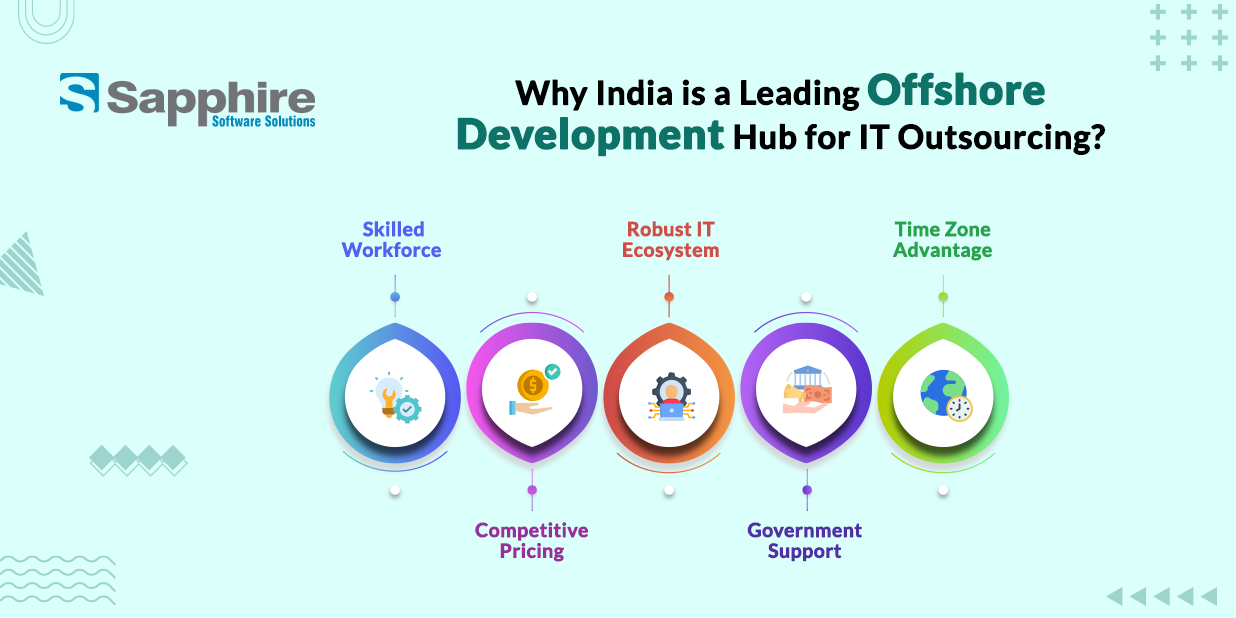
India stands out as the global epicenter for Offshore Development Company in India partnerships. With over 5 million IT professionals and decades of experience in global collaboration, the country offers unmatched scalability and expertise.
Here are the reasons why India leads the global outsourcing landscape:
- Skilled Workforce: Indian developers are proficient in modern frameworks, from AI and cloud computing to full-stack and mobile app development.
- Competitive Pricing: Labor costs are significantly lower than Western markets, without compromising quality or innovation.
- Robust IT Ecosystem: With advanced digital infrastructure, India supports seamless remote collaboration through secure networks and project management tools.
- Government Support: Policies promoting IT exports, data protection, and skill enhancement programs have strengthened India’s position in global outsourcing.
- Time Zone Advantage: The time difference allows for round-the-clock project execution, enabling continuous delivery pipelines.
For businesses seeking sustainable growth, choosing India as their outsourcing destination ensures a balance of affordability, quality, and scalability.
Why Choose Sapphire as Your Trusted Indian IT Outsourcing Company for Offshore Development?
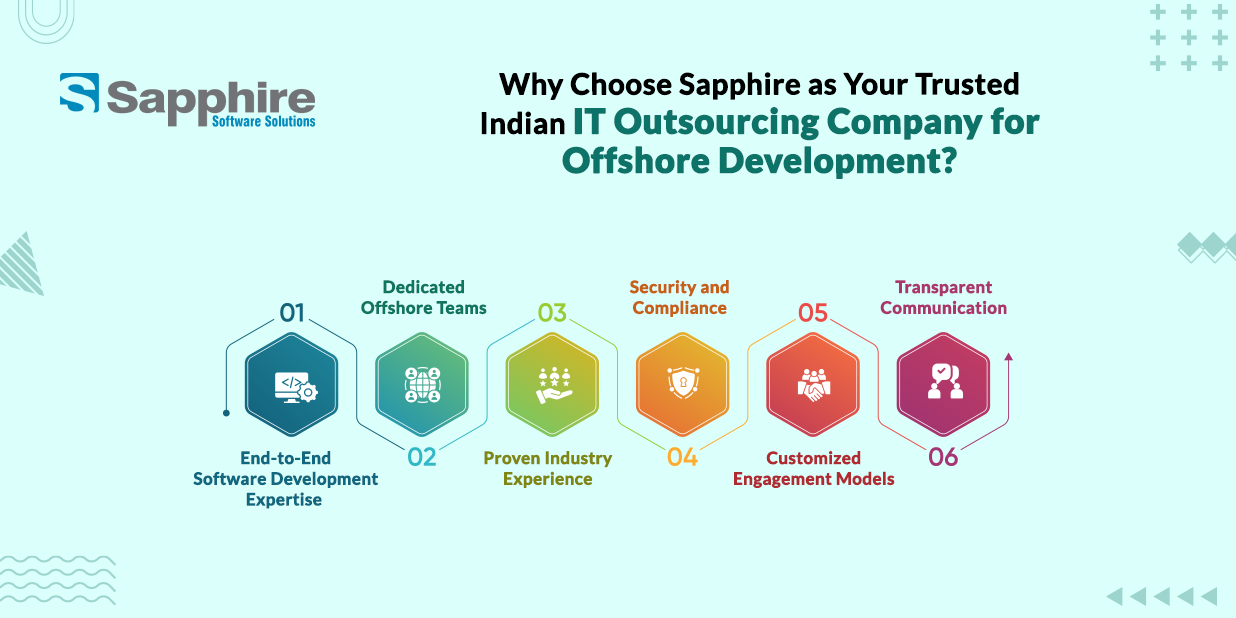
When selecting an Indian IT Outsourcing Company, the partnership you build defines your project’s long-term success. Sapphire Software Solutions has emerged as a global leader by combining deep technical expertise, transparent communication, and proven methodologies.
Here’s what sets Sapphire apart:-
- End-to-End Software Development Expertise: From ideation to deployment, Sapphire manages the full software lifecycle with agile precision.
- Dedicated Offshore Teams: Businesses can scale efficiently with remote teams that seamlessly integrate into existing workflows.
- Proven Industry Experience: Sapphire has delivered solutions across diverse sectors, including healthcare, fintech, logistics, and e-learning.
- Security and Compliance: The company adheres to stringent data privacy standards, ensuring your intellectual property is always protected.
- Customized Engagement Models: Whether you require short-term project support or long-term collaboration, Sapphire adapts to your needs.
- Transparent Communication: Clients benefit from regular progress updates, clear documentation, and proactive support.
Partnering with Sapphire means gaining a reliable technological ally capable of executing complex global projects with precision and trust. As one of the most reputable names in offshore development, Sapphire continues to empower businesses with innovative digital solutions that drive measurable impact.
Conclusion:
In a world defined by globalization and digital disruption, offshoring vs outsourcing is not merely a choice. It’s a strategic decision that influences your company’s agility, cost structure, and innovation capacity.
Outsourcing allows organizations to delegate non-core operations and gain specialized expertise, while offshoring helps build dedicated global teams that work as extensions of your company. By understanding the nuances and evaluating examples of offshoring and outsourcing, IT entrepreneurs can craft a model that accelerates business growth sustainably.
For companies seeking a trusted partner to navigate this journey, Sapphire Software Solutions stands out as a dependable Indian IT outsourcing company. With deep technical proficiency, a commitment to excellence, and an adaptive engagement approach, Sapphire enables IT entrepreneurs to harness the power of global collaboration and build future-ready digital solutions.