
















Digital marketing has become far more complex than it was just a few years ago. Customers no longer interact with businesses through a single channel before making a purchase. Instead, they discover brands through search engines, social media, paid advertisements, email campaigns, videos, webinars, and online communities. Managing these interactions manually can quickly overwhelm even experienced marketing teams.
This is where Marketing Automation Tools have become an essential part of modern business growth. They help organizations automate repetitive marketing activities; nurture leads more effectively and deliver personalized customer experiences throughout the buying journey.
What is Marketing Automation? (And Why It Matters in 2026)
Many business owners still ask what marketing automation actually means. Simply put, it refers to software that automates repetitive marketing activities while delivering personalized communication based on customer behavior.
The importance of automation has grown rapidly because customer expectations have changed. Today buyers expect immediate responses, relevant recommendations, and consistent communication across multiple channels.
Some of the biggest reasons businesses are investing in automation include:
- Faster leads to nurturing without increasing marketing workload.
- Better customer segmentation for personalized communication.
- Improved collaboration between marketing and sales teams.
- Higher conversion rates through timely engagement.
- Reduced operational costs by eliminating repetitive tasks.
- Better reporting and campaign performance analysis.
How Marketing Automation Tools Work Across the Entire Funnel?
Successful marketing is not limited to attracting visitors. Every customer moves through different stages before making a purchase, and automation helps optimize each stage of this journey.
Awareness:
The customer journey usually begins when potential buyers discover your business through search engines, advertisements, blogs, videos, or social media platforms.
Interest:
Once visitors interact with your website by downloading an eBook, subscribing to your newsletter, or requesting information, automation workflows begin nurturing them.
Consideration:
As prospects evaluate different solutions, automation platforms send case studies, product comparisons, customer success stories, webinars, and informative resources.
Decision:
Automation systems use lead scoring to determine when prospects are ready to speak with the sales team. High-value leads are automatically assigned to sales representatives, reducing response time and increasing the likelihood of closing deals.
Retention:
Marketing automation continues after the sale. Businesses can automate onboarding emails, customer education, renewal reminders, loyalty rewards, product recommendations, and satisfaction surveys.
Best AI Marketing Automation Tools for Smarter Campaigns:
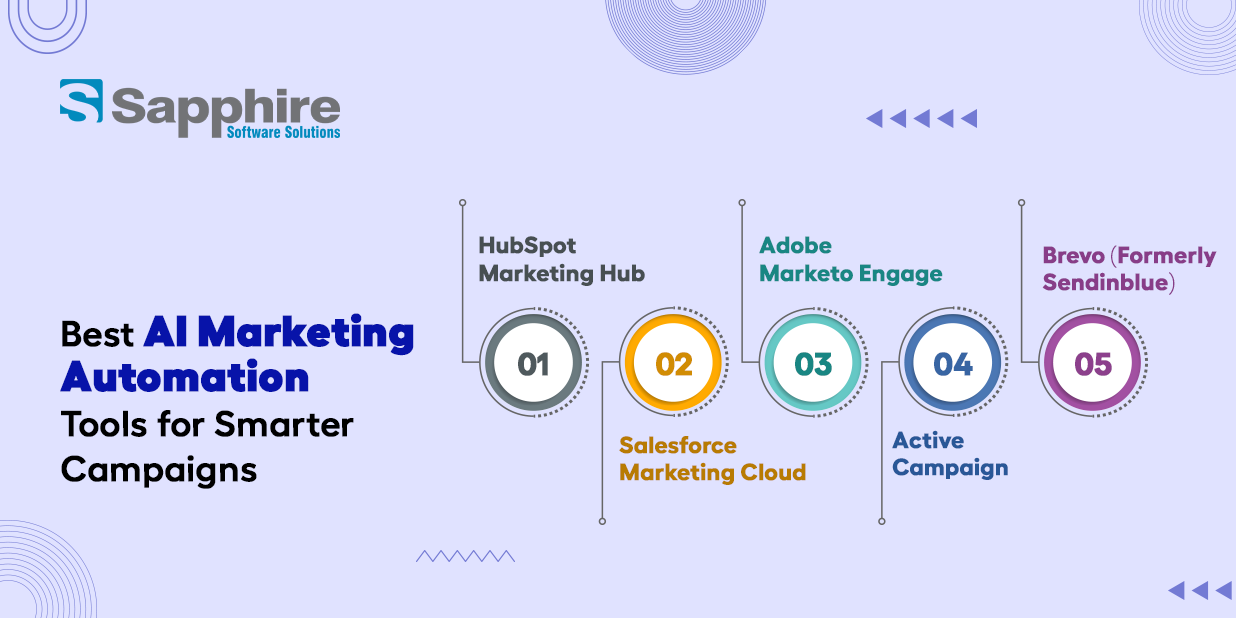
Modern AI marketing automation tools help businesses understand customer behavior, predict future actions, personalize communication, and optimize campaigns without requiring constant manual intervention.
HubSpot Marketing Hub:
HubSpot is one of the most comprehensive marketing platforms available today. It combines CRM, lead management, email campaigns, landing pages, analytics, and AI-powered recommendations in one ecosystem.
Salesforce Marketing Cloud:
Salesforce offers enterprise-level automation with Einstein AI, allowing organizations to personalize customer interactions across email, SMS, websites, and mobile applications.
Adobe Marketo Engage:
Marketo is designed for organizations managing complex customer journeys. It supports behavioral tracking, account-based marketing, lead scoring, campaign automation, and AI-powered optimization.
Active Campaign:
Active Campaign combines marketing automation with CRM functionality to create intelligent customer journeys. Businesses can automatically segment audiences, personalize messages, and build workflows based on customer behavior without requiring advanced technical expertise.
Brevo (Formerly Sendinblue):
Brevo offers affordable automation for startups and growing businesses. Besides email marketing, it supports SMS campaigns, WhatsApp messaging, customer segmentation, and AI-assisted campaign recommendations that help improve customer engagement.
Top Email Marketing Automation Tools to Boost Conversions:
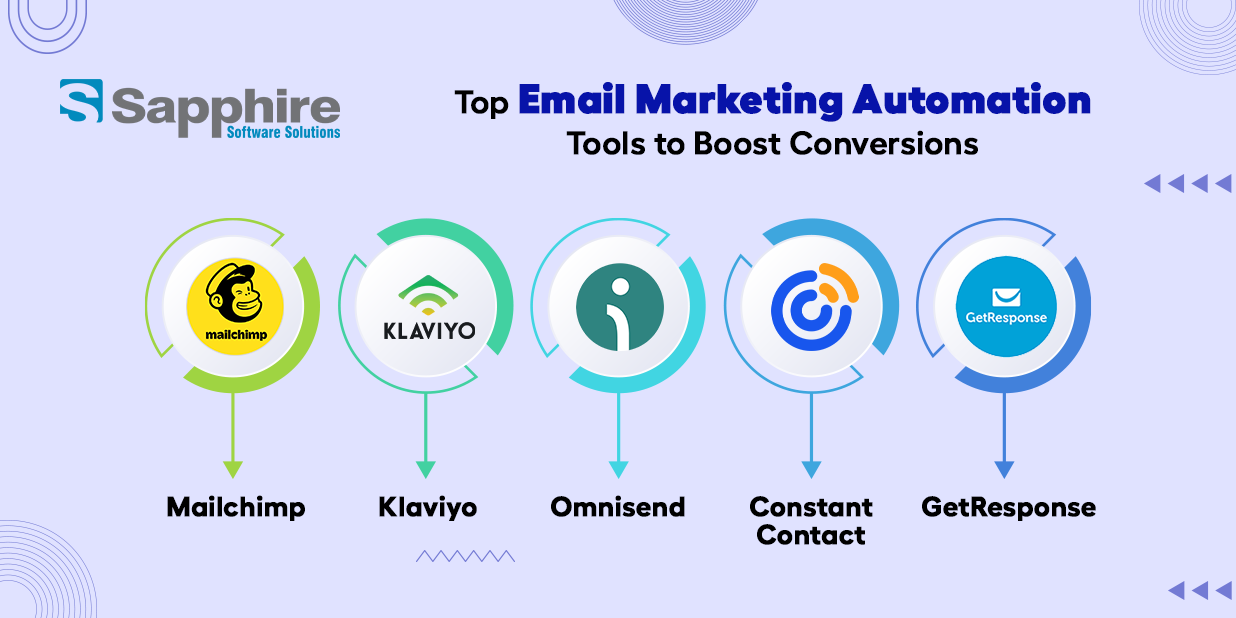
Email continues to deliver one of the highest returns on investment among all digital marketing channels. Modern email marketing automation tools simplify this process by automatically sending personalized emails based on customer actions and preferences.
Here are some of the leading platform's businesses rely on today.
Mailchimp:
Mailchimp remains a popular choice for startups and small businesses because of its user-friendly interface and ready-made automation templates. Users can quickly create welcome emails, newsletters, promotional campaigns, abandoned cart reminders, and customer follow-up sequences.
Klaviyo:
Klaviyo has become a preferred solution for eCommerce businesses. It analyzes customer shopping behavior to send personalized product recommendations, abandoned cart emails, post-purchase follow-ups, and loyalty campaigns that encourage repeat purchases.
Omnisend:
Omnisend combines email, SMS, push notifications, and customer segmentation into one platform. This omnichannel approach helps businesses maintain consistent communication across multiple customer touchpoints while improving engagement.
Constant Contact:
Constant Contact focuses on simplicity, making it ideal for small businesses that want effective email automation without technical complexity. It includes event marketing, customer segmentation, campaign scheduling, and performance reporting.
GetResponse:
GetResponse combines email marketing with landing pages, webinars, CRM functionality, and conversion funnels. Businesses can automate the complete lead generation process from visitor acquisition to customer conversion.
Best B2B Marketing Automation Tools for Lead Generation:
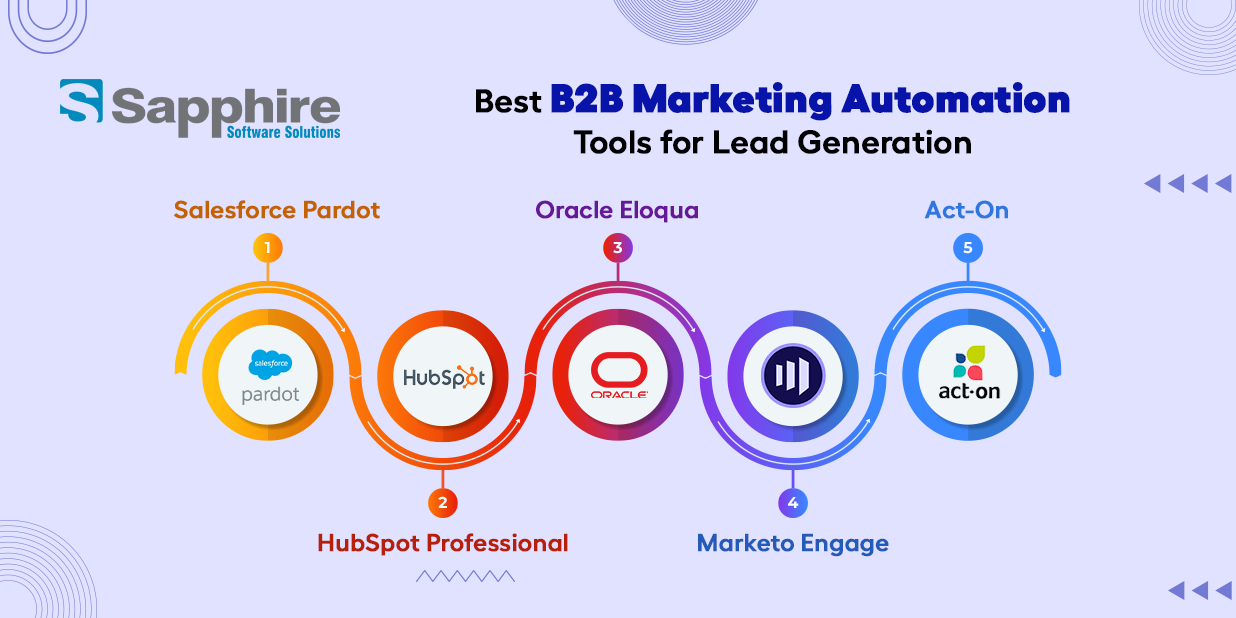
Business-to-business sales typically involve longer decision-making processes than consumer purchases. Modern b2b marketing automation tools help organizations generate qualified leads while supporting sales teams with valuable customer insights.
Salesforce Pardot:
Pardot is built specifically for B2B organizations using Salesforce CRM. It automates lead nurturing, customer segmentation, email marketing, lead scoring, and sales notifications, helping organizations identify prospects that are ready for direct engagement.
HubSpot Professional:
HubSpot provides an all-in-one solution for marketing and sales teams. Its automation capabilities include CRM integration, workflow management, lead scoring, meeting scheduling, live chat, forms, and comprehensive reporting.
Oracle Eloqua:
Oracle Eloqua is designed for large enterprises managing global marketing campaigns. It supports sophisticated audience segmentation, account-based marketing, campaign orchestration, and detailed performance analytics.
Marketo Engage:
Marketo continues to be a preferred platform for organizations managing large databases of business prospects. Its behavioral tracking and predictive analytics help marketing teams deliver highly targeted campaigns throughout lengthy buying cycles.
Act-On:
Act-On offers marketing automation, website visitor tracking, CRM integration, lead nurturing, and account-based marketing features while maintaining a relatively simple user experience.
The best B2B platform should align with your sales cycle, CRM system, reporting requirements, and future business expansion plans.
Marketing Automation Software Platforms: Features & Comparison
Choosing the right marketing automation software platform requires evaluating features that support both current marketing goals and future business growth. While pricing is important, functionality, scalability, and integration capabilities usually have a much greater impact on long-term success.
|
Feature |
Business Benefit |
| Customer Segmentation |
|
| Workflow Automation |
|
| CRM Integration |
|
| Lead Scoring |
|
| AI Recommendations |
|
| Analytics & Reporting |
|
| Multi-Channel Marketing |
|
| Personalization |
|
| A/B Testing |
|
| Scalability |
|
Beyond these features, businesses should also evaluate customer support, security, compliance, implementation time, available integrations, pricing flexibility, and ease of use. Investing in the right platform not only improves marketing efficiency but also creates a stronger foundation for sustainable business growth.
Content Marketing Automation Tools to Scale Engagement:
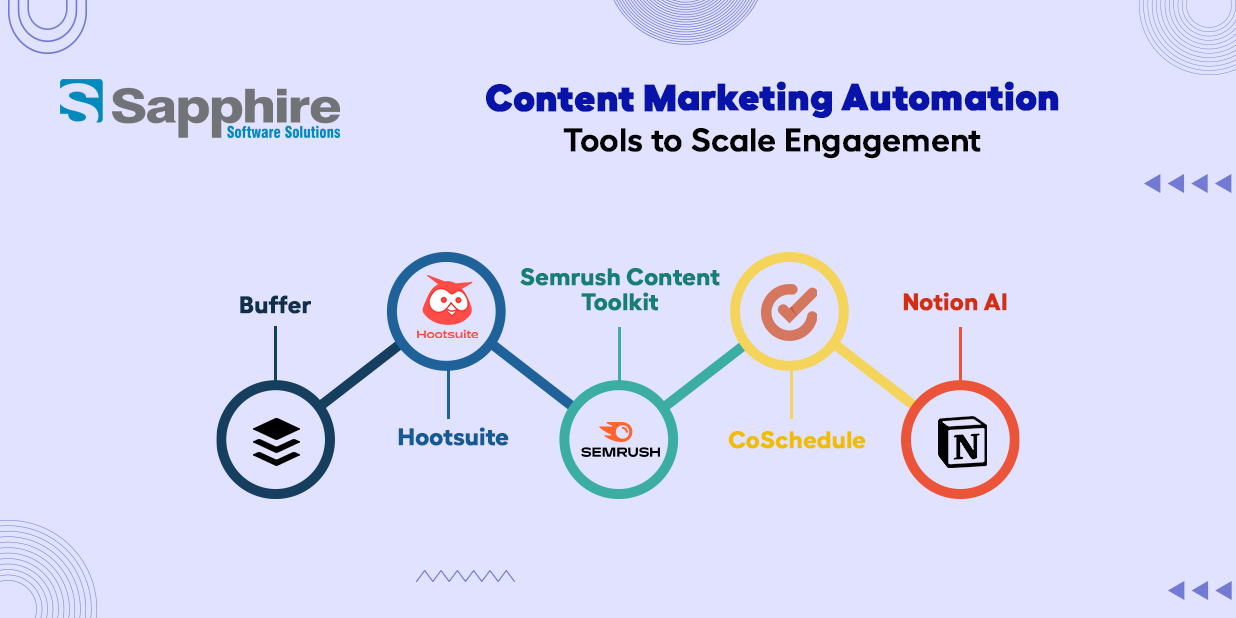
Content marketing is one of the most effective ways to attract, educate, and convert potential customers. However, consistently producing and distributing high-quality content across multiple channels requires significant time and effort. This is where content marketing automation tools help businesses maintain a consistent online presence while reducing manual work.
Buffer:
Buffer is widely used for scheduling and publishing content across various social media platforms. Businesses can plan campaigns for weeks in advance, monitor engagement, and maintain a consistent posting schedule without manually publishing every update.
Hootsuite:
Hootsuite enables organizations to manage multiple social media accounts from a single dashboard. It provides scheduling, social listening, performance analytics, and team collaboration features, making it suitable for businesses managing large content calendars.
Semrush Content Toolkit:
Semrush helps marketers discover trending topics, conduct keyword research, optimize content for search engines, and monitor content performance. It also provides valuable insights into competitor strategies and audience interests.
CoSchedule:
CoSchedule combines editorial planning with marketing campaign management. Teams can organize blog posts, email campaigns, social media content, and marketing projects within a centralized calendar, improving collaboration and workflow efficiency.
Notion AI:
Notion AI assists marketing teams with brainstorming ideas, organizing content strategies, summarizing research, and preparing content outlines. While human creativity remains essential, AI helps accelerate the planning process and improve productivity.
How Sapphire Uses AI in Marketing Services to Transform Business Growth?
As customer expectations continue to evolve, businesses require more than traditional marketing strategies to remain competitive. At Sapphire, technology and creativity work together to build intelligent marketing ecosystems that improve customer engagement, automate repetitive activities, and generate measurable business results through AI in Marketing Services.
AI-Powered Marketing Strategy:
Every successful automation initiative begins with a clear strategy. Sapphire analyzes customer behavior, business goals, market trends, and existing marketing processes to create automation roadmaps that support sustainable growth.
Customer Journey Automation:
Sapphire designs personalized customer journeys that automatically respond to user actions. From the first website visit to post-purchase engagement, every interaction is optimized to deliver relevant information at the right moment.
Lead Nurturing Workflows:
Businesses often lose valuable opportunities because leads are not followed up consistently. Sapphire builds automated workflows that nurture prospects using personalized emails, educational content, product recommendations, and timely follow-ups until they become sales ready.
CRM Integration:
Marketing automation becomes significantly more effective when connected with CRM platforms. Sapphire integrates automation systems with leading CRM solutions to provide a unified view of customer interactions while improving collaboration between marketing and sales teams.
AI-Based Customer Segmentation:
Not every customer has the same needs or purchasing behavior. Sapphire uses intelligent segmentation techniques to categorize audiences based on demographics, browsing behavior, engagement history, and buying intent, enabling highly personalized campaigns.
Marketing Analytics and Performance Monitoring:
Data-driven decision-making is essential for continuous improvement. Sapphire develops customized dashboards that provide real-time insights into campaign performance, customer engagement, lead quality, conversion rates, and return on investment.
Omnichannel Campaign Automation:
Modern customers interact with brands across multiple channels. Sapphire helps businesses coordinate communication through email, websites, mobile applications, SMS, social media, and chatbots, ensuring a consistent customer experience regardless of where interactions occur.
Scalable Marketing Solutions:
Whether supporting startups launching their first campaigns or enterprises managing thousands of customer interactions daily, Sapphire builds scalable automation solutions that grow alongside the business without requiring complete system replacements.
Conclusion:
Marketing automation has become a critical driver of scalable business growth in today’s digital-first economy. As customer journeys expand across multiple channels, businesses that adopt the right automation strategies can significantly improve lead generation, customer engagement, and conversion rates. However, success depends on selecting tools that align with your business objectives, integrate seamlessly with your CRM, and support personalized, data-driven marketing at every stage of the funnel. Companies that invest in automation today are better positioned to reduce operational costs while maximizing marketing ROI and long-term customer value.
At Sapphire Software Solutions, we help businesses transform their marketing systems through intelligent, AI-powered automation solutions designed for measurable results. From building advanced customer journeys to integrating CRM platforms and optimizing omnichannel campaigns, our approach focuses on sustainable and scalable growth. If you are ready to streamline your marketing efforts and increase qualified leads, Get a Free Quote today and take the next step toward a fully automated, high-performance marketing ecosystem.