















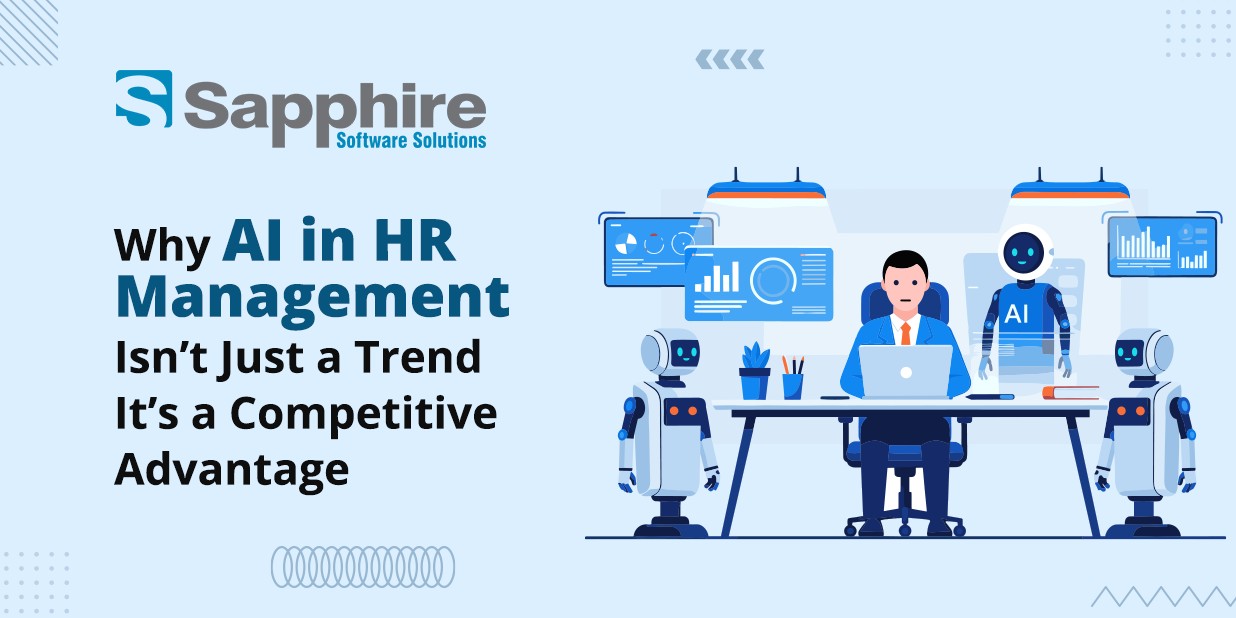
In the past few years, technology has revolutionized every aspect of the business world, and human resources have not been left behind. What used to be viewed as a people-focused department has now evolved to become one of the most technologically advanced functions of contemporary organizations. Step forward AI in HR Management, a change that is more than industry hype—it's really a game-changer. From streamlining recruitment to enhancing employee engagement and even supporting strategic workforce planning, AI in HRM is revolutionizing the way businesses conceptualize talent and organizational development.
In contrast to trends that may wane, AI in HR is building a lasting competitive edge. Why? Businesses that adopt smart HR systems can make quicker, more insight-based decisions and free their HR professionals from mundane work. Rather than using hours of time scanning resumes by hand or responding to employee FAQs, HR departments now have the ability of tools such as AI HR assistants and agentic AI in HR to perform these tasks with precision and accuracy.
But this is not simply about reducing expenses or saving time. The truth is in how AI in Human Resource Management enables companies to invest more in people, culture, and development. Technology guarantees fairness, consistency, and responsiveness—values that modern organizations require more than ever amidst a competitive global talent market.
What is AI in HR?
At its essence, AI in HR involves the application of artificial intelligence solutions, algorithms, and machine learning patterns to manage and enhance HR operations. This spans from hiring and onboarding to payroll, performance management, and employee engagement. Rather than being dependent on human intuition or manual processes, AI in Human Resource Management assists companies in interpreting huge volumes of data, forecasting trends, and making more informed decisions.
For instance, conventional recruitment means HR departments going through scores of resumes—a time-consuming and biased process. In contrast, AI in HR recruitment software can review resumes, select best-fit candidates, and even shortlist them on the basis of job fit in mere minutes. Likewise, predictive analytics in AI can predict employee churn so that companies are able to take pre-emptive measures for retaining employees.
It is critical to realize that AI in HRM is not a matter of replacing people. It's more about enhancing the human factor. With routine administrative processes automated, HR practitioners have more time for what is really important: establishing people connections, reinforcing company culture, and developing strategies that drive business growth.
From chatbots powered by AI responding to employee questions to generative AI in HR crafting learning and development material, the uses are immense and expanding. Briefly, AI is not merely an HR tool—it's rapidly becoming the backbone of successful, contemporary workforce management.
AI HR Assistants: Automating Daily HR Tasks
Perhaps the most useful utility of AI in HR management is through AI-powered HR assistants. These computerized aids, preferably chatbots or integrated platforms, can perform many repetitive tasks that tend to waste HR teams' time.
An AI HR assistant is capable of:
- Responding to employee FAQs (leave policy, benefits, working hours, etc.) immediately.
- Aiding in onboarding by walking new employees through paperwork and training schedules.
- Schedule appointments, organize reminders, and send notifications.
- Accompany payroll and attendance tracking with precision.
Being an AI HR assistant is more than just convenience. By leaving these administrative tasks behind, HR professionals can channel their energy into strategic endeavors—like developing more effective employee engagement programs or enhancing diversity and inclusion initiatives.
In addition, with agentic AI in HR, assistants become more context sensitive. They do not simply obey orders but learn to cater to the needs of employees, tailor responses, and even anticipate issues even before they arise. For example, if an employee keeps inquiring about leave policies, the system can identify signs of burnout and warn HR managers beforehand.
AI Usage in HR: Real-World Applications
The application of AI to HR goes well beyond chatbots and automation. Organizations are finding a vast range of applications for AI to improve the employee lifecycle. Let's take apart some actual examples:
- Recruitment & Hiring: HR recruitment software using AI assists in sifting resumes, filtering candidates, and even holding initial interviews with AI-driven voice or video tests. It decreases the possibilities of hiring biases and narrows down the time-to-hire.
- Onboarding: New hires tend to be overwhelmed. AI HR assistants can walk them through step by step and make them feel included and supported from day one.
- Employee Engagement: Generative AI in HR can develop personalized training modules, employee newsletters, or engagement campaigns specific to workforce requirements.
- Performance Management: AI-powered analytics can track performance data, identify underperformance, and suggest development programs—enabling HR teams to coach employees more effectively.
- Predictive Analytics: With AI in HRM, companies can predict turnover, track employees who are about to leave, and take retention actions.
- Diversity & Inclusion: AI can identify unconscious bias within job postings or performance appraisals to create a more inclusive environment.
Top Benefits of AI in HR Management
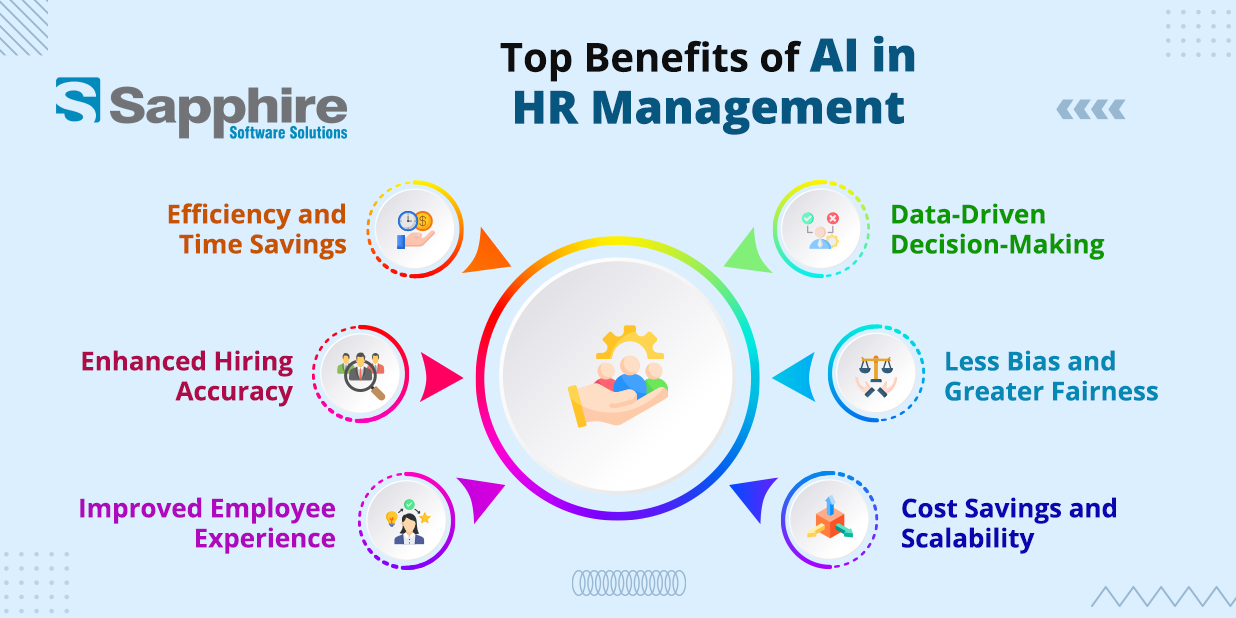
The advantages of AI in HR go way beyond mere automation; they penetrate every aspect of how contemporary companies find, manage, and keep their talent. By incorporating AI into human resource management, companies are able to reposition HR from a proactive function to a strategic force. Let's discuss the pros in more detail:
- Efficiency and Time Savings: One of the most direct consequences of AI in HRM is increased efficiency. Monotonous tasks such as resume screening, payroll, tracking attendance, and responding to employee queries consume a lot of time for HR professionals.
- Enhanced Hiring Accuracy: Recruitment has always been one of the most labor-intensive HR activities. AI recruitment in HR makes it more intelligent by processing thousands of resumes in minutes, selecting candidates best suited for job descriptions, and even knowing who will fit into company cultures.
- Improved Employee Experience: Workers today demand immediate responses and tailored assistance. With AI HR assistants, employees can obtain real-time answers to frequent questions, access onboarding instructions, and receive tailored learning suggestions.
- Data-Driven Decision-Making: Previously, most HR choices depended on intuition or incomplete data. Today, AI HR management gives predictive analysis, which enables managers to predict employee turnover, track performance patterns, and determine training requirements. These insights result in more intelligent, more proactive approaches.
- Less Bias and Greater Fairness: Unconscious prejudice has haunted recruitment and performance appraisal for ages. With AI-based solutions, businesses can eliminate discriminatory words in job posts and filter candidates purely based on merit. This increases the inclusivity and fairness of the workplace.
- Cost Savings and Scalability: HR functions become less costly with automation and also avoid expensive hiring errors. Additionally, as businesses expand, AI in HRM systems scales up effortlessly, keeping HR divisions from getting bogged down due to larger workloads.
Why Is Embracing AI in HR Management Critical for Businesses Looking to Streamline Operations?
The contemporary work environment is transforming at an unprecedented speed. Companies are facing talent deficits, rising turnover, remote and hybrid work challenges, and rising employee expectations of fairness, flexibility, and development. Under these circumstances, it can prove to be an expensive error to still depend on conventional HR practices—manual review of resumes, paper performance reviews, or lagged employee support. This is why adopting AI in HR management is not only a wise decision; it's fast becoming an essential survival tactic for companies.
On the most fundamental level, AI in HRM cuts out inefficiencies that hold back businesses. Rather than the hours it takes HR managers to sift through hundreds of CVs, AI-enabled recruitment software can screen candidates within minutes and highlight just those who most closely match job specifications.
Another key motivation to implement AI adoption in HR is fairness and transparency. Unconscious discrimination has been an issue in hiring and performance appraisals for decades. Using AI solutions, firms can make job postings gender-neutral, review candidate information objectively, and measure employee performance based on quantifiable criteria instead of personal impressions. This contributes to the establishment of an environment based on trust, inclusivity, and meritocracy—values that the current workforce actively seeks when selecting an employer.
For example, self-service onboarding eliminates the need for delays in welcoming new employees by providing them with customized training suggestions. Predictive analysis can anticipate attrition risk, enabling HR to catch valuable employees before they depart. This proactive strategy yields a more stable workforce and saves companies high rehiring expenses.
How Sapphire Leverages AI in HR Management to Deliver a Competitive Advantage for Modern Businesses?
Though off-the-shelf AI solutions have value, most businesses require secure, scalable, and customized systems specifically designed to address their individual challenges. This is where it pays to have a top artificial intelligence development firm like Sapphire on your side.
Sapphire Software Solutions focuses on creating AI-enabled HR systems that extend beyond automation. They craft tools that easily fit into existing infrastructure so they can be adopted smoothly without impeding everyday operations.
Security and compliance are similarly high on the list. In sectors where employee information is sensitive, Sapphire Software Solutions guarantees that AI in human resource management is on par with international standards such as GDPR and HIPAA, protecting companies from regulatory risk.
Above all, Sapphire is a long-term business partner, not merely a service provider. Their experienced professionals enable companies to continuously improve their HR infrastructure, staying up to date with emerging technology and workforce trends.
To businesses seeking to transform HR into a strategic strength, collaborating with Sapphire Software Solutions releases the full potential of AI to convert HR into a value-added driver of growth and innovation.
Conclusion
AI in HR management has moved far beyond buzzwords and temporary trends. It is now a proven catalyst for operational efficiency, unbiased decision-making, smarter talent strategies, and scalable workforce management. Companies that embrace AI in their HR processes are not just improving workflows—they’re positioning themselves to attract top talent, retain high performers, and adapt faster in a constantly evolving business environment.
The true power of AI in HR lies in its ability to free up human potential. By automating the repetitive and enabling data-driven decisions, organizations can focus on what truly matters: building stronger cultures, nurturing employee engagement, and driving sustainable business growth.
As a trusted AI Development Company, Sapphire Software Solutions doesn’t just implement AI—we design secure, intelligent, and future-ready HR solutions tailored to your unique organizational needs. Whether you're a growing enterprise or a large corporation, our AI-driven HR systems help you streamline operations, boost workforce engagement, and stay ahead of the curve.
If you're ready to transform HR from a support function into a strategic competitive advantage, Sapphire is here to help you lead that transformation with confidence.