

















Businesses today are rapidly modernizing their software systems to stay competitive in a technology-driven market. Older applications often create performance issues, security risks, and integration limitations that slow down business operations. To overcome these challenges, many organizations are investing in modern development frameworks that support scalability, cloud integration, and improved application performance. This growing demand for modernization has made dot NET migration an important strategy for companies looking to future-proof their digital infrastructure.
Many businesses also partner with an Experienced ASP.NET Development Company to ensure a smooth migration process and build high-performance applications tailored to evolving business needs. Modern .NET technologies help businesses improve operational efficiency, strengthen cybersecurity, and deliver better customer experiences. Companies across industries are moving away from outdated systems because modern applications provide greater flexibility, easier maintenance, and long-term cost savings. As digital transformation continues to grow, businesses are increasingly prioritizing migration projects to build faster, smarter, and more reliable software solutions.
Why Companies Are Investing in .NET Migration?
Many organizations are investing in migration projects because legacy systems are becoming more expensive to maintain and difficult to scale. Older applications often lack compatibility with cloud platforms, modern APIs, and advanced security frameworks. Businesses want technology environments that support automation, real-time analytics, and seamless user experiences, which older systems frequently fail to provide.
Migration helps companies improve application speed, reduce downtime, and enhance overall operational efficiency. Modern .NET platforms also offer cross-platform capabilities, allowing businesses to build scalable applications that work across different operating systems and devices. With increasing pressure to innovate and adapt quickly, organizations are choosing modernization to remain competitive in evolving digital markets.
VB6 to .NET Migration and Why It Is Still Relevant?
Many enterprises still rely on legacy Visual Basic 6 applications because these systems contain years of valuable business logic and operational data. However, outdated VB6 applications often create security vulnerabilities, compatibility issues, and maintenance challenges. Since modern operating systems no longer fully support VB6 environments, businesses are increasingly modernizing these applications to ensure stability and long-term functionality.
VB6 to .NET migration remains relevant because it allows organizations to preserve their existing business processes while upgrading application performance and security. Instead of rebuilding software entirely from scratch, businesses can modernize critical systems more efficiently through migration. This approach reduces operational risks while enabling better scalability, cloud integration, and future technology adoption.
Complete .NET Migration Guide for Businesses:
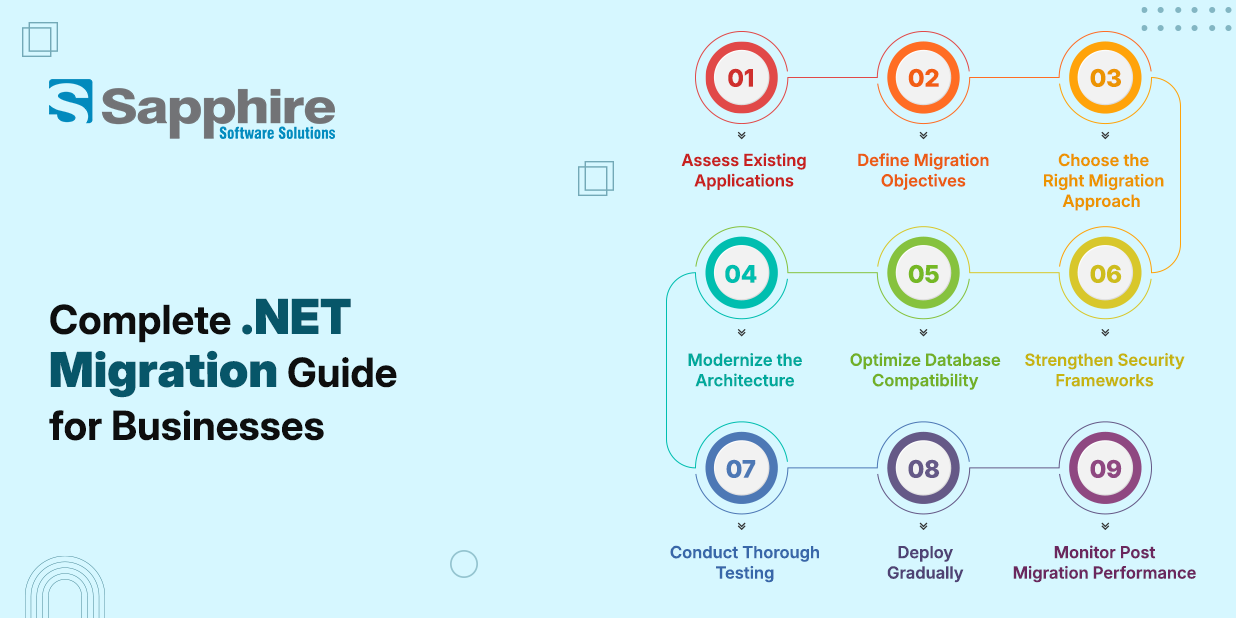
A successful migration project requires careful planning, technical expertise, and strategic execution. Businesses should approach modernization systematically to reduce risks and maximize long-term value. This .NET migration guide highlights the essential stages companies should follow during the migration process.
1. Assess Existing Applications:
The first step is to evaluate the current software environment. Businesses need to identify application dependencies, performance issues, outdated components, and integration requirements. A detailed assessment helps organizations understand migration complexity and prioritize critical systems.
2. Define Migration Objectives:
Organizations should clearly define their migration goals. Some businesses focus on cloud readiness, while others prioritize performance, security, scalability, or user experience improvements. Clear objectives help shape the migration strategy effectively.
3. Choose the Right Migration Approach:
There are multiple migration approaches depending on business requirements:
- Rehosting
- Refactoring
- Rebuilding
- Hybrid modernization
The ideal approach depends on application complexity, budget, timelines, and future scalability goals.
4. Modernize the Architecture:
Modern applications require a scalable and modular architecture. Businesses often transition from monolithic systems to microservices-based environments for greater flexibility and maintainability.
5. Optimize Database Compatibility:
Database migration is a critical aspect of modernization. Companies need to ensure data integrity, performance optimization, and compatibility with modern database technologies during the migration process.
6. Strengthen Security Frameworks:
Security modernization should be integrated throughout the migration process. Businesses must implement modern authentication systems, encryption standards, access controls, and compliance measures.
7. Conduct Thorough Testing:
Testing ensures that migrated applications function correctly across different devices, browsers, and environments. Performance testing, integration testing, and security testing help identify issues before deployment.
8. Deploy Gradually:
A phased deployment strategy minimizes operational disruption. Businesses often migrate modules incrementally to reduce risks and simplify troubleshooting.
9. Monitor Post-Migration Performance
After deployment, organizations should continuously monitor system performance, security, and user experience. Ongoing optimization ensures long-term stability and scalability.
Key Challenges in .NET Migration Projects:
Although migration provides significant benefits, businesses often encounter several technical and operational challenges during the process.
A. Legacy Code Complexity:
Older applications may contain tightly coupled code, undocumented functionalities, and outdated libraries. Understanding these systems requires detailed analysis and experienced developers.
B. Data Migration Risks:
Migrating large datasets while maintaining accuracy and consistency can be challenging. Poorly managed data migration may lead to data loss, duplication, or corruption.
C. Integration Difficulties:
Legacy applications often connect with multiple third-party systems. Ensuring smooth integration with modern platforms can be technically complex.
D. Downtime Concerns:
Businesses worry about operational disruptions during migration. Careful planning and phased deployment strategies are necessary to minimize downtime.
E. Resource Limitations:
Migration projects require skilled developers, testers, architects, and project managers. Organizations may face resource shortages or budget constraints during implementation.
F. Compatibility Issues:
Older applications may rely on unsupported components that require replacement or redesign during modernization.
G. Security Vulnerabilities:
Migration projects can expose hidden security weaknesses in legacy systems. Businesses must address these vulnerabilities proactively during modernization.
H. User Adaptation Challenges:
Employees may require training to adapt to modernized applications and updated workflows.
Despite these challenges, strategic planning and experienced development teams can help organizations execute successful migration projects efficiently.
Benefits of .NET Migration for Business Growth:
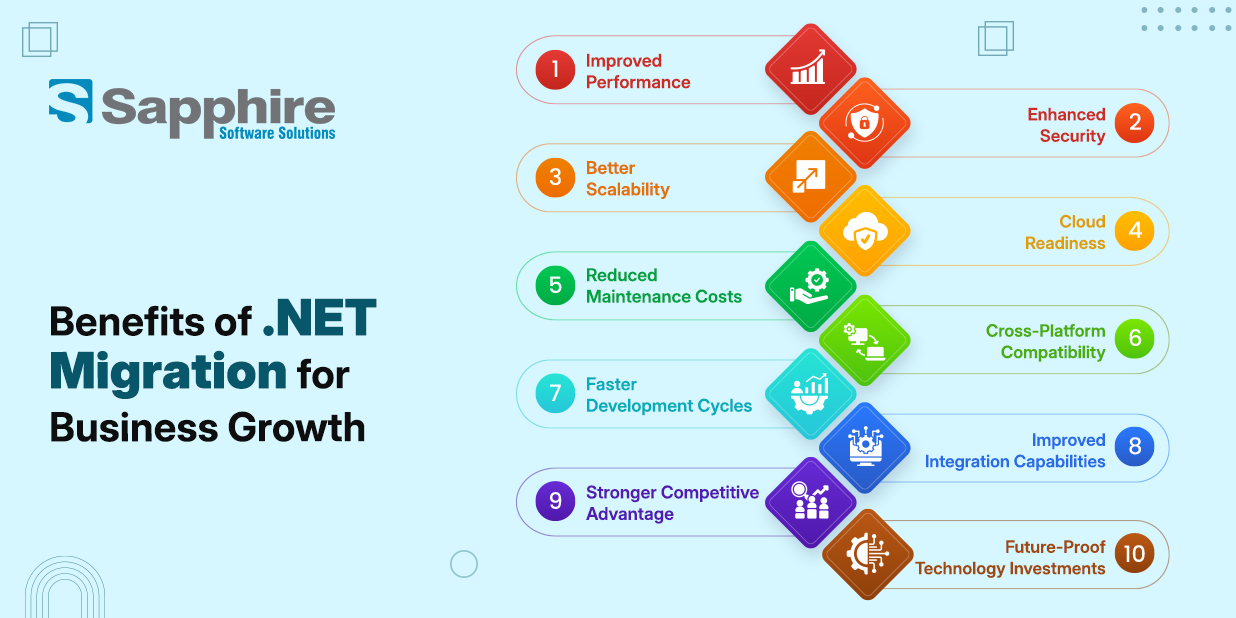
Modernization provides long-term strategic advantages that directly support business growth and innovation. Companies investing in migration projects often experience measurable improvements in operational efficiency, customer satisfaction, and scalability.
- Improved Performance: Modern .NET applications deliver faster execution speeds, better memory management, and improved responsiveness. This creates smoother user experiences and higher productivity.
- Enhanced Security: Upgraded applications benefit from modern security standards, regular updates, and advanced threat protection capabilities.
- Better Scalability: Modern architectures allow businesses to scale applications efficiently as customer demand and operational requirements grow.
- Cloud Readiness: Migration enables organizations to leverage cloud platforms for improved flexibility, remote accessibility, disaster recovery, and cost optimization.
- Reduced Maintenance Costs: Modernized systems are easier to maintain, update, and troubleshoot, reducing long-term operational expenses.
- Cross-Platform Compatibility: Businesses can develop applications that work across multiple operating systems and devices, improving accessibility and flexibility.
- Faster Development Cycles: Modern frameworks support agile development methodologies, reusable components, and automation tools that accelerate software delivery.
- Improved Integration Capabilities: Modern applications can integrate more effectively with APIs, enterprise systems, analytics platforms, and AI-driven technologies.
- Stronger Competitive Advantage: Businesses with modern digital infrastructure can innovate faster, respond to market changes quickly, and deliver better customer experiences.
- Future-Proof Technology Investments: Migration ensures that businesses remain aligned with evolving technology standards and industry requirements.
The growing importance of modernization has also increased demand for .NET framework migration solutions that help organizations transition from outdated environments to scalable enterprise-grade platforms.
Why Do Businesses Choose Sapphire for ASP.NET Migration Services?
Businesses choose Sapphire Software Solutions because of their strong expertise in enterprise application modernization and Microsoft technologies. The company focuses on delivering customized migration strategies that align with specific business requirements, operational goals, and future scalability needs. Sapphire helps organizations modernize legacy applications while minimizing disruptions and improving system performance.
With experienced developers, cloud modernization capabilities, and a business-focused development approach, Sapphire supports clients throughout the complete migration lifecycle. From planning and assessment to deployment and optimization, the company ensures smooth project execution and reliable technical support. Its ASP.NET Migration Services help businesses improve application efficiency, strengthen security, and build future-ready digital solutions.
Conclusion:
Modern businesses need scalable, secure, and high-performing software systems to compete successfully in today’s digital economy. Legacy applications often limit innovation and create operational inefficiencies that affect long-term growth. This is why more companies are investing in migration projects that help modernize outdated systems and improve overall business performance. From enhancing security and cloud readiness to improving scalability and user experience, migration offers significant long-term benefits for organizations across industries.
If you are planning to upgrade outdated applications and build future-ready digital solutions, partnering with the best ASP.NET development company can simplify the migration process and ensure long-term success. Get a Free Quote Today. To explore customized .NET migration solutions that improve performance, scalability, and business efficiency.