

















Mobile applications are no longer optional for digital assets—they are mission-critical platforms that define how customers engage with modern brands. From ordering services to managing finances, users expect seamless, real-time performance across every interaction. Even minor lags or inconsistencies can negatively impact user experience, leading to reduced engagement and lost revenue. To accelerate development while maintaining cost efficiency, many organizations have adopted React Native, which enables a unified codebase for both Android and iOS. However, as applications scale in complexity, limitations within the legacy architecture—such as performance bottlenecks, delayed UI rendering, and inefficient data handling—have become more apparent. This is where partnering with the best React Native App Development Company becomes essential to ensure scalable, high-performing mobile solutions.
The introduction of the new architecture in React Native marks a transformative leap forward. By redesigning core components and integrating advanced technologies, it eliminates traditional inefficiencies and delivers faster rendering, improved responsiveness, and enhanced developer control. For businesses, this translates into better user experiences, higher engagement, and long-term scalability. In this blog, we’ll explore how this architectural shift is reshaping mobile app development and why it presents a strategic advantage for forward-thinking enterprises.
What Is React Native's New Architecture?
To understand its importance, we first need clarity on what is react native new architecture is and how it differs from the previous system.
At its core, the new architecture is a redesign of how React Native handles communication between JavaScript and native code. In the older setup, these two layers interacted through a bridge, which acted as a translator. While functional, this approach introduced delays, especially when handling large amounts of data or complex interactions.
The new architecture removes this dependency on the bridge and replaces it with a more direct communication system. This change alone significantly improves performance by reducing latency and enabling faster execution.
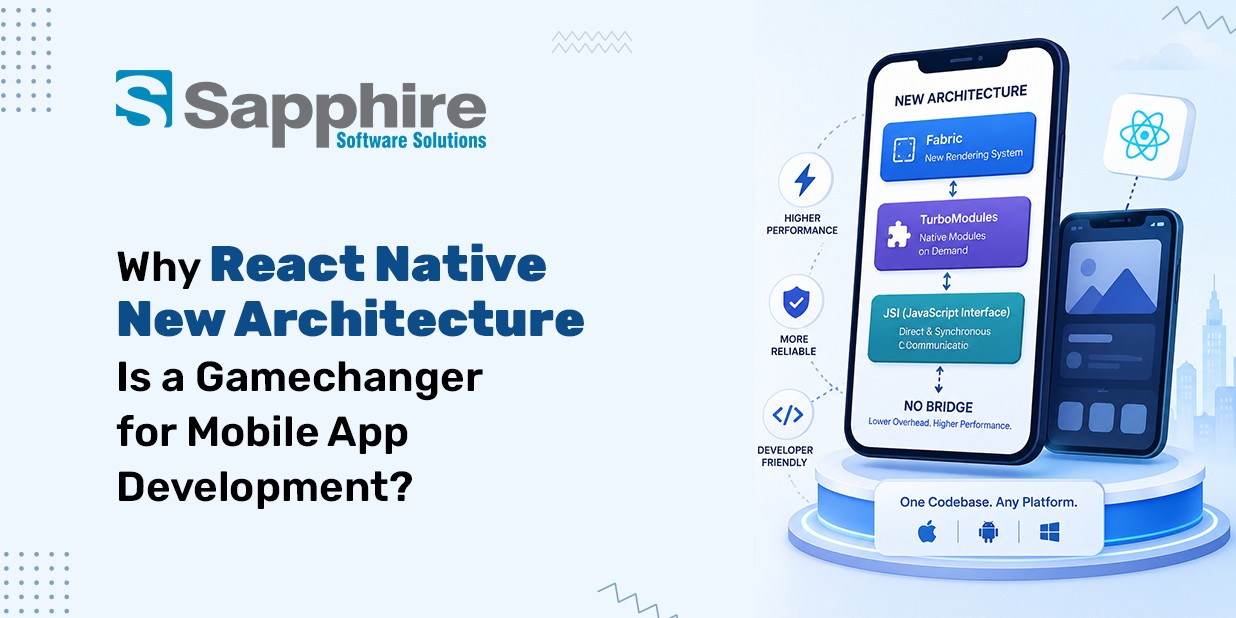
The transformation is powered by three major components:
- JSI (JavaScript Interface): Allows JavaScript code to interact directly with native modules. This eliminates the need for serialization and improves execution speed.
- Turbo Modules: Optimizes how native modules are loaded. Instead of loading everything at once, modules are loaded only when needed, making applications more efficient.
- Fabric Renderer: It is a new rendering system designed to handle UI updates more effectively. It ensures smoother transitions and faster rendering of components.
Limitations of the Old React Native Architecture:
Understanding the shortcomings of the old system helps highlight why the new architecture is necessary.
Bridge-Based Communication:
- The old architecture relied on a bridge to connect JavaScript and native code.
- This added an extra layer of processing, slowing down communication between components.
Asynchronous Data Handling:
- All interactions between JavaScript and native modules were asynchronous.
- This limited control over execution timing and sometimes caused unpredictable behavior.
Performance Bottlenecks:
- As applications grew more complex, the bridge became overloaded.
- This resulted in slower response times and reduced overall performance.
High Memory Consumption:
- The communication layer required additional memory.
- This often affects performance, particularly on devices with limited resources.
Complex Debugging Process:
- Debugging required working across separate JavaScript and native layers.
- This made troubleshooting more time-consuming and difficult.
Limited Scalability:
- The architecture struggled to handle large-scale applications efficiently.
- Developers faced challenges when building feature-rich systems.
Inefficient UI Rendering:
- UI updates depended on the bridge, causing delays in rendering.
- This led to less smooth animations and slower user interactions.
Key Components of the New Architecture:
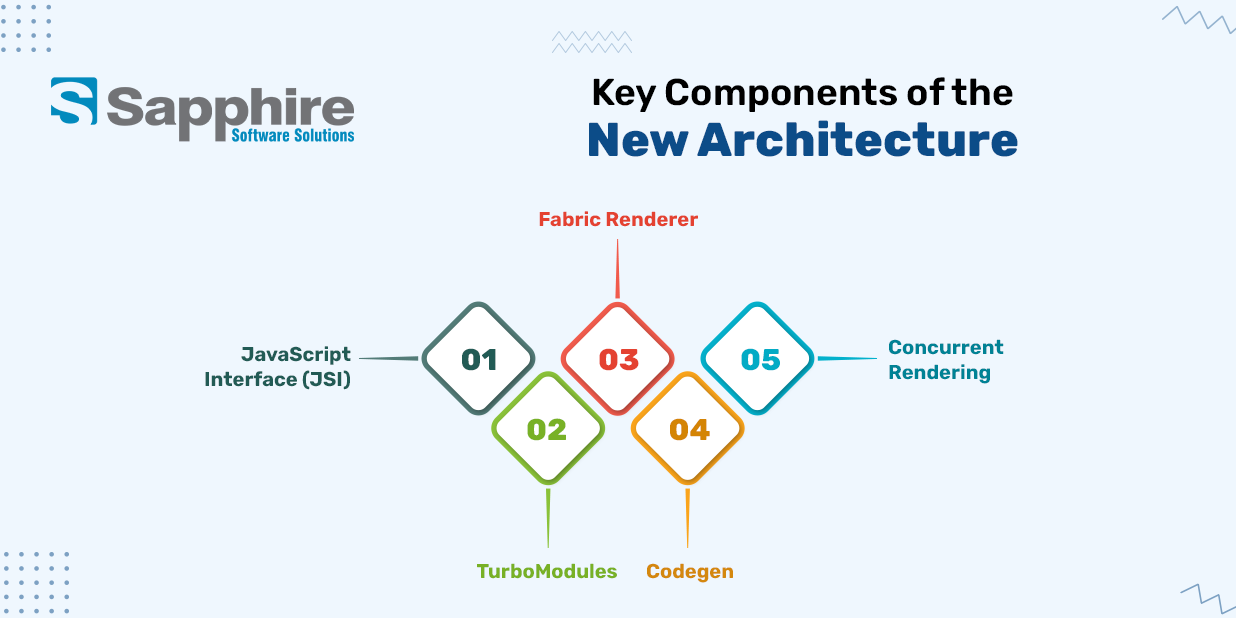
The new architecture introduces several powerful components that work together seamlessly.
JavaScript Interface (JSI):
- JSI allows direct communication between JavaScript and native code.
- This removes delays and improves execution speed significantly.
Turbo Modules:
- Turbo Modules enable efficient loading of native modules.
- They load modules only when required, reducing startup time.
Fabric Renderer:
- Fabric enhances the rendering process for user interfaces.
- It ensures faster updates and smoother animations.
Codegen:
- Codegen automates the generation of native code interfaces.
- This reduces errors and improves consistency across the application.
Concurrent Rendering:
- The new system supports concurrent rendering for better performance.
- This allows multiple tasks to be handled simultaneously without lag.
How React Native's New Architecture Improves Performance?
Performance improvements are one of the biggest reasons developers are adopting the new architecture. By eliminating the bridge, the system reduces communication delays. Data can move directly between layers, resulting in faster execution.
Lazy loading through Turbo Modules ensures that only necessary components are loaded at startup. This reduces initial load time and improves app responsiveness. The Fabric renderer enhances UI performance by enabling faster updates and smoother animations. Users notice this as a more fluid and responsive experience.
Improved memory management also plays a crucial role. Applications consume fewer resources, reducing the chances of crashes and improving stability. With updates introduced in versions like React Native 0.85, developers can fully utilize these enhancements to build high-performance applications that meet modern standards.
Benefits for Developers and Businesses:
The advantages of the new architecture extend to both technical teams and business stakeholders.
For Developers:
- Developers benefit from a more streamlined workflow.
- They can build complex features without worrying about performance limitations.
- Improved debugging tools and better architecture make development faster and more efficient.
- This leads to quicker delivery of high-quality applications.
For Businesses:
- Businesses gain faster and more reliable applications.
- This improves user satisfaction and retention rates.
- Reduced development time and lower maintenance costs provide a strong return on investment.
- Companies can scale their applications without major technical challenges.
These React Native New Architecture Benefits make it an essential upgrade for modern mobile app development.
React Native New Architecture vs Old Architecture Comparison:
The differences between the old and new systems are significant.
The old architecture relied on a bridge, while the new system uses direct communication. This results in faster performance and reduced latency.
Module loading has also improved. Instead of loading everything at once, the new architecture uses lazy loading for better efficiency.
UI rendering is faster and smoother with the Fabric renderer compared to the older system.
When discussing react native new architecture vs Flutter, both frameworks offer strong capabilities. However, the new architecture enhances React Native’s performance, making it more competitive with native and Flutter-based solutions.
Overall, the new architecture provides a more modern and efficient approach to app development.
Why Every React Native App Development Company Should Upgrade to the New Architecture?
For any React Native App Development Company, adopting the new architecture is a strategic decision. It allows companies to deliver high-performance applications that meet user expectations. This improves client satisfaction and strengthens market positioning. The new system also simplifies development workflows, making it easier to build and maintain applications. Teams can focus on innovation rather than troubleshooting performance issues.
Businesses planning to expand their development capabilities should consider working with experts. Choosing a Hire React Native Developer familiar with the new architecture to ensure smooth implementation and better results. By upgrading to the new architecture, companies can stay ahead of the competition and deliver future-ready solutions.
Conclusion:
The React Native New Architecture represents a major evolution in mobile app development. It addresses the limitations of the old system and introduces powerful features that improve performance, scalability, and developer experience. From faster communication and improved rendering to better memory management and modern tooling, the benefits are clear—empowering businesses to deliver seamless, high-performing applications.
This transformation enables organizations to build mobile solutions that not only meet current user expectations but are also future-ready. In an increasingly competitive digital landscape, adopting the new architecture is no longer just an upgrade—it’s a strategic necessity. Companies that embrace this shift will be better positioned to drive engagement, enhance user satisfaction, and achieve sustainable growth. If you’re looking to leverage these advancements for your business, Get a Free Quote today and take the first step toward building a next-generation mobile application.