
















Modern enterprises are no longer using robotics merely for repetitive or mechanical tasks. With advancements in Artificial Intelligence and Robotics Technology, machines are now capable of performing complex functions such as data analysis, pattern recognition, real-time decision-making, and adaptive learning in dynamic environments. This evolution is redefining enterprise automation, enabling organizations to scale operations more efficiently while improving accuracy, productivity, and operational intelligence. As a result, AI-driven robotics has become a key enabler of digital transformation across industries.
A growing understanding of robotics in artificial intelligence is accelerating adoption among enterprises seeking intelligent automation solutions. Today, robotics is not just about reducing manual effort—it is about enhancing operational speed, ensuring consistency, optimizing workflows, and delivering superior customer experiences. With the integration of Agentic AI and Generative AI, modern robotic systems are becoming increasingly autonomous, capable of predictive analytics, and self-optimizing processes. This makes AI-powered robotics a strategic asset for forward-looking businesses aiming to innovate and stay competitive in a rapidly evolving digital economy.
What is Robotics in Artificial Intelligence?
The importance of Knowing About What is Robotics in Artificial Intelligence cannot be overstated if one wants to integrate any new automation technology into their business processes. Simply put, robotics in AI is the implementation of AI into robotic technology, allowing machines to work intelligently instead of working according to pre-programmed actions.
While traditional robots operate on fixed actions according to programmed sequences, robots with AI abilities are capable of:
- Learning from information
- Analyzing the environment
- Object detection and recognition
- Making decisions in real-time
- Adjusting actions to changes
Thus, businesses can automate processes that were previously done by humans.
Modern technology in Robotics and AI includes such technologies as:
- Machine learning
- Computer vision
- Natural language processing
- Predictive analytics
- Sensor-based intelligence
For instance, warehouse robots with AI capabilities can recognize products, determine optimal delivery routes, and adjust workflow depending on the situation in the process.
AI Robotics Technology: How Smart Machines Work in Enterprises:-
Notably, the systems are meant to automate repetitive tasks while ensuring analysis and understanding of processes at hand.
Key Components of AI Robotics Technology:
- Machine Learning Algorithms: Machine learning enables robots to learn from data and enhance their performance. As such, the more data the machine processes, the better its performance becomes.
- Computer Vision: AI robots can understand their environment by using computer vision to identify objects, defects, monitor, and interact.
- Sensors: Sensors provide the robot with information about environmental conditions like movement, pressure, temperature, and positioning.
- Natural Language Processing (NLP): NLP enables robots to communicate effectively with humans.
How Enterprises Use AI Robotics?
Enterprises can take advantage of AI in robotics and automation in:
- Automation of warehouses
- Manufacturing
- Inventory management
- Customer services
- Health care
- Logistics
The ability to adapt to real-time processes is one of the key benefits of AI in robotics and automation. Unlike traditional systems, robots can adapt to operational conditions and circumstances.
Role of AI in Robotics for Modern Business Operations:
Its use has greatly increased as firms look for innovative methods of increasing efficiency and scaling up.
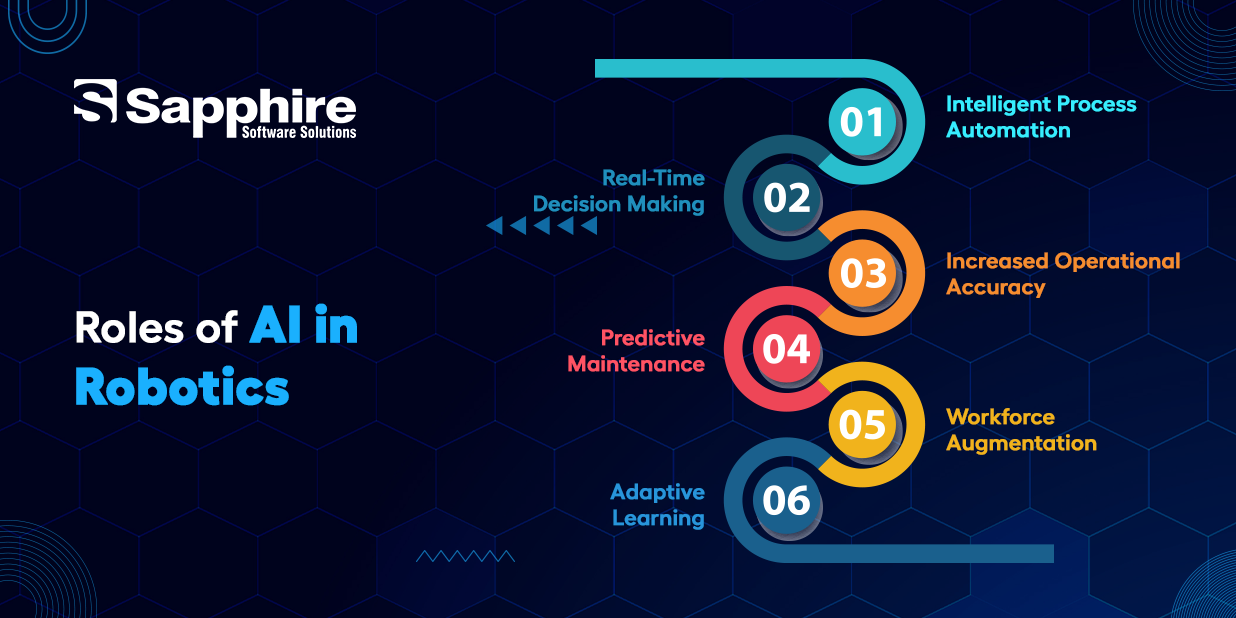
Roles of AI in Robotics:
- Intelligent Process Automation: With AI, robots are capable of automating complicated processes instead of simply doing repetitive physical work.
- Real-Time Decision Making: Robots are able to make decisions based on real-time analysis of the information available.
- Increased Operational Accuracy: Human errors are minimized by ensuring consistency and accuracy in robotic operations.
- Predictive Maintenance: AI systems are capable of identifying possible malfunctions before any problems arise.
- Workforce Augmentation: Instead of replacing human beings, robots powered by AI assist workers by carrying out repetitive and hazardous tasks.
- Adaptive Learning: Agentic AI in robotics allows robots to learn and become more efficient through experience.
As a result of this, firms are becoming more inclined towards using AI robotics to improve productivity while at the same time enhancing their agility.
Why Businesses Are Adopting AI in Robotics?
- Enhanced Operational Efficiency: Companies are implementing AI in Robotics since robotic systems that use AI can execute repetitive and tedious tasks much faster and more effectively than humans. This results in improved efficiency of their work processes.
- Reduced Operational Cost: Technology enables companies to cut down labor-intensive costs by automating processes in their operations. The firms can manage their resources efficiently while retaining their productivity.
- Reduced Error and Human Errors: Robots that use AI can minimize mistakes in the manufacturing process, logistics, customer services, and other processes of a firm. This enhances the efficiency of business operations.
- Efficient Scaling of Operations: Companies can efficiently scale up their operations using automation without necessarily increasing the size of their workforce and infrastructure.
- Creation of Safer Workplaces: Robotics technology enabled by AI makes it possible for firms to perform dangerous jobs that could result in injury or loss of life.
Business Benefits of AI in Robotics Solutions:
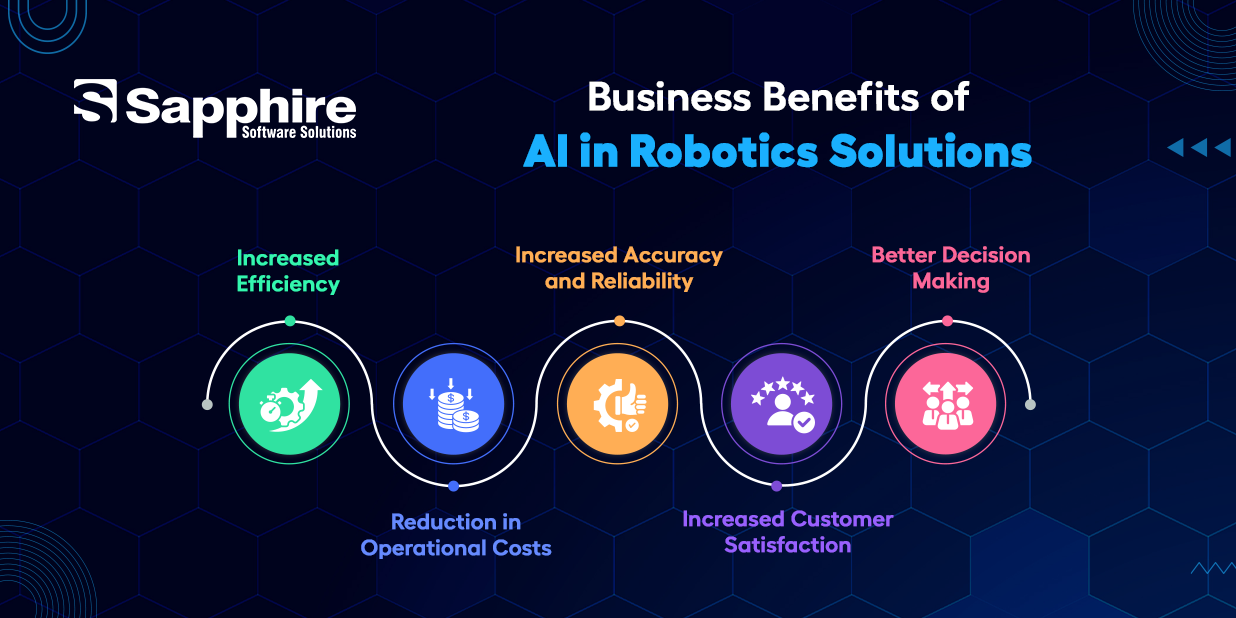
Here are some of the long-term benefits that arise from using AI robotics and automation in businesses.
- Increased Efficiency: One of the key benefits of using AI robotics and automation in businesses is increased efficiency. By utilizing AI-powered robots, companies are able to automate processes and increase their speed.
- Reduction in Operational Costs: AI robotics and automation technology allow businesses to reduce costs associated with labor-intensive processes. Intelligent robotic technology can help companies optimize resource usage and save money in the long term.
- Increased Accuracy and Reliability: Robots powered by artificial intelligence will be able to execute processes with great accuracy and reliability, which is especially useful when working in manufacturing, logistics, and data processing.
- Increased Customer Satisfaction: Through the use of robotic technology, businesses will be able to provide customers with faster service and better experiences through increased efficiency and decreased chances of error.
- Better Decision-Making: Advanced AI Robotics Technology will enable companies to analyze large amounts of operational data in real-time, allowing them to make better decisions based on the information they have.
Challenges and Risks in AI Robotics Adoption for Enterprises:
Although AI in robotics provides several benefits, companies must consider various issues associated with implementing this technology.
Some of the issues include:
- Expensive installation costs
- Difficult integration with current systems
- Data privacy and security concerns
- Employee adjustment needs
- Dependence on good-quality data for accurate AI
Another issue that companies face is ensuring appropriate human-robotic collaboration. Employees should know how to collaborate with robotic systems effectively.
Moreover, companies must devise effective governance frameworks for responsible decision-making by AI systems.
How Sapphire, as a Robotic Process Automation Company, is Transforming Business Efficiency with AI in Robotics?
One of the biggest advantages of Sapphire Software Solutions is its profound experience in working with AI in Robotics and intelligent automation technologies. By combining the power of artificial intelligence and robotic process automation company develops solutions that can not only automate business processes but also analyze their performance and make intelligent decisions based on data.
In terms of the implementation strategy, Sapphire first examines the current situation by assessing existing business processes, identifying operational challenges, and discovering automation opportunities. Understanding how particular departments operate, Sapphire develops customized AI Robotics Technology solutions that can improve productivity without causing additional disruptions.
Finally, Sapphire Software Solutions provides solutions that are scalable and efficient. In other words, its robotic systems will be able to adjust to changing business needs, increased workload, and different conditions without any need for full-scale infrastructure redesign.
Conclusion:
AI-powered robotics is becoming a core driver of enterprise transformation, enabling businesses to move beyond traditional automation toward intelligent, self-learning systems. By integrating Artificial Intelligence with robotics, organizations can streamline complex operations, improve decision-making accuracy, and achieve higher levels of efficiency across departments. From manufacturing and logistics to customer service and data management, AI robotics is helping enterprises reduce operational costs while improving speed, scalability, and overall business performance in a highly competitive digital landscape.
At Sapphire Software Solutions, we empower businesses to embrace the future of intelligent automation with advanced AI Robotics Technology tailored to their unique requirements. Our solutions are designed to enhance productivity, optimize workflows, and enable seamless digital transformation through smart, scalable systems. Get a Free Quote today to discover how Sapphire can help your organization leverage AI-driven robotics to unlock new levels of growth, efficiency, and innovation.