
















When flexibility and speed are essential in software development, choosing the proper technique may determine project success. Agile and Kanban have been widely praised for their efficacy. Below, we will compare Agile and Kanban, including their concepts, techniques, and applications in various business situations to help you Hire Dedicated Software Developer in USA.
Agile is connected with flexibility and fast delivery due to its iterative development and cooperation. Kanban, influenced by lean, stresses workflow visualization and continual improvement. Understanding these approaches is crucial as firms adapt to the digital age.
This blog will explain Agile and Kanban fundamentals, strengths, shortcomings, and practical applications. It will help you choose between Agile and Kanban while hiring a Top Software Development Company in USA.
Agile Methodology:
As a flexible and iterative project management strategy, agile has transformed software development. Agile emphasizes flexibility, cooperation, and customer happiness to overcome the drawbacks of conventional development techniques. This in-depth look at Agile’s key ideas, techniques, and advantages will explain its broad acceptance and ongoing appeal.
Key Agile Principles:
Agile is based on the Agile Manifesto, which prioritizes people, solutions, customer participation, and change above procedures and technologies. These principles emphasize cross-functional team members and their relationships, encouraging communication and cooperation.
Scrum and Kanban are used to execute Agile techniques, each with its practices to fulfill Agile’s goals. Scrum divides work into two- to four-week sprints. For communication and adaptability, Scrum requires daily stand-up meetings, backlog grooming, and sprint reviews.
Continuous improvement and iteration:
Agile teams may swiftly provide a minimal viable product (MVP) and expand on it in following iterations. This iterative cycle incorporates stakeholder and end-user input throughout the development process, resulting in a product that better meets user demands.
Retrospectives help Agile achieve continuous progress. These reflection meetings allow teams to evaluate what succeeded, what may be improved, and how to improve in the next iteration. This ongoing feedback loop encourages learning and adaptability, improving the product and development process.
Cross-functional teams and Collaboration:
Agile emphasizes cooperation between developers, stakeholders, customers, and end-users. Cross-functional teams with various talents and knowledge accomplish objectives together. This method speeds decision-making, improves problem-solving, and provides a comprehensive project view.
Agile Methodology Benefits:
- Agile enables flexibility and adaptability, allowing for late modifications to requirements throughout development. In fast-changing corporate situations, this flexibility is crucial.
- Agile’s iterative nature enables faster delivery of functional increments, enabling firms to adapt quickly to market needs and deploy products sooner.
- Improved Customer Satisfaction: Constant customer input ensures product alignment with expectations, improving satisfaction ratings.
- Reduced Risks: Agile decreases project failure by dividing it into smaller, manageable iterations. Early problem identification and continuous appraisal encourage risk-aware growth.
- Improved Team Morale: Agile’s collaborative approach promotes ownership and responsibility among team members. Continuous improvement supports a good and motivated team culture.
Agile Methodology Challenges:
- Resistance to Change: Teams used to old approaches may reject the Agile transition. The mentality and practice change might take time for specific stakeholders.
- Lack of Predictability: Agile’s adaptability may hinder project completion timetables, causing challenges for stakeholders who need defined deadlines.
- Resource-Intensive: Agile emphasizes teamwork, which may be resource-intensive if handled poorly.
Kanban Methodology:
This overview will cover Kanban’s fundamentals, essential practices, and broader application in many corporate scenarios.
Foundational Kanban Principles:
The Kanban technique promotes workflow efficiency and continual improvement via many essential concepts.
- To visualize work, Kanban boards are used to show the process in real time. This visual management tool helps teams track activities, detect bottlenecks, and prioritize.
- Limiting Work in Progress (WIP): Kanban emphasizes limiting simultaneous activities. Teams may avoid overload and maximize productivity by defining WIP limits at each process step.
- Managing Flow: Kanban prioritizes smoothly and continuously advancing work through the system. Teamwork may reduce delays and improve value delivery by recognizing and removing flow barriers.
- Explicit Policies: Kanban encourages teams to make work policies visible and explicit. This openness guarantees everyone knows how work is prioritized, done, and delivered.
- Feedback Loops and Continuous Development: Kanban emphasizes continuous development. Retrospects and feedback loops assist teams in finding areas for development, encouraging continuous progress and adaptability.
Key Kanban Practices:
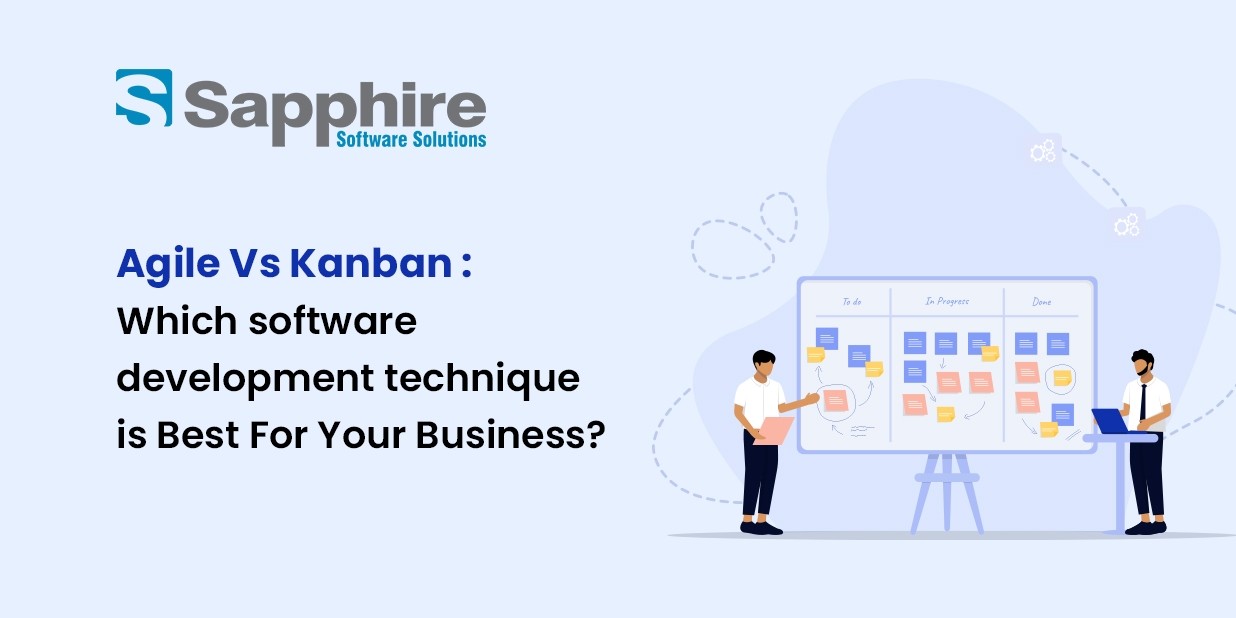
- Kanban Board: The Kanban board is the primary visual tool for Kanban teams. It usually has columns for workflow phases (to-do, in-process, done) and cards for activities. Team members may immediately assess task status using this visual depiction.
- Setting and enforcing WIP limits is essential to minimize work overload and maintain a consistent flow. Each Kanban board column has WIP limitations to help teams finish projects before beginning new ones.
- Pull System: Kanban uses a pull system, letting new work in only when capacity is available. This prevents overburdening and ensures the team completes current work before starting new ones.
Kanban Methodology Benefits:
- Kanban is flexible and adaptable to various projects and industries. Due to its flexibility, teams may apply Kanban ideas to their current processes without significant changes.
- Kanban improves efficiency and flow by visualizing workflow, imposing WIP limits, and reducing bottlenecks.
- Improved Responsiveness: Real-time visibility and pull system allow teams to swiftly address shifting priorities, consumer input, and emergent concerns.
Kanban Methodology Challenges:
- Lack of Structure: Kanban’s flexibility and lack of clear roles and procedures may challenge teams used to more organized techniques.
- Visual Tool Dependency: Kanban largely depends on visual tools like boards. Overreliance on these technologies may cause problems if teams have technological difficulties or are not co-located.
- Discipline: Enforcing WIP limits and regulating flow needs discipline. Kanban advantages may only be obtained with these actions.
Comparative Analysis:
Agile and Kanban, based on efficiency and flexibility, have different traits that meet different project needs.
Strengths of Agile:
Agile’s organized iterative development is its strength. Agile facilitates cooperation and delivery with time-boxed sprints and explicit roles and rituals. This strategy works well for projects with changing needs and client input. Cross-functional teams and sprint planning make agile development focused and predictable.
Kanban’s Strengths:
Flexibility and fluidity are its strengths. Visual management and work-in-progress constraints enable real-time priority modification. Kanban works effectively for operations with changing workloads and continual response. Its pull method prevents overburden and maintains productivity by only accepting work when capacity permits.
Choosing Between Kanban and Agile: Project type determines Agile or Kanban. Agile’s organized sprints benefit projects with clear objectives and a steady scope. Kanban thrives in dynamic, ever-improving contexts.
Integration Potential:
Some teams use both approaches in a hybrid way. This fusion combines sprint-based planning with Kanban’s flexibility for continuous work.
The comparative study emphasizes the need for matching techniques to project details, team dynamics, and organizational objectives, acknowledging each approach’s unique capabilities in software development.
Conclusion:
Agile and Kanban provide helpful software development tools and frameworks used for delivering Best Software Development Services in USA. We are one of the leading names when it comes to delivering software solutions at the best price. If you choose Sapphire, you can also Hire Dedicated Software programmers in USA or available our software development services.