
















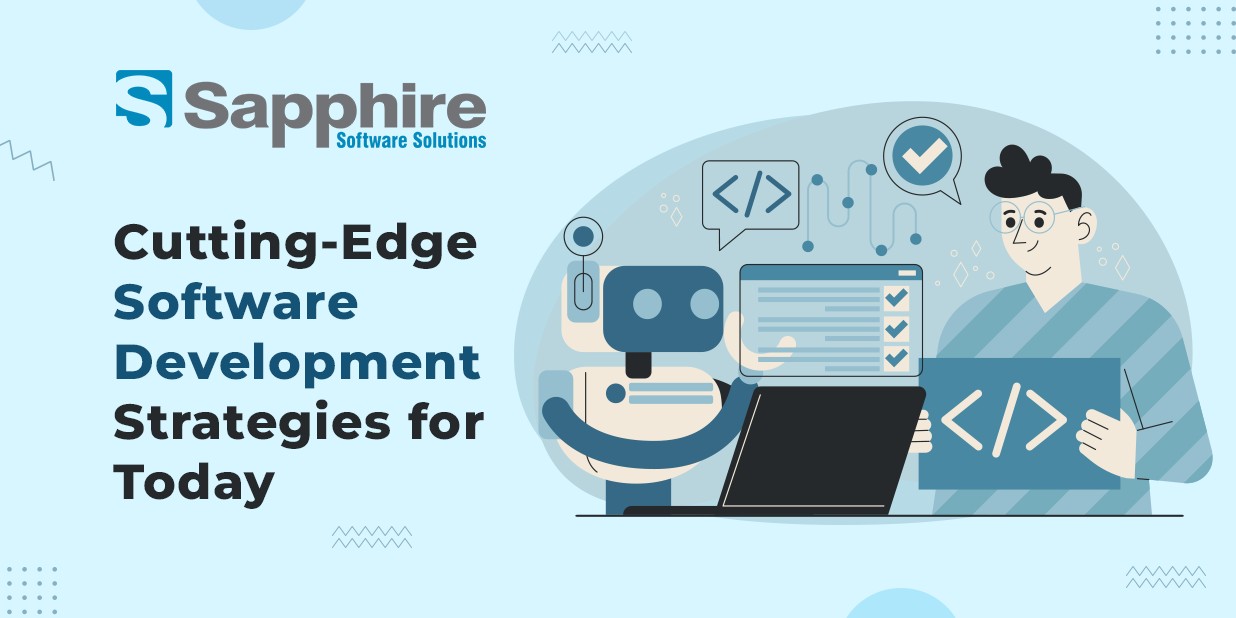
A Software Development Company has to use creative software development tactics in the always-changing digital terrain to remain competitive, stimulate development, and satisfy the needs of its consumers. Since almost every company model currently revolves around technology, knowing and using the most recent software development techniques is essential to opening fresh prospects and guaranteeing sustained performance. The most innovative software development techniques that companies may use to support their expansion are investigated in this paper.
1. Accepting DevOps and Agile Approaches:
Two approaches that have completely transformed the way software is created are agile development and DevOps. Agile lets teams divide projects into smaller, doable sprints, therefore fostering flexibility, cooperation, and iterative improvement. This method guarantees that the finished product is in line with corporate requirements and accelerates the development process. Conversely, DevOps combines operations with development to expedite the process of software distribution. DevOps lowers mistakes and improves productivity by automating testing and deployment across Continuous Integration and Continuous Delivery (CI/CD) pipelines. Agile and DevOps together help companies to quickly test, implement new features, and grow, thereby keeping ahead of the competition by delivering the best software development services.
2. Using Cloud-Native Development:
Modern software policies now revolve mostly around cloud-native development. With this method, companies can create and operate apps totally on the cloud, thereby benefiting from scalability, cost control, and flexibility in Software Development Services. Applications native to clouds may readily expand to manage changing workloads, guaranteeing the best performance at times of highest demand. Pay-as-you-go, you-go use of cloud resources helps companies lower infrastructure expenses and free up more funds for innovation. Furthermore, microservices architecture—where apps are made of discrete, autonomous services that can be designed, implemented, and scaled separately—is common in cloud-native development. This flexibility improves fault tolerance and speeds development, therefore enabling companies to innovate more quickly and successfully.
3. Including Machine Learning and Artificial Intelligence:
Modern software development depends on artificial intelligence (AI) and machine learning (ML; these are not just buzzwords). Including artificial intelligence and machine learning in their software plans can help companies reach hitherto unheard-of degrees of automation and intelligence. By means of their ability to examine enormous volumes of data, AI-driven algorithms may provide tailored user experiences, hence improving consumer happiness and loyalty.
By forecasting consumer behavior and trends, machine learning models help a software development company make data-driven choices that keep it ahead of market changes. AI-powered technologies also free important human resources for more strategic work by automating repetitive chores such as data input and customer assistance. Including artificial intelligence and machine learning in software development improves functionality and creates new income sources via sophisticated features and services.
4. Giving Design Thinking's User Experience (UX) top priority:
Higher than ever, user expectations demand that organizations give User Experience (UX) top priority in their software development plans. The success of a product may be much influenced by its well-designed, simple interface. Achieving this is aided by design thinking, a user-centered method of problem-solving. Comprehensive user research helps companies to better grasp the wants, pain issues, and behavior of their audience, thereby guaranteeing that the final product appeals to them.
By means of prototyping and usability testing, teams may compile comments and implement iterative enhancements before product release, reducing the chance of failure. Ensuring that software is available to all users—including those with disabilities—increases the product's reach and conforms with legal criteria. Incorporating UX and design thinking into the development process helps companies produce goods that not only meet needs but also appeal to use, therefore fostering consumer loyalty and expansion.
5. Adopting Strong Cybersecurity Policies:
Cybersecurity is becoming a major issue as companies rely more on digital technology. Any Software Development Company trying to expand via software development must use strong cybersecurity policies. Among the many ways to assist in preventing common vulnerabilities are safe coding techniques, frequent security audits, and data encryption.
Developers should be encouraged to use secure coding standards to help companies avoid problems such as cross-site scripting (XSS) and SQL injection. Frequent security audits and penetration testing assist in finding and fixing weaknesses before they can be taken advantage of. Encrypting private information guarantees that, should it be hacked, it remains unreadable to illegal users. Strong user authentication methods such as multi-factor authentication (MFA) also help to stop unlawful access to vital systems. Businesses that give cybersecurity priority will be able to safeguard their assets, keep consumer confidence, and prevent expensive interruptions.
6. Using Data-Driven Development's Power:
For every software development company today, data is among its most precious assets. Using data will help businesses make wise choices that drive innovation and expansion. Data-driven development is gathering, evaluating, and using data all along the software development process. By using analytics solutions tracking user behavior, application performance, and other important data, companies may acquire an understanding of how their software is being used and where development should be directed.
By use of two versions of a software feature, A/B testing—also known as split testing—allows teams to maximize the user experience by ascertaining which performs better. Including feedback loops in the development process also helps companies to always get comments from consumers and stakeholders, therefore guaranteeing that the result satisfies their requirements and expectations. Using a data-driven strategy can help companies produce not just creative but also fit for consumer tastes and market needs software.
7. Using low-code and no-code platforms:
Low-code and no-code platforms have emerged as a result of software development's ongoing demand outpacing the supply of qualified developers. These tools let companies create apps with little code, therefore allowing non-technical individuals to participate in the development process. Low-code and no-code systems enable companies to react fast to changing market circumstances by greatly lowering the time needed to create and implement applications.
These platforms help minimize the cost of software development services by cutting the need for specific development talents, therefore enabling a wider spectrum of companies to use them. Furthermore, these tools let technical and non-technical team members work together so that software solutions complement corporate goals. Although low-code and no-code systems may only be fit for some projects, they provide a useful alternative for companies wishing to rapidly expand and iterate on software without the need for significant coding knowledge.
Conclusion:
At Sapphire, we adopt innovative software development approaches to stay competitive and release potential. From embracing Agile and DevOps approaches to using AI and ML, giving UX priority, and implementing strong cybersecurity policies, we have everything in place. You can also Hire Software Developers from Sapphire Software Solutions to stay ahead of the curve. Our developers not only satisfy current needs but also keep innovating in the always-changing software development market.