
















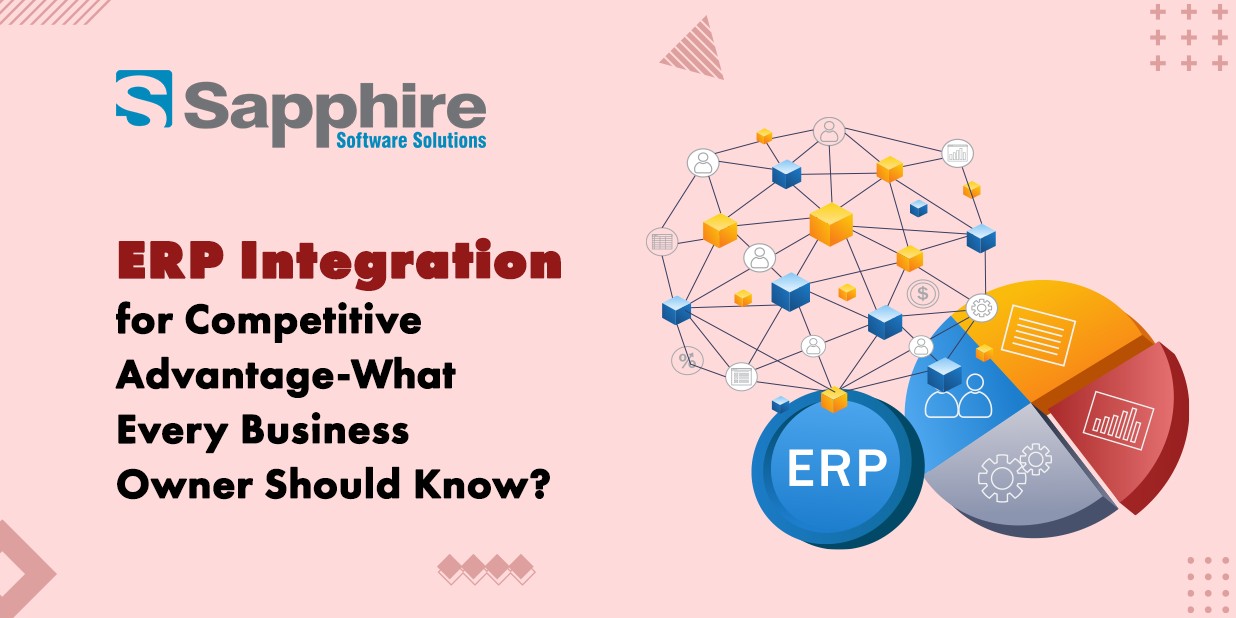
When choosing an ERP, organizations usually perceive countless opportunities to enhance their operations. Nevertheless, many projects fall short of expectations at some point, and executive expectations are not met by the advantages of ERP. Companies face constant pressure to work smarter, move faster, and operate more efficiently. The ability to stay competitive often depends on how well an organization manages its data and processes. This is where ERP integration becomes a true game-changer.
For many organizations, Enterprise Resource Planning (ERP) software acts as the backbone of business operations—helping manage finance, supply chain, human resources, and customer relationships. But integrating this system with other essential tools and technologies transforms it from a functional platform into a strategic powerhouse. In this blog, we’ll break down everything business owners should know about ERP integration—from what it means and its benefits, to its global applications and how the right partner, such as Sapphire, can help your business gain a competitive edge.
What Is ERP Integration? A Quick Overview
Before diving deeper, let’s clarify what ERP integration actually involves. In simple terms, ERP integration is the process of connecting your ERP system with other software applications, databases, or services within your business. The goal is to ensure seamless communication and data flow across all business functions.
Imagine a scenario where your sales team closes a deal, and instantly, your finance, inventory, and logistics systems are updated automatically—no manual input, no data lag, no confusion. That’s the power of effective ERP integration solutions. It eliminates data silos, enhances visibility, and ensures that every department works from the same real-time information. Whether it’s linking your ERP with CRM tools, e-commerce platforms, or HR systems, integration brings unity to your business operations.
Business Benefits of ERP Integration:
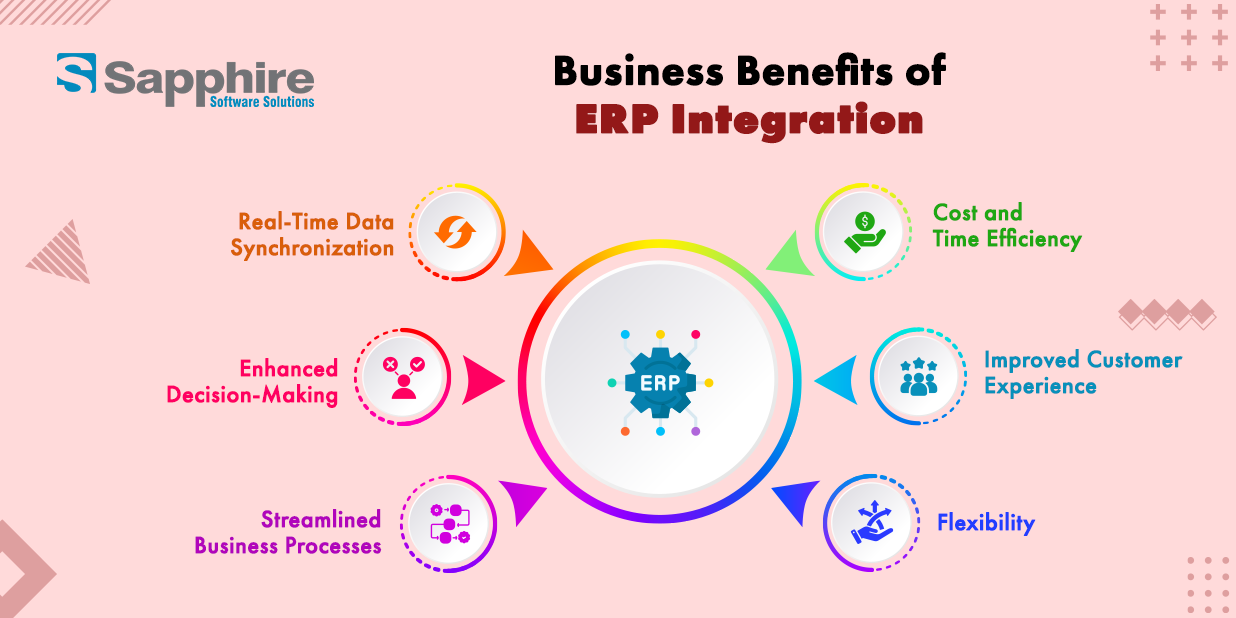
Every forward-thinking business owner understands that success comes from efficiency and agility. Let’s explore the key ERP integration benefits that make integration an invaluable investment.
1. Real-Time Data Synchronization:
Data drives modern businesses. Integration ensures that information entered in one department instantly reflects across all systems. This not only saves time but also minimizes human errors that can lead to costly mistakes.
2. Enhanced Decision-Making:
When data is centralized, decision-makers can access comprehensive insights into performance, sales, and operations. ERP data integration empowers leaders to make quick, informed, and data-backed decisions that boost growth.
3. Streamlined Business Processes:
By automating workflows, ERP integration eliminates repetitive manual tasks. From invoicing to inventory tracking, processes become faster and smoother, improving overall productivity.
4. Cost and Time Efficiency:
Integration reduces the need for multiple software systems and manual interventions, which in turn saves significant costs on operations and maintenance.
5. Improved Customer Experience:
When all departments—from sales to support—have access to accurate, up-to-date data, customer service improves drastically. Faster response times and better insights into customer behavior result in higher satisfaction rates.
6. Flexibility:
As businesses grow, integration makes it easier to add new tools, modules, or systems without disrupting existing operations. It supports sustainable scaling and adaptability in a changing market.
ERP Integration Across Global Markets:
1. ERP Integration in India:
The rise of digital transformation has made ERP Integration in India a necessity for companies looking to enhance productivity and compliance. Industries such as manufacturing, logistics, and retail are leveraging ERP systems to unify processes across multiple locations. Indian enterprises are increasingly adopting cloud-based ERPs that connect seamlessly with mobile platforms and analytics tools. This integration ensures transparency, efficient supply chain management, and real-time decision-making—helping businesses keep pace with India’s competitive, fast-evolving market.
2. ERP Integration in USA:
The United States continues to lead global innovation in digital transformation. ERP Integration in USA is often focused on automation, scalability, and compliance. Businesses across the technology, healthcare, and finance sectors use integration to manage complex operations and data analytics efficiently. The U.S. market values integration for its ability to connect ERP with advanced technologies like AI, IoT, and machine learning, allowing companies to predict trends, streamline workflows, and ensure regulatory compliance—all while boosting productivity.
3. ERP Integration in UK:
In the United Kingdom, ERP Integration in UK is shaping the way enterprises adapt to post-Brexit trade and regulatory environments. Businesses are using ERP systems integrated with CRM, financial management, and logistics tools to navigate changing market dynamics. Integration allows UK companies to remain compliant with international standards while maintaining real-time visibility over operations. It also supports hybrid working models—something that’s becoming the norm in the UK’s evolving business culture.
4. ERP Integration in Canada:
Digital transformation in ERP Integration in Canada is being driven by industries like manufacturing, energy, and healthcare. Canadian businesses prioritize system integration for improved collaboration across distributed teams and enhanced data accessibility. Cloud-based ERP adoption is increasing, offering real-time insights and compliance with stringent Canadian data protection laws. Integration helps businesses bridge the gap between traditional processes and modern digital systems, leading to more efficient operations.
5. ERP Integration in UAE:
The Middle East’s rapid digital growth has made ERP Integration in UAE a key component of business success. From construction and hospitality to finance and retail, organizations are turning into integrated ERP systems to manage complex, multi-location operations. With smart government initiatives like “Smart Dubai,” businesses in the UAE are combining ERP with IoT and AI for predictive analytics and automation. Integration ensures efficient management of multilingual, multi-currency operations while maintaining regulatory compliance and improving customer experiences.
6. ERP Integration in Germany:
Known for its manufacturing excellence, ERP Integration in Germany plays a crucial role in the nation’s Industry 4.0 movement. German enterprises integrate ERP systems with production, logistics, and IoT platforms to optimize efficiency and precision. Integration enables data-driven automation, predictive maintenance, and real-time monitoring—key pillars of the German manufacturing ecosystem. This approach allows businesses to maintain high productivity and quality standards in a globalized market.
7. ERP Integration in Australia:
ERP Integration in Australia has gained momentum as companies aim for greater digital resilience. Businesses in industries such as agriculture, mining, and education use integration to streamline operations and unify geographically dispersed processes. Australia’s focus on sustainability and compliance encourages organizations to adopt cloud-based ERP systems that integrate with analytics tools, ensuring better visibility and accountability in reporting. Integration also supports scalability for businesses expanding into international markets.
Choosing the Right ERP Integration Consultant or Partner:
Selecting the right ERP integration consultant can be the difference between a seamless transition and a failed implementation. Here’s what to look for:
- Expertise and Experience: Your consultant should have deep technical knowledge of various ERP systems (like SAP, Oracle, or Microsoft Dynamics) and a track record of successful integrations.
- Understanding Your Business Needs: A great consultant doesn’t just implement technology—they understand your unique business processes, challenges, and long-term goals before recommending integration strategies.
- Customization Capabilities: Each organization has distinct needs. Ensure your consultant can design customized integration solutions that fit your current systems rather than forcing you into rigid frameworks.
- Data Security and Compliance: Given the sensitivity of business data, your integration partner must prioritize data encryption, compliance, and privacy. This is especially important for businesses operating in regulated sectors.
- Ongoing Support and Scalability: Integration isn’t a one-time task. A reliable partner offers post-implementation support, system updates, and ensures your ERP can scale with your growing business demands.
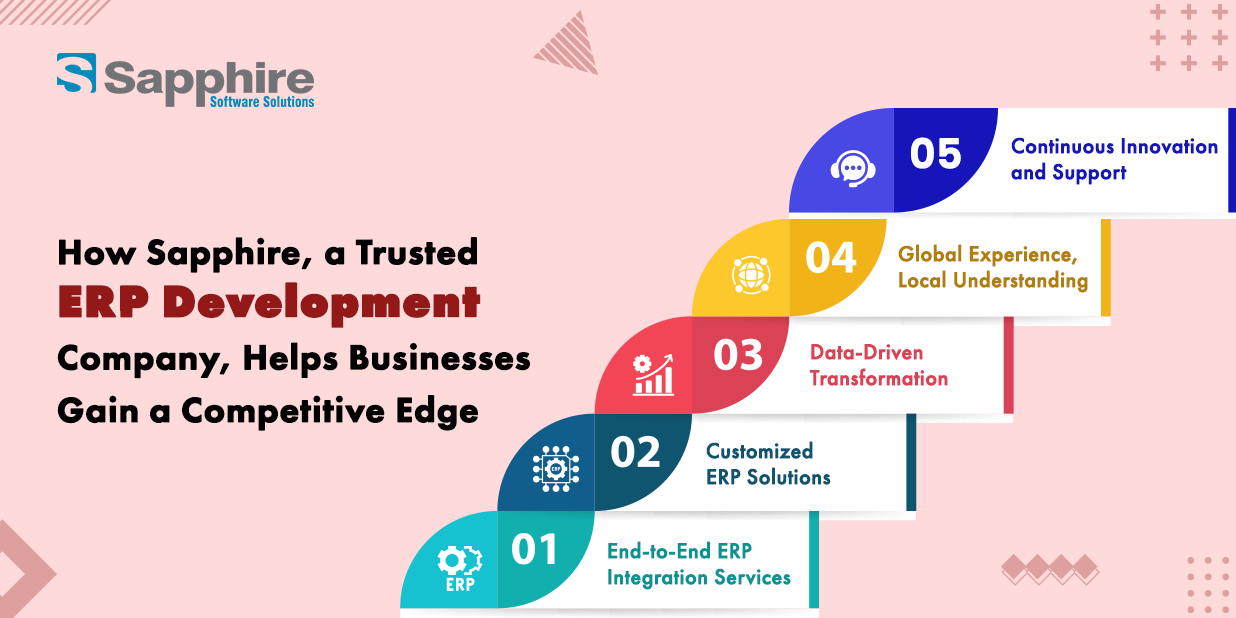
How Sapphire, a Trusted ERP Development Company, Helps Businesses Gain a Competitive Edge?
When it comes to ERP Software Development Services, Sapphire Software Solutions stands out as a trusted partner with global expertise and local insight. As a renowned ERP Development Company, Sapphire empowers organizations to achieve digital transformation through end-to-end ERP integration and development.
Here’s how Sapphire Software Solutions helps businesses gain a competitive edge:
1. End-to-End ERP Integration Services:
Sapphire offers complete integration services, connecting ERP systems with CRMs, analytics platforms, and third-party applications. Their tailored approach ensures efficiency, real-time collaboration, and better data visibility across departments.
2. Customized ERP Solutions:
Recognizing that every business is unique, Sapphire develops integration strategies that align perfectly with organizational goals, workflows, and infrastructure. Their flexible methodologies ensure seamless adoption and minimal disruption.
3. Data-Driven Transformation:
Through innovative integration, Sapphire helps businesses harness the full potential of their data. This enables leaders to make informed, analytics-backed decisions that drive efficiency and profitability.
4. Global Experience, Local Understanding:
With projects spanning India, the USA, UK, Canada, UAE, Germany, and Australia, Sapphire understands the nuances of different markets. This allows them to design ERP integration models tailored to each region’s business and compliance landscape.
5. Continuous Innovation and Support:
Beyond development and implementation, Sapphire offers ongoing support and optimization to ensure ERP systems continue to perform at their peak. This proactive approach ensures long-term success in a rapidly evolving digital environment.
Conclusion:
In an increasingly interconnected business landscape, ERP integration is no longer a luxury—it’s a necessity. Whether it’s enhancing operational efficiency, improving data accuracy, or driving innovation, integrated ERP systems give businesses the agility to stay ahead of competition.
From ERP Integration in India to ERP Integration in Australia, organizations worldwide are realizing the transformative potential of connected systems. By choosing the right ERP Development Company and partnering with a trusted name like Sapphire, you can unlock new levels of efficiency, scalability, and strategic growth.
ERP integration is the foundation of digital competitiveness—make sure your business builds it wisely.