
















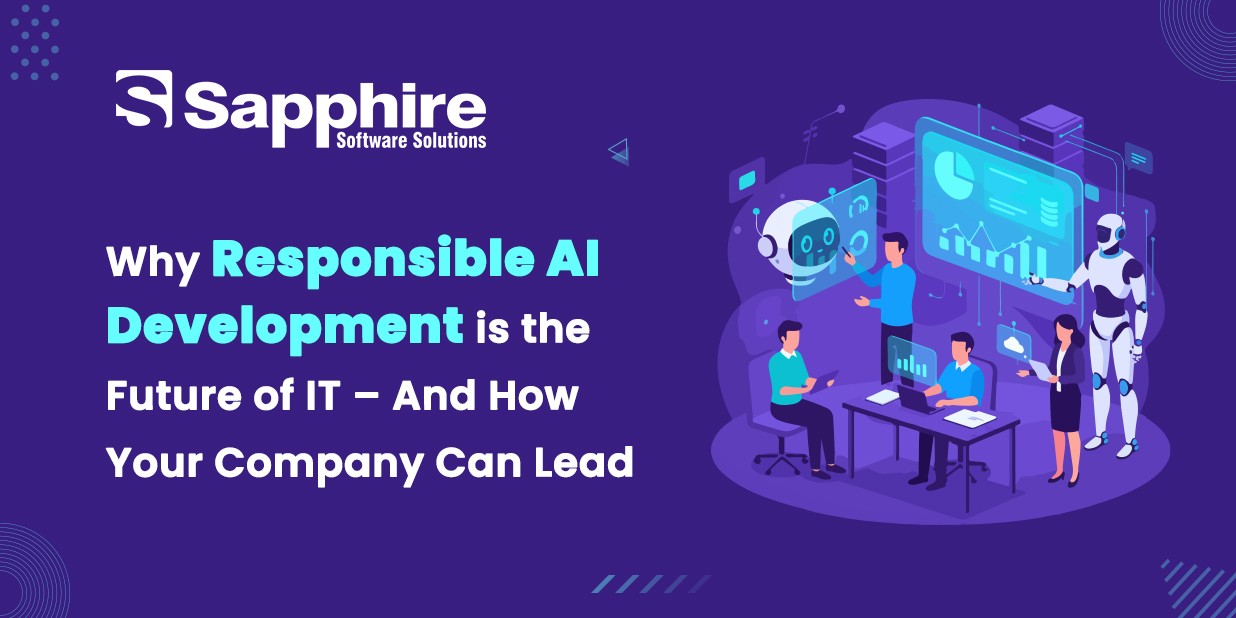
Artificial intelligence has quietly moved from being a specialist in technology into something that shapes everyday business decisions. From the way banks assess credit to how online stores recommend products and how hospitals predict patient risks, AI systems are now embedded in workflows that influence millions of people. This rapid rise in adoption brings enormous opportunity, but it also brings new responsibilities. That is why Responsible AI has become one of the most important topics in the IT world today.
This Introduction to Responsible AI is not about slowing innovation. It is about making sure innovation lasts. When algorithms are built without ethical guardrails, they can cause harm in subtle but powerful ways—by reinforcing bias, invading privacy, or making decisions that cannot be explained. Over time, this erodes trust, invites regulation, and damages a company’s reputation. Businesses that ignore responsibility may gain short-term speed, but they risk long-term instability.
On the other hand, organizations that embed responsible practices into their AI strategy build systems that people trust. Customers feel safer sharing their data. Employees rely more confidently on automated recommendations. Regulators see a commitment to compliance. In a world where digital trust is as valuable as digital capability, responsibility is no longer optional—it is a strategic advantage.
What is Responsible AI?
To truly understand what Responsible AI is, we must look beyond code and algorithms. Responsible AI refers to the entire lifecycle of how artificial intelligence is designed, trained, deployed, and monitored in real-world environments. It is about making sure these systems serve people, rather than the other way around.
At a practical level, it means using data in ways that respect privacy, building models that do not discriminate, and ensuring that automated decisions can be understood and challenged by humans. It also means creating clear lines of accountability so that when something goes wrong, someone is responsible and can fix it.
In business environments, Responsible AI supports sustainable growth. It allows companies to innovate without creating legal, ethical, or reputational risks. When customers know that AI systems are fair and transparent, they are more likely to trust them. When regulators see that companies take responsibility seriously, they are more willing to support innovation. In this way, responsible practices create a foundation for long-term success.
Core Principles of Responsible AI:
Every ethical AI strategy rests on a set of guiding values known as Responsible AI Principles. These principles ensure that technology remains aligned with human needs and societal expectations.
Fairness is the commitment to treat all users equitably, avoiding discrimination based on race, gender, age, or background. Transparency ensures that people can understand how decisions are made, rather than facing a mysterious black box. Accountability means that there is always a human responsible for the outcomes of an AI system. Privacy protects personal and sensitive data from misuse. Security safeguards systems from malicious attacks and unauthorized access.
Together, these principles create a moral and operational framework for innovation. They help companies avoid costly mistakes and build technology that can be trusted by users, partners, and regulators alike. Organizations that live by these principles do not just build better AI—they build better relationships with the people who depend on it.
Frameworks That Help Companies Build Responsible AI:
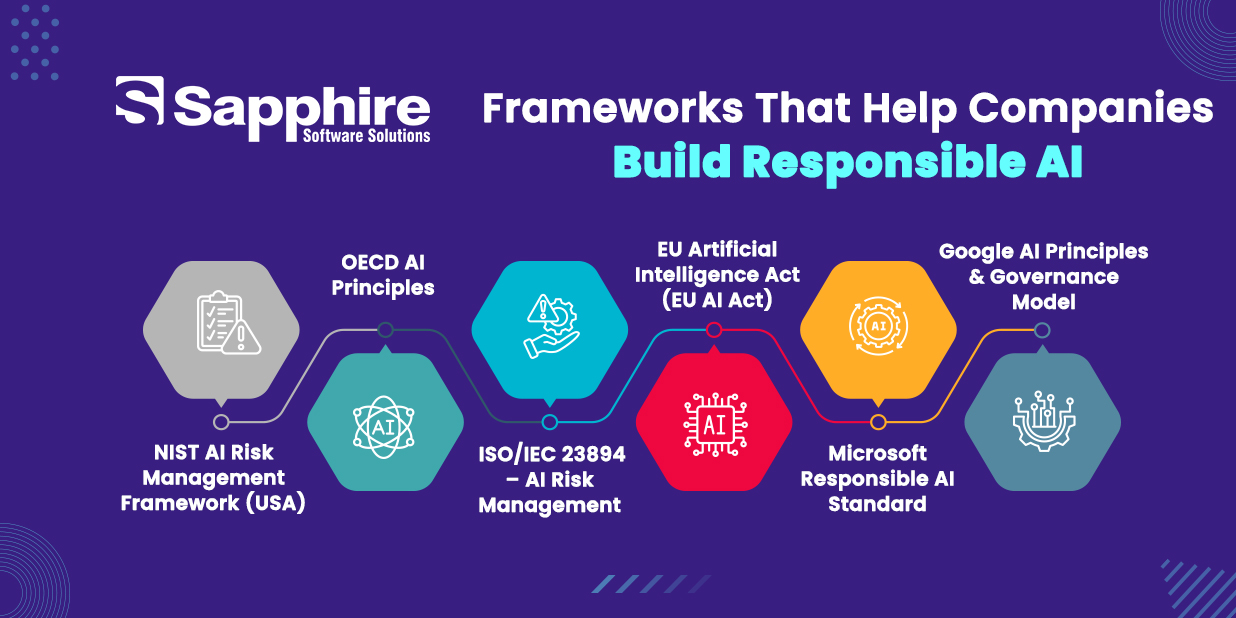
To move from ethical intent to real-world execution, organizations rely on structured governance models that guide how AI is designed, trained, and deployed. A well-defined Responsible AI Framework helps businesses ensure transparency, accountability, and long-term compliance as their AI systems scale.
1. NIST AI Risk Management Framework (USA):
This framework helps organizations identify, assess, and mitigate risks across the AI lifecycle. It focuses on trustworthiness, reliability, data security, and exploitability in enterprise AI systems.
2. OECD AI Principles:
The OECD principles promote fairness, transparency, and accountability in AI usage. They ensure AI systems support human well-being while minimizing bias, misuse, and unintended harm.
3. ISO/IEC 23894 – AI Risk Management:
This international standard guides managing AI-related risks and compliance. It helps organizations maintain auditability, safety, and privacy in AI-driven solutions.
4. EU Artificial Intelligence Act (EU AI Act):
The EU AI Act serves as a regulatory Responsible AI Framework for high-risk AI applications. It enforces strict requirements around data protection, algorithm transparency, and human oversight.
5. Microsoft Responsible AI Standard:
Microsoft’s approach integrates fairness, privacy, and reliability into AI development practices. It ensures ethical safeguards are embedded throughout the AI design and deployment lifecycle.
6. Google AI Principles & Governance Model:
Google’s framework focuses on building AI that is safe, socially beneficial, and accountable. It includes internal review processes, bias testing, and continuous monitoring of deployed systems.
How to Implement Responsible AI in Your Organization?
Turning values into action requires thoughtful Responsible AI Implementation. This begins with leadership commitment. Executives must treat ethics and governance as core business priorities, not technical details to be handled later.
The first step is defining clear policies around data use, model training, and accountability. Next, organizations should form cross-functional teams that include IT, legal, HR, and business leaders. These teams work together to identify risks, set standards, and review AI initiatives.
On the technical side, developers validate datasets, test models for bias, and build exploitability into their systems. Continuous monitoring ensures that AI behavior remains aligned with expectations even as conditions change. Implementation is not a one-time event; it is an ongoing process of learning, testing, and improvement.
Responsible AI Solutions and Tools for Businesses:
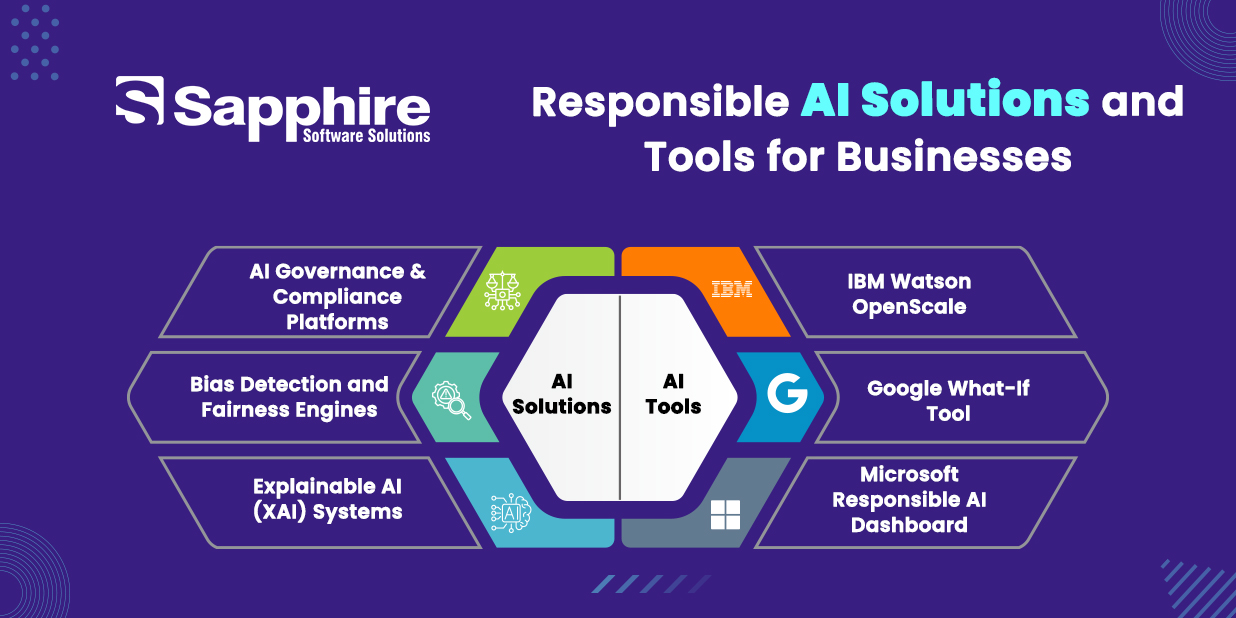
To deploy ethical and compliant AI at scale, organizations need practical platforms that convert policy into execution. The right Responsible AI Solutions allow businesses to detect bias, monitor models, and maintain transparency across the entire AI lifecycle.
AI Solutions
- AI Governance & Compliance Platforms: These solutions provide centralized oversight of AI models, data pipelines, and decision logic. They help organizations track compliance, manage risk, and ensure AI behaves within approved ethical boundaries.
- Bias Detection and Fairness Engines: These AI solutions analyze datasets and models to identify discrimination and skewed outcomes. They help improve fairness, accuracy, and trustworthiness before AI systems reach end users.
- Explainable AI (XAI) Systems: These platforms translate complex model outputs into human-readable insights. They allow business leaders, auditors, and regulators to understand how and why AI makes decisions.
AI Tools:
- IBM WatsonOpenScale: This enterprise tool monitors AI models for bias, drift, and performance issues in real time. It enables teams to maintain transparency and regulatory compliance as AI systems evolve.
- Google What-If Tool: This visual tool allows developers to test how changes in data affect model predictions. It supports responsible experimentation by revealing bias, errors, and unexpected behavior.
- Microsoft Responsible AI Dashboard: This integrated toolkit provides fairness, exploitability, and error analysis for machine-learning models. It helps teams validate and improve AI systems before and after deployment.
Hiring the Right AI Developers for Ethical AI Projects:
The success of any AI initiative depends on the people who build it. To hire AI Developers whom can deliver ethical, high-quality systems, companies must look beyond technical skills alone.
The best professionals understand data ethics, regulatory requirements, and the social impact of technology. They know how to test bias, design explainable models, and follow secure coding practices. They also appreciate that AI decisions affect real people, not just performance metrics.
This is especially true for Responsible AI Startups, which often operate in sensitive industries such as healthcare, finance, or education. Their reputation and growth depend on building technology that users can trust from the very beginning.
Future of IT with Responsible AI:
The future of IT will be defined by how well organizations balance innovation with accountability. Responsible AI Development allows businesses to take advantage of advanced analytics, automation, and machine learning while maintaining public trust.
As regulations grow stricter and consumers become more informed, companies that invest in responsible practices will have a clear advantage. They will be able to deploy new technologies faster because they already meet compliance and ethical standards.
In this new era, leadership will not be measured only by technical capability but by the ability to innovate responsibly. The most successful organizations will be those that combine intelligence with integrity.
Responsible AI Strategies That Set Sapphire Apart as an AI Development Company:
Sapphire Software Solutions distinguishes itself as a forward-thinking AI Development Company by embedding responsibility into every stage of its AI projects. From data governance and model validation to security audits and deployment, Sapphire ensures that client solutions meet the highest ethical and technical standards.
The company follows transparent development processes, rigorous testing protocols, and continuous monitoring to ensure reliability. This approach allows clients to adopt AI with confidence, knowing that their systems are built to last.
By combining innovation with responsibility, Sapphire helps organizations unlock the full value of AI while protecting their users, their data, and their reputation.
Conclusion:
Responsible AI is no longer just an ethical consideration—it is a strategic business advantage. As AI systems increasingly influence critical decisions, organizations that prioritize fairness, transparency, security, and accountability will earn greater trust from customers, regulators, and stakeholders. Companies that embed responsibility into their AI development today reduce long-term risk, accelerate adoption, and position themselves for sustainable growth in a rapidly evolving digital landscape.
At Sapphire Software Solutions, we help businesses turn Responsible AI principles into real-world, scalable solutions. By integrating governance frameworks, bias mitigation, explainable models, and continuous monitoring, Sapphire enables organizations to innovate with confidence while meeting compliance and ethical standards. The future of IT belongs to companies that lead with integrity—and Sapphire Software Solutions is committed to helping businesses build AI solutions that are trusted, resilient, and built to last.