
















In 2026, artificial intelligence is no longer just about automation or predictive analytics. It has evolved into a national and corporate strategic asset. Enterprises across industries—finance, healthcare, manufacturing, education, and government—are rethinking how and where their AI systems are built, trained, and deployed.
The conversation has shifted from “How powerful is your AI?” to “Who controls your AI?”
This shift is driving massive investments in Sovereign AI initiatives worldwide. From stricter data protection laws to geopolitical tensions and cybersecurity threats, enterprises now understand that AI independence is directly tied to business resilience and long-term growth.
In this blog, we’ll explore why organizations are prioritizing sovereign AI development in 2026, how it differs from traditional AI systems, and why partnering with the right technology provider is critical for success.
What Is Sovereign AI?
Before diving deeper, let’s address the fundamental question: what is sovereign AI?
At its core, Sovereign AI refers to artificial intelligence systems that are designed, deployed, and governed within a specific country or organizational boundary. It ensures that data, infrastructure, models, and governance remain under local control. To better understand the sovereign AI meaning, think of it as digital independence in the AI era. Just as countries seek economic or energy independence, enterprises and governments now seek AI independence.
Sovereign Artificial Intelligence emphasizes:
- Data residency within national borders
- Compliance with local regulations
- Control over AI training datasets
- Transparency in model governance
- Secure infrastructure ownership
Unlike AI systems hosted entirely on foreign cloud servers or trained on uncontrolled global datasets, sovereign AI models prioritize local control and accountability.
Sovereign Artificial Intelligence vs Traditional AI Systems:
Traditional AI systems often rely on global cloud providers, centralized data centers, and pre-trained models built outside the organization’s jurisdiction. While they offer scalability and speed, they come with several concerns:
- Data Exposure Risks: Sensitive enterprise data may be processed in unknown locations.
- Regulatory Compliance Challenges: Many countries now require data to remain within specific borders.
- Limited Customization: Pre-trained models may not reflect regional languages, cultural nuances, or industry-specific requirements.
In contrast, a sovereign AI model is trained and governed under strict regulatory and organizational frameworks. It offers:
- Enhanced data control
- Local compliance assurance
- Reduced geopolitical dependency
- Stronger cybersecurity posture
This distinction is why enterprises are increasingly choosing sovereign frameworks over traditional AI systems in 2026.
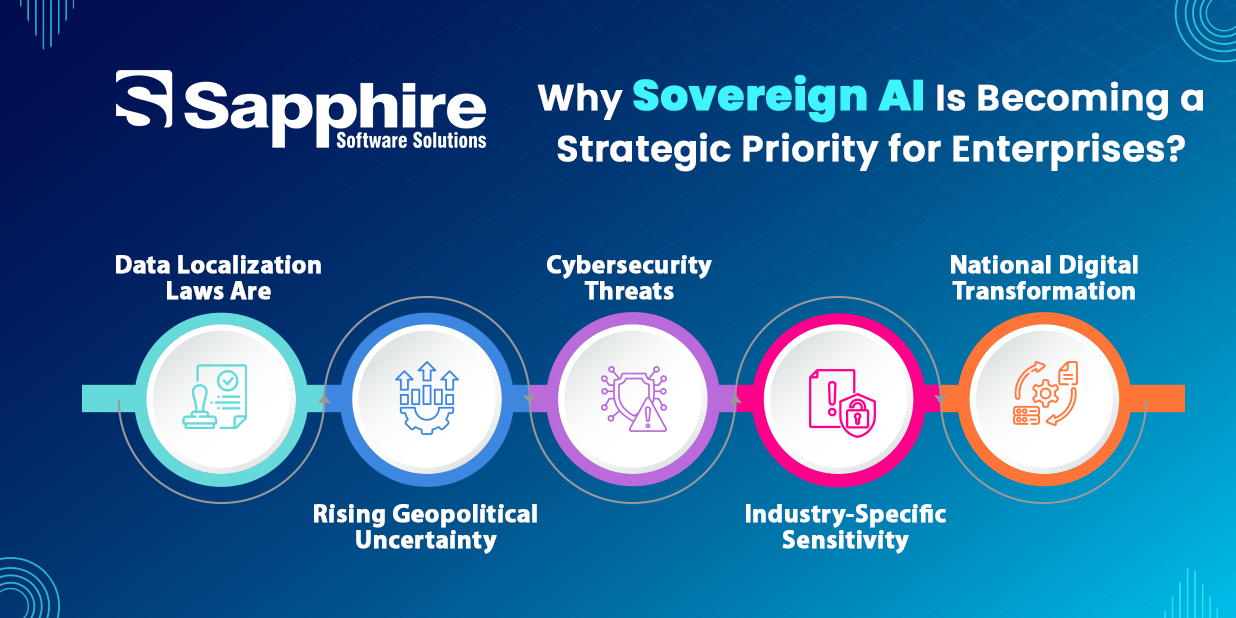
Why Sovereign AI Is Becoming a Strategic Priority for Enterprises?
Enterprises are not investing in sovereign AI development for trend-driven reasons. The motivations are strategic and long-term.
- Data Localization Laws Are Tightening: Governments worldwide are enforcing stricter data protection regulations. Enterprises must demonstrate control over how data is stored, processed, and shared. Failure to comply can lead to heavy fines and reputational damage.
- Rising Geopolitical Uncertainty: In a world of trade restrictions and digital sanctions, relying heavily on foreign AI services introduces operational risks. Enterprises want assurance that their AI systems cannot be disrupted by international tensions.
- Cybersecurity Threats: AI systems are attractive targets for cybercriminals. A sovereign approach ensures tighter access controls, localized hosting, and customized security protocols.
- Industry-Specific Sensitivity: Banking, healthcare, defense, and telecom sectors handle highly sensitive data. Sovereign AI frameworks provide stronger governance and audit capabilities.
- National Digital Transformation Initiatives: Countries like India are accelerating AI adoption through localized innovation programs. The rise of sovereign AI India initiatives demonstrates how enterprises align with national digital missions while protecting data sovereignty.
For enterprise leaders, sovereign AI is no longer optional—it is a strategic necessity.
Understanding Sovereign AI Infrastructure:
To build effective sovereign systems, enterprises must invest in robust Sovereign AI Infrastructure.
This infrastructure typically includes:
- Local data centers or private cloud environments
- Secure edge computing systems
- Dedicated GPU clusters
- AI lifecycle management tools
- Encryption and compliance frameworks
A strong sovereign AI platform integrates infrastructure, governance, and model management into one controlled ecosystem. Without the right infrastructure, sovereign AI efforts can fail due to scalability or performance limitations.
Essential Sovereign AI Tools for Enterprise Deployment:
Successful implementation requires the right sovereign AI tools tailored for enterprise needs.
These tools typically include:
- Secure AI model training frameworks
- Federated learning capabilities
- Data anonymization systems
- Compliance monitoring dashboards
- AI audit and explainability tools
- Custom AI development environments
Enterprises must evaluate tools based on:
- Scalability
- Security compliance
- Interoperability
- Governance support
The right toolset ensures that sovereign AI systems remain transparent, auditable, and adaptable to future regulations.
Benefits of Investing in Sovereign AI Development:
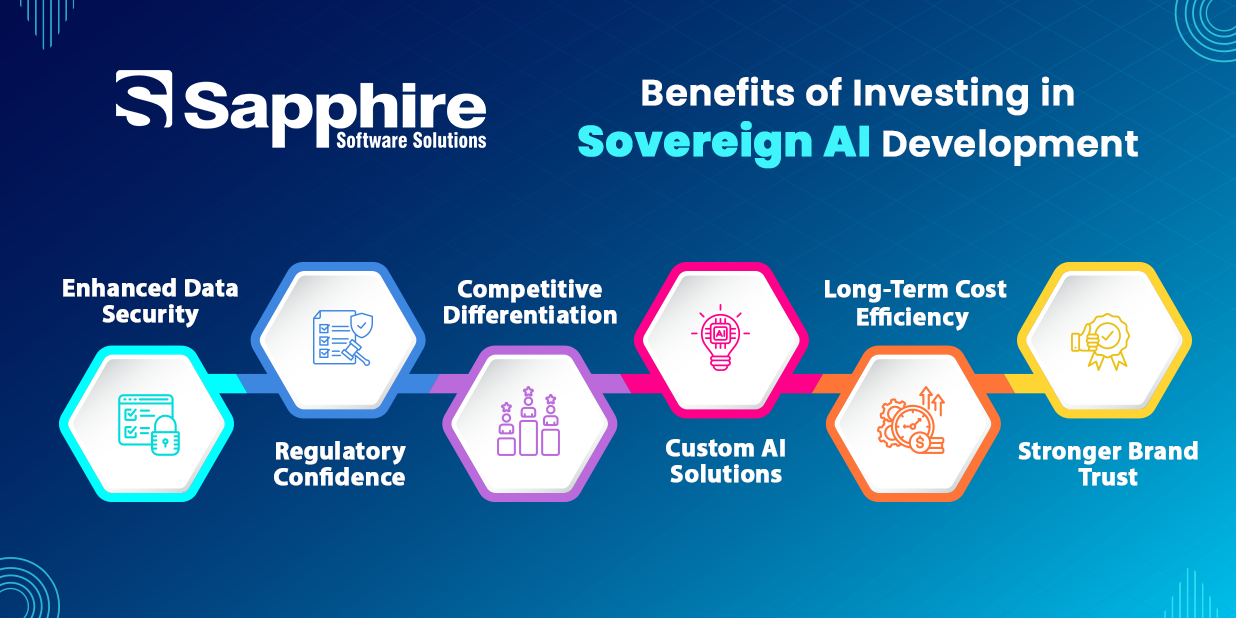
Enterprises investing in sovereign AI development in 2026 are witnessing measurable strategic advantages.
- Enhanced Data Security: Local control significantly reduces external exposure risks.
- Regulatory Confidence: Organizations can confidently demonstrate compliance with national and international laws.
- Competitive Differentiation: Enterprises that prioritize AI sovereignty gain trust among customers, partners, and regulators.
- Custom AI Solutions: Localized AI models better understand regional languages, behavior patterns, and industry dynamics.
- Long-Term Cost Efficiency: Though initial investments may be higher, sovereign systems reduce dependency costs and long-term licensing risks.
- Stronger Brand Trust: Consumers increasingly value transparency. Enterprises that safeguard data strengthen their brand reputation.
Why Enterprises Need to Hire AI Developers for Sovereign AI Projects?
Building sovereign AI systems is complex. It requires deep expertise in AI engineering, cloud architecture, cybersecurity, compliance, and governance.
This is why enterprises increasingly choose to hire AI Developers who specialize in:
- Custom model development
- Secure data pipelines
- Infrastructure optimization
- AI governance implementation
- Performance tuning
Experienced AI developers understand how to:
- Design compliant architectures
- Implement scalable training pipelines
- Integrate AI systems with enterprise workflows
- Ensure transparency and explainability
Without skilled developers, sovereign AI projects risk underperformance, security gaps, or regulatory violations.
In 2026, AI talent is not just technical support—it’s strategic leadership.
How Sapphire Stands Out as a Sovereign AI Development Company in 2026?
Choosing the right technology partner determines the success of sovereign initiatives. As a trusted Sovereign AI Development Company, Sapphire Software Solutions delivers enterprise-grade AI systems built with security, scalability, and compliance at their core. Rather than offering generic AI implementations, Sapphire designs sovereign-ready architectures that ensure data residency, regulatory compliance, infrastructure security, and governance integration from the ground up. Our team combines advanced AI engineering expertise with a strong understanding of data protection laws, enabling enterprises to deploy AI systems that are both innovative and legally aligned. By focusing on secure infrastructure, localized model development, and long-term scalability, Sapphire helps organizations reduce dependency risks, protect intellectual property, and strengthen customer trust.
In 2026, enterprises need more than AI vendors—they need strategic partners capable of delivering secure and compliant AI ecosystems.
Conclusion:
Artificial intelligence is shaping the next era of global enterprise innovation. But in 2026, control matters as much as capability. Enterprises are realizing that data sovereignty is directly linked to business resilience, regulatory security, and customer trust. By investing in Sovereign AI Development, organizations gain greater transparency over their data, stronger cybersecurity frameworks, protection of intellectual property, and the ability to align with national regulations without constant operational risk.
As regulatory pressures increase and cyber risks evolve, enterprises that invest in sovereign AI development today will lead tomorrow’s digital economy. As global data laws evolve and AI adoption accelerates, sovereignty is shifting from being an optional enhancement to a foundational requirement. Enterprises that prioritize Sovereign AI today are not just preparing for compliance—they are positioning themselves as trusted, future-ready leaders in the digital economy.