















Artificial Intelligence is no longer a futuristic concept—it’s a present-day business necessity. From automating repetitive tasks to enabling data-driven decision-making, AI is reshaping industries at an unprecedented pace. But as AI evolves, new paradigms are emerging, creating confusion for businesses trying to choose the right approach.
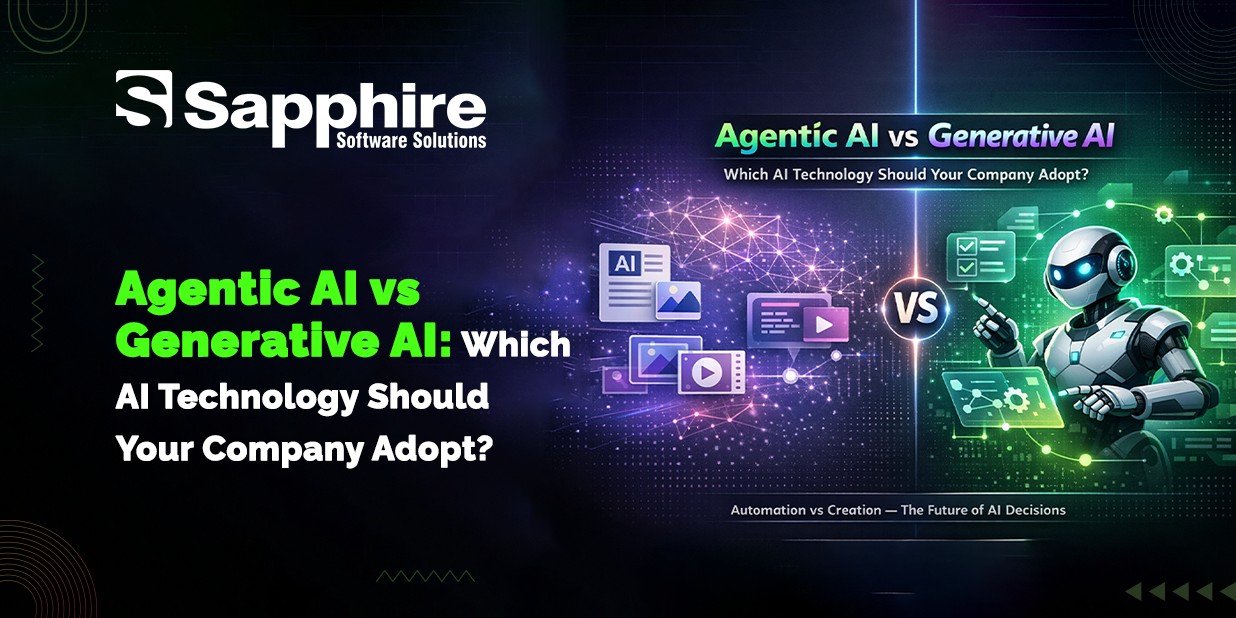
Two of the most talked about innovations today are Agentic AI vs Generative AI. While both technologies fall under the AI umbrella, they serve very different purposes and offer unique advantages. Understanding these differences is crucial if you want to stay competitive and future-ready. In this blog, we’ll break down these concepts in a simple, humanized way, so you can confidently decide which AI approach aligns best with your business goals.
What is Agentic AI vs Generative AI?
What is an Agentic AI?
Agentic AI refers to AI systems that can act autonomously, make decisions, and execute tasks without constant human intervention. These systems behave like “agents” that:
- Understand goals
- Plan actions
- Execute tasks
- Learn from outcomes
Think of Agentic AI as a digital employee that doesn’t just respond—it acts. For example:
- AI-powered customer service agents resolving tickets end-to-end
- Autonomous supply chain optimization systems
- Smart assistants that schedule meetings, send emails, and manage workflows
Businesses working with an Agentic AI Company often aim to automate complex processes rather than just generate outputs.
What is a Generative AI?
Generative AI focuses on creating content based on data patterns. It generates:
- Text
- Images
- Code
- Audio
- Videos
Popular use cases include:
- Chatbots and virtual assistants
- Content creation tools
- Code generation platforms
- Marketing automation
A Generative AI Development Company typically builds tools that enhance creativity and productivity by generating high-quality outputs quickly.
Key Difference in Simple Terms:
- Agentic AI acts and executes tasks
- Generative AI creates and generates content
How Agentic AI and Generative AI Differ from Traditional AI?
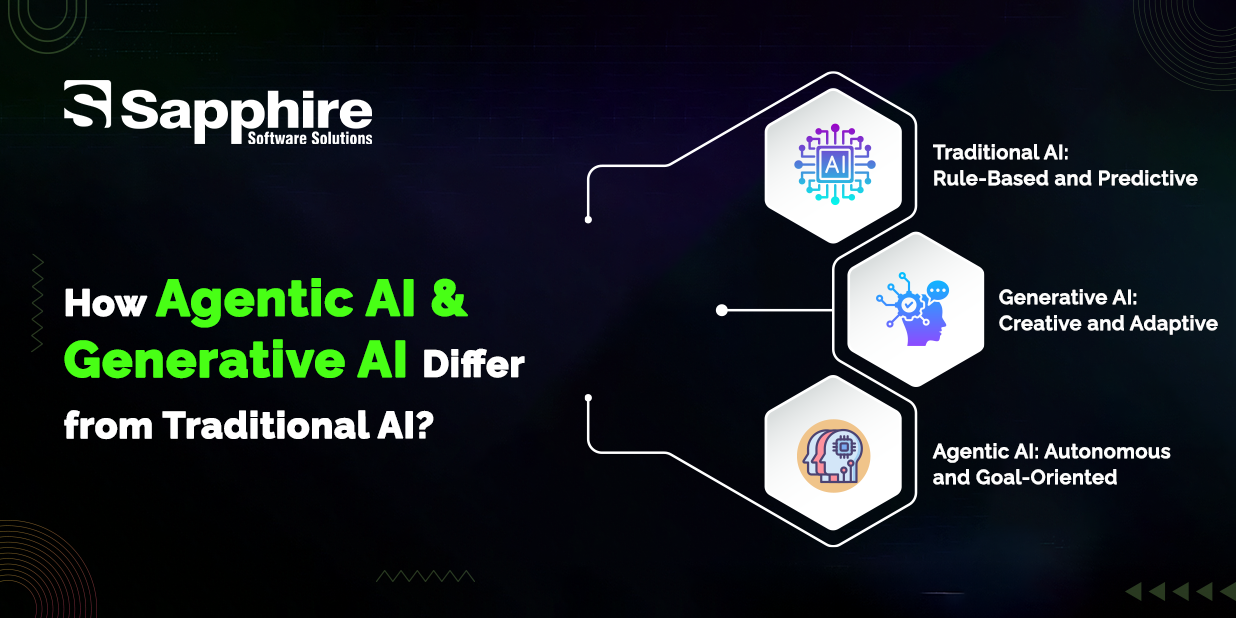
To fully grasp the evolution, let’s compare Agentic AI vs Generative AI vs Traditional AI
1. Traditional AI: Rule-Based and Predictive:
Traditional AI systems are designed to:
- Analyze data
- Identify patterns
- Make predictions
Examples include:
- Fraud detection systems
- Recommendation engines
- Predictive analytics tools
However, these systems are:
- Reactive (not proactive)
- Limited to predefined rules
- Dependent on structured data
2. Generative AI: Creative and Adaptive
Generative AI marked a shift from analysis to creation. Unlike traditional AI, it:
- Produces new content
- Adapts to prompts
- Learns from vast datasets
But it still has limitations:
- Doesn’t take independent action
- Requires human input or prompts
- Lacks goal-driven autonomy
3. Agentic AI: Autonomous and Goal-Oriented
Agentic AI takes things further by:
- Acting independently
- Setting and achieving goals
- Making decisions dynamically
- Interacting with multiple systems
It combines:
- Reasoning
- Planning
- Execution
Quick Comparison Table:
|
Feature |
Traditional AI |
Generative AI |
Agentic AI |
| Function |
|
|
|
| Autonomy |
|
|
|
| Input Required |
|
|
|
| Output |
|
|
|
| Complexity |
|
|
|
AI vs Generative AI: Where Does Agentic AI Fit?
When businesses compare it, they often overlook Agentic AI as the next step in evolution.
- Traditional AI = Thinking
- Generative AI = Creating
- Agentic AI = Doing
This progression shows how AI is moving from passive tools to active decision-makers.
Which AI is Better for Your Company?
The biggest question businesses ask is: Agentic AI vs Generative AI, which is better?
The answer isn’t universal—it depends on your business needs, goals, and maturity level.
Let’s break it down.
Choose Generative AI If You Need:
1. Content Creation at Scale:
If your business relies on:
- Blogs
- Social media posts
- Marketing campaigns
- Product descriptions
Generative AI can dramatically reduce time and costs.
2. Enhanced Customer Engagement:
AI chatbots powered by Generative AI can:
- Answer FAQs
- Personalize interactions
- Improve response time
3. Faster Development Cycles:
Developers can use Generative AI for:
- Code generation
- Debugging
- Documentation
Choose Agentic AI If You Need:
1. End-to-End Automation:
Agentic AI can handle:
- Customer support workflows
- Order processing
- IT operations
Without human intervention.
2. Decision-Making Systems:
Ideal for industries like:
- Finance
- Healthcare
- Logistics
Where systems need to:
- Analyze
- Decide
- Act
3. Complex Task Management:
Agentic AI excels in:
- Multi-step processes
- Dynamic environments
- Real-time adjustments
When to Use Both Together:
Real power lies in combining both technologies.
Example:
- Generative AI creates marketing content
- Agentic AI schedules, publishes, and optimizes campaigns
This hybrid approach gives you:
- Creativity + Execution
- Speed + Intelligence
- Automation + Personalization
Real-World Business Use Cases:
1. E-Commerce:
- Generative AI: Product descriptions, ads
- Agentic AI: Inventory management, order processing
2. Healthcare:
- Generative AI: Medical documentation
- Agentic AI: Patient monitoring and alerts
3. Finance:
- Generative AI: Financial reports
- Agentic AI: Fraud detection and response
4. IT & Software Development:
- Generative AI: Code generation
- Agentic AI: Automated deployment and monitoring
Future Trends and Takeaways:
The future of AI is not about choosing one over the other—it’s about integration and evolution.
1. Rise of Autonomous Enterprises:
Businesses will increasingly adopt Agentic AI to:
- Reduce human dependency
- Improve efficiency
- Scale operations
2. Generative AI Becoming Standard:
Content generation will become:
- Faster
- More accurate
- Highly personalized
3. AI Collaboration Models:
Expect systems where:
- Multiple AI agents collaborate
- Generative AI feeds Agentic AI
- End-to-end automation becomes the norm
4. Ethical and Governance Challenges:
With autonomy comes responsibility:
- Data privacy concerns
- Decision accountability
- AI governance frameworks
Key Takeaway:
- Generative AI = Creativity
- Agentic AI = Autonomy
- Together = Transformation
Finding the Right AI Partner for Your Company
Choosing the right AI approach is only half the battle—the real success lies in selecting the right implementation partner.
What to Look for in an AI Partner?
- Industry Experience: Choose a company that understands your domain.
- Custom AI Solutions: Avoid one-size-fits-all approaches. Your business needs tailored solutions.
- Scalability: Ensure the AI system can grow with your business.
- Integration Capabilities: Your AI solution should seamlessly integrate with existing systems.
- Ongoing Support: AI isn’t a one-time implementation—it requires continuous improvement.
Types of AI Partners:
- An Agentic AI Company focuses on building autonomous, decision-making systems tailored for complex workflows.
- A Generative AI Development Company specializes in content-driven and conversational AI solutions.
Conclusion:
Choosing between Agentic AI vs Generative AI is not about picking a winner—it’s about understanding your business priorities. If your goal is to enhance creativity, improve content, and boost engagement, Generative AI is a powerful tool. But if you’re aiming for automation, decision-making, and operational efficiency, Agentic AI is the future.
For most modern businesses, the smartest approach is a strategic combination of both. While Generative AI fuels innovation and creativity, Agentic AI ensures execution and scalability.
As AI continues to evolve, companies that adopt the right mix today will lead the market tomorrow. The key is to start with a clear vision, choose the right technology, and collaborate with experienced AI partners who can turn that vision into reality.