
















Artificial intelligence is rapidly becoming a core part of modern business operations. From generating marketing content to analyzing customer behavior, AI-powered systems help companies automate tasks and improve decision-making. However, many organizations find that the quality of AI output varies with how instructions are written.
Simply asking an AI system a question does not always produce the best result. Sometimes the response can be too generic, inaccurate, or incomplete. This is where AI Prompt Engineering becomes essential. By crafting structured instructions, users can guide AI models to generate clearer, more relevant responses.
In this article, we will explore how prompt engineering works, why it matters to businesses, and how organizations use it to improve the results they get from artificial intelligence systems.
What is AI Prompt Engineering?
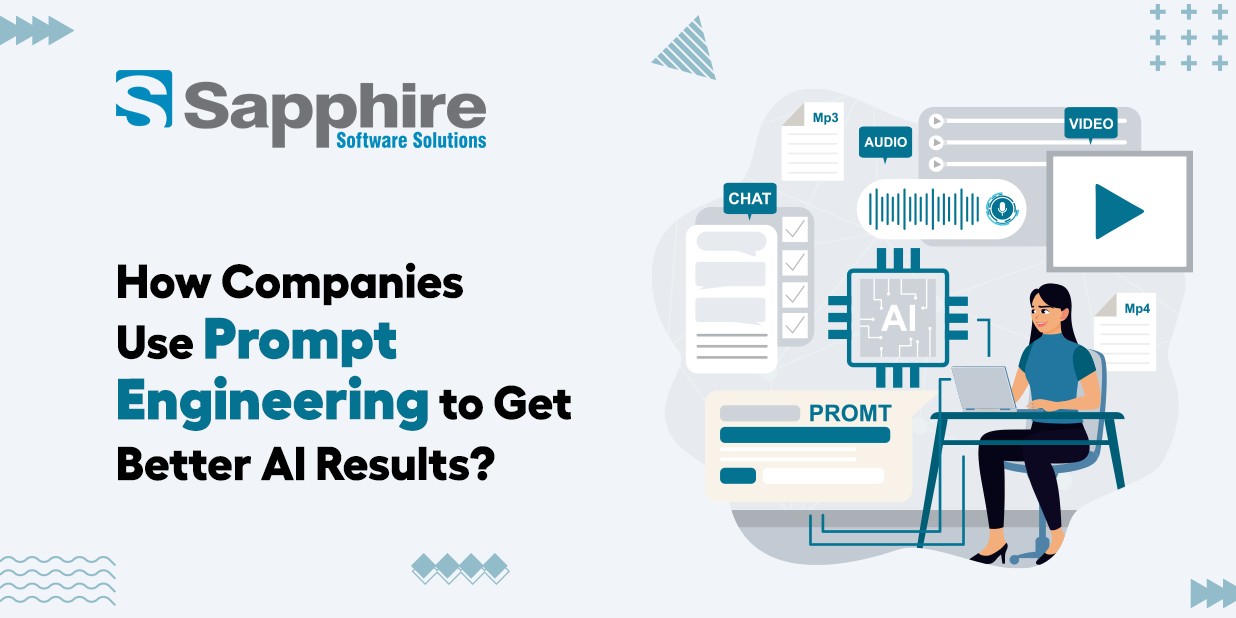
Prompt engineering is the process of designing clear, structured instructions for AI systems. These prompts guide the model to produce responses that match the user’s expectations. Instead of giving vague commands, users provide context, format, and direction to improve accuracy.
For example, if someone asks an AI tool to “write marketing,” the output may be broad and unfocused. However, a prompt that specifies the topic, target audience, tone, and length gives the AI a clearer understanding of the task. Companies are increasingly adopting AI Prompt Engineering best practices to make AI interactions more efficient. These practices often include defining the desired output structure, providing background context, and using step-by-step instructions for complex tasks.
Prompt engineering is not limited to technical experts. Professionals in content creation, product development, customer support, and research are learning how to write better prompts to improve their daily work.
Why Prompt Engineering Matters for Businesses?
Businesses invest in artificial intelligence with the expectation that it will improve productivity and reduce operational effort. However, the results produced by AI tools depend heavily on the instructions they receive.
Prompt engineering helps organizations ensure that AI-generated outputs are accurate, relevant, and useful. When prompts are written clearly, AI models can interpret the request more effectively and deliver better responses.
One major advantage is efficiency. Employees who understand prompt engineering can complete tasks faster because they receive higher-quality results from the AI system on the first attempt.
Another benefit is consistency. When organizations establish standard prompts for common tasks, different teams can achieve similar outcomes while using AI tools. This consistency becomes particularly important in large companies where multiple departments rely on automated systems. Many organizations now seek guidance from Prompt Engineering Consulting Services to design frameworks that help teams interact with AI effectively. These consulting services often focus on developing structured prompt templates, training employees, and integrating AI tools into business workflows.
By adopting prompt engineering strategies, businesses can unlock more value from artificial intelligence technologies.
How Companies Use Prompt Engineering to Get Better AI Results?
Across industries, companies are using prompt engineering to improve the performance of their AI tools. By refining how they communicate with AI systems, organizations can achieve more reliable and meaningful results.
In marketing departments, prompt engineering helps generate content such as blog posts, product descriptions, and advertising copy. Marketers often include details about brand voice, target audience, and messaging goals in their prompts to guide AI-generated content.
Customer support teams also benefit from prompt engineering. AI chatbots trained with well-designed prompts can answer frequently asked questions more accurately and maintain consistent communication with customers.
Data analysis is another area where prompt engineering proves valuable. Analysts use structured prompts to summarize large datasets, identify trends, or generate reports based on complex information. Software development teams are also incorporating prompt engineering into their workflows. Developers use prompts to explain code functionality, generate programming suggestions, and identify potential errors.
Even internal operations can benefit from prompt engineering. Companies often use AI to summarize documents, organize meeting notes, and generate insights from internal knowledge bases. These examples show that prompt engineering helps organizations turn AI tools into practical productivity partners rather than simple automation tools.
Popular AI Prompt Engineering Techniques:
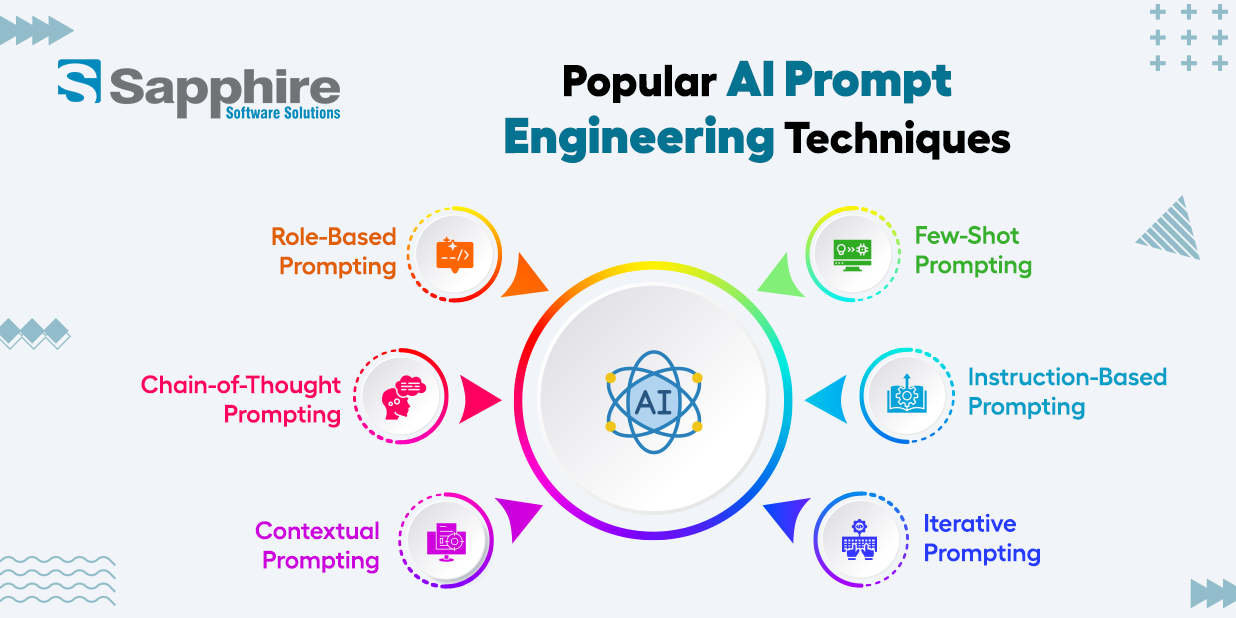
Organizations experimenting with AI often rely on structured AI Prompt Engineering techniques to improve output quality. These approaches guide models to produce more accurate, relevant, and business-focused responses.
A. Role-Based Prompting:
This technique instructs the AI to respond as a specific professional, such as a marketer, developer, or consultant. Assigning a role helps the system generate responses with the right tone and expertise.
B. Chain-of-Thought Prompting:
This approach encourages the AI to explain its reasoning step by step before delivering the final answer. It is useful for solving complex problems that require logical thinking.
C. Contextual Prompting:
Contextual prompting provides background details like industry, audience, or objectives. With this information, the AI can produce responses that are more relevant and aligned with the situation.
D. Few-Shot Prompting:
Few-shot prompting includes one or two sample outputs in the prompt. These examples guide the AI to follow a similar structure, style, or format in its response.
E. Instruction-Based Prompting:
In this technique, the prompt clearly states what the AI should do and how the output should look. Clear instructions help reduce confusion and improve the quality of the results.
F. Iterative Prompting:
Iterative prompting involves refining prompts multiple times to achieve better responses. Businesses often adjust wording, add details, or restructure prompts until the desired output is achieved.
AI Prompt Engineering Tools Used by Companies:
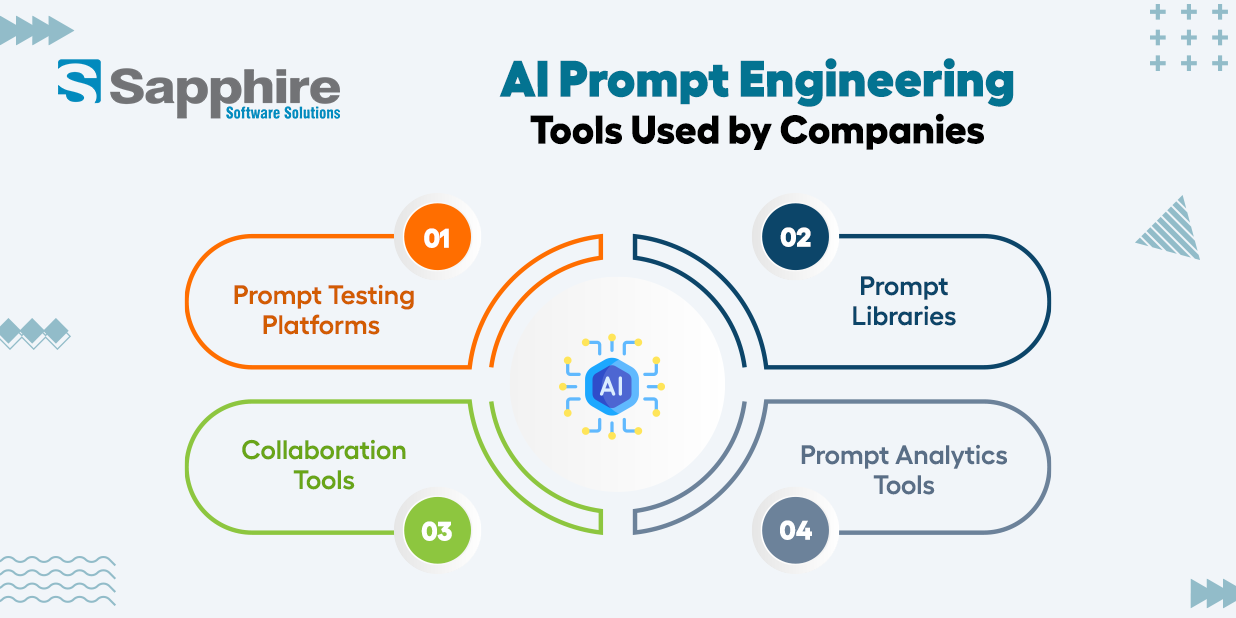
As AI adoption grows, companies rely on AI prompt engineering tools to organize, test, and improve prompts efficiently. These tools help teams generate better outputs while maintaining consistency across different AI applications.
1. Prompt Testing Platforms:
These tools allow teams to test multiple prompt variations and compare results. This helps identify which prompts produce the most accurate and reliable outputs.
2. Prompt Libraries:
Prompt libraries store reusable prompts for tasks like content creation, research, and reporting. Employees can quickly access proven prompts without writing new ones every time.
3. Collaboration Tools:
Some platforms allow teams to share prompt strategies and successful use cases. This creates a shared knowledge base that improves productivity across departments.
4. Prompt Analytics Tools:
Advanced tools provide performance insights and track how prompts perform over time. Businesses use these insights to refine instructions and improve AI-generated responses.
Common Challenges in AI Prompt Engineering:
Despite its benefits, prompt engineering poses several challenges for organizations new to the practice.
One common difficulty is writing clear and specific prompts. Ambiguous instructions can cause AI models to generate responses that do not match user expectations.
Another challenge is maintaining consistency. Different employees may design prompts in different ways, leading to inconsistent results across teams.
Testing prompts can also take time. Finding the most effective prompt structure often requires multiple iterations and careful evaluation of the output.
Data privacy is another important concern. Businesses must ensure that prompts do not include sensitive or confidential information when interacting with external AI systems.
To address these issues, many companies adopt AI Prompt Engineering Services that provide structured training and implementation support. These services help organizations develop safe and effective prompt engineering practices.
With proper guidance and experimentation, companies can overcome these challenges and establish reliable AI workflows.
Why Businesses Choose Sapphire for AI Prompt Engineering Services?
As AI adoption grows, many companies seek experienced partners to help them implement prompt engineering effectively.
Sapphire Software Solutions supports businesses by analyzing their AI usage and identifying opportunities to improve results through better prompt design. By studying existing workflows, the team develops structured prompt strategies tailored to the organization’s needs. One key advantage of working with Sapphire is the ability to create reusable prompt frameworks. These frameworks allow teams to apply consistent prompts across multiple tasks and departments.
Sapphire also focuses on practical integration. Instead of simply explaining prompt engineering concepts, the company helps organizations apply them within real business processes. Training and guidance are another important aspect of Sapphire’s approach.
Employees learn how to design prompts that produce reliable results while maintaining data security and operational efficiency. Through this structured methodology, businesses can fully leverage the power of prompt engineering while avoiding common implementation challenges.
Conclusion:
Artificial intelligence is transforming the way companies operate, but its effectiveness depends largely on how humans interact with it. Prompt engineering plays a crucial role in ensuring that AI systems generate useful and reliable responses.
Companies that invest in prompt engineering skills often discover that AI tools have become far more valuable and efficient. Instead of producing inconsistent results, AI systems can deliver insights, recommendations, and content that align closely with business goals.
As artificial intelligence continues to evolve, prompt engineering will remain an essential capability for organizations seeking to maximize the potential of their AI technologies.