
















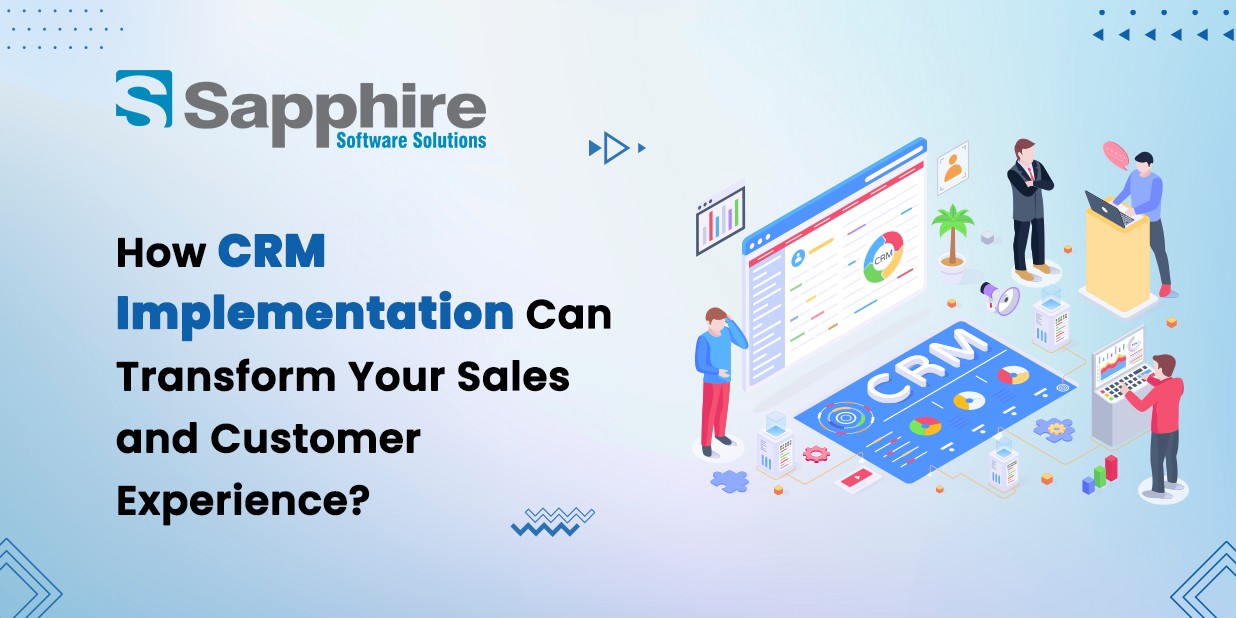
What would be the result if you were to lose out on a significant client because of the failure in following up after the sale process? Or, because of disorganized data management systems that have led you to misplace all the data about your clients? Or, perhaps because of the non-accessibility of past records? Such scenarios occur more frequently than people tend to think about. This is the exact reason why Implementation of CRM can play a critical role in business development and success.
Whether you own an eCommerce business, a service firm or an expanding enterprise, having a good strategy in place to implement a CRM system will go a long way in ensuring that you have an effective and efficient way of acquiring, engaging and retaining customers. From lead generation and workflow automation to managing customer experience, CRM Implementation company have proved to play an important role in helping organizations establish better connections with customers at each step of their journey.
What is CRM Implementation and Why It Matters for Businesses?
The implementation of Customer Relationship Management (CRM) entails the planning, configuration, integration, customization, and deployment of a CRM solution within an organization.
In simple terms, CRM implementation helps businesses:
- Store customer data in one place
- Monitor sales leads
- Automate tedious tasks
- Provide customer support
- Facilitate teamwork
- Gain valuable business insights
Why Does CRM Implementation Matter?
The modern consumer demands personalization and promptness. Companies unable to satisfy those needs to lose their customers to other companies.
A successful CRM implementation helps organizations:
- Customer Behavior Understanding
- Personalized Communication
- Sales Forecasting
- Customer Retention
- Internal Processes Optimization
Key Benefits of CRM Implementation for Sales and Customer Experience:
1. Better Lead Management:
Many businesses struggle because leads are lost between marketing and sales teams.
With a CRM system, you can:
- Automatically capture leads
- Source of leads
- Distribute leads to correct salespeople
- Keep track of lead progress in real-time
Example
A digital marketing agency receives 500 leads monthly. Without CRM, many inquiries remain unanswered. After CRM implementation, lead response time drops significantly, resulting in higher conversion rates.
2. Improved Customer Experience:
Customers expect businesses to know their preferences and previous interactions.
CRM systems provide:
- Customer history information
- Purchase information
- Support information
- Communication preference
This allows businesses to deliver personalized experiences that build trust and loyalty.
3. Increased Sales Productivity:
Sales teams often spend too much time on administrative tasks.
CRM automation helps by:
- Follow-up scheduling
- Reminders generation
- Automatic reporting
- Sales pipeline management
4. Enhanced Team Collaboration:
Departments often work in silos.
CRM systems create a shared platform where:
- Sales teams receive ticket requests
- Marketing teams analyze customer insights
- Customer service teams monitor purchase history
5. Data-Driven Business Decisions:
CRM platforms provide valuable analytics such as:
- Sales efficiency
- Customer activities
- Conversion rates
- Income forecasting
Business leaders can use this information to make informed strategic decisions.
CRM Implementation Process: Step-by-Step Guide
Successful CRM implementation requires more than installing software.
Step 1: Define Business Goals
Identify what you want to achieve.
Examples:
- Boost sales conversions
- Increase customer retention
- Improve customer support
- Automation of business processes
Step 2: Evaluate Existing Processes
Analyze current workflows and identify inefficiencies.
Ask questions like:
- Where are leads getting lost?
- What tasks consume excessive time?
- Which customer issues occur repeatedly?
Step 3: Select the Right CRM Platform
Popular CRM solutions include:
- Zoho CRM
- Salesforce
- HubSpot CRM
- Microsoft Dynamics 365
Choose a solution based on business size, budget, and requirements.
Step 4: Customize the CRM
Configure:
- Sales pipelines
- Customer fields
- Workflows
- Reports
- Dashboards
Customization ensures the CRM aligns with business processes.
Step 5: Data Migration
Transfer customer data from:
- Excel sheets
- Legacy systems
- Databases
- Third-party applications
Ensure data accuracy before migration.
Step 6: Team Training
Even the best CRM fails if employees do not use it correctly.
Provide training on:
- Daily operations
- Reporting
- Automation tools
- Customer management
Step 7: Monitor and Optimize
CRM implementation is an ongoing process.
Regularly review:
- User adoption
- Performance metrics
- Workflow efficiency
- Customer feedback
CRM Implementation Checklist Before Getting Started
|
Checklist Item |
Importance |
| Define business objectives |
High |
| Select appropriate CRM platform |
High |
| Clean existing customer data |
High |
| Identify workflow requirements |
High |
| Plan user training |
Medium |
| Establish success metrics |
High |
| Integrate third-party tools |
Medium |
| Create implementation timeline |
High |
| Assign project stakeholders |
High |
| Test before launch |
High |
Common CRM Implementation Issues and How to Avoid Them
|
Common Issue |
Solution |
| Poor user adoption | Provide comprehensive training |
| Unclear goals | Define measurable objectives |
| Data quality issues | Clean data before migration |
| Over-customization | Focus on essential features |
| Lack of leadership support | Involve management from the start |
| Insufficient testing | Conduct thorough testing before launch |
Common Mistakes Businesses Make:
- Choosing CRM based only on price
- Ignoring employee training
- Migrating poor-quality data
- Setting unrealistic expectations
- Skipping workflow analysis
Zoho CRM Implementation: Features and Business Use Cases
Why Businesses Choose Zoho CRM?
Zoho CRM offers a balance of affordability, flexibility, and powerful automation capabilities.
Key Features:
- Lead management
- Workflow automation
- Sales forecasting
- Email integration
- Customer segmentation
- AI-powered insights
- Custom dashboards
Business Use Cases:
eCommerce Businesses:
- Track customer purchases
- Recover abandoned carts
- Automate marketing campaigns
Service-Based Companies:
- Manage client relationships
- Schedule appointments
- Improve support response times
B2B Organizations:
- Handle complex sales cycles
- Track opportunities
- Manage account relationships
Example:
A consulting company using Zoho CRM implementation can automate lead nurturing, track client interactions, and improve proposal follow-ups, resulting in better conversion rates and customer satisfaction.
Why Businesses Need CRM Implementation Services from Experts?
Many organizations underestimate the complexity of CRM implementation.
Professional CRM Implementation Services help businesses:
- Reduce implementation risks
- Accelerate deployment
- Ensure proper customization
- Improve user adoption
- Integrate existing business systems
- Maximize return on investment
Benefits of Working with Experts:
| DIY Implementation | Expert CRM Implementation |
|
|
|
|
|
|
|
|
|
|
Why Sapphire CRM Development Services Deliver Better Sales and Customer Experience Results?
Choosing the right technology partner can significantly impact CRM success.
What Makes Sapphire Different?
Business-Centric Approach:
Instead of using general solutions, Sapphire creates alignment between CRM software and business objectives, sales process, and customer interaction methods.
Custom CRM Development:
Every business operates differently. Tailored CRM Development Services ensure workflows, dashboards, and automation fit specific operational needs.
Seamless Integration:
CRM platforms can be integrated with:
- ERP software
- Marketing solutions
- Accounting software
- Customer support software
Scalable Solutions:
As businesses grow, CRM systems should evolve with them. Sapphire develops scalable solutions designed for long-term business expansion.
Industry Expertise:
With experience across multiple industries, implementation strategies are designed to improve efficiency, customer satisfaction, and revenue growth.
Conclusion:
CRM implementation is a strategic move for businesses aiming to improve sales efficiency and deliver better customer experiences. It helps organizations centralize customer data, streamline lead management, and automate repetitive tasks, resulting in faster follow-ups and improved conversion rates. For companies like Sapphire, adopting a structured CRM approach enables better visibility across the sales pipeline and ensures that no opportunity is missed due to poor data handling or delayed communication.
From a business growth perspective, CRM implementation strengthens customer relationships through personalized engagement and data-driven decision-making. When executed effectively, it enhances team collaboration, improves productivity, and supports long-term scalability. Sapphire Software Solutions can help businesses achieve these outcomes with the right implementation strategy and expert support, where services like Zoho CRM Integration Services play a key role in ensuring smooth connectivity and optimized performance across all business operations.