
















Businesses across the world are facing a new kind of pressure—one that goes beyond profits and growth. Today, organizations are expected to operate responsibly, reduce environmental impact, and contribute to sustainability goals while still maintaining efficiency and competitiveness. This shift has brought Green Technology into the spotlight. Companies are no longer treating sustainability as an optional initiative; it has become a strategic priority.
When these two forces come together, they create something far more impactful—AI-Driven Green Technology Solutions. These solutions help businesses rethink how they operate, making systems smarter, cleaner, and more efficient. From energy optimization to predictive maintenance and resource management, AI is enabling organizations to achieve sustainability goals without compromising performance. In fact, many companies are discovering that sustainable practices can drive growth, reduce costs, and enhance brand value.
In this blog, we will explore how AI-driven green technologies are transforming industries, the benefits they offer, the challenges involved, and how businesses can take the first step toward building a sustainable future.
What Are AI-Driven Green Technology Solutions?
To understand their impact, it’s important to define what AI-driven green technology solutions actually are. These solutions combine artificial intelligence with environmentally focused technologies to create systems that minimize environmental impact while maximizing efficiency.
At their core, these solutions use AI to analyze data, identify inefficiencies, and optimize resource usage. This could include reducing energy consumption in buildings, improving supply chain efficiency, or minimizing waste in manufacturing processes.
Traditional solutions often rely on predefined rules and manual processes. While effective to some extent, they lack the adaptability and intelligence needed to handle complex, dynamic environments. AI adds this layer of intelligence, enabling systems to learn, adapt, and improve over time.
For example, an AI-powered energy management system can monitor usage patterns, predict future demand, and automatically adjust consumption. Similarly, AI can optimize logistics routes to reduce fuel consumption and emissions.
By integrating AI into sustainability efforts, businesses can move beyond reactive approaches and adopt proactive strategies that deliver measurable results.
How AI is Transforming Green Technology?
Artificial intelligence plays a transformative role in the design and implementation of sustainability initiatives. Instead of relying solely on manual monitoring and static systems, AI introduces dynamic, data-driven decision-making.
One of the most significant contributions of AI is energy optimization. Systems powered by Green Tech Energy Solutions can analyze usage patterns and adjust energy consumption in real time. This reduces waste and ensures efficient utilization of resources.
AI is also improving waste management. By analyzing data from sensors and operational systems, businesses can identify areas where waste is generated and implement strategies to reduce it.
In transportation and logistics, AI helps optimize routes, reduce fuel consumption, and minimize emissions. This not only supports environmental goals but also reduces operational costs. Another important area is predictive maintenance. AI can monitor equipment performance and predict failures before they occur. This prevents unnecessary downtime and reduces resource wastage.
Key Benefits of AI-Driven Green Tech for Business Growth:
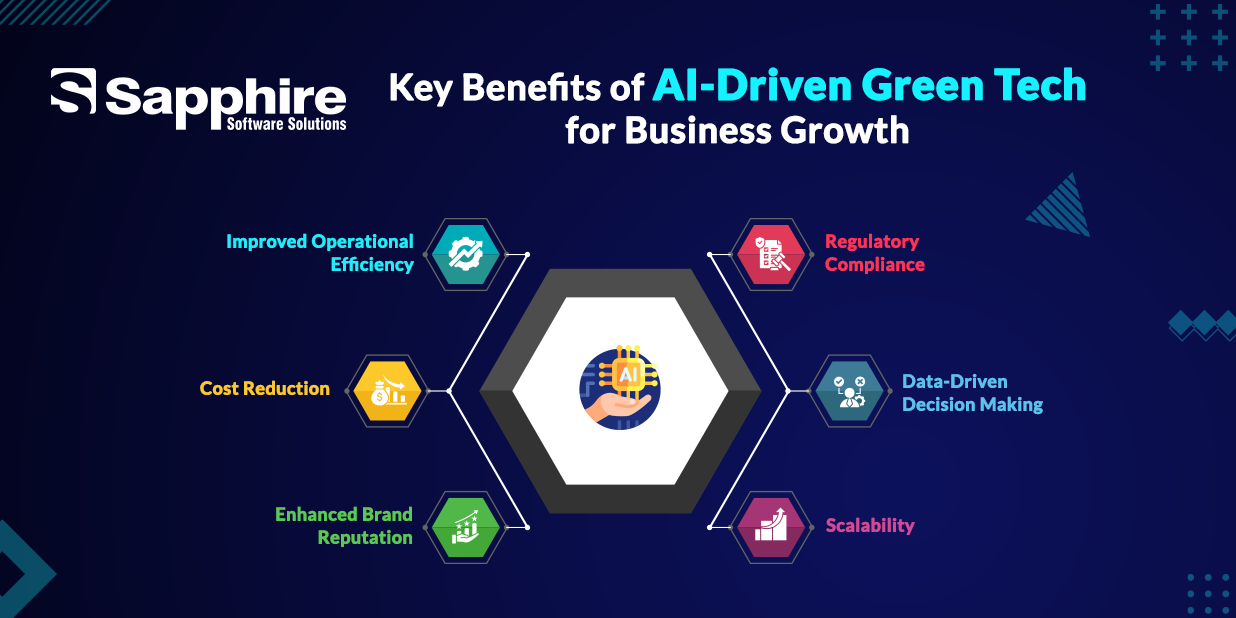
The adoption of AI-driven sustainability solutions offers several advantages that go beyond environmental impact. These Green Technology Benefits contribute directly to business growth and long-term success.
1. Improved Operational Efficiency:
AI helps identify inefficiencies in processes and optimize resource usage. This leads to smoother operations and better productivity across departments.
2. Cost Reduction:
Reducing energy consumption and minimizing waste lowers operational expenses. Businesses can achieve significant cost savings over time through smarter resource management.
3. Enhanced Brand Reputation:
Sustainability initiatives improve brand image and customer trust. Consumers are more likely to support companies that prioritize environmental responsibility.
4. Regulatory Compliance:
Governments worldwide are introducing stricter environmental regulations. AI-driven solutions help businesses stay compliant and avoid penalties.
5. Data-Driven Decision Making:
AI provides actionable insights based on real-time data analysis. This enables businesses to make informed decisions that align with sustainability goals.
6. Scalability:
AI systems can adapt to changing business needs and scale accordingly. This makes it easier for organizations to expand while maintaining sustainable practices.
Challenges in Implementing AI-Driven Green Solutions:
While the advantages are significant, implementing AI-driven sustainability solutions is not without challenges. Businesses must address several factors to ensure successful adoption.
One of the primary challenges is initial investment. Implementing AI systems requires infrastructure, tools, and skilled professionals, which can be costly for some organizations.
Data availability and quality are also critical. AI relies on accurate and consistent data to function effectively. Without proper data management, the results may not be reliable.
Another challenge is integration with existing systems. Many businesses operate on legacy infrastructure, making it difficult to implement new technologies seamlessly.
There is also a skills gap. Organizations may struggle to find professionals with expertise in both AI and sustainability.
Finally, change management can be a hurdle. Employees may resist adopting new technologies, especially if they are unfamiliar with AI systems.
Despite these challenges, businesses that invest in the right strategies and partnerships can overcome these barriers and unlock the full potential of AI-driven sustainability solutions.
How Businesses Can Get Started with AI Green Tech?
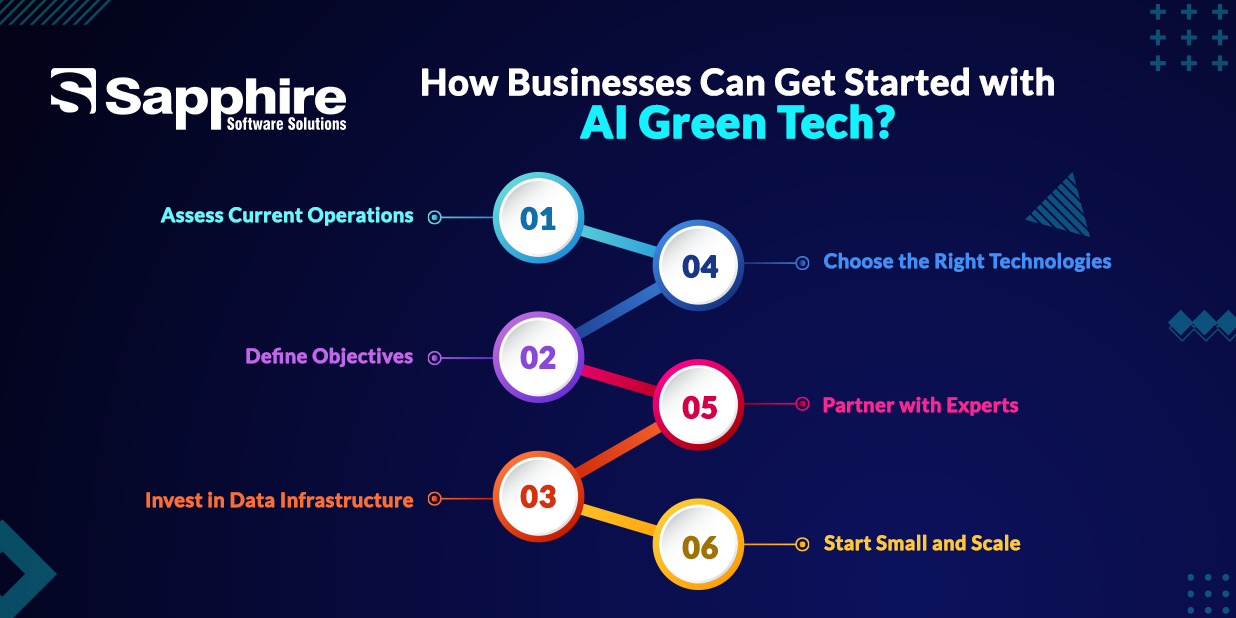
Adopting AI-driven sustainability solutions requires a structured approach. Businesses need to start with clear goals and a well-defined strategy.
1) Assess Current Operations:
- Identify areas where resources are being wasted or used inefficiently.
- This helps determine where AI can deliver the most value.
2) Define Objectives:
- Set clear sustainability and business goals.
- This ensures alignment between AI initiatives and overall strategy.
3) Invest in Data Infrastructure:
- High-quality data is essential for AI systems to function effectively.
- Organizations should focus on data collection, storage, and management.
4) Choose the Right Technologies:
- Select tools and platforms that align with your business needs.
- Consider scalability and compatibility with existing systems.
5) Partner with Experts:
- Working with a reliable Green IT Development Company can simplify implementation.
- Experienced partners bring expertise and ensure successful deployment.
6) Start Small and Scale:
- Begin with pilot projects to test the effectiveness of AI solutions.
- Gradually expand based on results and insights.
By following these steps, businesses can adopt AI-driven sustainability solutions in a structured and effective manner.
How a Green Software Development Company Like Sapphire Uses AI to Drive Sustainable Business Growth?
Sapphire Software Solutions has emerged as a trusted Green Software Development Company that combines technology and sustainability to deliver impactful solutions. The company focuses on helping businesses integrate AI into their operations to achieve both environmental and business objectives.
One of Sapphire’s key strengths is its ability to design customized Green Technology Services tailored to specific industry needs. Whether it’s energy management, waste reduction, or process optimization, the company provides solutions that deliver measurable results.
Sapphire Software Solutions also emphasizes innovation. By leveraging advanced AI technologies, the company helps businesses build systems that are not only efficient but also adaptable to future challenges. Another important aspect is collaboration. Sapphire works closely with clients to understand their goals and develop strategies that align with their vision.
By combining technical expertise with a commitment to sustainability, Sapphire Software Solutions enables businesses to achieve growth while minimizing environmental impact.
Conclusion:
The integration of artificial intelligence and sustainability is shaping the future of business. Companies are no longer choosing between growth and responsibility—they are finding ways to achieve both simultaneously. AI-driven green technology solutions are at the forefront of this transformation, enabling businesses to optimize operations, reduce costs, and meet sustainability goals. From energy management to predictive analytics, AI is driving innovation in green technology.
While challenges exist, they can be overcome with the right strategy, tools, and partnerships. Businesses that embrace these solutions today will be better prepared for the demands of tomorrow. As the world continues to move toward a more sustainable future, organizations that invest in AI-driven green technologies will not only contribute to environmental protection but also gain a competitive advantage in the market. Get a Free Quote Today to discover how your business can benefit from AI-driven green solutions.