

















Imagine managing multiple projects, tight deadlines, remote teams, and growing customer expectations—all at the same time. In today's highly competitive business landscape, even a small delay or communication gap can impact productivity, profitability, and customer satisfaction. As organizations continue to scale and digital transformation accelerates, the need for smarter and more efficient project management solutions has never been greater.
Businesses are increasingly moving beyond spreadsheets and generic tools in search of systems that can adapt to their unique workflows and operational goals. This shift has fueled the growing adoption of Project Management Software, enabling companies to streamline processes, improve collaboration, automate repetitive tasks, and gain real-time visibility into project performance. Unlike one-size-fits-all solutions, custom-built platforms provide the flexibility, scalability, and control needed to support long-term business growth. As a result, investing in custom project management software is no longer just a technology upgrade—it's a strategic decision that helps organizations stay competitive, agile, and future-ready.
What Is Custom Project Management Software Development?
Custom project management solutions are specifically designed for applications built to support a company's unique workflows, processes, and operational requirements. Unlike off-the-shelf tools that offer standardized features, custom platforms are developed based on specific business objectives and team structures.
It involves designing, building, testing, and deploying a platform that helps organizations plan, execute, monitor, and control projects effectively. These systems can include features such as:
- Task management
- Resource allocation
- Team collaboration
- Time tracking
- Budget monitoring
- Reporting and analytics
- Workflow automation
- Document management
- Risk assessment tools
Every organization has distinct operational challenges. A construction company may require field reporting and compliance tracking, while a software company might need sprint planning and bug management capabilities. Custom solutions address these specialized needs without unnecessary features that create complexity and increase costs.
Understanding the Project Management Software Development Life Cycle
Building a successful project management platform requires a structured approach. It serves as a roadmap that guides teams through every stage of development while minimizing risks and ensuring quality outcomes.
- Requirement Gathering
The process begins by understanding business goals, operational challenges, and stakeholder expectations. Developers collaborate closely with clients to identify essential features and project objectives.
- Planning and Analysis
Once requirements are documented, teams create detailed project plans, timelines, budgets, and technical specifications. This phase establishes the foundation for successful development.
- UI/UX Design
Designers create wireframes, prototypes, and user interfaces focused on usability and workflow efficiency. A well-designed interface significantly improves user adoption.
- Development
Developers begin coding the platform using appropriate technologies, frameworks, and programming languages. Features are implemented according to the predefined requirements.
- Quality Assurance Testing
Testing ensures the system functions correctly across devices, browsers, and operating environments. Common testing activities include:
- Functional testing
- Security testing
- Performance testing
- User acceptance testing
- Integration testing
- Deployment
After successful testing, the solution is launched into the production environment. Data migration and user onboarding activities are also completed during this phase.
- Maintenance and Continuous Improvement
Software development does not end after deployment. Ongoing maintenance ensures system stability, security updates, and feature enhancements.
Organizations that follow a structured development life cycle experience fewer delays, lower costs, and higher project success rates.
How a Project Management Plan Impacts Software Development Success?
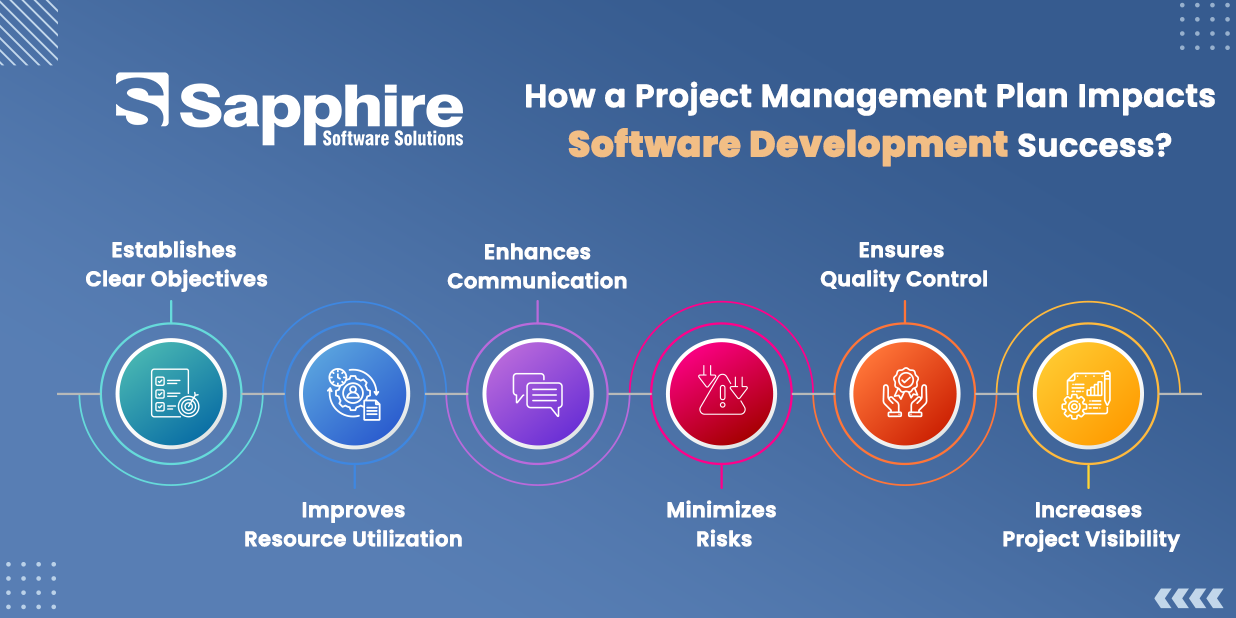
Many software projects fail because of poor planning rather than technical limitations. A well-defined Project Management Plan Software Development strategy acts as a blueprint that guides teams throughout the entire project journey.
- Establishes Clear Objectives: A comprehensive project plan defines goals, deliverables, timelines, and responsibilities. This clarity helps teams stay aligned and focused.
- Improves Resource Utilization: Effective planning ensures the right people, tools, and budgets are allocated to appropriate tasks at the right time.
- Enhances Communication: Project plans establish communication protocols that reduce misunderstandings and improve collaboration among stakeholders.
- Minimizes Risks: Potential risks can be identified early, allowing organizations to develop mitigation strategies before issues escalate.
- Ensures Quality Control: Defined milestones and performance metrics help maintain quality standards throughout the development process.
- Increases Project Visibility: Managers gain real-time insights into project progress, resource utilization, and potential bottlenecks.
When organizations invest time in proper planning, they significantly increase the likelihood of delivering successful software projects on schedule and within budget.
When and Why You Need a Software Project Rescue Company?
Not every software project goes according to plan. Missed deadlines, budget overruns, technical issues, poor communication, and changing requirements can quickly push projects toward failure.
This is where a Software Project Rescue Company becomes valuable.
Signs Your Project Needs Rescue
- Continuous Delays
If project milestones are repeatedly missed, it may indicate deeper management or technical issues.
- Budget Escalation
Unexpected expenses often signal poor planning or ineffective project execution.
- Poor Software Performance
Frequent bugs, system crashes, and performance issues can negatively impact business operations.
- Lack of Documentation
Insufficient documentation creates confusion and makes project recovery more difficult.
- Team Misalignment
Communication breakdowns between stakeholders and development teams often lead to costly misunderstandings.
Benefits of Project Rescue Services
- Independent project assessment
- Technical code review
- Risk analysis
- Team restructuring recommendations
- Process optimization
- Recovery planning
- Project stabilization
A rescue team identifies root causes, develops corrective action plans, and helps organizations regain control of struggling projects. This intervention can save significant time, money, and business resources.
How Custom Project Management Software Improves Business Productivity and ROI?
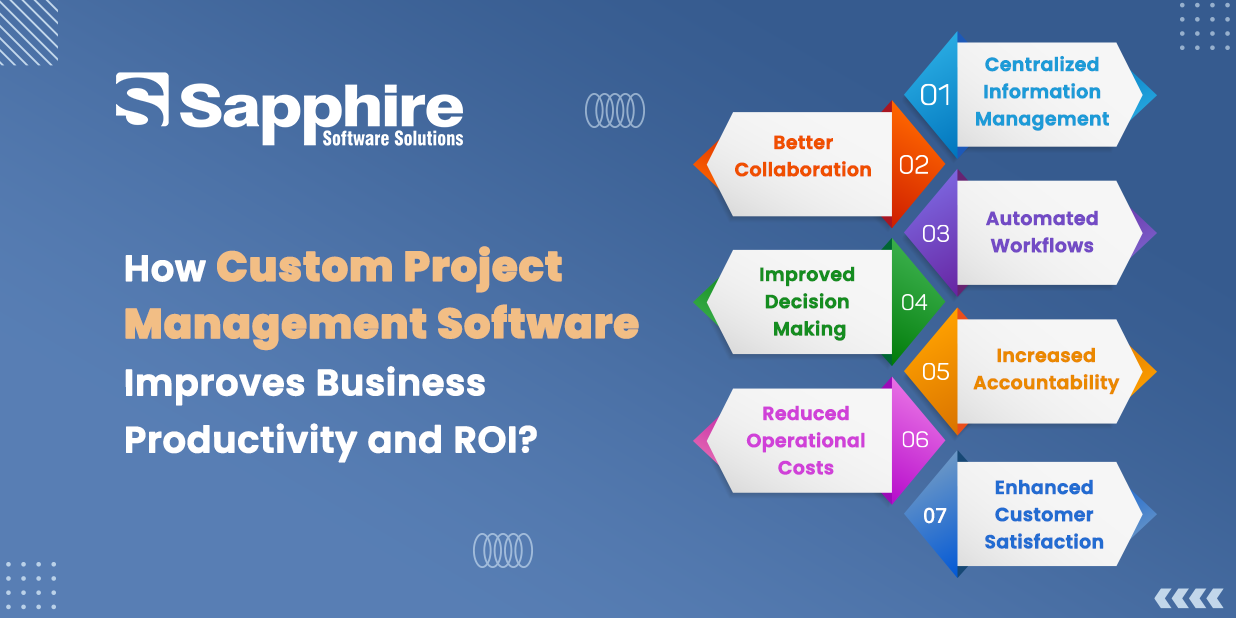
Businesses invest in customized solutions because they deliver measurable returns on investment. Effective Project Management of Software Development allows organizations to improve operational efficiency while reducing unnecessary costs.
- Centralized Information Management: All project-related information is stored on a single platform, reducing time spent searching for files, updates, and documents.
- Better Collaboration: Team members can communicate, share updates, and track progress from a centralized workspace.
- Automated Workflows: Automation reduces manual work by handling routine tasks such as: Status updates, Notifications, Task assignments, Approval workflows, Reporting.
- Improved Decision-Making: Real-time dashboards provide managers with valuable insights into project health, resource utilization, and performance trends.
- Increased Accountability: Task ownership and transparent tracking encourage responsibility and improve team performance.
- Reduced Operational Costs: Automation and workflow optimization reduce administrative overhead and improve resource efficiency.
- Enhanced Customer Satisfaction: Projects delivered on time and within scope result in happier customers and stronger client relationships.
Organizations that implement custom project management solutions often experience significant improvements in productivity, project success rates, and profitability.
Why Businesses Choose Professional Development Partners?
Developing a custom solution requires specialized expertise, technical knowledge, and industry experience.
Professional development teams bring:
- Business analysis expertise
- Technical architecture design
- Security implementation
- Quality assurance processes
- Cloud deployment capabilities
- Ongoing support and maintenance
Working with experts reduces development risks and accelerates project delivery timelines.
Choosing the right Project Management Software Development Company can make a significant difference in the overall success of a project. Experienced providers understand industry best practices and can recommend innovative solutions that align with long-term business objectives.
Future of AI in Project Management Software Development
Artificial intelligence is rapidly transforming how organizations manage projects. The integration of AI in Project Management Software Development is creating smarter, more efficient systems capable of supporting data-driven decision-making.
- Predictive Analytics
AI can analyze historical project data to predict:
Potential delays
Budget risks
Resource shortages
Performance issues
- Intelligent Resource Allocation
Machine learning algorithms help assign resources based on skills, availability, and project priorities.
- Automated Scheduling
AI-powered scheduling tools can automatically adjust timelines based on changing project conditions.
- Risk Management
Advanced algorithms identify potential risks before they impact project outcomes.
- Smart Reporting
AI generates real-time insights and actionable recommendations from project data.
- Virtual Project Assistants
Intelligent assistants can answer questions, schedule meetings, generate reports, and automate administrative tasks.
- Enhanced Forecasting
Organizations gain greater visibility into future project performance, enabling proactive management.
As AI technologies continue evolving, project management platforms will become increasingly intelligent, adaptive, and autonomous. Businesses that embrace these innovations will gain substantial competitive advantages.
Conclusion
The growing complexity of modern business operations has made project management more important than ever. Organizations need flexible, scalable, and efficient systems that support their unique workflows while driving productivity and profitability. Custom project management software provides a tailored solution with the right features, smooth integrations, strong security, and a better user experience. Unlike generic tools, it is designed to match specific business needs and goals.
By using structured development processes, better planning, and even AI-powered innovations, companies can improve project execution and achieve stronger long-term growth, efficiency, and return on investment.