
















MEAN STACK refers to a group of javascript-based technologies that develop web pages and online applications. Mean comprises “MongoDB, Express.js, AngularJS, Node.js.” Because of this, it is dubbed MEAN. Below, we will define each component of MEAN. Hire MEAN Stack Developers in India from us to develop MEAN stack applications.
Node.JS
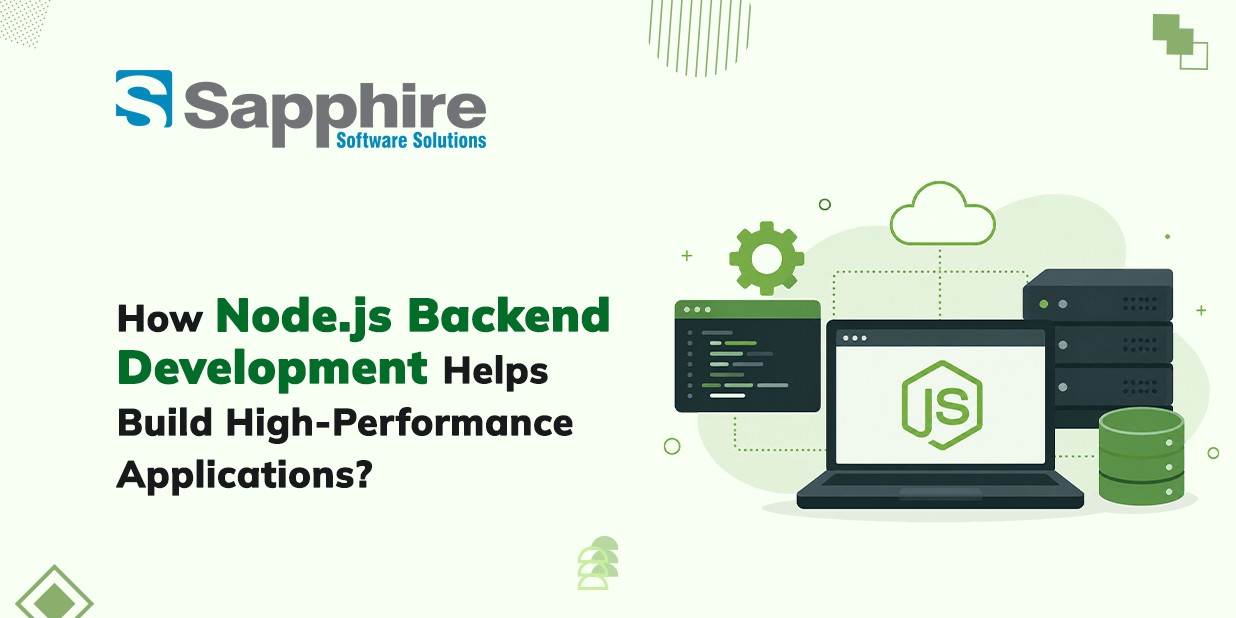
Node.js is a platform based on Google Chrome’s V8 JavaScript engine that facilitates the development of scalable and rapid network applications. It is ideal for real-time, data-intensive applications that operate on a distributed device. Utilizing a non-blocking, event-driven I/O Model, it is efficient and lightweight.
Express.JS
Express is a simple and adaptable lightweight framework for developing Node web apps. It offers all functionality necessary for developing single- and multi-page web applications. It is distributed as a free, open-source framework. It is a lightweight, opinion-free framework for nodes.
MongoDB
The NoSql database system MongoDB. It is a cross-platform, document-focused database that operates on ideas and files. It stores data in a binary format, often JSON, which facilitates data transfer between the client and server.
Angular.JS
Google has created Angular JS, a javascript-based framework. Angular JS’s two-way data binding capability facilitates the creation of new apps. It is a comprehensive solution that can be used to construct incredible apps swiftly. Angular JS operates on all mobile devices, laptops, desktops, and even Smart TV.
Benefits of using Mean Stack
- It is often updated due to its use of open-source components.
- Developing web applications using Node.js is straightforward since it offers a wide selection of JavaScript modules.
- Flowing data across JSON layers does not involve rewriting or reformatting since Mean employs the same JSON data format everywhere.
- Transferring code from one framework to another is straightforward using Mean. Recently, mean Stack has become a prominent end technology.
- Mean is highly adaptable. After completing an application’s development, testing it on a cloud platform is simpler. Adding a new field to your form may include more information.
- Developing applications using the mean stack is less expensive since just javascript-savvy developers are required.
- Mean facilitates the development of real-time trending applications in the present era. Because it employs single-page applications (SPAs), it is unnecessary to refresh web pages for each server request.
- Mean saves a great deal of time in application development since it includes an endless number of ready-to-use Node.js module libraries.
- There is no wasted time in the creation of modules from scratch. On the one hand, time management is a tremendous advantage, but on the other, it produces applications of world-class quality.
- Mean supports MVC architecture (Model View Controller).
- Mean Stack is simple and versatile to comprehend, allowing developers to tailor it to their needs.
- Mean Stack allows developers to make websites dynamic by modifying their aesthetics.
- During back-end development, the developers make the website more functional using the mean stack.
Mean Stack is constantly evolving and simple to use. Mean Stack is rated as the most powerful technology for building mobile applications. Hence the leading development firms utilize it to create the best mobile apps. This is the ideal technology for new web apps.
How Does the MEAN Stack Work?
The introduction of a MEAN application optimized to fully use the cloud’s efficiency advantages and performance improvements. MEAN would be an open-source software stack for cloud-hosted application development. The scalability, adaptability, and versatility of MEAN stack applications make them excellent for hosting services. The Stack has its web server, making it easy to deploy, and the databases may be enlarged on demand to accommodate temporary usage spikes.
JavaScript has remained a popular language for front-end web development due to its versatility, interactivity, and simplicity. However, it has only been accessible for front-end and database design for the last several years, allowing developers to create end-to-end JavaScript applications. Since MEAN uses the same language throughout, you can streamline your development teams.
MEAN reduces the need for many specialists to develop various app components. Alternatively, you may use a centralized pool of JavaScript programmers available to work whenever and wherever required. Enforcing JavaScript enables you to reuse code across the application, reducing the effort spent reinventing the wheel.
When Can the MEAN Stack be Used?
A “Stack” is a collection of software packages and development tools that collaborate to create complex web or mobile applications. Hire experienced MEAN stack developers who integrate development with sustainability to provide a more agile and rapid website creation process.
Few Actual Applications of MEAN Stack
Netflix
The well-known Netflix subscription model employs MEAN technology. Utilizing AngularJS, the streaming website explores a variety of patterns.
Netflix’s back end was developed in Java, whereas the front end was done in JS. However, the management of several programming talents proved challenging.
The Weather Channel
The Weather Report utilizes AngularJS for essential weather forecasts and functionality. It uses AngularJS for numerous themes that vary according to locations and regions since the website provides global forecasts.
Automatic Data Processing
Automatic Database Design (ADP) is a technique for recruiting and selection that mainly depends on enormous datasets. It has around 41,000 customers and one million users.
The application tracks vital sensitive records such as earnings, health, and insurance. Using MongoDB, the ADP Mobile Applications application was developed.
Forbes
Within two months, Forbes developed a custom CMS based on the MongoDB database. Within two weeks, Forbes also established its website.
Gmail
Google encourages developers to embrace the Angular framework for building interface design. Google endorses AngularJS as the optimal solution for developing rapid and scalable web applications. In actuality, Gmail is a standard SPA built using AngularJS. Gmail opens the computer for a specific HTML page and refreshes it uniquely.
YouTube
In 2012, YouTube’s software was accessible to all PS3 users. This made it feasible for users to operate YouTube on their PS3 using their mobile phones. YouTube relies on Angular’s framework to use HTML data effectively. Programmers at YouTube might leverage Angular to execute flexible scripts inside the user interface.
Angular lets YouTube videos play smoothly on the PS3 while maintaining performance and efficacy.
Consequently, LinkedIn transitioned to Node.js and experienced its many benefits. The MEAN aspect assisted in enhancing the functionality of the online platform. LinkedIn offers about 260 million unique visitors every day.
Trello
Trello is a web-based tool for project management and product creation. It is now a subsidiary of Atlassian that offers a Kanban-style project listing tool.
The stemming in Trello is built on Node.js. The Trello team desired event-driven, transparent, and non-blocking prerequisites.
Conclusion
Some reasons explain why MEAN Stack’s popularity in software development has increased. MEAN Stack would be an innovative and forward-looking web server technology. MEAN enterprises use the Stack to develop novel and cutting-edge apps. You can avail our MEAN Stack Consulting Services to take advantage of modern single-page apps by eliminating the need to refresh a webpage for each server, as is the case with most traditional application forms.