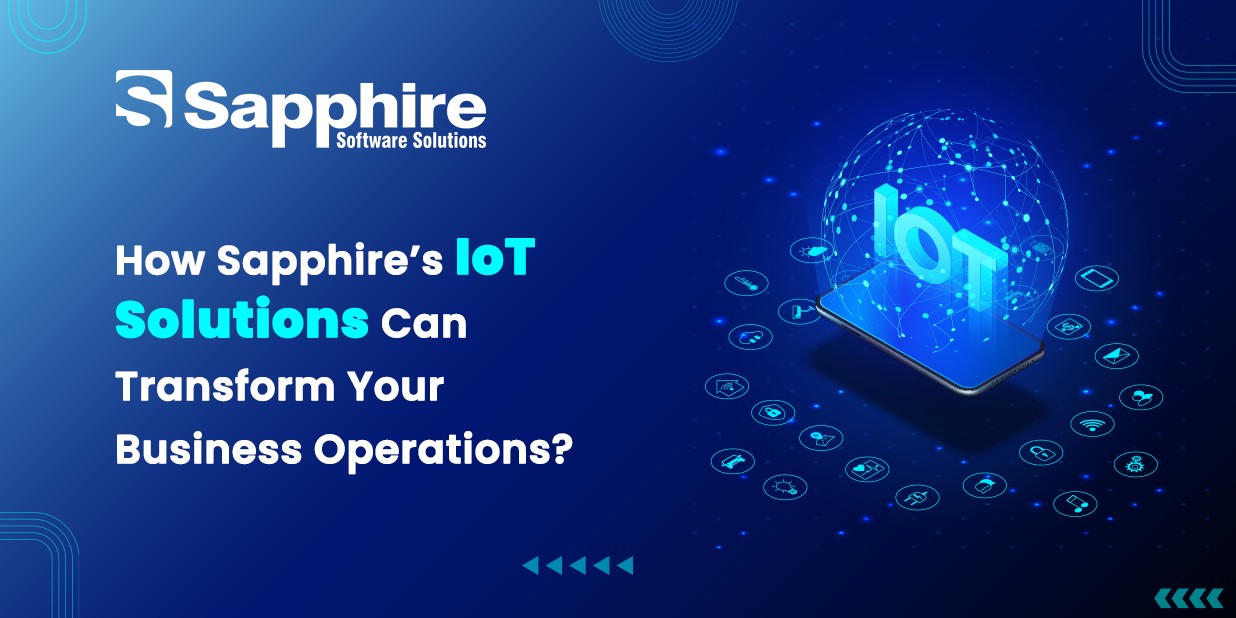

















The term “Internet of Things” refers to networking numerous electronic items via the internet. These Internet of Things gadgets are controlled via the cloud. The cloud receives data from a variety of sensors, and the cloud also sometimes transfers data to Internet of Things devices. To create an Internet of Things project, it is necessary to have several components, including hardware and software. Keeping track of all of these components at once is a challenging endeavor. Various open-source IoT frameworks may assist in making an Internet of Things project, and here we will help you learn about the top 5 of them. Check out the best IoT app development company in India, USA.
It should be no surprise that most companies see developing tech trends as a priceless asset to monetize such movements in the future. Unsurprisingly, some companies choose to have competitive Internet of Things-backed solutions linked with their operations, such as the aforementioned actionable use cases for the automobile and sports sectors. Some companies decide to double down on buying out competitors or developing their own open-source platforms to increase their income. In any case, it points us in the direction of the exponential growth of software development projects powered by the Internet of Things.
Several open-source IoT frameworks are available, and using one may help a person methodically construct an IoT project. This is because the framework enables the person to remotely gather and transmit data among numerous devices using a single system. In addition, the most significant benefit of using IoT Frameworks is that they can connect to various sensors and operate on multiple communication protocols. They ensure that all devices that have been verified are safe to use.
1. Kaa
Kaa is a highly versatile open-source Internet of Things framework considered one of the most acceptable IoT frameworks. It enables the handling of data from connected things. It works well and is quite efficient. In addition, its high level of security is due to the usage of encrypted channels and standard open protocols. The majority of the time, the devices in this platform may be linked either directly or via the use of gateways.
It is simple to use, and its device management is superior since it organizes connected devices into groups and handles the credentials of every one of those devices. The capacity of this platform to gather data on a massive scale and the ease with which it can take both structured and unstructured data make data collecting another significant benefit of using this platform.
2. Zetta
Zetta is an Internet of Things framework that is open source. It can connect to boards such as Raspberry Pi, Arduino, and Spark Core, as well as personal computers and cloud platforms such as Heroku. Node.js is used for the integration process on the server. REST APIs, web sockets, and reactive programming are all brought together in this solution. They do an excellent job of managing the devices and assembling the data.
Because its server gives each device a REST API locally and in the cloud, it effectively transforms each device into its own API. It also provides a visual representation of the massive amounts of data the server has acquired. It gives the user the ability to construct a variety of applications for both smartphones and the cloud. Zetta always takes care of herself if there is a difficult circumstance.
3. thinger.io
thinger.io is an open-source Internet of Things framework that has a limited number of restrictions and is widely used for IOT app development services. Because just fundamental code is required, device communication may be accomplished relatively easily. The transmitting and receiving of data are made more straightforward as a result. In addition, it helps control the features and functions of the gadget. Every conceivable kind of electronic component may be included in the system. There is no relevance in either their processor or their manufacturer. They use a one-of-a-kind communication paradigm that allows the Internet of Things server only to accept or transmit data when necessary.
The framework can link several devices with a much-reduced burden of computational effort and a shallow bandwidth need. On the other hand, it is possible to set up communications in both directions with several different devices, such as Arduino and Raspberry Pi, MQTT devices, and other internet API data resources. It is made up of a variety of widgets that allow for improved data presentation and organization throughout the platform.
4. Things Board
Things Board is an Internet of Things (IoT) free-source framework. The gathering of data and the management of devices is the primary objective of the framework. In addition, it facilitates device communication via IoT protocols such as HTTP, MQTT, and CoAP. Additionally, it is straightforward to incorporate any device, making it incredibly scalable. In addition, it has fault tolerance and speed that ensures there is no data loss. Because of the availability of automated or customized widgets, data visualization has come a long way.
Additionally, on-premises and cloud installations are also supported by ThingsBoard. Because encryption is enabled for both the MQTT and HTTP protocols, it provides a high level of security. Additionally, the device authentication process manages the credentials of the devices themselves.
5. Device Hive
Device Hive is an open-source framework for the Internet of Things that offers tools for communicating and administering intelligent devices. Its architecture comprises a communication layer, control software, and libraries compatible with several platforms. Its primary emphasis is on providing services that contribute to the advancement of intelligent energy, home automation, remote sensing and control, as well as many other areas. It is a scalable, hardware-cum-cloud service platform that provides APIs in various protocols.
These APIs allow the user to set up, operate, and evaluate the behavior of the data. The applications of this technology range from the transfer, validation, and collecting of data to machine learning and artificial intelligence. It is compatible with many libraries, including Python, Node.js, Java, and the ESP8266 Firmware library.
Bottom Line
Whatever you are searching for, keep in mind that you can bring your company ideas into reality with
our top-notch IOT app development services in India. Get in touch with us for more details.